
 My Inquiry
 My Account


Infineon Technologies KP253XTMA1
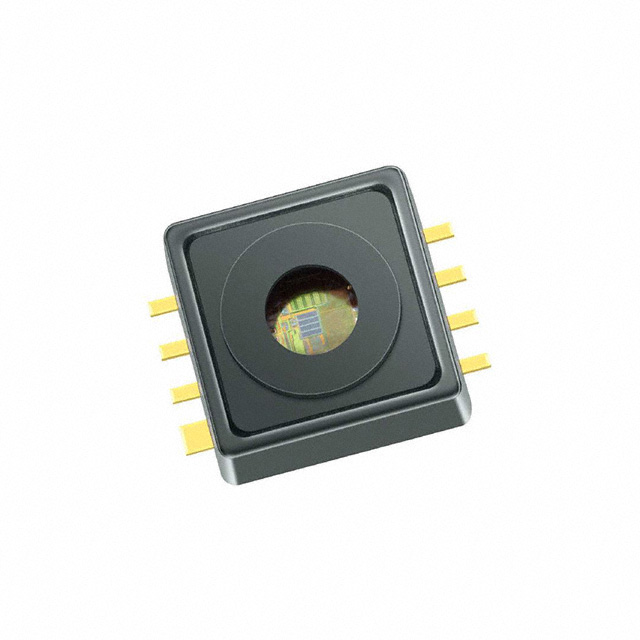
- Part No.:
- KP253XTMA1
- Manufacturer:
- Infineon Technologies
- Category:
- Pressure Sensors, Transducers
- Package:
- 8-SMD Module
- Datasheet:
-
 KP253XTMA1.pdf
- Description:
- SENSOR BAROMETRIC DSOF8
- Quantity:
- Payment:

- Shipping:

Inventory:1,668
Please send an inquiry. Send us your inquiry, and we will respond immediately.
Product details
Overview
KP253XTMA1 from Infineon Technologies is a digital absolute pressure sensor IC based on capacitive MEMS sensing with monolithic BiCMOS signal conditioning. It delivers 12-bit pressure (0–110 kPa) and 12-bit temperature (−40°C to +125°C) data via SPI interface, features ±1.0 kPa total accuracy over temperature, integrated self-diagnostic capability, and operates from 3.1 V to 5.5 V supply - deployed in automotive barometric pressure monitoring for engine control and altitude compensation.
For engineers reviewing the KP253XTMA1 datasheet, KP253XTMA1 pinout, KP253XTMA1 application, or KP253XTMA1 equivalent, key selection considerations include SPI-compatible daisy-chain operation, power-down mode current (≤1 µA), diagnostic command support (Diag1/Diag2/E2PROM check), and PG-DSOF-8-16 package compatibility with PCB-level humidity protection requirements.
Technical Context
The KP253XTMA1 integrates a capacitive pressure-sensing element with on-die temperature sensor and fully calibrated digital signal path. Its BiCMOS ASIC performs offset/temperature compensation, linearization, and 12-bit ADC conversion before SPI transmission - eliminating external calibration components. The device supports both single-device and daisy-chain SPI configurations with programmable clock polarity and phase.
Functional diagnostics include cell integrity checks (Diag1), signal path validation (Diag2), E2PROM checksum verification, and pressure-out-of-range detection. Power-down mode is entered via SPI command and exited automatically on next NCS assertion, enabling microamp-level standby in battery-powered weather stations and portable altimeters.
Key Specifications
| Parameter | Value and Actual Design Meaning |
|---|---|
| Pressure Range | 0–110 kPa absolute - covers sea-level to ~3000 m altitude, sufficient for automotive cabin pressure and portable weather station use. |
| Pressure Accuracy | ±1.0 kPa total error (−40°C to +125°C) - enables <10 m altitude resolution without external calibration. |
| Output Resolution | 12-bit digital output for both pressure and temperature - provides 0.027 kPa LSB and 0.031°C LSB granularity. |
| Supply Voltage | 3.1 V to 5.5 V - compatible with standard 3.3 V and 5 V microcontroller I/O domains without level-shifting. |
| Standby Current | ≤1 µA in power-down mode - extends battery life in handheld altimeters and IoT environmental sensors. |
| SPI Interface | 4-wire, mode 0/3 selectable, up to 10 MHz clock - supports direct connection to ARM Cortex-M SPI peripherals. |
| Operating Temp | −40°C to +125°C - qualified for under-hood automotive placement and industrial process monitoring. |
Pinout & Package
Package: PG-DSOF-8-16 - 8-pin, lead-free, green RoHS-compliant SMD package with exposed thermal pad; footprint optimized for reflow soldering and board-level moisture resistance.
| Pin/Terminal | Circuit Role | Design Meaning |
|---|---|---|
| 1 NCS | Active-low chip select | Enables SPI communication when pulled low; high-impedance SDO state when high. |
| 2 CLK | Serial clock input | Master-generated clock (up to 10 MHz); polarity/phase configurable per SPI mode. |
| 3 SDI | Serial data input | Receives SPI commands (e.g., Acquire Pressure, Trigger Diag) from host controller. |
| 4 SDO | Serial data output | Tri-state output delivering 12-bit pressure/temperature data or diagnostic responses. |
| 5 VDD | Supply voltage | 3.1–5.5 V main power rail; decoupling capacitor required per datasheet layout guidelines. |
| 6 VPROG | Programming voltage | Required only during factory programming; tied to VDD in normal operation. |
| 7 GND | Ground reference | Analog/digital common ground; connected to thermal pad for thermal and noise performance. |
| 8 NC | No connect | Internally unused; must be left unconnected or grounded per layout recommendations. |
Key Features
| Feature | Design Value |
|---|---|
| Dual 12-bit sensing | Simultaneous pressure and temperature digitization eliminates need for separate thermal sensor in altimeter designs. |
| On-chip diagnostics | Hardware-accelerated Diag1 (sensor cell test) and Diag2 (signal path validation) reduce firmware validation effort. |
| SPI daisy-chain support | Enables multi-sensor systems (e.g., differential pressure + ambient reference) using single SPI bus and CS line. |
| Automotive qualification | AEC-Q100 Grade 2 compliance ensures reliability in engine bay and HVAC applications up to +105°C ambient. |
| Low-power standby | 1 µA shutdown current allows >1-year battery life in coin-cell–powered weather loggers. |
Applications
| Automotive Engine Control | Portable Altimeter |
|---|---|
|
Use Scenario: Monitoring intake manifold absolute pressure (MAP) for fuel injection timing and turbo boost control. IC Role / Device Role / Timing Role: Primary barometric reference and dynamic pressure transducer; updates at 100 Hz via SPI polling. Use Value: ±1.0 kPa accuracy enables precise air-mass calculation across −40°C to +125°C, reducing emissions and improving throttle response. |
Use Scenario: Real-time elevation tracking in handheld hiking GPS units and drone flight controllers. IC Role / Device Role / Timing Role: Absolute pressure-to-altitude converter; triggered acquisition every 500 ms during ascent/descent. Use Value: 12-bit resolution yields <10 m altitude step size; low standby current extends CR2032 battery life beyond 12 months. |
| Industrial Weather Station | Medical Respiratory Monitor |
|
Use Scenario: Long-term atmospheric pressure logging for agricultural microclimate analysis and storm prediction. IC Role / Device Role / Timing Role: High-stability barometric reference; acquires pressure/temperature every 10 seconds with diagnostic verification weekly. Use Value: Total error band of ±1.0 kPa ensures sub-millibar repeatability over 5-year field deployment without recalibration. |
Use Scenario: Detecting exhalation/inhalation pressure differentials in non-invasive ventilation (NIV) devices. IC Role / Device Role / Timing Role: Fast-response differential pressure proxy via dual KP253 configuration (reference + line sensing). Use Value: 10 MHz SPI interface supports >200 Hz sampling for breath-phase detection; AEC-Q100 qualification assures medical-grade reliability. |
Equivalent & Alternatives
The following parts are listed as comparable options for similar digital absolute pressure sensing applications.
| Alternative Part | Technical Difference | Application Difference | Selection Advice |
|---|---|---|---|
| BMP388 (Bosch) | Higher pressure resolution (0.06 Pa LSB), I²C/SPI dual interface, no integrated diagnostics. | Lacks hardware-triggered Diag1/Diag2; requires external firmware validation for safety-critical use. | Preferred where ultra-high resolution outweighs diagnostic coverage and AEC-Q100 requirement. |
| MS5637 (TE Connectivity) | 24-bit pressure output, I²C-only interface, ±1.5 mbar accuracy (≈±1.5 kPa), no power-down mode below 10 µA. | Lower accuracy and higher standby current limit suitability for battery-constrained portable altimeters. | Consider only for cost-sensitive consumer applications where <10 m altitude resolution is acceptable. |
Compared with BMP388 and MS5637, the KP253XTMA1 uniquely combines AEC-Q100 qualification, hardware diagnostics, and sub-µA power-down - making it the sole choice for automotive MAP sensing and medical-grade portable pressure logging where functional safety and long-term stability are mandatory.
Availability
KP253XTMA1 is available at Aetrix Electronics and suitable for automotive engine control, portable altimeter development, industrial weather station deployment, and medical respiratory monitoring requiring stable component supply across extended product lifecycles.
Supply support for KP253XTMA1 includes scheduled delivery planning, volume procurement assistance, BOM continuity management, traceable sourcing, and lifecycle availability coordination for OEM customers, industrial embedded developers, connected-device designers, and electronics production programs.
Manufacturer
Infineon Technologies is a German semiconductor manufacturer specializing in power management, sensor, and automotive ICs, with global manufacturing and quality certification to ISO/TS 16949 and IATF 16949 standards.
The KP253 belongs to Infineon's XENSIV™ pressure sensor family, engineered specifically for high-accuracy, high-reliability barometric and differential pressure measurement in safety-critical automotive and industrial environments.
FAQ
Does KP253XTMA1 require external calibration during system integration?
No. The KP253XTMA1 includes factory-trimmed compensation coefficients stored in on-chip EEPROM, enabling full 12-bit pressure and temperature output without external calibration. System-level accuracy depends only on proper PCB layout (e.g., decoupling, grounding, thermal isolation) and adherence to the recommended application circuit in Figure 26 of the datasheet.
Can KP253XTMA1 operate in daisy-chain SPI configuration with other KP253 devices?
Yes. The KP253XTMA1 supports true daisy-chain operation using a single SPI bus and shared CLK/SDI lines, with individual NCS lines or cascaded SDO-to-SDI routing. Up to four devices can be chained per datasheet Section 2.7.3, maintaining full 12-bit resolution and diagnostic access for each unit without additional logic.
What is the function of the VPROG pin, and how should it be connected?
VPROG is used exclusively during factory programming of trimming coefficients and must be tied to VDD in all end-user applications. Leaving VPROG floating or connecting it to ground may cause undefined behavior or failure to exit power-down mode. The datasheet explicitly states "VPROG = VDD during normal operation" in Table 1 and Section 2.2.
How does the KP253XTMA1 handle pressure measurements outside its 0–110 kPa range?
When pressure falls below 0 kPa or exceeds 110 kPa, the KP253XTMA1 asserts the "Pressure out of Range" diagnostic flag (bit D1 in Diag1 register) and returns saturated 12-bit values (0x000 or 0xFFF). This condition triggers an interrupt-capable diagnostic response, allowing host firmware to initiate corrective action such as sensor replacement or environmental fault logging.
KP253XTMA1 Specifications
- Product attributes
- Attribute value
- Manufacturer:
- Infineon Technologies
- Series:
- -
- Package/Case:
- 8-SMD Module
- Packaging:
- Tape & Reel (TR)
- Product Status:
- Obsolete
- Applications:
- Board Mount
- Pressure Type:
- -
- Operating Pressure:
- -
- Output Type:
- -
- Output:
- -
- Accuracy:
- -
- Voltage - Supply:
- -
- Port Size:
- -
- Port Style:
- -
- Features:
- -
- Termination Style:
- -
- Maximum Pressure:
- -
- Operating Temperature:
- -
- Grade:
- Automotive
- Qualification:
- AEC-Q100
- Mounting Type:
- Surface Mount
- Supplier Device Package:
- PG-DSOF-8-16
KP253XTMA1 FAQ
1.How can I place an order for KP253XTMA1 through Aetrix?
Please submit a Request for Quotation (RFQ) for KP253XTMA1 on Aetrix. Our sales agent will provide a competitive quotation and guide you through the order confirmation once you accept the terms.
2.Are the price and stock information for KP253XTMA1 reliable?
The price and inventory of KP253XTMA1 are updated periodically and may fluctuate due to market conditions. Stock and pricing data are typically refreshed every 24 hours. Quotation validity for KP253XTMA1 is usually 5 days.
3.What payment methods are accepted for KP253XTMA1?
We accept Wire Transfer, PayPal, Credit Card, Western Union, MoneyGram, and Escrow for KP253XTMA1 transactions.
Note: Certain payment methods may incur a processing fee.
4.How is shipping managed for KP253XTMA1?
KP253XTMA1 orders can be shipped via leading logistics carriers, including DHL, UPS, FedEx, TNT, or Registered Mail.
Once your KP253XTMA1 order is processed, you will receive an email with the shipment details and tracking number.
Note: Tracking information may take up to 24 hours to appear. Express delivery typically takes 3–5 business days.
5.How can I obtain technical support or documentation for KP253XTMA1?
For technical support, including KP253XTMA1 datasheets, pinout diagrams, or application guidance, please contact our engineering support team. They can provide detailed documentation and assistance for your KP253XTMA1 requirements.
6.How does Aetrix verify that KP253XTMA1 is sourced from the original manufacturer or authorized distributors?
All KP253XTMA1 products on Aetrix are procured from qualified distributors and authorized channels. Our dedicated quality assurance team conducts strict verification, including traceability checks and, if necessary, third-party testing. This ensures that KP253XTMA1 meets industry standards.
7.What is the process for return or replacement of KP253XTMA1?
All KP253XTMA1 units undergo pre-shipment inspection (PSI). If there is an issue with KP253XTMA1, returns or replacements are accepted under the following conditions:
1.Quantity discrepancies, incorrect items, or visible external defects (such as breakage or corrosion), acknowledged by Aetrix.
2.The issue is reported within 90 days of delivery.
3.The KP253XTMA1 part is unused and in its original packaging.
Return procedure for KP253XTMA1:
1.Submit a request within 90 days.
2.Obtain a Return Material Authorization (RMA) from Aetrix.
KP253XTMA1 Tags
-
DPS368XTSA1
Infineon Technologies
-
DPS310XTSA1
Infineon Technologies
-
LPS22HHTR
STMicroelectronics

-
ICP-20100
TDK InvenSense
-
ICP-10110
TDK InvenSense
-
LPS22DFTR
STMicroelectronics
-
LPS22HBTR
STMicroelectronics
-
BMP390
Bosch Sensortec
-
BMP581
Bosch Sensortec
-
BMP384
Bosch Sensortec
-
2511020213301
Würth Elektronik
-
ILPS22QSTR
STMicroelectronics
Tech Hub

Operational amplifier guide covering op amp basics, feedback, ideal vs real op amps, common configurations, buffer circuits, offset, bias current, gain-bandwidth, slew rate, rail-to-rail limits and sel…

Jumper cables guide covering safe connection order, red and black clamp placement, final ground connection, cable gauge, length, clamp quality, copper vs CCA cables, jump starter comparison and battery…

LDO regulator guide covering low dropout voltage, power dissipation, thermal design, PSRR, output noise, capacitor stability, adjustable LDO circuits, LDO vs buck converter and datasheet selection chec…

Conditional Access Module guide covering CAM meaning, CI/CI+ interface, smart card authorization, DVB security workflow, TV and set-top box compatibility, internal electronics, ESD protection, connecto…

Guide to electronic component obsolescence covering EOL risk, PCN/PDN notices, last-time buy planning, replacement options, form-fit-function validation, counterfeit risk and BOM lifecycle management.

18650 battery guide covering lithium-ion cell basics, 3.6V/3.7V voltage, 4.2V charging, mAh and Wh capacity, protected cells, chargers, BMS, series-parallel packs, holders, welding and sourcing checks.…

Hall effect sensor guide covering working principle, linear and digital sensors, Arduino circuits, current sensing, speed detection, automotive applications, A3144 examples, signal filtering and datash…

Product Change Notification guide for electronic components, covering PCN meaning, PCN vs PDN/EOL, common change types, risk levels, form-fit-function review, engineering validation, BOM control, LTB/L…

A practical guide to blend door actuators, covering HVAC function, symptoms, location, AC and heater issues, reset and calibration, replacement cost, electrical diagnosis, compatibility checks, and rep…

Engineering guide to Raspberry Pi alternatives, covering chip-level differences, Orange Pi, ROCK, Jetson, Banana Pi, NanoPi, Compute Module, Pico, GPIO, camera, HAT compatibility, and replacement risks…


