
 My Inquiry
 My Account


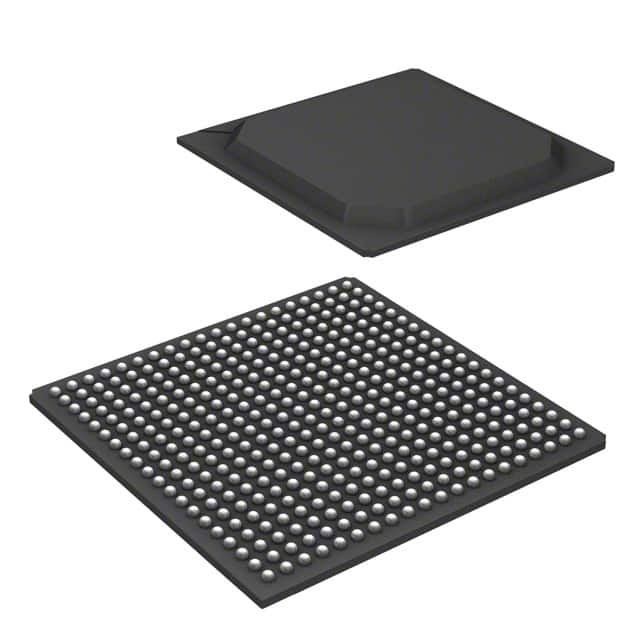
Microchip Technology KSZ9692XPB
- Part No.:
- KSZ9692XPB
- Manufacturer:
- Microchip Technology
- Category:
- Application Specific Microcontrollers
- Package:
- 400-BGA
- Datasheet:
-
 KSZ9692XPB.pdf
- Description:
- IC ARM9 PHY 5MBPS 400BGA
- Quantity:
- Payment:

- Shipping:

Inventory:2,477
Please send an inquiry. Send us your inquiry, and we will respond immediately.
Product details
Overview
KSZ9692XPB from Microchip Technology is a highly-integrated ARM922T-based SoC networking controller featuring a 250 MHz processor core, dual 10/100/1000 Mbps Ethernet MACs with MII/RGMII support, PCI 2.3 interface (single external master), and 32-bit DDR memory controller - designed for residential gateways and VoIP systems requiring embedded networking and communications processing.
For engineers reviewing the KSZ9692XPB datasheet, KSZ9692XPB pinout, KSZ9692XPB application, or KSZ9692XPB equivalent, key selection criteria include its single-master PCI configuration, absence of SDIO host controller, DDR clock driver integration, 1.3V core voltage, and dedicated DMA channels for Ethernet, USB, and PCI.
Technical Context
The KSZ9692XPB implements an ARM922T RISC core operating at up to 250 MHz with 8KB I-cache and 8KB D-cache, coupled to a 166 MHz AMBA AHB bus. Its memory subsystem includes a 32-bit DDR controller (200 MHz clock, 400 Mbps data rate) with two integrated JESD82-1-compliant differential clock drivers and a NAND flash interface supporting 512+16 and 2048+64 byte page sizes.
Networking functionality centers on two IEEE 802.3-compliant Gigabit Ethernet MACs - Port 0 (WAN) supports up to 2000-byte frames and 8KB TX/RX FIFOs; Port 1 (LAN) supports up to 9KB frames and 24KB RX/22KB TX FIFOs - with hardware IPv4/IPv6 TCP/UDP checksum offload, 32-rule ACL filtering, and Wake-on-LAN including Magic Packet detection.
Key Specifications
| Parameter | Value and Actual Design Meaning |
|---|---|
| Processor Core | ARM922T RISC, 250 MHz max - enables Linux/WinCE OS support via configurable MMU and cache hierarchy. |
| Ethernet Interfaces | Dual 10/100/1000 Mbps MACs with MII/RGMII - provides WAN/LAN separation with independent 8KB/24KB receive FIFOs for burst traffic resilience. |
| PCI Interface | PCI 2.3, 32-bit/33–66 MHz, one external master - simplifies integration with legacy mini-PCI peripherals without requiring external arbiter logic. |
| DDR Memory Controller | 32-bit, 200 MHz clock (400 Mbps), two integrated SSTL_2 clock drivers - enables glueless DDR interface with JEDEC-compliant timing and up to 128 MB addressable space. |
| USB Interface | Dual USB 2.0 ports with integrated PHY - supports 2-port host or host+device configurations with dedicated DMA per port for high-throughput data transfer. |
| Power Supply | 1.3V core / 3.3V I/O / 2.5–2.6V DDR - mandates separate LDO regulation domains and impacts PCB power delivery layout. |
| Peripheral Set | Four UARTs (up to 5 Mbps), two 32-bit timers (one with watchdog), 20 GPIO, I²C/SPI/I²S, interrupt controller - supports console, timing, sensor, audio, and control functions in compact designs. |
Pinout & Package
The KSZ9692XPB is housed in a 484-pin PBGA package (27 mm × 27 mm, 1.0 mm pitch) with ball map defined in Microchip DS00003073A, pages 43–44. Pin assignments are functionally grouped into DDR, PCI, Ethernet MII/RGMII, USB, UART, and power domains, with dedicated VDD_DDR, VDD_IO, and VDD_CORE supply balls.
| Pin/Terminal | Circuit Role | Design Meaning |
|---|---|---|
| DDR_CLK_P / DDR_CLK_N | Differential DDR clock output | Drives DDR SDRAM clock tree directly - eliminates need for external clock buffer in compliant layouts. |
| PCI_AD[31:0] | PCI address/data multiplexed bus | Carries 32-bit address and data cycles - requires proper PCI termination and timing compliance for 66 MHz operation. |
| ETH0_RXD[3:0] / ETH0_TXD[3:0] | RGMII data interface (Port 0) | Supports 1000 Mbps operation with source-synchronous timing - demands matched trace lengths and controlled impedance. |
| USB_DP0 / USB_DM0 | USB 2.0 differential pair (Port 0) | Integrated 45 Ω termination and 1.5 kΩ pull-up - reduces BOM count and layout complexity for full-speed/high-speed signaling. |
| VDD_CORE | 1.3V processor core supply | Requires low-noise, high-PSRR regulation - decoupling must be placed near corresponding balls to minimize IR drop. |
| GPIO[19:0] | General-purpose I/O bank | Individually configurable as input/output/alternate function - includes UART CTS/RTS, timer outputs, and external interrupt inputs. |
Key Features
| Feature | Design Value |
|---|---|
| ARM922T + MMU + caches | Enables full Linux kernel execution with memory protection and deterministic real-time response for network stack processing. |
| Dual Ethernet MACs with hardware checksum offload | Reduces CPU load by >30% during IPv4/IPv6 TCP/UDP packet processing - critical for concurrent VoIP and routing tasks. |
| Integrated DDR clock drivers | Eliminates external clock buffer IC and associated layout constraints - lowers BOM cost and improves signal integrity margin. |
| Single-master PCI arbiter | Simplifies system-level arbitration logic versus KSZ9692PB's three-master design - reduces FPGA or companion chip requirements. |
| Wake-on-LAN with Magic Packet detection | Allows complete system power-down while maintaining network presence - extends energy efficiency in always-on residential gateways. |
| Dedicated DMA per Ethernet/USB/PCI | Enables zero-copy data movement between peripherals and DDR - avoids CPU bottlenecks during sustained 1 Gbps throughput. |
Applications
| Residential Gateway | Voice-over-IP System |
|---|---|
Use Scenario: Integrated broadband router with firewall, QoS, and Wi-Fi backhaul. IC Role / Device Role / Timing Role: Central SoC managing WAN/LAN traffic, running Linux-based routing stack, and coordinating USB/Wi-Fi peripherals. Use Value: Dual Ethernet MACs with hardware ACL and checksum offload enable line-rate forwarding at 1 Gbps while sustaining concurrent VoIP call setup and NAT traversal. | Use Scenario: SIP-based IP phone or analog telephony adapter with echo cancellation and codec acceleration. IC Role / Device Role / Timing Role: Real-time media processor handling RTP packetization, jitter buffering, and hardware-accelerated G.711/G.729 encoding. Use Value: 250 MHz ARM922T core with 8KB caches delivers deterministic latency for voice packet scheduling, while dual USB ports support headset and firmware update interfaces. |
| Industrial Control Gateway | Wireless Access Point |
Use Scenario: Field-deployable protocol converter bridging Modbus TCP to EtherNet/IP over secure tunnels. IC Role / Device Role / Timing Role: Deterministic communications controller executing dual Ethernet stacks with time-critical interrupt handling for fieldbus synchronization. Use Value: Two independent Ethernet MACs with programmable MIB counters and 32-rule ACL allow precise traffic classification and secure inter-network policy enforcement. | Use Scenario: Dual-band 802.11ac access point with integrated switching fabric and captive portal management. IC Role / Device Role / Timing Role: Baseband and control processor interfacing with Wi-Fi radio via PCI or USB, managing AP mode state machines and client association. Use Value: PCI 2.3 interface enables direct connection to mini-PCIe Wi-Fi modules, while DDR controller supports large frame buffers for multi-client aggregation without CPU intervention. |
Equivalent & Alternatives
The following parts are listed as comparable options for similar embedded networking controller applications.
| Alternative Part | Technical Difference | Application Difference | Selection Advice |
|---|---|---|---|
| KSZ9692PB | Includes SDIO/SD host controller and three-master PCI arbiter; otherwise identical core, Ethernet, DDR, and USB specs. | Required for designs needing removable storage or multi-peripheral PCI expansion (e.g., dual Wi-Fi radios). | Select KSZ9692PB only if SDIO or multi-master PCI is mandatory; KSZ9692XPB reduces cost and complexity where those features are unused. |
| MPC8360E | Power Architecture e300 core (333–667 MHz), single Gigabit Ethernet, no integrated DDR clock drivers, different peripheral set. | Better suited for legacy PowerPC toolchain environments and single-port routing with external DDR clocking. | Choose MPC8360E when migrating from existing PowerPC designs or when DDR clock buffer integration is not required. |
Compared with KSZ9692PB, the KSZ9692XPB removes SDIO and reduces PCI arbitration capability - lowering cost and power for fixed-function gateways. Versus MPC8360E, it offers higher integration (dual Ethernet, DDR clocks, USB PHY) but requires ARM toolchains and lacks PowerPC ecosystem support.
Availability
KSZ9692XPB is available at Aetrix Electronics and suitable for residential gateways, VoIP systems, and industrial control gateways requiring stable component supply, long-term lifecycle assurance, and qualified industrial temperature grade availability.
Supply support for KSZ9692XPB includes scheduled delivery planning, volume procurement assistance, BOM continuity management, traceable sourcing, and lifecycle availability coordination for OEM customers, industrial embedded developers, connected-device designers, and electronics production programs.
Manufacturer
Microchip Technology Inc. is a leading provider of microcontrollers, analog, FPGA, and connectivity solutions, serving automotive, industrial, consumer, and communications markets with vertically integrated silicon and software.
The KSZ9692XPB belongs to Microchip's KSZ9692 family of integrated networking SoCs, engineered specifically for cost-sensitive, high-bandwidth residential and enterprise edge devices requiring ARM-based processing with dual-Gigabit Ethernet and DDR memory subsystems.
FAQ
What distinguishes KSZ9692XPB from KSZ9692PB?
The KSZ9692XPB omits the SDIO/SD host controller and implements a single-master PCI arbiter, whereas the KSZ9692PB includes both SDIO support and a three-master PCI arbiter. All other core features - ARM922T processor, dual Ethernet MACs, DDR controller, USB 2.0, and peripheral set - are identical between the two variants. This makes KSZ9692XPB optimal for designs that do not require removable storage or complex PCI expansion.
Does KSZ9692XPB support hardware-accelerated IPv6 packet processing?
Yes, KSZ9692XPB supports hardware generation of IPv6 TCP/UDP checksums and detection of IPv6 TCP/UDP checksum errors in both LAN and WAN MAC paths. It also enables up to eight IP-based filtering rules in its Access Control List engine for IPv6 traffic, reducing host CPU overhead during protocol inspection.
What DDR memory configurations are supported by KSZ9692XPB?
KSZ9692XPB supports 32-bit DDR SDRAM with densities up to 1 Gb, using x8 or x16 device widths. It provides two integrated JESD82-1-compliant differential clock drivers, SSTL_2 I/Os, and configurable RAS/CAS timing parameters. Addressable space reaches 128 MB with 12-column and 14-row addressing.
Can KSZ9692XPB operate in both MII and RGMII modes simultaneously on its Ethernet ports?
No, each Ethernet port (Port 0 and Port 1) is independently configurable for either MII or RGMII interface mode via strap pins or register settings, but both ports cannot operate in different modes concurrently. The choice is fixed per port at boot time and affects pin assignment and timing requirements.
Is there hardware support for Wake-on-LAN features in KSZ9692XPB?
Yes, KSZ9692XPB includes full hardware Wake-on-LAN support, including Magic Packet detection, link status change wake events, and user-defined wake-up frame matching (up to four per port). These features operate while the ARM core and most peripherals are powered down, enabling ultra-low-power standby in residential gateway applications.
KSZ9692XPB Specifications
- Product attributes
- Attribute value
- Manufacturer:
- Microchip Technology
- Series:
- KSZx692
- Package/Case:
- 400-BGA
- Packaging:
- Tray
- Product Status:
- Active
- Programmable:
- Not Verified
- Applications:
- Networking and Communications
- Core Processor:
- ARM9®
- Program Memory Type:
- External Program Memory
- Controller Series:
- KSZ
- RAM Size:
- -
- Interface:
- EBI/EMI, Ethernet, I2C, I2S,PCI, SPI, UART/USART, USB
- Number of I/O:
- 20
- Voltage - Supply:
- 1.235V ~ 1.365V
- Operating Temperature:
- 0°C ~ 70°C
- Grade:
- -
- Qualification:
- -
- Mounting Type:
- Surface Mount
- Supplier Device Package:
- 400-PBGA (24x24)
KSZ9692XPB FAQ
1.How can I place an order for KSZ9692XPB through Aetrix?
Please submit a Request for Quotation (RFQ) for KSZ9692XPB on Aetrix. Our sales agent will provide a competitive quotation and guide you through the order confirmation once you accept the terms.
2.Are the price and stock information for KSZ9692XPB reliable?
The price and inventory of KSZ9692XPB are updated periodically and may fluctuate due to market conditions. Stock and pricing data are typically refreshed every 24 hours. Quotation validity for KSZ9692XPB is usually 5 days.
3.What payment methods are accepted for KSZ9692XPB?
We accept Wire Transfer, PayPal, Credit Card, Western Union, MoneyGram, and Escrow for KSZ9692XPB transactions.
Note: Certain payment methods may incur a processing fee.
4.How is shipping managed for KSZ9692XPB?
KSZ9692XPB orders can be shipped via leading logistics carriers, including DHL, UPS, FedEx, TNT, or Registered Mail.
Once your KSZ9692XPB order is processed, you will receive an email with the shipment details and tracking number.
Note: Tracking information may take up to 24 hours to appear. Express delivery typically takes 3–5 business days.
5.How can I obtain technical support or documentation for KSZ9692XPB?
For technical support, including KSZ9692XPB datasheets, pinout diagrams, or application guidance, please contact our engineering support team. They can provide detailed documentation and assistance for your KSZ9692XPB requirements.
6.How does Aetrix verify that KSZ9692XPB is sourced from the original manufacturer or authorized distributors?
All KSZ9692XPB products on Aetrix are procured from qualified distributors and authorized channels. Our dedicated quality assurance team conducts strict verification, including traceability checks and, if necessary, third-party testing. This ensures that KSZ9692XPB meets industry standards.
7.What is the process for return or replacement of KSZ9692XPB?
All KSZ9692XPB units undergo pre-shipment inspection (PSI). If there is an issue with KSZ9692XPB, returns or replacements are accepted under the following conditions:
1.Quantity discrepancies, incorrect items, or visible external defects (such as breakage or corrosion), acknowledged by Aetrix.
2.The issue is reported within 90 days of delivery.
3.The KSZ9692XPB part is unused and in its original packaging.
Return procedure for KSZ9692XPB:
1.Submit a request within 90 days.
2.Obtain a Return Material Authorization (RMA) from Aetrix.
KSZ9692XPB Tags
-
CYPD3175-24LQXQ
Infineon Technologies

-
SLB9672VU20FW1523XTMA1
Infineon Technologies
-
SLB9670VQ20FW785XTMA1
Infineon Technologies
-
SLB9672XU20FW1523XTMA1
Infineon Technologies
-
SLB9673XU20FW2613XTMA1
Infineon Technologies
-
CYPD3125-40LQXIT
Infineon Technologies
-
AT97SC3204-U2A1A-20
Microchip Technology
-
AT97SC3204-U2A1A-10
Microchip Technology
-
SLM9670AQ20FW1311XTMA1
Infineon Technologies
-
SLB9672XU20FW1613XTMA1
Infineon Technologies
-
SLB9672AU20FW1613XTMA1
Infineon Technologies
-
SLB9673AU20FW2613XTMA1
Infineon Technologies
Tech Hub

TTL and CMOS logic families differ in thresholds, loading, output drive, power and timing. This engineering guide compares 74HC and 74HCT, calculates noise margins and checks 3.3 V/5 V compatibility.

A practical engineering guide to 3.3V and 5V logic compatibility, input thresholds, resistor dividers, translator ICs, MOSFET level shifting, I2C pull-ups, timing limits and power-sequencing risks.

The 74HC595 uses push-pull logic outputs, while the TPIC6B595 uses 50 V open-drain DMOS sinks for higher-power loads. This guide compares timing, current limits, 3.3 V interfacing, load wiring, thermal…

The 74HC595 converts serial data into eight stable parallel outputs. This guide covers pin functions, shift and storage timing, OE and MR behavior, drive-current limits, cascading, voltage compatibilit…

A technical comparison of level-sensitive latches and edge-triggered flip-flops, covering timing windows, setup and hold limits, master–slave operation, time borrowing, race-through, HDL inference and…

A D latch stores one bit while Enable controls when data can pass. This reference covers gate-level operation, truth tables, transparency, setup and hold timing, LE versus OE, common ICs and practical …

An SR latch stores one bit through cross-coupled feedback. This engineering reference covers NOR and NAND implementations, truth tables, forbidden-state recovery, gated operation, switch debouncing, fa…

Latch circuits retain one bit through feedback. This technical reference covers SR and D latches, truth tables, transparency, timing limits, latch-versus-flip-flop behavior, applications and common log…

An engineering guide to LED driver operation, constant-current and constant-voltage outputs, linear and switching topologies, dimming, IC selection, calculations, replacement compatibility, and fault c…

Operational amplifier guide covering op amp basics, feedback, ideal vs real op amps, common configurations, buffer circuits, offset, bias current, gain-bandwidth, slew rate, rail-to-rail limits and sel…


