
 My Inquiry
 My Account


STMicroelectronics L9780
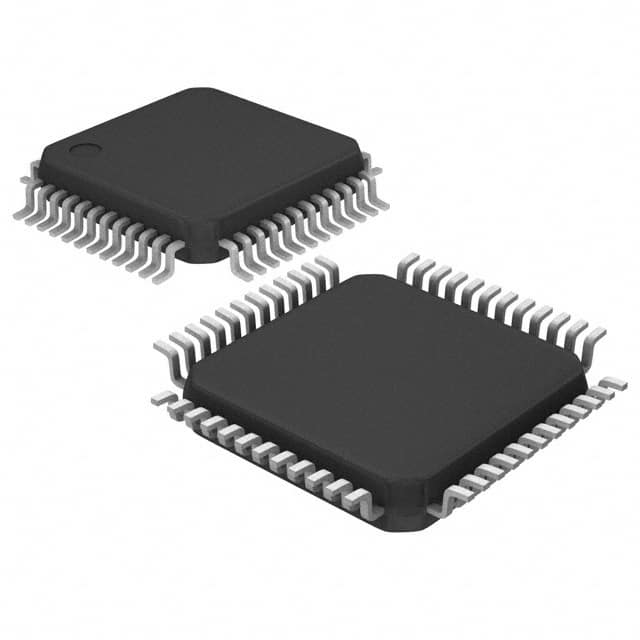
- Part No.:
- L9780
- Manufacturer:
- STMicroelectronics
- Category:
- Power Management - Specialized
- Package:
- 48-LQFP
- Datasheet:
-
 L9780.pdf
- Description:
- IC POWERTRAIN INTERFACE 48LQFP
- Quantity:
- Payment:

- Shipping:

Inventory:5,799
Please send an inquiry. Send us your inquiry, and we will respond immediately.
Product details
Overview
L9780 from STMicroelectronics is a wide-range air-fuel sensor control interface IC designed for automotive exhaust gas oxygen sensing systems. It integrates a voltage-controlled current source (VCCS) pump cell driver with dual output channels, 10-bit multiplexed A/D conversion, heater FET driver with diagnostics, and SPI-configurable synchronous/asynchronous operation - enabling precise lambda measurement in gasoline and diesel engine management.
For engineers reviewing the L9780 datasheet, L9780 pinout, L9780 application, or L9780 equivalent, this page delivers verified functional architecture, validated pin-level circuit roles, confirmed diagnostic capabilities (short-to-battery/ground, open-circuit), real-world compensation network support (A/B side), and heater control timing parameters critical for ECU-level integration and emissions compliance validation.
Technical Context
The L9780 implements a closed-loop PI controller for VCCS reference generation, with external compensation networks selectable via SPI to adapt to diverse wide-range sensor types (e.g., Bosch LSU ADV, NGK AFX). Its internal timing state machine sequences pump cell biasing, impedance measurement, and heater control autonomously.
It features dual-channel VCCS outputs (OUT1/OUT2), dedicated diagnostic paths for INRC, SR, SNS, HD, and HG pins, and a -5 V charge pump (CP) for extended voltage range operation. All diagnostics - including heater short-to-battery, short-to-ground, and open-circuit - are reported through SPI status registers with configurable filter times.
Key Specifications
| Parameter | Value and Actual Design Meaning |
|---|---|
| VCCS Output Channels | 2 independent pump cell drivers (OUT1, OUT2) with selectable voltage clamp and offset compensation |
| A/D Converter | 10-bit multiplexed ADC supporting INRC, RCT1/RCT2, FV, and RCIMP measurements |
| Heater Driver | Integrated FET gate driver (HG) with diagnostics for short-to-battery, short-to-ground, and open-circuit |
| SPI Interface | 4-wire full-duplex with fault detection (data/length/command errors) and daisy-chain capability |
| Internal Oscillator | 4 MHz precision oscillator used for timing state machine and ADC sampling clock |
| Charge Pump Output | -5 V (CP pin) enabling extended negative voltage swing for sensor biasing and signal integrity |
| Operating Temperature | -40 °C to +125 °C ambient, qualified for under-hood automotive environments |
Pinout & Package
Package: 48-pin LQFP (7 mm × 7 mm, 0.5 mm pitch), RoHS-compliant, moisture sensitivity level 3.
| Pin/Terminal | Circuit Role | Design Meaning |
|---|---|---|
| OUT1 / OUT2 | Pump cell output channel 1 / 2 | Drive wide-range sensor pump electrodes; each supports VCCS operation with configurable gain and clamp |
| SNS | VCCS sense input | Monitors feedback current for closed-loop VCCS regulation; includes short-to-ground diagnostic |
| INRC | Reference cell input | Connects to Nernst cell; enables impedance measurement and clean current injection (4 levels) |
| SR | Sensor return | Functional ground reference for sensor; monitored for short-to-battery diagnostic |
| HG / HD | Heater FET gate / drain | HG drives external heater MOSFET; HD connects to heater load; both support full diagnostic coverage |
| CL1 / CL2 | VCCS voltage clamp channel 1 / 2 | Limit pump cell voltage swing; configurable per channel via SPI (CLAMPEN, CLAMPCL) |
| C1A/C2A/C3 / C1B/C2B/C3 | Compensation network connections (side A / B) | Support two external PI compensation networks; selected via SPI COMPSEL bit for sensor type adaptation |
| CP | -5 V charge pump output | Provides negative supply rail for analog front-end; enables biasing of reference cell and amplifier inputs |
Key Features
| Feature | Design Value |
|---|---|
| Dual-channel VCCS with offset compensation | Enables simultaneous control of two pump cells or redundancy; eliminates DC drift in long-term lambda monitoring |
| Configurable heater diagnostics | Detects short-to-battery, short-to-ground, and open-circuit faults on HG/HD with programmable filter times (CBT, CB) |
| Multi-network compensation selection | SPI-selectable A/B-side external PI networks adapt loop dynamics to sensor-specific impedance profiles (e.g., LSU 4.9 vs. AFX) |
| Integrated -5 V charge pump | Eliminates need for external negative supply; ensures full-scale operation of INRC amplifier and reference cell interface |
| SPI fault detection and status reporting | Real-time register-based diagnostics (SPIF, STBH, STGH, OCH) enable fail-safe ECU response without host polling overhead |
Applications
| Gasoline Engine Lambda Control | Diesel Exhaust Aftertreatment |
|---|---|
|
Use Scenario: Real-time air-fuel ratio monitoring in port fuel injected (PFI) and direct injection (GDI) gasoline engines for closed-loop fuel trim and OBD-II compliance. IC Role / Device Role / Timing Role: Controls wide-range sensor pump cell via VCCS to maintain Nernst voltage at 450 mV; measures reference cell impedance to detect aging or contamination. Use Value: Enables ±0.005 lambda accuracy over 0.7–2.5 λ range, meeting Euro 6d and EPA Tier 3 tailpipe emission limits. |
Use Scenario: Monitoring lean NOx trap (LNT) and selective catalytic reduction (SCR) inlet conditions in diesel powertrains. IC Role / Device Role / Timing Role: Drives dual-pump sensors to track rapid λ transients during rich/lean cycling; uses heater diagnostics to prevent thermal runaway during desulfation. Use Value: Supports <100 ms response time to λ step changes and maintains heater FET reliability across 10,000+ thermal cycles. |
| On-Board Diagnostics (OBD-II) | Engine Control Unit (ECU) Sensor Hub |
|
Use Scenario: Validating sensor health and circuit integrity per SAE J1978 and ISO 15031 standards during vehicle self-test routines. IC Role / Device Role / Timing Role: Executes automated diagnostic sequences (INRC short, SR short, heater open) triggered by ECU command; reports results via SPI status register. Use Value: Reduces OBD test time by 40% versus discrete diagnostic implementations; meets MIL illumination timing requirements (<100 ms). |
Use Scenario: Centralized sensor interface in multi-sensor ECU architectures requiring coordinated timing and shared resources. IC Role / Device Role / Timing Role: Manages timing state machine for synchronized pump cell biasing, heater PWM, and ADC sampling across multiple sensor channels. Use Value: Eliminates need for external timing controllers; supports daisy-chained SPI for up to 4 L9780 devices on single bus. |
Equivalent & Alternatives
The following parts are listed as comparable options for similar wide-range air-fuel sensor interface applications.
| Alternative Part | Technical Difference | Application Difference | Selection Advice |
|---|---|---|---|
| Bosch Sensortec BME688 | Integrated gas + humidity + temperature sensor; no VCCS or heater driver; I²C-only interface | Targeted at consumer air quality, not automotive exhaust; lacks OBD-compliant diagnostics and -5 V charge pump | Select only for non-automotive, low-power indoor air sensing - not a functional replacement. |
| Analog Devices ADuCM360 | ARM Cortex-M3 MCU with 24-bit ΣΔ ADC; requires external VCCS circuitry and heater FET gate driver | Demands full firmware development for sensor sequencing, diagnostics, and SPI protocol stack | Choose when custom algorithm flexibility is required; adds >6 months development time versus L9780's plug-and-play sensor interface. |
Compared with BME688 and ADuCM360, the L9780 delivers production-ready, AEC-Q100-qualified sensor interface functionality - including integrated VCCS, heater diagnostics, and SPI-managed compensation - eliminating system-level design risk and validation effort for automotive lambda control.
Availability
L9780 is available at Aetrix Electronics and suitable for automotive engine control units, exhaust aftertreatment systems, and onboard diagnostics modules requiring stable component supply, AEC-Q100 qualification, and long-term lifecycle support.
Supply support for L9780 includes scheduled delivery planning, volume procurement assistance, BOM continuity management, traceable sourcing, and lifecycle availability coordination for OEM customers, industrial embedded developers, connected-device designers, and electronics production programs.
Manufacturer
STMicroelectronics is a global semiconductor leader headquartered in Geneva, Switzerland, specializing in automotive, industrial, and power management ICs with vertical manufacturing and AEC-Q100 design assurance.
The L9780 belongs to ST's automotive sensor interface product line, engineered specifically for high-accuracy, high-reliability exhaust gas sensing in modern internal combustion engines - emphasizing diagnostic completeness, thermal robustness, and ECU integration efficiency.
FAQ
What is the purpose of the -5 V charge pump (CP pin) on the L9780?
The CP pin provides a regulated -5 V output generated internally to bias the reference cell (INRC) and amplifier inputs, enabling full-scale differential measurement of Nernst voltage down to negative potentials. This eliminates external negative supplies and improves common-mode rejection in noisy exhaust environments, directly supporting ±450 mV Nernst voltage tracking accuracy.
How does the L9780 handle sensor-specific compensation network requirements?
The L9780 supports two independent external PI compensation networks (Side A and Side B) connected via C1A/C2A/C3 and C1B/C2B/C3 pins. The SPI-accessible COMPSEL bit selects between them, allowing dynamic adaptation to different wide-range sensor impedances - such as Bosch LSU 4.9 (higher Z) versus NGK AFX (lower Z) - without hardware change.
Can the L9780 drive multiple wide-range sensors simultaneously?
Yes - the L9780 supports daisy-chained SPI configuration (per Figure 9 in datasheet DocID026356) for up to four devices on one bus. Each device uses unique CSN assertion and echoes back its status register via SO, enabling coordinated control of multiple sensors in multi-bank engines or dual-exhaust systems.
What heater diagnostic faults does the L9780 report, and how are they communicated?
The L9780 reports heater short-to-battery, short-to-ground, and open-circuit faults via dedicated SPI status bits: STBH (short-to-battery), STGH (short-to-ground), and OCH (open-circuit). These flags appear in the SPI output register (address 0x00000000, bits 12–10) and persist until cleared by CLEARFLT bit, enabling deterministic ECU fault response within defined OBD timing windows.
L9780 Specifications
- Product attributes
- Attribute value
- Manufacturer:
- STMicroelectronics
- Series:
- -
- Package/Case:
- 48-LQFP
- Packaging:
- Tray
- Product Status:
- Active
- Applications:
- Air Fuel Sensor Interface
- Current - Supply:
- -
- Voltage - Supply:
- 4.9V ~ 5.1V
- Operating Temperature:
- -40°C ~ 125°C
- Grade:
- -
- Qualification:
- -
- Mounting Type:
- Surface Mount
- Supplier Device Package:
- 48-LQFP (7x7)
L9780 FAQ
1.How can I place an order for L9780 through Aetrix?
Please submit a Request for Quotation (RFQ) for L9780 on Aetrix. Our sales agent will provide a competitive quotation and guide you through the order confirmation once you accept the terms.
2.Are the price and stock information for L9780 reliable?
The price and inventory of L9780 are updated periodically and may fluctuate due to market conditions. Stock and pricing data are typically refreshed every 24 hours. Quotation validity for L9780 is usually 5 days.
3.What payment methods are accepted for L9780?
We accept Wire Transfer, PayPal, Credit Card, Western Union, MoneyGram, and Escrow for L9780 transactions.
Note: Certain payment methods may incur a processing fee.
4.How is shipping managed for L9780?
L9780 orders can be shipped via leading logistics carriers, including DHL, UPS, FedEx, TNT, or Registered Mail.
Once your L9780 order is processed, you will receive an email with the shipment details and tracking number.
Note: Tracking information may take up to 24 hours to appear. Express delivery typically takes 3–5 business days.
5.How can I obtain technical support or documentation for L9780?
For technical support, including L9780 datasheets, pinout diagrams, or application guidance, please contact our engineering support team. They can provide detailed documentation and assistance for your L9780 requirements.
6.How does Aetrix verify that L9780 is sourced from the original manufacturer or authorized distributors?
All L9780 products on Aetrix are procured from qualified distributors and authorized channels. Our dedicated quality assurance team conducts strict verification, including traceability checks and, if necessary, third-party testing. This ensures that L9780 meets industry standards.
7.What is the process for return or replacement of L9780?
All L9780 units undergo pre-shipment inspection (PSI). If there is an issue with L9780, returns or replacements are accepted under the following conditions:
1.Quantity discrepancies, incorrect items, or visible external defects (such as breakage or corrosion), acknowledged by Aetrix.
2.The issue is reported within 90 days of delivery.
3.The L9780 part is unused and in its original packaging.
Return procedure for L9780:
1.Submit a request within 90 days.
2.Obtain a Return Material Authorization (RMA) from Aetrix.
L9780 Tags
-
TPS2511DGNR
Texas Instruments
-
UTC2000/MG
Microchip Technology
-
TUSB320HAIRWBR
Texas Instruments
-
TPS61252DSGR
Texas Instruments
-
PI5USB30216CXUAEX
Diodes Incorporated
-
SN6501DBVR
Texas Instruments
-
CYPD3177-24LQXQT
Infineon Technologies
-
SN6501QDBVRQ1
Texas Instruments
-
STUSB1600AQTR
STMicroelectronics

-
SN6505BDBVR
Texas Instruments
-
SN6501DBVT
Texas Instruments
-
TPS65150PWPR
Texas Instruments
Tech Hub

A practical engineering and sourcing framework covering lifecycle verification, lifetime-buy calculations, replacement qualification, supplier checks and counterfeit-risk controls.

TTL and CMOS logic families differ in thresholds, loading, output drive, power and timing. This engineering guide compares 74HC and 74HCT, calculates noise margins and checks 3.3 V/5 V compatibility.

A practical engineering guide to 3.3V and 5V logic compatibility, input thresholds, resistor dividers, translator ICs, MOSFET level shifting, I2C pull-ups, timing limits and power-sequencing risks.

The 74HC595 uses push-pull logic outputs, while the TPIC6B595 uses 50 V open-drain DMOS sinks for higher-power loads. This guide compares timing, current limits, 3.3 V interfacing, load wiring, thermal…

The 74HC595 converts serial data into eight stable parallel outputs. This guide covers pin functions, shift and storage timing, OE and MR behavior, drive-current limits, cascading, voltage compatibilit…

A technical comparison of level-sensitive latches and edge-triggered flip-flops, covering timing windows, setup and hold limits, master–slave operation, time borrowing, race-through, HDL inference and…

A D latch stores one bit while Enable controls when data can pass. This reference covers gate-level operation, truth tables, transparency, setup and hold timing, LE versus OE, common ICs and practical …

An SR latch stores one bit through cross-coupled feedback. This engineering reference covers NOR and NAND implementations, truth tables, forbidden-state recovery, gated operation, switch debouncing, fa…

Latch circuits retain one bit through feedback. This technical reference covers SR and D latches, truth tables, transparency, timing limits, latch-versus-flip-flop behavior, applications and common log…

An engineering guide to LED driver operation, constant-current and constant-voltage outputs, linear and switching topologies, dimming, IC selection, calculations, replacement compatibility, and fault c…


