
 My Inquiry
 My Account


STMicroelectronics L9916
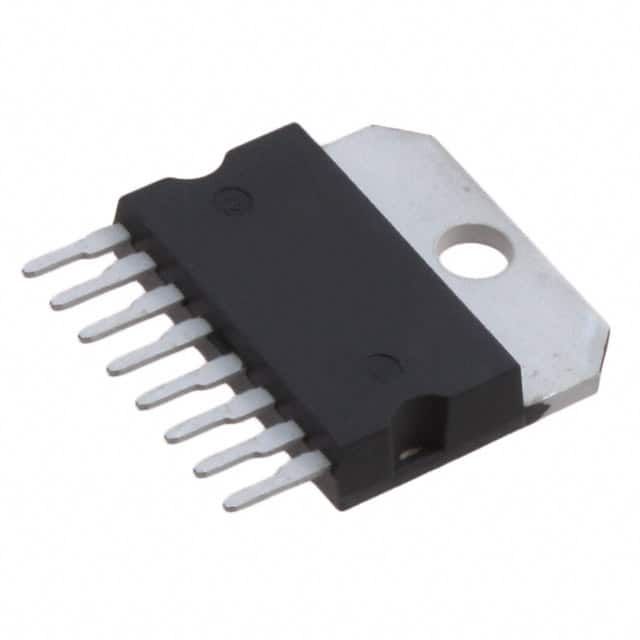
- Part No.:
- L9916
- Manufacturer:
- STMicroelectronics
- Category:
- Power Management - Specialized
- Package:
- Multiwatt-8 (Straight Leads)
- Datasheet:
-
 L9916.pdf
- Description:
- IC REG SMART AVR MULTIWATT8
- Quantity:
- Payment:

- Shipping:

Inventory:3,931
Please send an inquiry. Send us your inquiry, and we will respond immediately.
Product details
Overview
L9916 from STMicroelectronics is an AEC-Q100-qualified automotive multifunction alternator voltage regulator for 12 V and 24 V on-board networks, featuring a monolithic high-side field driver, thermally compensated regulated voltage (13.5–15.0 V / 27–30 V), OTP-programmable parameters, and integrated lamp driver with wake-up and warning detection. It enables precise battery voltage regulation in engine control units under varying load, speed, and temperature conditions.
For engineers reviewing the L9916 datasheet, L9916 pinout, L9916 application, or L9916 equivalent, key selection considerations include its dual-voltage support (12 V/24 V), load response control (LRC) for transient load handling, self-start function, thermal shutdown at 175 °C, and phase-sense input for multi-phase alternator compatibility.
Technical Context
The L9916 implements a closed-loop voltage regulation architecture using internal thermally compensated voltage reference and real-time feedback from B+ and SENSE pins. Its state machine supports six operational modes-Standby, Pre-excitation, Regulation, Phase Regulation, LRC, and Crank-triggered by PH (phase sense), IGN (ignition), VB (battery voltage), and alarm status.
It integrates a protected high-side MOSFET driver (FIELD pin) capable of sourcing up to 5 A, with freewheeling diode, slew-rate controlled FM (field monitor) PWM output for ECU communication, and configurable over/under-voltage protection thresholds (e.g., VBOvp = 16.9 V / 33 V, VBUV = 9 V / 18 V) with programmable filter times.
Key Specifications
| Parameter | Value and Actual Design Meaning |
|---|---|
| Supply Range | 6–36 V DC; supports ISO 7637-2 pulse 1/2/3 transients up to 58 V for robust automotive battery rail operation. |
| Regulation Setpoint | 13.5–15.0 V (12 V system) or 27–30 V (24 V system); factory-configurable via OTP cells with ±0.15–±0.25 V tolerance at 30 °C. |
| Thermal Drift | −3.5 mV/°C typical; enables stable voltage regulation across −40 °C to +150 °C junction temperature range. |
| Load Regulation Error | ≤300 mV (12 V) / ≤400 mV (24 V); measured as ΔVBload between 10% and 90% field duty cycle, critical for maintaining battery health during high-current alternator loads. |
| Phase Sense Input (PH) | Accepts 0–36 V AC/DC signals; used to detect alternator RPM and enable phase regulation mode when VPH falls below VPprTh or VPLTh thresholds. |
| Field Driver Output | High-side N-channel MOSFET driver (FIELD pin); delivers up to 5 A continuous current to alternator excitation coil with internal freewheeling diode. |
| Alarm & Lamp Control | LAMP pin drives warning lamp directly; activates on undervoltage (VBUV), overvoltage (VBOvp), or phase fault; supports key wake-up sensing. |
Pinout & Package
The L9916 is housed in a Multiwatt8 package (pin 5 = GND), with exposed die pad for thermal dissipation (Rth_j-case = 1.5 °C/W). The package is RoHS-compliant and qualified for under-hood automotive environments.
| Pin/Terminal | Circuit Role | Design Meaning |
|---|---|---|
| 1 PH | Phase sense input | Detects alternator rotor position/speed; triggers phase regulation mode when signal amplitude drops below threshold. |
| 2 FM | Field monitor output | PWM signal reporting real-time field duty cycle to ECU; slew-rate limited for EMC compliance. |
| 3 IGN | Ignition input | Enables wake-up from standby; initiates pre-excitation sequence upon key-on event. |
| 4 LAMP | Lamp driver output | Drives dashboard warning lamp directly; active-low output with built-in current limiting and fault indication logic. |
| 5 GND | Regulator ground | Main power return path; pin 5 is dedicated ground terminal per Multiwatt8 mechanical specification. |
| 6 SENSE | Remote battery sense | Compensates for wiring voltage drop; enables accurate regulation at battery terminals rather than at regulator input. |
| 7 FIELD | High-side field driver | Switches external or integrated N-MOSFET to control alternator excitation current; includes short-circuit protection. |
| 8 B+ | Power supply & voltage sense | Primary supply input (6–36 V); also serves as main feedback node for regulation loop and over/under-voltage monitoring. |
Key Features
| Feature | Design Value |
|---|---|
| OTP parameter programming | Enables factory configuration of setpoint voltage, thermal drift coefficient, LRC behavior, and protection thresholds without external components. |
| Load Response Control (LRC) | Automatically increases field duty cycle in two stages (fast step + slow ramp) during sudden load steps to prevent battery voltage sag. |
| Self-start function | Permits regulator activation without external wake-up signal; uses internal oscillator to initiate pre-excitation when IGN is open. |
| Thermally compensated regulation | Uses on-die temperature sensor and programmable drift coefficients (e.g., −3.5 mV/°C) to maintain stable setpoint across operating temperature. |
| Integrated lamp driver | Eliminates need for external transistor/driver; supports both wake-up sensing (via LAMP pin) and fault indication (low-side sink). |
Applications
| Engine Start/Stop Systems | 12 V Mild Hybrid Powertrain |
|---|---|
|
Use Scenario: Regulating battery voltage during frequent engine cranking and restart cycles in micro-hybrid vehicles. IC Role / Device Role / Timing Role: Alternator voltage regulator with crank security function that freezes field drive during low-VB pulses (ISO 7637-1 pulse 4) and resumes regulation once VB exceeds 6.35 V. Use Value: Prevents erratic alternator behavior and ECU resets during start events by enforcing deterministic frozen-state recovery and controlled re-entry into pre-excitation. |
Use Scenario: Maintaining stable 12 V bus voltage while supporting regenerative braking energy injection and high-power accessory loads. IC Role / Device Role / Timing Role: Smart regulator executing Load Response Control (LRC) to rapidly increase field current when brake energy recovery causes sudden battery current reversal. Use Value: Limits voltage dip to ≤300 mV during 10–90% field duty cycle transitions, preserving stability of ADAS sensors and infotainment systems. |
| Commercial Vehicle 24 V Charging | Multi-Phase Alternator Systems |
|
Use Scenario: Managing charging in heavy-duty trucks with 24 V electrical architecture and high alternator output (≥200 A). IC Role / Device Role / Timing Role: Dual-range regulator configured for 27–30 V setpoint with −3.5 mV/°C thermal compensation and 33 V overvoltage clamp. Use Value: Ensures battery longevity by preventing overcharge at elevated temperatures and sustaining regulation during wide-load transients (ΔVBload ≤ 400 mV). |
Use Scenario: Controlling three-phase alternators where phase imbalance or loss must be detected to avoid field overheating. IC Role / Device Role / Timing Role: Phase regulation controller using PH pin to monitor phase waveform amplitude and adjust field drive to maintain minimum VPH threshold. Use Value: Avoids unregulated alternator operation during partial phase failure by entering dedicated Phase Regulation mode before alarm activation. |
Equivalent & Alternatives
The following parts are listed as comparable options for similar alternator voltage regulator applications.
| Alternative Part | Technical Difference | Application Difference | Selection Advice |
|---|---|---|---|
| Infineon TLE8888 | Integrated LIN transceiver and watchdog; requires external field MOSFET; no OTP programming - parameters fixed in silicon. | Designed for LIN-based ECU communication and safety-critical diagnostics; lacks LRC and self-start functions. | Select when LIN interface and ASIL-B compliance are mandatory; not suitable for cost-sensitive or OTP-flexible designs. |
| NXP MC33816 | Includes CAN interface and advanced diagnostics; supports dual-field drivers; higher quiescent current (250 μA vs. 170 μA). | Targeted at premium vehicles requiring CAN-based regulator monitoring and dual-alternator coordination. | Choose for CAN-connected architectures needing ECU-level fault logging; avoid if only basic voltage regulation and lamp control are required. |
Compared with TLE8888 and MC33816, the L9916 offers superior integration density (monolithic high-side driver + lamp + OTP), lower standby current, and application-specific features like LRC and phase regulation - making it optimal for mainstream 12/24 V automotive platforms where cost, thermal efficiency, and functional safety level (AEC-Q100 Grade 0) are balanced priorities.
Availability
L9916 is available at Aetrix Electronics and suitable for engine control units, commercial vehicle charging systems, start-stop modules, and 24 V off-highway equipment requiring stable component supply with full automotive qualification.
Supply support for L9916 includes scheduled delivery planning, volume procurement assistance, BOM continuity management, traceable sourcing, and lifecycle availability coordination for OEM customers, industrial embedded developers, connected-device designers, and electronics production programs.
Manufacturer
STMicroelectronics is a global semiconductor leader headquartered in Geneva, Switzerland, specializing in automotive-grade analog, power, and microcontroller solutions with broad AEC-Q100 product coverage.
The L9916 belongs to ST's automotive power management portfolio, designed specifically for intelligent alternator control in ICE and mild hybrid vehicles - emphasizing thermal robustness, functional safety, and system-level integration to reduce external component count.
FAQ
What is the purpose of the SENSE pin on the L9916?
The SENSE pin provides remote battery voltage sensing to compensate for IR drop across wiring between the alternator regulator and battery terminals. When connected to the battery positive, it enables precise regulation at the battery itself - critical for maintaining correct charge voltage in vehicles with long harness runs or high-current accessories. It operates within −0.3 V to 36 V and supports differential sensing relative to GND.
How does the Load Response Control (LRC) function operate?
LRC activates automatically when the field duty cycle deviates beyond a defined threshold during load transients. It first applies a fast step increase (DFLRCBZ) to counteract immediate voltage sag, then ramps duty cycle slowly (DFLRCUP) until regulation is restored. This two-stage response prevents overshoot while minimizing battery voltage deviation - verified to limit ΔVBload to ≤300 mV in 12 V systems.
Can the L9916 operate without an ignition signal?
Yes - the L9916 includes a self-start function that enables autonomous initialization without IGN input. When IGN is left open, the device uses an internal oscillator to enter pre-excitation mode and begin field drive after power-up. This feature supports applications such as auxiliary power units or battery monitors where ignition signaling is unavailable or unreliable.
What protections are implemented on the FIELD pin?
The FIELD pin integrates high-side driver protection including thermal shutdown (175 °C), current limiting, and short-circuit detection. If field current exceeds safe limits or junction temperature reaches Tj-sd, the driver disables immediately and remains off until thermal hysteresis (Tj-sdhy ≈ 2 °C) allows safe restart. Field short-circuit protection is implemented via dedicated sensing circuitry independent of regulation loop.
L9916 Specifications
- Product attributes
- Attribute value
- Manufacturer:
- STMicroelectronics
- Series:
- -
- Package/Case:
- Multiwatt-8 (Straight Leads)
- Packaging:
- Tube
- Product Status:
- Active
- Applications:
- -
- Current - Supply:
- -
- Voltage - Supply:
- 6V ~ 36V
- Operating Temperature:
- -40°C ~ 175°C
- Grade:
- Automotive
- Qualification:
- AEC-Q100
- Mounting Type:
- Through Hole
- Supplier Device Package:
- 8-Multiwatt
L9916 FAQ
1.How can I place an order for L9916 through Aetrix?
Please submit a Request for Quotation (RFQ) for L9916 on Aetrix. Our sales agent will provide a competitive quotation and guide you through the order confirmation once you accept the terms.
2.Are the price and stock information for L9916 reliable?
The price and inventory of L9916 are updated periodically and may fluctuate due to market conditions. Stock and pricing data are typically refreshed every 24 hours. Quotation validity for L9916 is usually 5 days.
3.What payment methods are accepted for L9916?
We accept Wire Transfer, PayPal, Credit Card, Western Union, MoneyGram, and Escrow for L9916 transactions.
Note: Certain payment methods may incur a processing fee.
4.How is shipping managed for L9916?
L9916 orders can be shipped via leading logistics carriers, including DHL, UPS, FedEx, TNT, or Registered Mail.
Once your L9916 order is processed, you will receive an email with the shipment details and tracking number.
Note: Tracking information may take up to 24 hours to appear. Express delivery typically takes 3–5 business days.
5.How can I obtain technical support or documentation for L9916?
For technical support, including L9916 datasheets, pinout diagrams, or application guidance, please contact our engineering support team. They can provide detailed documentation and assistance for your L9916 requirements.
6.How does Aetrix verify that L9916 is sourced from the original manufacturer or authorized distributors?
All L9916 products on Aetrix are procured from qualified distributors and authorized channels. Our dedicated quality assurance team conducts strict verification, including traceability checks and, if necessary, third-party testing. This ensures that L9916 meets industry standards.
7.What is the process for return or replacement of L9916?
All L9916 units undergo pre-shipment inspection (PSI). If there is an issue with L9916, returns or replacements are accepted under the following conditions:
1.Quantity discrepancies, incorrect items, or visible external defects (such as breakage or corrosion), acknowledged by Aetrix.
2.The issue is reported within 90 days of delivery.
3.The L9916 part is unused and in its original packaging.
Return procedure for L9916:
1.Submit a request within 90 days.
2.Obtain a Return Material Authorization (RMA) from Aetrix.
L9916 Tags
-
TPS2511DGNR
Texas Instruments
-
UTC2000/MG
Microchip Technology
-
TUSB320HAIRWBR
Texas Instruments
-
TPS61252DSGR
Texas Instruments
-
PI5USB30216CXUAEX
Diodes Incorporated
-
SN6501DBVR
Texas Instruments
-
CYPD3177-24LQXQT
Infineon Technologies
-
SN6501QDBVRQ1
Texas Instruments
-
STUSB1600AQTR
STMicroelectronics

-
SN6505BDBVR
Texas Instruments
-
SN6501DBVT
Texas Instruments
-
TPS65150PWPR
Texas Instruments
Tech Hub

A practical engineering guide to 3.3V and 5V logic compatibility, input thresholds, resistor dividers, translator ICs, MOSFET level shifting, I2C pull-ups, timing limits and power-sequencing risks.

The 74HC595 uses push-pull logic outputs, while the TPIC6B595 uses 50 V open-drain DMOS sinks for higher-power loads. This guide compares timing, current limits, 3.3 V interfacing, load wiring, thermal…

The 74HC595 converts serial data into eight stable parallel outputs. This guide covers pin functions, shift and storage timing, OE and MR behavior, drive-current limits, cascading, voltage compatibilit…

A technical comparison of level-sensitive latches and edge-triggered flip-flops, covering timing windows, setup and hold limits, master–slave operation, time borrowing, race-through, HDL inference and…

A D latch stores one bit while Enable controls when data can pass. This reference covers gate-level operation, truth tables, transparency, setup and hold timing, LE versus OE, common ICs and practical …

An SR latch stores one bit through cross-coupled feedback. This engineering reference covers NOR and NAND implementations, truth tables, forbidden-state recovery, gated operation, switch debouncing, fa…

Latch circuits retain one bit through feedback. This technical reference covers SR and D latches, truth tables, transparency, timing limits, latch-versus-flip-flop behavior, applications and common log…

An engineering guide to LED driver operation, constant-current and constant-voltage outputs, linear and switching topologies, dimming, IC selection, calculations, replacement compatibility, and fault c…

Operational amplifier guide covering op amp basics, feedback, ideal vs real op amps, common configurations, buffer circuits, offset, bias current, gain-bandwidth, slew rate, rail-to-rail limits and sel…

Jumper cables guide covering safe connection order, red and black clamp placement, final ground connection, cable gauge, length, clamp quality, copper vs CCA cables, jump starter comparison and battery…


