
 My Inquiry
 My Account


STMicroelectronics L9950
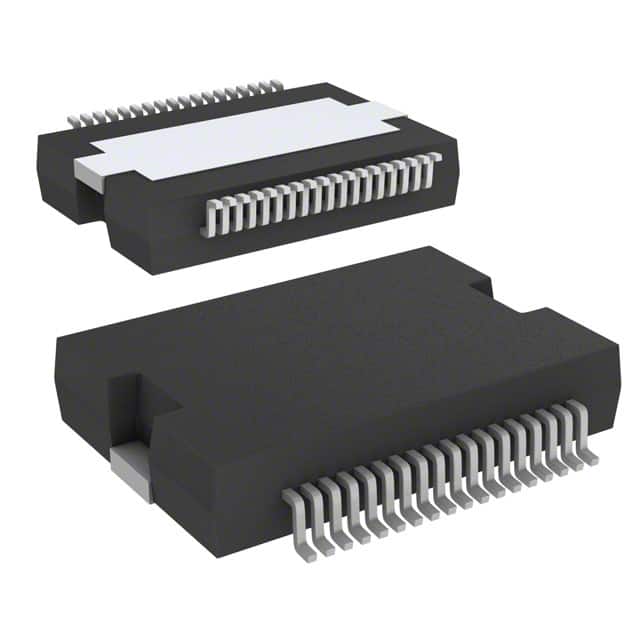
- Part No.:
- L9950
- Manufacturer:
- STMicroelectronics
- Category:
- Power Management - Specialized
- Package:
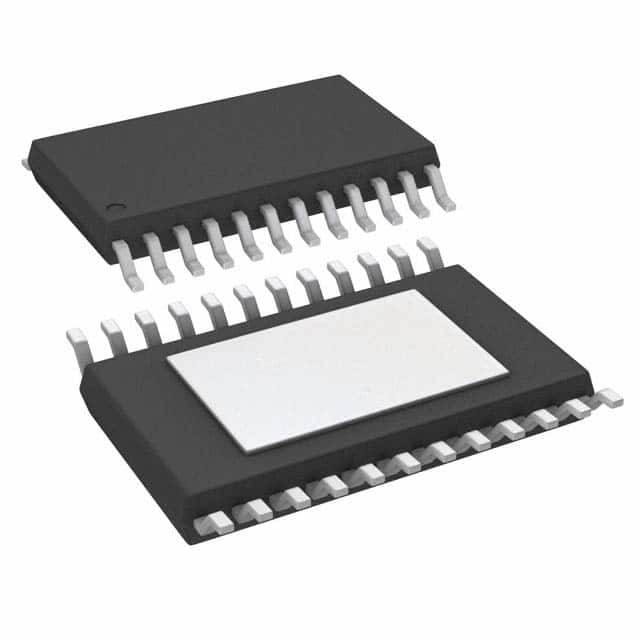
- 36-PowerBSSOP (0.433", 11.00mm Width)
- Datasheet:
-
 L9950.pdf
- Description:
- IC DRIVER DOOR ACTUATOR PWRSO-36
- Quantity:
- Payment:

- Shipping:

Inventory:1,533
Please send an inquiry. Send us your inquiry, and we will respond immediately.
Product details
Overview
L9950 from STMicroelectronics is an automotive-grade multifunctional door actuator driver IC integrating six half-bridge outputs and five high-side drivers for precise control of up to five DC motors and five grounded resistive loads. It features one 6A full-bridge (RON = 150 mΩ), two 3A half-bridges (RON = 300 mΩ), two 1.5A half-bridges (RON = 800 mΩ), one 6A high-side driver (RON = 100 mΩ), and four 1.5A high-side drivers (RON = 800 mΩ), all with open-load, overload, and overtemperature protection - deployed in power seat, mirror fold, and door lock systems.
For engineers reviewing the L9950 datasheet, L9950 pinout, L9950 application, or L9950 equivalent, this device supports SPI-controlled bidirectional motor drive, programmable soft-start for inrush current management, current monitoring on 100/150/300 mΩ outputs, reverse polarity protection via charge pump, and diagnostic feedback across all 11 outputs - critical for ASIL-B–aligned body electronics design.
Technical Context
The L9950 implements a microcontroller-driven architecture with a standard 24-bit SPI interface enabling real-time configuration of forward/reverse/brake/high-impedance states and retrieval of comprehensive diagnostics including open-load, overload, thermal warning, and fault status. All 11 outputs are independently protected and monitored.
It operates from a dual supply: VS (7–28 V) powers the power stage and VCC (4.5–5.3 V) supplies logic; standby current is <6 µA (typ), and it integrates a charge pump (VCP = 6–13 V) to drive external reverse-polarity N-MOSFETs. The device supports PWM control on all outputs and offers configurable soft-start timing for inductive load ramp-up.
Key Specifications
| Parameter | Value and Actual Design Meaning |
|---|---|
| Output Configuration | 1×6A full-bridge + 4×half-bridges (2×3A + 2×1.5A) + 1×6A high-side + 4×1.5A high-side = 11 total controlled outputs |
| RON (max @ 125°C) | 150 mΩ (full-bridge), 300 mΩ (3A half-bridge), 800 mΩ (1.5A half-/high-side) - defines conduction loss and thermal derating margin |
| Diagnostic Coverage | Open-load, overload, overtemperature, and short-circuit detection on all 11 outputs - enables ISO 26262-compliant functional safety monitoring |
| Current Monitor Accuracy | ±4% + 1% FS for 100/150/300 mΩ outputs - provides calibrated analog feedback for closed-loop current regulation |
| Standby Supply Current | IS < 6 µA (typ), ICC < 25 µA (typ) at Tj ≤ 85°C - ensures ultra-low quiescent power in vehicle sleep modes |
| SPI Interface | 24-bit serial peripheral interface with CSN/CLK/DI/DO - delivers deterministic command execution and real-time fault reporting without CPU polling overhead |
| Thermal Protection | Temperature warning at 150°C (hysteresis 5 K), shutdown at 170°C (hysteresis 5 K) - prevents latch-up during sustained overload or poor heatsinking |
Pinout & Package
Available in PowerSO-36 (L9950) and PowerSSO-36 (L9950XP) packages - thermally enhanced exposed-pad surface-mount packages with integrated heat sink capability and dual GND/VS pin arrays for low-inductance, high-current routing.
| Pin/Terminal | Circuit Role | Design Meaning |
|---|---|---|
| OUT1–OUT3 | Full/half-bridge motor outputs | Internally connected HS+LS DMOS stages; support bidirectional 1.5–3A drive with bulk-drain freewheeling diodes |
| OUT4–OUT6 | Half-bridge motor outputs | 3A-rated outputs with RON = 150 mΩ; used for door lock and safe lock actuators |
| OUT7–OUT10 | High-side resistive load drivers | 1.5A high-side switches (RON = 800 mΩ); drive mirror defroster and 10W bulbs without ground return path |
| OUT11 | High-side driver | 6A high-side output (RON = 100 mΩ); intended for high-power mirror fold or footstep lighting |
| VS (Pins 6,7,14,15,23,24,25,28,29,32,33) | Main power rail input | 7–28 V supply with 10× parallel pins for <10 mΩ PCB trace resistance and minimized voltage drop under 10A peak |
| GND (Pins 1,18,19,36) | Reference ground | Four dedicated GND pins ensure stable reference for current sensing and minimize ground bounce in multi-output switching |
| CSN, CLK, DI, DO | SPI interface | CMOS-level 4-wire SPI supporting daisy-chaining; DO is tristate when CSN high - enables multi-device bus sharing |
| CM/PWM2 | Bidirectional monitor/control | Current monitor output (1:10,000 scaling) or secondary PWM input for OUT9/OUT10 - reduces MCU GPIO count |
| PWM1 | Global PWM input | Analog PWM signal controlling OUT1–OUT8 and OUT11 - allows hardware-based speed regulation independent of SPI latency |
| CP | Charge pump output | 6–13 V gate drive for external N-MOSFET reverse polarity protection - eliminates need for costly discrete protection ICs |
Key Features
| Feature | Design Value |
|---|---|
| Programmable soft-start | Configurable ramp time for inductive loads exceeding 6 A, 3 A, or 1.5 A - prevents fuse blowing and voltage sag during motor startup |
| Integrated current monitor | Analog current-sense output (1:10,000) on 100/150/300 mΩ drivers - enables real-time torque estimation and stall detection without external shunts |
| Dual-supply architecture | Independent VS (7–28 V) and VCC (4.5–5.3 V) rails - isolates noisy power-stage transients from logic, improving SPI reliability and noise immunity |
| Reverse polarity protection support | On-chip charge pump (CP pin) drives external N-MOSFET gate - achieves >99% efficiency vs. Schottky diode solutions and eliminates 0.4V forward drop |
| Comprehensive diagnostics | Per-output open-load, overload, and overtemperature flags reported via SPI status register - reduces software validation effort for ASIL-B compliance |
Applications
| Door Lock Actuation | Mirror Fold Control |
|---|---|
|
Use Scenario: Electromechanical locking/unlocking of vehicle doors using 12 V DC solenoids or small brushed motors. IC Role / Device Role / Timing Role: L9950 drives OUT4–OUT5 (3A half-bridges) in H-bridge mode to reverse polarity and control lock/unlock direction with brake and high-Z states. Use Value: Integrated cross-current protection and soft-start prevent contact welding and inrush-induced EMI during repeated actuation cycles. |
Use Scenario: Motorized folding/unfolding of side mirrors in response to vehicle speed or user command. IC Role / Device Role / Timing Role: OUT11 (6A high-side) powers the fold motor while OUT1–OUT3 (1.5–3A half-bridges) control axis positioning and end-stop detection. Use Value: Open-load diagnostics confirm mechanical engagement; current monitor output validates motor stall before timeout-induced error escalation. |
| Mirror Defroster Drive | Exterior Lighting Control |
|
Use Scenario: Resistive heating element activation on rearview or side mirrors to clear condensation/frost. IC Role / Device Role / Timing Role: OUT7–OUT10 (1.5A high-side drivers) switch grounded 12 V heater traces without requiring return-path wiring to the IC. Use Value: High-side topology simplifies harness routing; overtemperature protection shuts down heater if airflow is blocked or ambient exceeds 85°C. |
Use Scenario: Switching of 10 W incandescent or LED-based footstep lights, turn indicators, and safety lighting. IC Role / Device Role / Timing Role: Four 1.5A high-side drivers (OUT7–OUT10) and OUT11 (6A) manage multiple lighting zones with independent PWM dimming via CM/PWM2 or SPI. Use Value: Soft-start eliminates filament shock in incandescent lamps; short-circuit protection prevents harness damage during bulb replacement faults. |
Equivalent & Alternatives
The following parts are listed as comparable options for similar door actuator driver applications.
| Alternative Part | Technical Difference | Application Difference | Selection Advice |
|---|---|---|---|
| TLE9201SE | Single 5.5A half-bridge per package; requires 3x devices for L9950's 11-output functionality; no integrated charge pump or current monitor | Targeted at discrete actuator modules rather than centralized door ECUs; lacks SPI diagnostics aggregation | Select when modularity, board space, or thermal partitioning outweigh integration benefits |
| VNQ7E100AJ | Quad 10A high-side driver only; no half-bridges or full-bridge; no SPI interface - uses parallel enable/control lines | Suitable for simple on/off resistive loads (e.g., defrosters), but cannot drive bidirectional motors or provide diagnostic feedback | Choose only for cost-sensitive, non-motorized lighting/heating subsystems without functional safety requirements |
Compared with TLE9201SE and VNQ7E100AJ, the L9950 delivers higher integration density, unified SPI diagnostics, and motor-specific features (soft-start, bidirectional control, current monitoring), reducing BOM count and software complexity in centralized automotive body controllers.
Availability
L9950 is available at Aetrix Electronics and suitable for automotive door module design, mirror control systems, and exterior lighting actuation requiring stable component supply, long-term lifecycle assurance, and AEC-Q100 Grade 1 qualification.
Supply support for L9950 includes scheduled delivery planning, volume procurement assistance, BOM continuity management, traceable sourcing, and lifecycle availability coordination for OEM customers, industrial embedded developers, connected-device designers, and electronics production programs.
Manufacturer
STMicroelectronics is a global semiconductor leader specializing in automotive, industrial, and power management ICs, with broad portfolio coverage and ISO/TS 16949-certified manufacturing.
The L9950 belongs to ST's automotive system basis chip (SBC) and smart power driver family, engineered specifically for centralized body electronics ECUs needing high-channel-count, fault-tolerant motor and load control in harsh automotive environments.
FAQ
What is the maximum continuous current rating for OUT11?
OUT11 is rated for 6 A continuous output current with RON = 100 mΩ (typ) at Tj = 25°C. Absolute maximum pulsed current is ±10 A per Table 3, but sustained operation above 6 A requires active thermal management due to junction temperature limits (Tj ≤ 150°C warning, 170°C shutdown).
Does the L9950 support daisy-chained SPI communication?
Yes - the L9950 supports daisy-chained SPI via its tristate DO pin. When CSN is deasserted (high), DO enters high-impedance state, allowing multiple L9950 devices to share a single DO line. Each device must be individually addressed using its own CSN line; data is shifted through the chain using 24-bit frames.
How does the programmable soft-start function operate?
The soft-start is configured via SPI register bits to set ramp duration for specific output groups (6A, 3A, or 1.5A). It linearly increases output duty cycle over time to limit inrush current during motor startup - preventing voltage droop, fuse tripping, and mechanical shock. Timing is internally generated and independent of PWM1 input.
Can the CM/PWM2 pin be used simultaneously for current monitoring and PWM input?
No - CM/PWM2 is a bidirectional pin with multiplexed function: it operates either as current monitor output (for OUT1, OUT4–OUT6, OUT11) or as PWM2 input (for OUT9/OUT10), selected via SPI configuration bits. Concurrent use is not supported; the function must be statically assigned during initialization.
L9950 Specifications
- Product attributes
- Attribute value
- Manufacturer:
- STMicroelectronics
- Series:
- -
- Package/Case:
- 36-PowerBSSOP (0.433", 11.00mm Width)
- Packaging:
- Tube
- Product Status:
- Active
- Applications:
- -
- Current - Supply:
- 7mA
- Voltage - Supply:
- 7V ~ 28V
- Operating Temperature:
- -40°C ~ 150°C
- Grade:
- Automotive
- Qualification:
- -
- Mounting Type:
- Surface Mount
- Supplier Device Package:
- PowerSO-36, Bottom Pad
L9950 FAQ
1.How can I place an order for L9950 through Aetrix?
Please submit a Request for Quotation (RFQ) for L9950 on Aetrix. Our sales agent will provide a competitive quotation and guide you through the order confirmation once you accept the terms.
2.Are the price and stock information for L9950 reliable?
The price and inventory of L9950 are updated periodically and may fluctuate due to market conditions. Stock and pricing data are typically refreshed every 24 hours. Quotation validity for L9950 is usually 5 days.
3.What payment methods are accepted for L9950?
We accept Wire Transfer, PayPal, Credit Card, Western Union, MoneyGram, and Escrow for L9950 transactions.
Note: Certain payment methods may incur a processing fee.
4.How is shipping managed for L9950?
L9950 orders can be shipped via leading logistics carriers, including DHL, UPS, FedEx, TNT, or Registered Mail.
Once your L9950 order is processed, you will receive an email with the shipment details and tracking number.
Note: Tracking information may take up to 24 hours to appear. Express delivery typically takes 3–5 business days.
5.How can I obtain technical support or documentation for L9950?
For technical support, including L9950 datasheets, pinout diagrams, or application guidance, please contact our engineering support team. They can provide detailed documentation and assistance for your L9950 requirements.
6.How does Aetrix verify that L9950 is sourced from the original manufacturer or authorized distributors?
All L9950 products on Aetrix are procured from qualified distributors and authorized channels. Our dedicated quality assurance team conducts strict verification, including traceability checks and, if necessary, third-party testing. This ensures that L9950 meets industry standards.
7.What is the process for return or replacement of L9950?
All L9950 units undergo pre-shipment inspection (PSI). If there is an issue with L9950, returns or replacements are accepted under the following conditions:
1.Quantity discrepancies, incorrect items, or visible external defects (such as breakage or corrosion), acknowledged by Aetrix.
2.The issue is reported within 90 days of delivery.
3.The L9950 part is unused and in its original packaging.
Return procedure for L9950:
1.Submit a request within 90 days.
2.Obtain a Return Material Authorization (RMA) from Aetrix.
L9950 Tags
-
TPS2511DGNR
Texas Instruments
-
UTC2000/MG
Microchip Technology
-
TUSB320HAIRWBR
Texas Instruments
-
TPS61252DSGR
Texas Instruments
-
PI5USB30216CXUAEX
Diodes Incorporated

-
SN6501DBVR
Texas Instruments
-
CYPD3177-24LQXQT
Infineon Technologies
-
SN6501QDBVRQ1
Texas Instruments
-
STUSB1600AQTR
STMicroelectronics

-
SN6505BDBVR
Texas Instruments
-
SN6501DBVT
Texas Instruments
-
TPS65150PWPR
Texas Instruments
Tech Hub

A practical engineering and sourcing framework covering lifecycle verification, lifetime-buy calculations, replacement qualification, supplier checks and counterfeit-risk controls.

TTL and CMOS logic families differ in thresholds, loading, output drive, power and timing. This engineering guide compares 74HC and 74HCT, calculates noise margins and checks 3.3 V/5 V compatibility.

A practical engineering guide to 3.3V and 5V logic compatibility, input thresholds, resistor dividers, translator ICs, MOSFET level shifting, I2C pull-ups, timing limits and power-sequencing risks.

The 74HC595 uses push-pull logic outputs, while the TPIC6B595 uses 50 V open-drain DMOS sinks for higher-power loads. This guide compares timing, current limits, 3.3 V interfacing, load wiring, thermal…

The 74HC595 converts serial data into eight stable parallel outputs. This guide covers pin functions, shift and storage timing, OE and MR behavior, drive-current limits, cascading, voltage compatibilit…

A technical comparison of level-sensitive latches and edge-triggered flip-flops, covering timing windows, setup and hold limits, master–slave operation, time borrowing, race-through, HDL inference and…

A D latch stores one bit while Enable controls when data can pass. This reference covers gate-level operation, truth tables, transparency, setup and hold timing, LE versus OE, common ICs and practical …

An SR latch stores one bit through cross-coupled feedback. This engineering reference covers NOR and NAND implementations, truth tables, forbidden-state recovery, gated operation, switch debouncing, fa…

Latch circuits retain one bit through feedback. This technical reference covers SR and D latches, truth tables, transparency, timing limits, latch-versus-flip-flop behavior, applications and common log…

An engineering guide to LED driver operation, constant-current and constant-voltage outputs, linear and switching topologies, dimming, IC selection, calculations, replacement compatibility, and fault c…


