
 My Inquiry
 My Account


Texas Instruments LM25066APSQE/NOPB
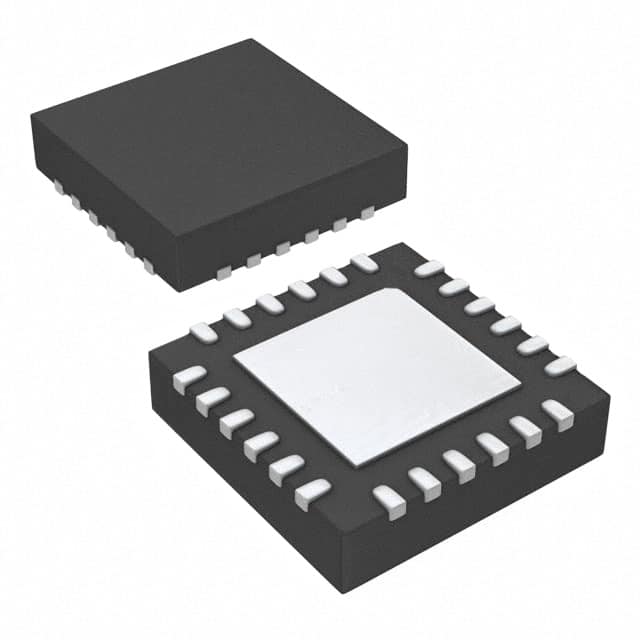
- Part No.:
- LM25066APSQE/NOPB
- Manufacturer:
- Texas Instruments
- Category:
- Power Management - Specialized
- Package:
- 24-WFQFN Exposed Pad
- Datasheet:
-
 LM25066APSQE/NOPB.pdf
- Description:
- IC CTLR PM HOTSWAP 24WQFN
- Quantity:
- Payment:

- Shipping:

Inventory:432
Please send an inquiry. Send us your inquiry, and we will respond immediately.
Product details
Overview
LM25066APSQE/NOPB from Texas Instruments is a PMBus™-compliant system power management and protection IC designed for hot-swap control and real-time telemetry in 2.9 V–17 V input systems. It integrates current/power limiting, undervoltage/overvoltage lockout with hysteresis, remote temperature sensing, and black-box fault capture. It serves as the primary power supervisory controller on server backplane and base station power distribution boards.
For engineers reviewing the LM25066APSQE/NOPB datasheet, LM25066APSQE/NOPB pinout, LM25066APSQE/NOPB application, or LM25066APSQE/NOPB equivalent, key selection criteria include its 24-pin WQFN package, ±1% current measurement accuracy over temperature, 12-bit telemetry resolution, programmable 25-mV/46-mV current limit thresholds, and SMBus timing compliance up to 400 kHz.
Technical Context
The LM25066APSQE/NOPB implements a dual-stage protection architecture: fast current limiting (1.2 µs response) followed by configurable circuit breaker tripping (0.6–1.2 µs), both referenced to the SENSE–VIN differential voltage. Its analog front-end simultaneously samples VIN and IIN to compute true input power with ±2% accuracy across –40°C to +85°C.
Control logic is managed via PMBus commands with register-mapped configuration of UVLO/OVLO thresholds (1.16 V nominal, 23 µA hysteresis current), PGD assertion delay (115 ns), and TIMER-based insertion delay/fault timeout. The device supports three SMBus address bits (ADR0–ADR2), SMBA alert signaling, and black-box telemetry capture triggered by WARN or FAULT events.
Key Specifications
| Parameter | Value and Actual Design Meaning |
|---|---|
| Input Voltage Range | 2.9 V to 17 V - supports wide-range DC power buses including 3.3 V, 5 V, 12 V, and 15 V systems without external level-shifting. |
| Current Limit Threshold | Programmable 25 mV or 46 mV - sets precise overcurrent trip point via CL pin connection to GND or VDD, enabling scalable protection for different MOSFET RDS(on) values. |
| Current Measurement Accuracy | ±1% over temperature - ensures reliable load monitoring and fault discrimination in thermal-cycling environments like telecom base stations. |
| Power Measurement Accuracy | ±2% over temperature - enables accurate input power budgeting and thermal derating using simultaneous VIN/IIN sampling. |
| SMBus Frequency | 10 kHz to 400 kHz - compatible with standard PMBus host controllers and supports high-speed telemetry polling at up to 1 kHz sample rate. |
| Package | 24-pin WQFN (5.0 mm × 4.0 mm) - thermally enhanced surface-mount package with exposed pad for PCB heat sinking in high-power density applications. |
| Operating Temperature | –40°C to +125°C junction - qualified for industrial and telecom infrastructure deployments requiring extended thermal reliability. |
Pinout & Package
LM25066APSQE/NOPB is housed in a 24-pin WQFN package (5.0 mm × 4.0 mm body, 0.5 mm pitch) with an exposed thermal pad soldered to PCB ground for optimal thermal performance (RθJB = 13.4°C/W).
| Pin/Terminal | Circuit Role | Design Meaning |
|---|---|---|
| SENSE | Current sense input | Differential input measuring voltage across external sense resistor (RS); triggers current limiting when VIN–SENSE reaches programmed threshold (25 mV or 46 mV). |
| GATE | High-side MOSFET gate driver | Drives external N-channel MOSFET gate; output swings up to 20.3 V (vs. GND) to ensure full enhancement of high-VGS MOSFETs. |
| VIN | Main power input | Primary supply rail input (2.9 V–17 V); powers internal regulator and supplies bias for hot-swap control loop. |
| OUT | Output feedback node | Connected to MOSFET source; used for VDS-based power limiting and output voltage monitoring. |
| PGD | Power Good indicator | Open-drain output asserting high when FB > 1.167 V and VIN within UVLO/OVLO window; provides system-level power status to host controller. |
| SDA / SCL / SMBA | SMBus interface pins | Standard bidirectional data/clock/alert lines compliant with PMBus v1.2; support multi-drop bus topology with 3-bit address (ADR0–ADR2). |
| UVLO/EN & OVLO | Input voltage supervision inputs | Resistor-divider-configurable thresholds (1.16 V nominal, 23 µA hysteresis current) for turn-on/turn-off control and remote shutdown capability. |
| VAUX | Auxiliary voltage telemetry input | 12-bit ADC input with 1.16 V full-scale range for monitoring auxiliary rails (e.g., standby voltages, sensor supplies). |
Key Features
| Feature | Design Value |
|---|---|
| Real-time telemetry averaging | Programmable averaging interval (0.001 s to 4 s) for VIN, IIN, PIN, and VOUT - reduces noise in dynamic load monitoring without host CPU overhead. |
| Black-box telemetry capture | Automated snapshot of telemetry and status registers upon WARN/FAULT trigger - enables post-fault root-cause analysis without continuous logging. |
| Configurable circuit breaker | CB pin selects 1.8× or 3.6× multiplier of current limit threshold - allows independent tuning of soft-limit vs. hard-short protection behavior. |
| Damaged MOSFET detection | Monitors GATE–OUT voltage during startup and steady-state - flags abnormal VGS or VDS conditions indicating gate oxide failure or bond wire lift. |
| Remote diode temperature sensing | 9-bit resolution with ±2°C to ±10°C accuracy using external NPN transistor - monitors MOSFET junction or board hotspot temperature without dedicated sensor IC. |
Applications
| Server Backplane Power Monitoring | Telecom Base Station Distribution |
|---|---|
|
Use Scenario: Hot-plug insertion of compute/storage blades into live 12 V backplane with transient surge suppression and inrush current control. IC Role / Device Role / Timing Role: Primary hot-swap controller enforcing current ramp rate, detecting short circuits within 0.6 µs, and reporting real-time power consumption via PMBus. Use Value: Prevents backplane brownouts and protects upstream power supplies by limiting peak inrush to ≤25 A while maintaining telemetry visibility during insertion. |
Use Scenario: Distributed 48 V DC-to-12 V conversion feeding multiple RF transceiver modules with individual power health monitoring. IC Role / Device Role / Timing Role: Per-module power supervisor providing input voltage validation, overcurrent protection, and black-box fault logging for field-replaceable units. Use Value: Enables predictive maintenance by correlating repeated WARN events (e.g., VAUX droop) with component aging before catastrophic failure occurs. |
| Solid-State Circuit Breaker | Industrial Rack-Mount Power System |
|
Use Scenario: Replacing electromechanical breakers in 24 V industrial control cabinets with electronic trip coordination and remote reset capability. IC Role / Device Role / Timing Role: Fault-responsive power switch with programmable retry (RETRY pin) or latched-off behavior, coordinated via SMBA alert to central PLC. Use Value: Eliminates manual breaker resetting; supports automatic recovery after transient overload or controlled shutdown on persistent fault condition. |
Use Scenario: Multi-rail power sequencing and health monitoring in modular test equipment requiring synchronized 3.3 V, 5 V, and ±15 V outputs. IC Role / Device Role / Timing Role: Telemetry hub aggregating voltage, current, and temperature data from up to four independent power stages via shared SMBus. Use Value: Reduces BOM count by consolidating discrete monitoring functions into one IC with 12-bit resolution and ±1% current accuracy. |
Equivalent & Alternatives
The following parts are listed as comparable options for similar hot-swap and power telemetry applications.
| Alternative Part | Technical Difference | Application Difference | Selection Advice |
|---|---|---|---|
| LM25066IY/NOPB | Same pinout and core functionality; adds enhanced EEPROM-based fault logging and extended temperature range (–40°C to +125°C vs. same), but lacks VAUX input. | Preferred for mission-critical systems requiring nonvolatile fault history storage and wider ambient operation, where auxiliary voltage monitoring is not required. | Select LM25066IY/NOPB when black-box persistence beyond power cycle and extended thermal margin outweigh VAUX telemetry needs. |
| TPS2490DRCT | Hot-swap controller only - no PMBus, no telemetry, no power measurement; 10-pin WSON package; fixed 25 mV current limit; no circuit breaker configurability. | Suitable for cost-sensitive, low-complexity hot-swap applications where host-based monitoring is unavailable or unnecessary. | Choose TPS2490DRCT only when telemetry, programmability, and PMBus integration are excluded from system requirements. |
Compared with LM25066IY/NOPB, LM25066APSQE/NOPB offers VAUX telemetry and simpler EEPROM usage but trades off nonvolatile fault retention; versus TPS2490DRCT, it delivers full digital power management at higher BOM cost and design complexity.
Availability
LM25066APSQE/NOPB is available at Aetrix Electronics and suitable for server backplane systems, telecom base station power distribution, and solid-state circuit breaker designs requiring stable component supply, long-term lifecycle support, and traceable sourcing.
Supply support for LM25066APSQE/NOPB includes scheduled delivery planning, volume procurement assistance, BOM continuity management, traceable sourcing, and lifecycle availability coordination for OEM customers, industrial embedded developers, connected-device designers, and electronics production programs.
Manufacturer
Texas Instruments is a global semiconductor leader specializing in analog, embedded processing, and power management technologies, with decades of heritage in high-reliability industrial and communications ICs.
The LM25066A product line was engineered specifically for intelligent power distribution in modular computing and telecom infrastructure, combining precision analog sensing with standardized digital control via PMBus.
FAQ
What is the primary function of the LM25066APSQE/NOPB in a power system?
The LM25066APSQE/NOPB serves as a system-level power management and protection IC that combines hot-swap control, real-time telemetry (VIN, IIN, PIN, VOUT, VAUX, temperature), and PMBus-compliant digital interface. It actively limits inrush current, enforces programmable overcurrent/overvoltage/undervoltage thresholds, and captures fault-triggered telemetry snapshots - all within a single 24-pin WQFN package. Its core role is to safeguard downstream loads while providing actionable power data to the system host controller.
How does the LM25066APSQE/NOPB achieve ±1% current measurement accuracy over temperature?
The LM25066APSQE/NOPB achieves ±1% current measurement accuracy over temperature through factory-trimmed analog front-end circuitry, simultaneous sampling of VIN and SENSE signals, and internal calibration routines executed at power-up and during periodic self-checks. Its 12-bit ADC resolves current sense voltage with LSB sizes of 7.32 µV (25-mV range) or 14.64 µV (46-mV range), and error remains bounded across –40°C to +85°C junction temperature per TI's production test specifications.
Can the LM25066APSQE/NOPB be used without an external microcontroller or PMBus host?
Yes - the LM25066APSQE/NOPB operates autonomously as a standalone hot-swap controller even without PMBus communication. Core protection functions (current limiting, UVLO/OVLO, circuit breaker, PGD assertion) are fully functional using only passive components (resistors, capacitors) on pins like UVLO/EN, OVLO, CL, CB, TIMER, and FB. PMBus is optional for telemetry readout, dynamic reconfiguration, and advanced diagnostics - not required for basic power enable/disable and fault response.
What is the purpose of the VAUX pin on the LM25066APSQE/NOPB?
The VAUX pin on the LM25066APSQE/NOPB is an auxiliary analog input supporting 12-bit telemetry of a secondary voltage rail, with a full-scale range of 0 V to 1.16 V. It enables monitoring of auxiliary supplies such as standby regulators, sensor bias voltages, or reference sources - extending the IC's visibility beyond the main power path. This input shares the same ADC and accuracy specs (±1% typical) as VIN and VOUT measurements, and its data is accessible via PMBus READ_VAUX command.
How does the TIMER pin affect startup and fault behavior in the LM25066APSQE/NOPB?
The TIMER pin on the LM25066APSQE/NOPB sets three critical timing parameters via an external capacitor: insertion delay (soft-start duration), fault timeout period (time before GATE disables after overcurrent detection), and retry interval (if RETRY = GND). For example, a 100 nF capacitor yields ~140 ms insertion delay and ~8.3 ms fault timeout. The pin uses internal hysteresis thresholds (0.85 V and 1.7 V) to define timing cycles, ensuring predictable, RC-tunable behavior independent of host software.
LM25066APSQE/NOPB Specifications
- Product attributes
- Attribute value
- Manufacturer:
- Texas Instruments
- Series:
- -
- Package/Case:
- 24-WFQFN Exposed Pad
- Packaging:
- Tape & Reel (TR)
- Product Status:
- Active
- Applications:
- Base Station-Networking Line Cards, Servers
- Current - Supply:
- 5.8mA
- Voltage - Supply:
- 2.9V ~ 17V
- Operating Temperature:
- -40°C ~ 85°C
- Grade:
- -
- Qualification:
- -
- Mounting Type:
- Surface Mount
- Supplier Device Package:
- 24-WQFN (4x5)
LM25066APSQE/NOPB FAQ
1.How can I place an order for LM25066APSQE/NOPB through Aetrix?
Please submit a Request for Quotation (RFQ) for LM25066APSQE/NOPB on Aetrix. Our sales agent will provide a competitive quotation and guide you through the order confirmation once you accept the terms.
2.Are the price and stock information for LM25066APSQE/NOPB reliable?
The price and inventory of LM25066APSQE/NOPB are updated periodically and may fluctuate due to market conditions. Stock and pricing data are typically refreshed every 24 hours. Quotation validity for LM25066APSQE/NOPB is usually 5 days.
3.What payment methods are accepted for LM25066APSQE/NOPB?
We accept Wire Transfer, PayPal, Credit Card, Western Union, MoneyGram, and Escrow for LM25066APSQE/NOPB transactions.
Note: Certain payment methods may incur a processing fee.
4.How is shipping managed for LM25066APSQE/NOPB?
LM25066APSQE/NOPB orders can be shipped via leading logistics carriers, including DHL, UPS, FedEx, TNT, or Registered Mail.
Once your LM25066APSQE/NOPB order is processed, you will receive an email with the shipment details and tracking number.
Note: Tracking information may take up to 24 hours to appear. Express delivery typically takes 3–5 business days.
5.How can I obtain technical support or documentation for LM25066APSQE/NOPB?
For technical support, including LM25066APSQE/NOPB datasheets, pinout diagrams, or application guidance, please contact our engineering support team. They can provide detailed documentation and assistance for your LM25066APSQE/NOPB requirements.
6.How does Aetrix verify that LM25066APSQE/NOPB is sourced from the original manufacturer or authorized distributors?
All LM25066APSQE/NOPB products on Aetrix are procured from qualified distributors and authorized channels. Our dedicated quality assurance team conducts strict verification, including traceability checks and, if necessary, third-party testing. This ensures that LM25066APSQE/NOPB meets industry standards.
7.What is the process for return or replacement of LM25066APSQE/NOPB?
All LM25066APSQE/NOPB units undergo pre-shipment inspection (PSI). If there is an issue with LM25066APSQE/NOPB, returns or replacements are accepted under the following conditions:
1.Quantity discrepancies, incorrect items, or visible external defects (such as breakage or corrosion), acknowledged by Aetrix.
2.The issue is reported within 90 days of delivery.
3.The LM25066APSQE/NOPB part is unused and in its original packaging.
Return procedure for LM25066APSQE/NOPB:
1.Submit a request within 90 days.
2.Obtain a Return Material Authorization (RMA) from Aetrix.
LM25066APSQE/NOPB Tags
-
TPS2511DGNR
Texas Instruments
-
UTC2000/MG
Microchip Technology
-
TUSB320HAIRWBR
Texas Instruments
-
TPS61252DSGR
Texas Instruments
-
PI5USB30216CXUAEX
Diodes Incorporated
-
SN6501DBVR
Texas Instruments
-
CYPD3177-24LQXQT
Infineon Technologies
-
SN6501QDBVRQ1
Texas Instruments
-
STUSB1600AQTR
STMicroelectronics

-
SN6505BDBVR
Texas Instruments
-
SN6501DBVT
Texas Instruments
-
TPS65150PWPR
Texas Instruments
Tech Hub

A practical engineering guide to 3.3V and 5V logic compatibility, input thresholds, resistor dividers, translator ICs, MOSFET level shifting, I2C pull-ups, timing limits and power-sequencing risks.

The 74HC595 uses push-pull logic outputs, while the TPIC6B595 uses 50 V open-drain DMOS sinks for higher-power loads. This guide compares timing, current limits, 3.3 V interfacing, load wiring, thermal…

The 74HC595 converts serial data into eight stable parallel outputs. This guide covers pin functions, shift and storage timing, OE and MR behavior, drive-current limits, cascading, voltage compatibilit…

A technical comparison of level-sensitive latches and edge-triggered flip-flops, covering timing windows, setup and hold limits, master–slave operation, time borrowing, race-through, HDL inference and…

A D latch stores one bit while Enable controls when data can pass. This reference covers gate-level operation, truth tables, transparency, setup and hold timing, LE versus OE, common ICs and practical …

An SR latch stores one bit through cross-coupled feedback. This engineering reference covers NOR and NAND implementations, truth tables, forbidden-state recovery, gated operation, switch debouncing, fa…

Latch circuits retain one bit through feedback. This technical reference covers SR and D latches, truth tables, transparency, timing limits, latch-versus-flip-flop behavior, applications and common log…

An engineering guide to LED driver operation, constant-current and constant-voltage outputs, linear and switching topologies, dimming, IC selection, calculations, replacement compatibility, and fault c…

Operational amplifier guide covering op amp basics, feedback, ideal vs real op amps, common configurations, buffer circuits, offset, bias current, gain-bandwidth, slew rate, rail-to-rail limits and sel…

Jumper cables guide covering safe connection order, red and black clamp placement, final ground connection, cable gauge, length, clamp quality, copper vs CCA cables, jump starter comparison and battery…


