
 My Inquiry
 My Account


STMicroelectronics LPS225HBTR
- Part No.:
- LPS225HBTR
- Manufacturer:
- STMicroelectronics
- Category:
- Pressure Sensors, Transducers
- Package:
- 8-WLGA
- Datasheet:
-
 LPS225HBTR.pdf
- Description:
- SENSOR 18.27PSIA 24BIT 8HLGA
- Quantity:
- Payment:

- Shipping:

Inventory:3,662
Please send an inquiry. Send us your inquiry, and we will respond immediately.
Product details
Overview
LPS225HBTR from STMicroelectronics is an ultra-compact piezoresistive absolute pressure sensor with 26–126 kPa range, 1 Pa RMS resolution in high-resolution mode, embedded 24-bit ADC, and dual SPI/I²C interfaces. It operates from 1.7–3.6 V, consumes as low as 4 μA, and delivers pressure/temperature data at ODRs up to 75 Hz - deployed in portable altimeters, GPS-assisted navigation, and sport watches.
For engineers reviewing the LPS225HBTR datasheet, LPS225HBTR pinout, LPS225HBTR application, or LPS225HBTR equivalent, key selection criteria include absolute pressure accuracy (±0.1 hPa over 800–1100 hPa), integrated temperature compensation, FIFO buffering for burst-read efficiency, and HLGA-8L package compatibility with space-constrained PCB layouts.
Technical Context
The LPS225HBTR integrates a monolithic silicon MEMS sensing element with a dedicated CMOS interface IC. Its piezoresistive Wheatstone bridge detects absolute pressure via membrane deflection, while factory-trimmed calibration parameters stored in non-volatile memory enable ±0.1 hPa relative accuracy without user calibration.
Digital output is delivered through configurable SPI (3- or 4-wire) or I²C (standard/fast mode) interfaces. The device supports seven FIFO operating modes-including Stream, Dynamic-Stream, and Stream-to-FIFO-with 32×40-bit depth to decouple sensor sampling from host read timing and reduce system power consumption.
Key Specifications
| Parameter | Value and Actual Design Meaning |
|---|---|
| Pressure Range | 26–126 kPa absolute - covers sea-level barometric pressure and altitudes up to ~10,000 m. |
| Resolution (HR Mode) | 1 Pa RMS - enables altitude resolution better than 8.5 cm under standard conditions. |
| Current Consumption | 4 μA at 1 Hz ODR - extends battery life in wearable and IoT edge devices. |
| Output Data Rate | 1–75 Hz - selectable via CTRL_REG1 register for trade-off between responsiveness and power. |
| Interface Support | SPI (3-/4-wire) and I²C - allows direct connection to MCU peripherals without level-shifting or protocol translation. |
| Embedded FIFO | 32-slot × 40-bit depth - stores pressure + temperature samples to reduce host polling frequency and interrupt load. |
| Overpressure Tolerance | 2 MPa (20× full scale) - protects against mechanical shock and transient pressure spikes during handling or deployment. |
Pinout & Package
Package: HLGA-8L (2.0 × 2.5 × 0.8 mm max), holed for external pressure access, ECOPACK® lead-free compliant, rated for −40 °C to +85 °C operation.
| Pin/Terminal | Circuit Role | Design Meaning |
|---|---|---|
| 1 GND | Ground reference | 0 V supply return for analog and digital sections; must be low-impedance for noise-sensitive pressure measurement. |
| 2 CS | Interface mode select / chip enable | High = I²C enabled (SPI idle); Low = SPI enabled (I²C disabled); critical for bus arbitration in mixed-interface systems. |
| 3 SDA/SDI/SDI-SDO | Data line (I²C)/Input (SPI 4-wire)/I/O (SPI 3-wire) | Shared terminal requires careful pull-up/pull-down configuration depending on selected interface mode. |
| 4 SCL/SPC | Clock line (I²C)/Serial clock (SPI) | Common clock input; timing compliance required per Table 5 (SPI) or Table 6 (I²C) for reliable communication. |
| 5 SDO/SA0 | Data output (SPI)/Address LSB (I²C) | In I²C mode, SA0 sets LSB of 7-bit slave address (0x5C or 0x5D); in SPI mode, provides pressure/temperature data output. |
| 6 VDD_IO | I/O power supply | Independent rail (1.7–VDD+0.1 V) isolates interface logic from core sensor supply, enabling mixed-voltage system integration. |
| 7 INT_DRDY | Interrupt / Data Ready output | Active-low open-drain signal asserts when new pressure/temperature sample is ready - eliminates polling and synchronizes host reads. |
| 8 VDD | Analog/digital core supply | Main supply (1.7–3.6 V); powers MEMS element, ADC, DSP, and internal regulators - noise filtering essential for RMS noise performance. |
Key Features
| Feature | Design Value |
|---|---|
| Embedded temperature compensation | Factory-calibrated across −40 °C to +85 °C using three-point trim; eliminates need for external thermal modeling or software correction. |
| 24-bit pressure ADC with digital filtering | Delivers 1 Pa RMS noise floor in high-resolution mode; low-pass filter configurations (via RES_CONF register) allow ODR/noise trade-offs. |
| Multi-mode FIFO (32×40-bit) | Enables burst sampling at 75 Hz while host reads at lower rate - reduces average current and simplifies real-time firmware scheduling. |
| Programmable pressure thresholds & interrupts | INTERRUPT_CFG and THS_P_L/H registers allow hardware-triggered alerts on pressure excursions - offloads threshold monitoring from MCU. |
| High overpressure survival (2 MPa) | Withstands 20× full-scale pressure without membrane rupture - ensures reliability in consumer handling, drop tests, and rapid environmental changes. |
Applications
| Portable Altimeters | GPS-Assisted Navigation |
|---|---|
|
Use Scenario: Altitude estimation in hiking watches and drone flight controllers using barometric pressure differentials. IC Role / Device Role / Timing Role: Absolute pressure transducer providing calibrated 24-bit digital output synchronized to INT_DRDY pulses. Use Value: 1 Pa resolution enables <8.5 cm vertical resolution; embedded temperature compensation maintains accuracy across −10 °C to +40 °C ambient shifts. |
Use Scenario: Improving GPS vertical accuracy in urban canyons by fusing barometric altitude with GNSS position fixes. IC Role / Device Role / Timing Role: High-stability pressure reference feeding Kalman filter inputs at 10–25 Hz ODR with low latency. Use Value: ±0.1 hPa relative accuracy over 800–1100 hPa ensures sub-meter altitude drift correction without frequent GPS reacquisition. |
| Weather Station Sensors | Sport Watches |
|
Use Scenario: Long-term atmospheric pressure logging in compact outdoor weather stations powered by coin-cell batteries. IC Role / Device Role / Timing Role: Low-power barometer operating at 1 Hz ODR with FIFO buffering to minimize MCU wake-ups. Use Value: 4 μA typical current draw at 1 Hz extends 10-year battery life; ECOPACK® HLGA-8L package withstands outdoor humidity and thermal cycling. |
Use Scenario: Real-time ascent/descent tracking during trail running or skiing with automatic activity mode switching. IC Role / Device Role / Timing Role: Pressure-triggered event detector using programmable thresholds and interrupt-driven wake-up from deep sleep. Use Value: Hardware-based pressure excursion detection (via INTERRUPT_CFG) reduces MCU active time by >90% versus continuous polling. |
Equivalent & Alternatives
The following parts are listed as comparable options for similar absolute pressure sensing applications.
| Alternative Part | Technical Difference | Application Difference | Selection Advice |
|---|---|---|---|
| LPS22HBTR | Successor with improved accuracy (±0.05 hPa), lower noise (0.8 Pa RMS), and extended ODR (up to 100 Hz); same HLGA-8L footprint and register map. | Required where higher altitude resolution (<5 cm) or faster response (e.g., drone stabilization) is needed. | Select LPS22HBTR for new designs demanding tighter specs; LPS225HBTR remains valid for cost-sensitive or legacy-replacement use cases. |
| BMP280 | Lower resolution (0.01 hPa typ.), no FIFO, no programmable pressure thresholds; I²C/SPI compatible but lacks INT_DRDY hardware interrupt flexibility. | Suitable for basic barometric trending but not for real-time altitude triggering or burst-sampling architectures. | Choose BMP280 only if system firmware already handles polling and no hardware interrupt coordination is required. |
Compared with LPS22HBTR, the LPS225HBTR offers proven field reliability and lower BOM cost but trades off 0.05 hPa accuracy and 25 Hz ODR headroom; versus BMP280, it delivers deterministic interrupt-driven operation and FIFO-based power optimization essential for ultra-low-power wearables.
Availability
LPS225HBTR is available at Aetrix Electronics and suitable for portable altimeters, GPS-assisted navigation systems, and sport watch designs requiring stable component supply, long-lifecycle support, and guaranteed ECOPACK® compliance.
Supply support for LPS225HBTR includes scheduled delivery planning, volume procurement assistance, BOM continuity management, traceable sourcing, and lifecycle availability coordination for OEM customers, industrial embedded developers, connected-device designers, and electronics production programs.
Manufacturer
STMicroelectronics is a global semiconductor leader headquartered in Geneva, Switzerland, designing and manufacturing microcontrollers, sensors, power ICs, and analog components for industrial, automotive, and consumer markets.
The LPS225HBTR belongs to ST's LPS ultra-compact MEMS pressure sensor family, engineered specifically for battery-powered portable devices requiring high accuracy, minimal footprint, and seamless MCU integration via standard digital interfaces.
FAQ
What is the maximum overpressure the LPS225HBTR can withstand without damage?
The LPS225HBTR features intrinsic mechanical stoppers that protect the MEMS membrane up to 2 MPa (20× full-scale pressure), as specified in Table 7 (Absolute Maximum Ratings). This exceeds typical environmental overpressure events encountered in consumer handling, drop testing, or rapid cabin pressurization scenarios - ensuring robust field reliability without requiring external pressure-limiting hardware.
Does the LPS225HBTR require external calibration after soldering?
No. The LPS225HBTR undergoes factory calibration at three temperatures and two pressures, with trimming values stored in non-volatile memory. Upon power-up, these parameters are automatically loaded into operational registers, delivering ±0.1 hPa relative accuracy over 800–1100 hPa without any user-performed calibration - critical for high-volume manufacturing and field-deployed devices.
How does the FIFO reduce system power consumption?
The 32-slot FIFO allows the host MCU to configure the LPS225HBTR for continuous sampling at 75 Hz while reading batches of data infrequently (e.g., every 100 ms). This minimizes MCU wake-up frequency and active time, directly lowering average system current - especially valuable in coin-cell-powered wearables where interrupt-driven reads replace constant polling.
Can the LPS225HBTR operate with different supply voltages for VDD and VDD_IO?
Yes. VDD (1.7–3.6 V) powers the MEMS element and core logic, while VDD_IO (1.7 V to VDD+0.1 V) independently supplies the digital interface. This separation enables interfacing with 1.8 V or 3.3 V MCUs regardless of core sensor voltage - simplifying mixed-voltage board design and eliminating level-shifters in most implementations.
LPS225HBTR Specifications
- Product attributes
- Attribute value
- Manufacturer:
- STMicroelectronics
- Series:
- -
- Package/Case:
- 8-WLGA
- Packaging:
- Tape & Reel (TR)
- Product Status:
- Obsolete
- Applications:
- Board Mount
- Pressure Type:
- Absolute
- Operating Pressure:
- 3.77PSI ~ 18.27PSI (26kPa ~ 126kPa)
- Output Type:
- I2C, SPI
- Output:
- 24 b
- Accuracy:
- ±0.1%
- Voltage - Supply:
- 1.7V ~ 3.6V
- Port Size:
- -
- Port Style:
- -
- Features:
- Temperature Compensated
- Termination Style:
- SMD (SMT) Tab
- Maximum Pressure:
- 290PSI (2000kPa)
- Operating Temperature:
- -40°C ~ 85°C
- Grade:
- -
- Qualification:
- -
- Mounting Type:
- Surface Mount
- Supplier Device Package:
- 8-HLGA (2.5x2)
LPS225HBTR FAQ
1.How can I place an order for LPS225HBTR through Aetrix?
Please submit a Request for Quotation (RFQ) for LPS225HBTR on Aetrix. Our sales agent will provide a competitive quotation and guide you through the order confirmation once you accept the terms.
2.Are the price and stock information for LPS225HBTR reliable?
The price and inventory of LPS225HBTR are updated periodically and may fluctuate due to market conditions. Stock and pricing data are typically refreshed every 24 hours. Quotation validity for LPS225HBTR is usually 5 days.
3.What payment methods are accepted for LPS225HBTR?
We accept Wire Transfer, PayPal, Credit Card, Western Union, MoneyGram, and Escrow for LPS225HBTR transactions.
Note: Certain payment methods may incur a processing fee.
4.How is shipping managed for LPS225HBTR?
LPS225HBTR orders can be shipped via leading logistics carriers, including DHL, UPS, FedEx, TNT, or Registered Mail.
Once your LPS225HBTR order is processed, you will receive an email with the shipment details and tracking number.
Note: Tracking information may take up to 24 hours to appear. Express delivery typically takes 3–5 business days.
5.How can I obtain technical support or documentation for LPS225HBTR?
For technical support, including LPS225HBTR datasheets, pinout diagrams, or application guidance, please contact our engineering support team. They can provide detailed documentation and assistance for your LPS225HBTR requirements.
6.How does Aetrix verify that LPS225HBTR is sourced from the original manufacturer or authorized distributors?
All LPS225HBTR products on Aetrix are procured from qualified distributors and authorized channels. Our dedicated quality assurance team conducts strict verification, including traceability checks and, if necessary, third-party testing. This ensures that LPS225HBTR meets industry standards.
7.What is the process for return or replacement of LPS225HBTR?
All LPS225HBTR units undergo pre-shipment inspection (PSI). If there is an issue with LPS225HBTR, returns or replacements are accepted under the following conditions:
1.Quantity discrepancies, incorrect items, or visible external defects (such as breakage or corrosion), acknowledged by Aetrix.
2.The issue is reported within 90 days of delivery.
3.The LPS225HBTR part is unused and in its original packaging.
Return procedure for LPS225HBTR:
1.Submit a request within 90 days.
2.Obtain a Return Material Authorization (RMA) from Aetrix.
LPS225HBTR Tags
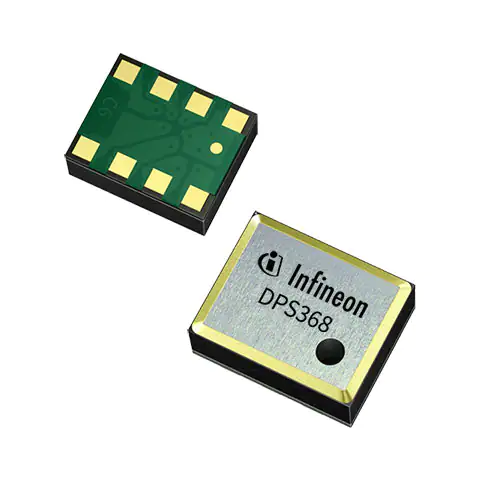
-
DPS368XTSA1
Infineon Technologies
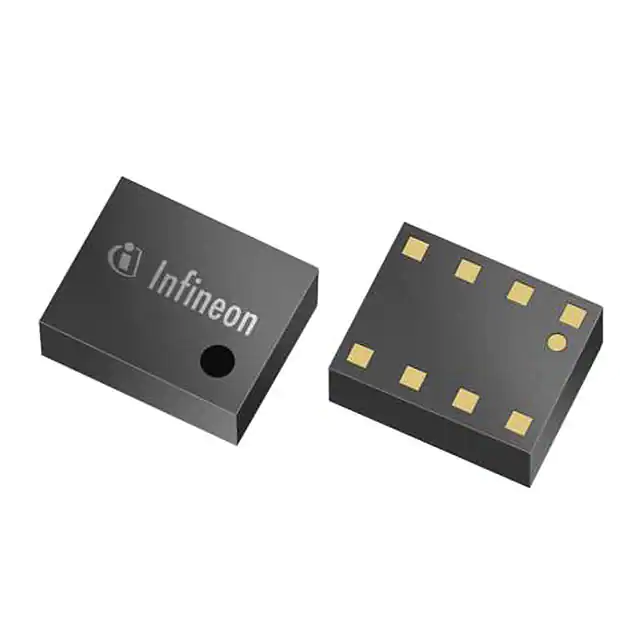
-
DPS310XTSA1
Infineon Technologies
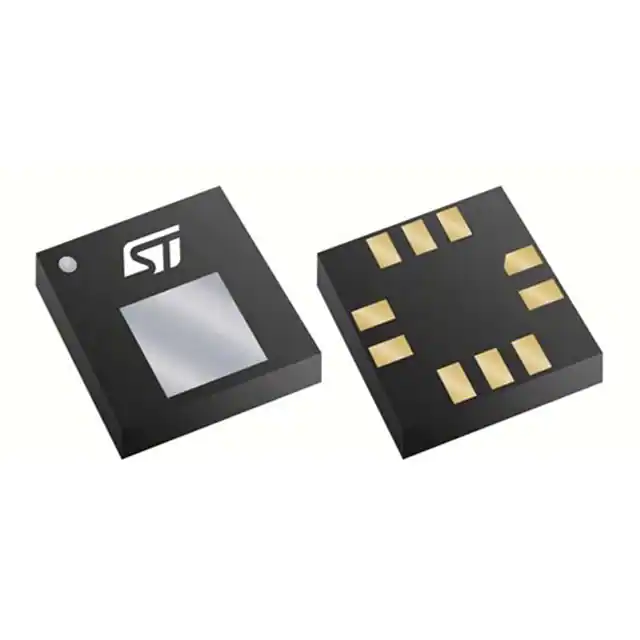
-
LPS22HHTR
STMicroelectronics

-
ICP-20100
TDK InvenSense
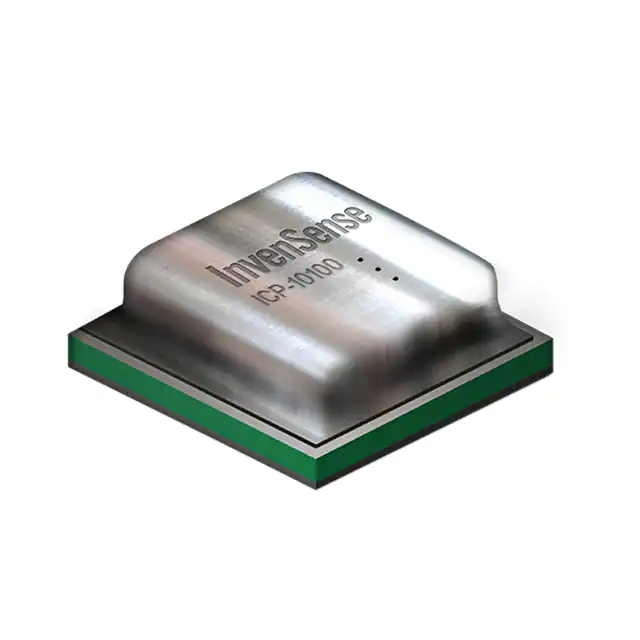
-
ICP-10110
TDK InvenSense
-
LPS22DFTR
STMicroelectronics
-
LPS22HBTR
STMicroelectronics
-
BMP390
Bosch Sensortec
-
BMP581
Bosch Sensortec
-
BMP384
Bosch Sensortec
-
2511020213301
Würth Elektronik
-
ILPS22QSTR
STMicroelectronics
Tech Hub

A practical engineering guide to 3.3V and 5V logic compatibility, input thresholds, resistor dividers, translator ICs, MOSFET level shifting, I2C pull-ups, timing limits and power-sequencing risks.

The 74HC595 uses push-pull logic outputs, while the TPIC6B595 uses 50 V open-drain DMOS sinks for higher-power loads. This guide compares timing, current limits, 3.3 V interfacing, load wiring, thermal…

The 74HC595 converts serial data into eight stable parallel outputs. This guide covers pin functions, shift and storage timing, OE and MR behavior, drive-current limits, cascading, voltage compatibilit…

A technical comparison of level-sensitive latches and edge-triggered flip-flops, covering timing windows, setup and hold limits, master–slave operation, time borrowing, race-through, HDL inference and…

A D latch stores one bit while Enable controls when data can pass. This reference covers gate-level operation, truth tables, transparency, setup and hold timing, LE versus OE, common ICs and practical …

An SR latch stores one bit through cross-coupled feedback. This engineering reference covers NOR and NAND implementations, truth tables, forbidden-state recovery, gated operation, switch debouncing, fa…

Latch circuits retain one bit through feedback. This technical reference covers SR and D latches, truth tables, transparency, timing limits, latch-versus-flip-flop behavior, applications and common log…

An engineering guide to LED driver operation, constant-current and constant-voltage outputs, linear and switching topologies, dimming, IC selection, calculations, replacement compatibility, and fault c…

Operational amplifier guide covering op amp basics, feedback, ideal vs real op amps, common configurations, buffer circuits, offset, bias current, gain-bandwidth, slew rate, rail-to-rail limits and sel…

Jumper cables guide covering safe connection order, red and black clamp placement, final ground connection, cable gauge, length, clamp quality, copper vs CCA cables, jump starter comparison and battery…


