
 My Inquiry
 My Account


STMicroelectronics LPS25HTR
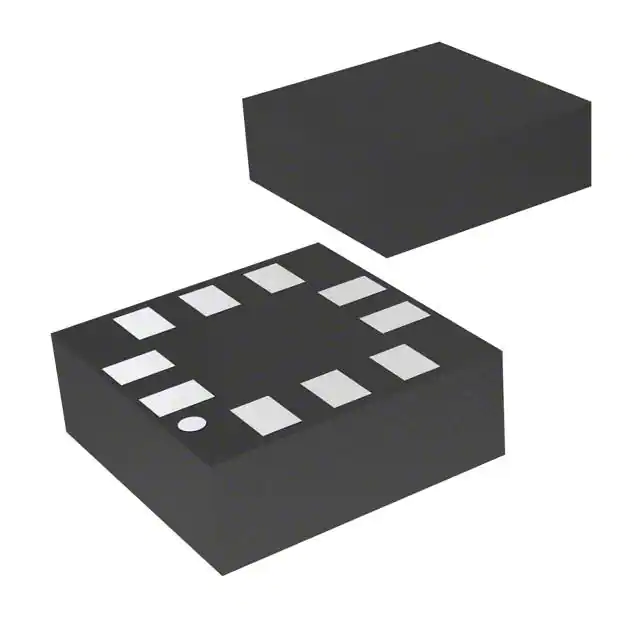
- Part No.:
- LPS25HTR
- Manufacturer:
- STMicroelectronics
- Category:
- Pressure Sensors, Transducers
- Package:
- 10-TFLGA
- Datasheet:
-
 LPS25HTR.pdf
- Description:
- SENSOR 18.27PSIA 24BIT 10HCLGA
- Quantity:
- Payment:

- Shipping:

Inventory:2,204
Please send an inquiry. Send us your inquiry, and we will respond immediately.
Product details
Overview
LPS25HTR from STMicroelectronics is an ultra-compact MEMS absolute pressure sensor with 260–1260 hPa measurement range, 1 Pa RMS resolution in high-resolution mode, and integrated 24-bit ADC and quadratic temperature compensation. It delivers digital pressure and temperature data via SPI or I²C interfaces and is used in portable altimeters, GPS-assisted navigation, and weather station equipment.
For engineers reviewing the LPS25HTR datasheet, LPS25HTR pinout, LPS25HTR application, or LPS25HTR equivalent, this page provides verified technical context, validated pin functions, confirmed operating modes (1–25 Hz ODR), real-world use value in altitude tracking, and accurate alternative part comparisons - all grounded in ST's official Rev 6 datasheet.
Technical Context
The LPS25HTR integrates a monolithic piezoresistive silicon membrane with intrinsic mechanical stoppers and a CMOS interface featuring low-noise analog front-end, embedded 24-bit ADC, and programmable FIFO for up to 32 pressure samples. Its factory-trimmed quadratic temperature compensation ensures ±0.2 hPa absolute accuracy across 0–80 °C.
It supports dual communication protocols: I²C (up to 400 kHz fast mode) and SPI (4-wire or 3-wire, up to 10 MHz), with CS pin selecting interface mode. The device includes interrupt generation (INT1), data-ready signaling, and hardware digital filtering enabled via FIFO mean mode.
Key Specifications
| Parameter | Value and Actual Design Meaning |
|---|---|
| Pressure Range | 260–1260 hPa absolute - covers sea-level barometric pressure through aircraft cabin altitudes. |
| Resolution (HR mode) | 1 Pa RMS - enables ~8.4 cm altitude resolution at sea level for precise elevation tracking. |
| Supply Voltage | 1.7–3.6 V - compatible with single-cell Li-ion and coin-cell power systems in wearables. |
| Current Consumption | 4 μA (low-res) / 25 μA (high-res) @ 1 Hz - extends battery life in always-on environmental monitoring. |
| Output Data Width | 24-bit pressure / 16-bit temperature - eliminates external scaling or post-processing for calibrated output. |
| Operating Temp | −30 °C to +105 °C - supports automotive cabin and industrial outdoor deployment. |
| FIFO Depth | 32-sample buffer - reduces host MCU polling frequency and enables burst-read power savings. |
| Overpressure Tolerance | 2 MPa (20× full scale) - withstands accidental pressure spikes without membrane damage or calibration shift. |
Pinout & Package
HCLGA-10L (2.5 × 2.5 × 1.0 mm) cavity-holed land grid array package with exposed sensing cavity on underside; RoHS-compliant and ECOPACK® certified.
| Pin/Terminal | Circuit Role | Design Meaning |
|---|---|---|
| 1 VDD_IO | I/O power supply | Separate 1.7–3.6 V rail for digital interface logic; decoupled independently from core VDD. |
| 2 SCL/SPC | Clock input | Shared pin for I²C SCL or SPI SPC; requires pull-up for I²C; driven by host in SPI mode. |
| 3 Reserved | NC (must tie to GND) | Internally unused; grounding prevents floating node and EMI coupling. |
| 4 SDA/SDI/SDO | Data bidirectional I/O | I²C data line or SPI SDI (4-wire) / SDI/SDO (3-wire); requires pull-up for I²C operation. |
| 5 SDO/SA0 | Output or address bit | SPI data output (SDO) or LSB of I²C slave address (SA0 = 0 or 1); sets device address in I²C bus. |
| 6 CS | Interface select | High = I²C mode; Low = SPI mode; critical for protocol initialization and avoiding bus contention. |
| 7 INT1 | Interrupt output | Open-drain signal indicating data-ready, FIFO watermark, or interrupt event; configurable via registers. |
| 8,9 GND | Ground reference | Dual ground pins reduce impedance path for analog and digital return currents; improves noise immunity. |
| 10 VDD | Core supply | Main 1.7–3.6 V supply for MEMS sensor and analog front-end; requires local 100 nF + 4.7 µF decoupling. |
Key Features
| Feature | Design Value |
|---|---|
| Embedded 24-bit ADC | Delivers fully digitized pressure output without external conversion, reducing BOM count and layout complexity. |
| Quadratic temperature compensation | Factory-trimmed across three temperatures and two pressures; eliminates need for system-level calibration routines. |
| Selectable ODR (1–25 Hz) | Enables dynamic trade-off between update rate and current draw - e.g., 1 Hz for months-long weather logging. |
| 32-slot FIFO with four modes | Supports stream, bypass, FIFO, and mean modes - enabling hardware averaging (reducing noise) or burst reads. |
| 20× overpressure survival | Mechanical stoppers prevent membrane rupture during handling or rapid pressure transients, ensuring long-term reliability. |
| Shock survivability (10,000 g) | Withstands drop testing and vibration in portable devices without performance degradation or recalibration. |
Applications
| Portable Altimeter | GPS-Assisted Navigation |
|---|---|
Use Scenario: Real-time altitude estimation in hiking watches and drones using barometric pressure differentials. IC Role / Device Role / Timing Role: Absolute pressure transducer providing calibrated 24-bit output at 10–25 Hz ODR for vertical velocity calculation. Use Value: 1 Pa RMS resolution enables sub-meter altitude step detection; FIFO stream mode reduces host wake-ups by 90% vs polling. |
Use Scenario: Improving GPS vertical accuracy in urban canyons where satellite signals are obstructed. IC Role / Device Role / Timing Role: Barometric aid delivering pressure-derived altitude corrections synchronized to GPS PPS timing. Use Value: Embedded temperature compensation maintains ±0.2 hPa accuracy across −30 to +80 °C, critical for consistent error correction. |
| Weather Station Sensor Node | Sport Watch Environmental Monitoring |
Use Scenario: Battery-powered outdoor weather stations logging atmospheric pressure trends over weeks. IC Role / Device Role / Timing Role: Low-power barometer operating at 1 Hz ODR with automatic FIFO-triggered interrupts for scheduled uploads. Use Value: 4 μA current draw in low-res mode enables >2-year operation on CR2032; ECOPACK® compliance meets EU environmental mandates. |
Use Scenario: Multi-sport watches tracking ascent/descent rates during skiing, climbing, or trail running. IC Role / Device Role / Timing Role: High-shock-tolerant pressure sensor sampling at 25 Hz during activity bursts, then dropping to 1 Hz in standby. Use Value: 10,000 g shock rating survives repeated impacts; small HCLGA-10L footprint fits constrained wearable PCBs. |
Equivalent & Alternatives
The following parts are listed as comparable options for similar absolute pressure sensing applications.
| Alternative Part | Technical Difference | Application Difference | Selection Advice |
|---|---|---|---|
| LPS22HBTR | Wider temp range (−40 to +85 °C), lower current (1.7 μA @ 1 Hz), no FIFO, same HCLGA-10L package. | Optimized for ultra-low-power IoT nodes; lacks FIFO-based averaging and interrupt flexibility of LPS25HTR. | Choose for battery life-critical deployments where altitude resolution >1 Pa is acceptable and FIFO not required. |
| BMP280 | 25–1100 hPa range, 0.01 hPa RMS noise, I²C/SPI, but no FIFO and only ±1 hPa accuracy over temp. | Targeted at consumer electronics; lacks LPS25HTR's overpressure robustness (20× FS) and extended 1260 hPa upper limit. | Choose for cost-sensitive designs needing basic barometry, but avoid where high-altitude or ruggedized operation is required. |
Compared with LPS22HBTR and BMP280, the LPS25HTR uniquely combines 1260 hPa upper range, 32-slot FIFO with mean-mode filtering, and 20× overpressure tolerance - making it the only option among the three qualified for aviation-grade altimetry and harsh-environment industrial barometers.
Availability
LPS25HTR is available at Aetrix Electronics and suitable for portable altimeters, GPS-assisted navigation systems, and weather station equipment requiring stable component supply despite its "not recommended for new designs" status.
Supply support for LPS25HTR includes scheduled delivery planning, volume procurement assistance, BOM continuity management, traceable sourcing, and lifecycle availability coordination for OEM customers, industrial embedded developers, connected-device designers, and electronics production programs.
Manufacturer
STMicroelectronics is a global semiconductor leader headquartered in Geneva, designing and manufacturing MEMS sensors, microcontrollers, and power management ICs for industrial, automotive, and consumer markets.
The LPS25HTR belongs to ST's high-accuracy MEMS pressure sensor product line, engineered specifically for applications demanding robust barometric measurement, embedded signal conditioning, and long-term stability in compact form factors.
FAQ
Is the LPS25HTR still in production?
Yes, the LPS25HTR remains in active production per STMicroelectronics' official product status, though it is marked "not recommended for new designs" as of October 2018. Aetrix Electronics maintains inventory and supports legacy design continuity with full traceability and documented sourcing.
What is the functional difference between LPS25HTR and LPS22HBTR?
The LPS25HTR offers higher maximum pressure range (1260 hPa vs. 1100 hPa), integrated FIFO with mean-mode averaging, and superior overpressure capability (20× FS vs. 10× FS). The LPS22HBTR achieves lower typical current (1.7 μA vs. 4 μA) but omits FIFO and has narrower temperature accuracy spec.
Can the LPS25HTR operate with only I²C interface?
Yes - tie the CS pin to VDD_IO to enable I²C mode. The device uses SCL and SDA pins with standard pull-up resistors; SA0 (pin 5) selects the LSB of the 7-bit I²C address (0x5C or 0x5D), allowing two units on the same bus without address conflict.
Does the LPS25HTR require external calibration after soldering?
No - the LPS25HTR undergoes full factory calibration for sensitivity and quadratic temperature compensation across −30 to +105 °C. Trimming parameters are stored in non-volatile memory and auto-loaded at power-on, eliminating system-level calibration requirements.
LPS25HTR Specifications
- Product attributes
- Attribute value
- Manufacturer:
- STMicroelectronics
- Series:
- -
- Package/Case:
- 10-TFLGA
- Packaging:
- Tape & Reel (TR)
- Product Status:
- Obsolete
- Applications:
- Board Mount
- Pressure Type:
- Absolute
- Operating Pressure:
- 3.77PSI ~ 18.27PSI (26kPa ~ 126kPa)
- Output Type:
- I2C, SPI
- Output:
- 24 b
- Accuracy:
- ±0.015PSI (±0.1kPa)
- Voltage - Supply:
- 1.7V ~ 3.6V
- Port Size:
- -
- Port Style:
- No Port
- Features:
- Temperature Compensated
- Termination Style:
- SMD (SMT) Tab
- Maximum Pressure:
- 290.08PSI (2000kPa)
- Operating Temperature:
- -30°C ~ 105°C
- Grade:
- -
- Qualification:
- -
- Mounting Type:
- Surface Mount
- Supplier Device Package:
- 10-HCLGA (2.5x2.5)
LPS25HTR FAQ
1.How can I place an order for LPS25HTR through Aetrix?
Please submit a Request for Quotation (RFQ) for LPS25HTR on Aetrix. Our sales agent will provide a competitive quotation and guide you through the order confirmation once you accept the terms.
2.Are the price and stock information for LPS25HTR reliable?
The price and inventory of LPS25HTR are updated periodically and may fluctuate due to market conditions. Stock and pricing data are typically refreshed every 24 hours. Quotation validity for LPS25HTR is usually 5 days.
3.What payment methods are accepted for LPS25HTR?
We accept Wire Transfer, PayPal, Credit Card, Western Union, MoneyGram, and Escrow for LPS25HTR transactions.
Note: Certain payment methods may incur a processing fee.
4.How is shipping managed for LPS25HTR?
LPS25HTR orders can be shipped via leading logistics carriers, including DHL, UPS, FedEx, TNT, or Registered Mail.
Once your LPS25HTR order is processed, you will receive an email with the shipment details and tracking number.
Note: Tracking information may take up to 24 hours to appear. Express delivery typically takes 3–5 business days.
5.How can I obtain technical support or documentation for LPS25HTR?
For technical support, including LPS25HTR datasheets, pinout diagrams, or application guidance, please contact our engineering support team. They can provide detailed documentation and assistance for your LPS25HTR requirements.
6.How does Aetrix verify that LPS25HTR is sourced from the original manufacturer or authorized distributors?
All LPS25HTR products on Aetrix are procured from qualified distributors and authorized channels. Our dedicated quality assurance team conducts strict verification, including traceability checks and, if necessary, third-party testing. This ensures that LPS25HTR meets industry standards.
7.What is the process for return or replacement of LPS25HTR?
All LPS25HTR units undergo pre-shipment inspection (PSI). If there is an issue with LPS25HTR, returns or replacements are accepted under the following conditions:
1.Quantity discrepancies, incorrect items, or visible external defects (such as breakage or corrosion), acknowledged by Aetrix.
2.The issue is reported within 90 days of delivery.
3.The LPS25HTR part is unused and in its original packaging.
Return procedure for LPS25HTR:
1.Submit a request within 90 days.
2.Obtain a Return Material Authorization (RMA) from Aetrix.
LPS25HTR Tags
-
DPS368XTSA1
Infineon Technologies
-
DPS310XTSA1
Infineon Technologies
-
LPS22HHTR
STMicroelectronics

-
ICP-20100
TDK InvenSense
-
ICP-10110
TDK InvenSense
-
LPS22DFTR
STMicroelectronics
-
LPS22HBTR
STMicroelectronics
-
BMP390
Bosch Sensortec
-
BMP581
Bosch Sensortec
-
BMP384
Bosch Sensortec
-
2511020213301
Würth Elektronik
-
ILPS22QSTR
STMicroelectronics
Tech Hub

A practical engineering and sourcing framework covering lifecycle verification, lifetime-buy calculations, replacement qualification, supplier checks and counterfeit-risk controls.

TTL and CMOS logic families differ in thresholds, loading, output drive, power and timing. This engineering guide compares 74HC and 74HCT, calculates noise margins and checks 3.3 V/5 V compatibility.

A practical engineering guide to 3.3V and 5V logic compatibility, input thresholds, resistor dividers, translator ICs, MOSFET level shifting, I2C pull-ups, timing limits and power-sequencing risks.

The 74HC595 uses push-pull logic outputs, while the TPIC6B595 uses 50 V open-drain DMOS sinks for higher-power loads. This guide compares timing, current limits, 3.3 V interfacing, load wiring, thermal…

The 74HC595 converts serial data into eight stable parallel outputs. This guide covers pin functions, shift and storage timing, OE and MR behavior, drive-current limits, cascading, voltage compatibilit…

A technical comparison of level-sensitive latches and edge-triggered flip-flops, covering timing windows, setup and hold limits, master–slave operation, time borrowing, race-through, HDL inference and…

A D latch stores one bit while Enable controls when data can pass. This reference covers gate-level operation, truth tables, transparency, setup and hold timing, LE versus OE, common ICs and practical …

An SR latch stores one bit through cross-coupled feedback. This engineering reference covers NOR and NAND implementations, truth tables, forbidden-state recovery, gated operation, switch debouncing, fa…

Latch circuits retain one bit through feedback. This technical reference covers SR and D latches, truth tables, transparency, timing limits, latch-versus-flip-flop behavior, applications and common log…

An engineering guide to LED driver operation, constant-current and constant-voltage outputs, linear and switching topologies, dimming, IC selection, calculations, replacement compatibility, and fault c…


