
 My Inquiry
 My Account


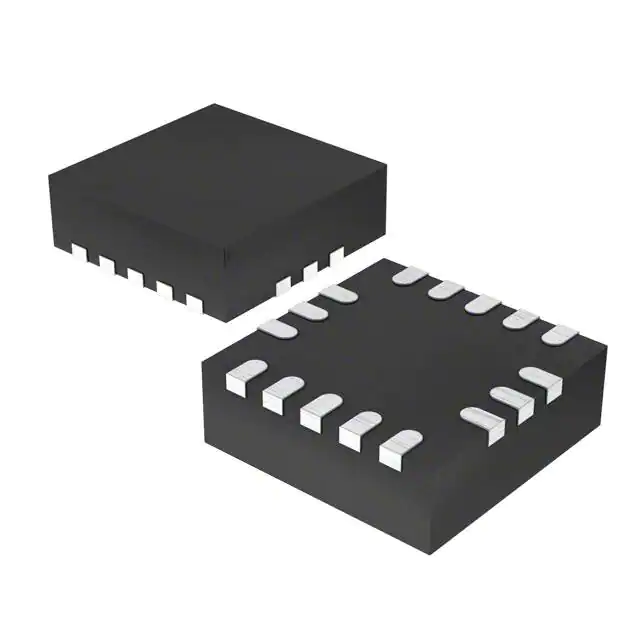
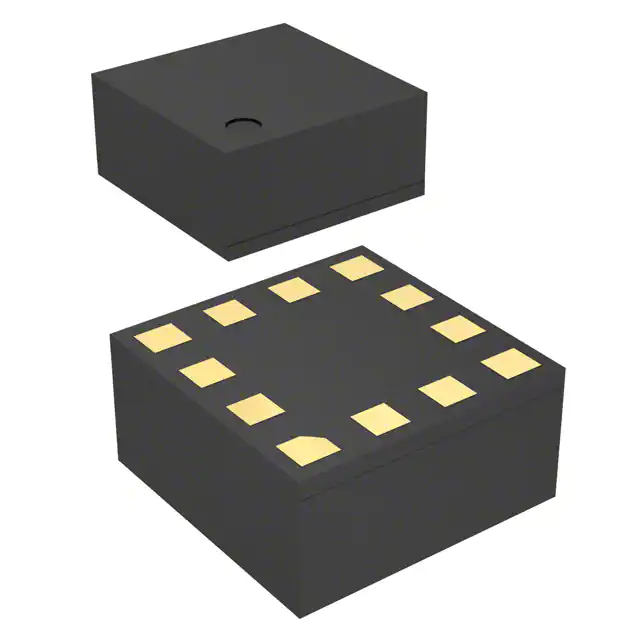
STMicroelectronics LSM303D
- Part No.:
- LSM303D
- Manufacturer:
- STMicroelectronics
- Category:
- IMUs (Inertial Measurement Units)
- Package:
- 16-VFLGA Module
- Datasheet:
-
 LSM303D.pdf
- Description:
- IMU ACCEL/MAG I2C/SPI 16LGA
- Quantity:
- Payment:

- Shipping:

Inventory:3,815
Please send an inquiry. Send us your inquiry, and we will respond immediately.
Product details
Overview
LSM303D from STMicroelectronics is an ultra-compact system-in-package eCompass module integrating a 3-axis ±2/±4/±6/±8/±16 g accelerometer and a 3-axis ±2/±4/±8/±12 gauss magnetometer, delivering 16-bit digital output via I²C or SPI interfaces for tilt-compensated heading calculation in handheld and wearable devices.
For engineers reviewing the LSM303D datasheet, LSM303D pinout, LSM303D application, or LSM303D equivalent, this page provides verified technical context, validated pin functions, confirmed magnetic/acceleration full-scale configurations, interrupt generator programmability, FIFO depth, and real-world use-value for motion-aware orientation systems.
Technical Context
The LSM303D implements independent dual-sensor architecture: the accelerometer block supports configurable ODR up to 800 Hz with selectable anti-aliasing filter bandwidths (e.g., 200 Hz at ±2g), while the magnetometer operates at up to 100 Hz with low-noise continuous conversion mode and embedded set/reset pulse compensation for stability.
Interrupt logic includes two fully programmable generators-one for motion/fall detection (using acceleration thresholds and duration) and another for magnetic field events-with separate enable/disable control per sensor block and shared INT1/INT2 output pins routed to host MCU GPIOs.
Key Specifications
| Parameter | Value and Actual Design Meaning |
|---|---|
| Accelerometer Full Scale | ±2/±4/±6/±8/±16 g - enables selection of resolution vs. dynamic range trade-off for specific motion profiles (e.g., ±2 g for high-resolution pedometer, ±16 g for impact logging) |
| Magnetometer Full Scale | ±2/±4/±8/±12 gauss - determines magnetic field sensitivity and heading accuracy under varying geomagnetic conditions |
| Data Resolution | 16-bit - provides 0.06 mg/LSB (±2 g) and 0.08 mG/LSB (±2 gauss) quantization for precise vector computation |
| Digital Interfaces | I²C (100/400 kHz) and SPI (3-/4-wire) - allows flexible host integration with minimal pin count or deterministic timing control |
| Supply Voltage | 2.16 V to 3.6 V - compatible with single-cell Li-ion and regulated 3.3 V rails without level-shifting circuitry |
| Embedded Features | FIFO (32-level), temperature sensor (±2 °C accuracy), programmable interrupts, and self-test - reduces host CPU load and enables autonomous event-driven operation |
| Operating Temperature | −40 °C to +85 °C - qualified for consumer electronics and industrial portable equipment environments |
Pinout & Package
LSM303D is housed in a 3 mm × 3 mm × 1 mm LGA-16 package with exposed thermal pad, optimized for space-constrained PCB layouts in smartphones, wearables, and IoT sensors.
| Pin/Terminal | Circuit Role | Design Meaning |
|---|---|---|
| VDD | Analog power supply | 2.16–3.6 V input powering both accelerometer and magnetometer blocks |
| VDD_IO | Digital I/O supply | Independent 1.71–3.6 V rail for interface logic-enables voltage translation with lower-voltage MCUs |
| GND | Ground reference | Common analog/digital return path; thermal pad must be soldered to PCB ground plane for thermal and noise performance |
| SCL / SDA | I²C clock/data lines | Open-drain bidirectional signals supporting standard/fast-mode timing; require external pull-ups |
| SDO/SA0 | Slave address select | Configures I²C address (0x1E or 0x1D); also serves as SPI MISO in 4-wire mode |
| CS | SPI chip select | Active-low enable for SPI communication; disables I²C when asserted |
| SCLK | SPI clock | Master-generated clock up to 10 MHz; controls data sampling edge and transfer rate |
| SDI | SPI data in | Serial input for register writes and command sequences in 4-wire SPI mode |
| INT1 / INT2 | Programmable interrupt outputs | Push-pull or open-drain configurable outputs signaling motion, free-fall, magnetic threshold crossing, or FIFO status |
Key Features
| Feature | Design Value |
|---|---|
| Integrated eCompass functionality | Co-located 3D accelerometer and 3D magnetometer on single die with factory-calibrated cross-axis alignment-eliminates mechanical assembly error and simplifies tilt compensation math |
| Configurable interrupt generators | Two independent interrupt engines with user-defined thresholds, latency, and duration windows for motion, free-fall, and magnetic events-reduces polling overhead and enables low-power wake-on-event operation |
| 32-level FIFO buffer | Stores acceleration and/or magnetometer samples autonomously-allows burst reads, mitigates I²C/SPI bus contention, and supports activity monitoring without constant host intervention |
| Embedded temperature sensor | Monitors die temperature with ±2 °C accuracy over −40 °C to +85 °C-enables real-time compensation of magnetometer offset drift and improves heading stability across operating conditions |
| Low-power modes | Separate power-down control per sensor block plus low-power mode (10 µA typical for accelerometer only)-extends battery life in always-on orientation sensing applications |
Applications
| Smartphone Display Rotation | Wearable Pedometer |
|---|---|
|
Use Scenario: Real-time screen orientation adjustment during device rotation. IC Role / Device Role / Timing Role: Accelerometer detects gravity vector direction; magnetometer provides Earth's magnetic field reference; fused output computes true heading relative to magnetic north. Use Value: Enables seamless portrait/landscape switching with <500 ms response and <2° heading error under static conditions using built-in temperature compensation and set/reset pulse calibration. |
Use Scenario: Step counting and activity classification in fitness bands. IC Role / Device Role / Timing Role: Accelerometer captures vertical acceleration peaks; embedded interrupt generator triggers step detection; FIFO buffers bursts for host-side pattern analysis. Use Value: Achieves >95% step detection accuracy at 1–3 Hz walking cadence with 10 µA low-power mode active between steps-extending coin-cell battery life beyond 7 days. |
| Industrial Handheld Scanner | AR/VR Motion Controller |
|
Use Scenario: Tilt-compensated barcode scanning in warehouse terminals. IC Role / Device Role / Timing Role: Magnetometer measures azimuth angle; accelerometer corrects for pitch/roll; combined vector yields stable scan-line alignment regardless of device tilt. Use Value: Maintains <±1.5° angular accuracy across −20 °C to +60 °C ambient using on-chip temperature sensor feedback and factory-trimmed magnetometer offsets. |
Use Scenario: 6-DoF head or controller tracking in immersive VR systems. IC Role / Device Role / Timing Role: Accelerometer supplies high-bandwidth linear motion data; magnetometer anchors yaw axis; fused output feeds Kalman filter for drift-free orientation estimation. Use Value: Delivers sub-degree heading stability at 100 Hz update rate with embedded FIFO buffering-reducing host MCU interrupt load by 70% versus register-by-register polling. |
Equivalent & Alternatives
The following parts are listed as comparable options for similar eCompass module applications.
| Alternative Part | Technical Difference | Application Difference | Selection Advice |
|---|---|---|---|
| BNO055 | Integrated sensor fusion ASIC with onboard 32-bit Cortex-M0+; outputs quaternion, Euler angles, and linear acceleration directly | Reduces host processing load but consumes higher current (160 µA typical vs. LSM303D's 10 µA in LP mode) | Select BNO055 when real-time fused orientation output is required and power budget permits; prefer LSM303D for host-controlled fusion with tighter power constraints |
| LSM303AGR | Newer revision with improved magnetometer noise density (1.5 mG/√Hz vs. 2.5 mG/√Hz), same pinout and register map, extended temperature range (−40 °C to +105 °C) | Offers better heading precision in low-field environments and wider industrial operating margin | Choose LSM303AGR for new designs requiring enhanced magnetic sensitivity or extended temperature qualification; LSM303D remains valid for legacy cost-sensitive consumer applications |
Compared with BNO055 and LSM303AGR, the LSM303D delivers optimal balance of ultra-low standby current, proven co-location accuracy, and host-flexible register-level control-making it ideal for battery-powered devices where firmware-defined fusion logic and minimal quiescent draw are prioritized over turnkey orientation output.
Availability
LSM303D is available at Aetrix Electronics and suitable for smartphone display rotation, wearable pedometers, industrial handheld scanners, and AR/VR motion controllers requiring stable component supply across production lifecycles.
Supply support for LSM303D includes scheduled delivery planning, volume procurement assistance, BOM continuity management, traceable sourcing, and lifecycle availability coordination for OEM customers, industrial embedded developers, connected-device designers, and electronics production programs.
Manufacturer
STMicroelectronics is a global semiconductor leader headquartered in Geneva, Switzerland, designing and manufacturing microcontrollers, sensors, power ICs, and automotive-grade components since 1987.
The LSM303D belongs to ST's iNEMO inertial module family, engineered specifically for compact, low-power consumer and industrial motion-sensing applications where size, accuracy, and integration density are critical design constraints.
FAQ
What is the maximum I²C clock frequency supported by the LSM303D?
The LSM303D supports standard-mode (100 kHz) and fast-mode (400 kHz) I²C operation, with guaranteed timing compliance per Table 7 of the datasheet. It does not support fast-mode plus (1 MHz) or high-speed mode. Pull-up resistors must be selected based on bus capacitance to meet rise-time requirements at 400 kHz, typically 2.2 kΩ for ≤200 pF total capacitance.
How is magnetic sensor offset calibrated in the LSM303D?
The LSM303D includes factory-trimmed offset registers (OFFSET_X/Y/Z_M) and supports on-the-fly soft-iron/hard-iron calibration via host software using the reference registers (REFERENCE_X/Y/Z). Its embedded set/reset pulse circuit actively compensates for thermal drift of magnetic sensor bias, improving long-term stability without requiring continuous recalibration.
Can the accelerometer and magnetometer operate simultaneously at different output data rates?
Yes-the LSM303D allows independent configuration of ODR for each sensor block. For example, the accelerometer can run at 400 Hz for gesture detection while the magnetometer runs at 10 Hz for heading calculation, minimizing magnetic interference from high-frequency digital switching and optimizing overall power consumption.
Does the LSM303D support click/double-click detection natively?
Yes-the LSM303D integrates dedicated click detection logic accessible via CLICK_CFG, CLICK_SRC, and CLICK_THS registers. It supports configurable threshold, time window, and latency parameters to distinguish single/double clicks and reject false triggers from ambient vibration, enabling UI interaction without additional external components.
LSM303D Specifications
- Product attributes
- Attribute value
- Manufacturer:
- STMicroelectronics
- Series:
- -
- Package/Case:
- 16-VFLGA Module
- Packaging:
- Tray
- Product Status:
- Obsolete
- Sensor Type:
- Accelerometer, Magnetometer, Temperature, 6 Axis
- Output Type:
- I2C, SPI
- Operating Temperature:
- -40°C ~ 85°C
- Grade:
- -
- Qualification:
- -
- Supplier Device Package:
- 16-LGA (3x3)
- Mounting Type:
- Surface Mount
LSM303D FAQ
1.How can I place an order for LSM303D through Aetrix?
Please submit a Request for Quotation (RFQ) for LSM303D on Aetrix. Our sales agent will provide a competitive quotation and guide you through the order confirmation once you accept the terms.
2.Are the price and stock information for LSM303D reliable?
The price and inventory of LSM303D are updated periodically and may fluctuate due to market conditions. Stock and pricing data are typically refreshed every 24 hours. Quotation validity for LSM303D is usually 5 days.
3.What payment methods are accepted for LSM303D?
We accept Wire Transfer, PayPal, Credit Card, Western Union, MoneyGram, and Escrow for LSM303D transactions.
Note: Certain payment methods may incur a processing fee.
4.How is shipping managed for LSM303D?
LSM303D orders can be shipped via leading logistics carriers, including DHL, UPS, FedEx, TNT, or Registered Mail.
Once your LSM303D order is processed, you will receive an email with the shipment details and tracking number.
Note: Tracking information may take up to 24 hours to appear. Express delivery typically takes 3–5 business days.
5.How can I obtain technical support or documentation for LSM303D?
For technical support, including LSM303D datasheets, pinout diagrams, or application guidance, please contact our engineering support team. They can provide detailed documentation and assistance for your LSM303D requirements.
6.How does Aetrix verify that LSM303D is sourced from the original manufacturer or authorized distributors?
All LSM303D products on Aetrix are procured from qualified distributors and authorized channels. Our dedicated quality assurance team conducts strict verification, including traceability checks and, if necessary, third-party testing. This ensures that LSM303D meets industry standards.
7.What is the process for return or replacement of LSM303D?
All LSM303D units undergo pre-shipment inspection (PSI). If there is an issue with LSM303D, returns or replacements are accepted under the following conditions:
1.Quantity discrepancies, incorrect items, or visible external defects (such as breakage or corrosion), acknowledged by Aetrix.
2.The issue is reported within 90 days of delivery.
3.The LSM303D part is unused and in its original packaging.
Return procedure for LSM303D:
1.Submit a request within 90 days.
2.Obtain a Return Material Authorization (RMA) from Aetrix.
LSM303D Tags

-
BMI323
Bosch Sensortec
-
ICM-42670-P
TDK InvenSense
-
ICM-42605
TDK InvenSense

-
LSM6DSO32TR
STMicroelectronics
-
LSM6DSOTR
STMicroelectronics
-
LSM6DSVTR
STMicroelectronics
-
LSM6DSRTR
STMicroelectronics
-
BMI270
Bosch Sensortec
-
LSM6DSOXTR
STMicroelectronics
-
LSM6DSV16XTR
STMicroelectronics
-
LSM6DSO16ISTR
STMicroelectronics
-
LSM303AGRTR
STMicroelectronics
Tech Hub

A practical engineering and sourcing framework covering lifecycle verification, lifetime-buy calculations, replacement qualification, supplier checks and counterfeit-risk controls.

TTL and CMOS logic families differ in thresholds, loading, output drive, power and timing. This engineering guide compares 74HC and 74HCT, calculates noise margins and checks 3.3 V/5 V compatibility.

A practical engineering guide to 3.3V and 5V logic compatibility, input thresholds, resistor dividers, translator ICs, MOSFET level shifting, I2C pull-ups, timing limits and power-sequencing risks.

The 74HC595 uses push-pull logic outputs, while the TPIC6B595 uses 50 V open-drain DMOS sinks for higher-power loads. This guide compares timing, current limits, 3.3 V interfacing, load wiring, thermal…

The 74HC595 converts serial data into eight stable parallel outputs. This guide covers pin functions, shift and storage timing, OE and MR behavior, drive-current limits, cascading, voltage compatibilit…

A technical comparison of level-sensitive latches and edge-triggered flip-flops, covering timing windows, setup and hold limits, master–slave operation, time borrowing, race-through, HDL inference and…

A D latch stores one bit while Enable controls when data can pass. This reference covers gate-level operation, truth tables, transparency, setup and hold timing, LE versus OE, common ICs and practical …

An SR latch stores one bit through cross-coupled feedback. This engineering reference covers NOR and NAND implementations, truth tables, forbidden-state recovery, gated operation, switch debouncing, fa…

Latch circuits retain one bit through feedback. This technical reference covers SR and D latches, truth tables, transparency, timing limits, latch-versus-flip-flop behavior, applications and common log…

An engineering guide to LED driver operation, constant-current and constant-voltage outputs, linear and switching topologies, dimming, IC selection, calculations, replacement compatibility, and fault c…


