
 My Inquiry
 My Account


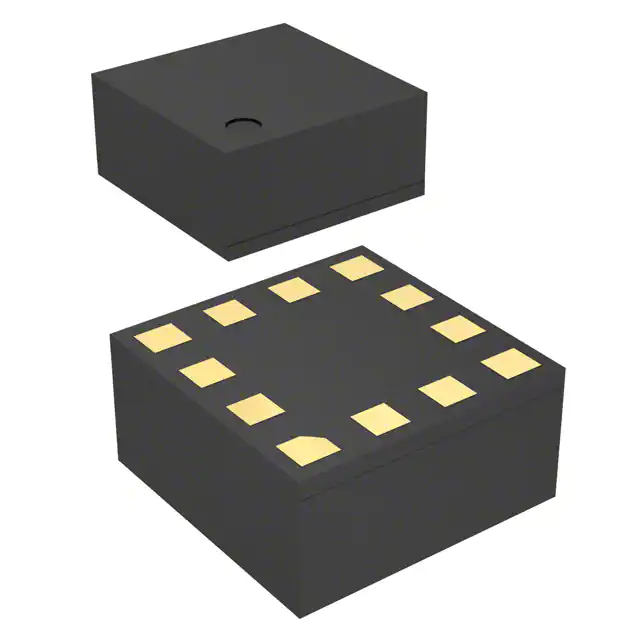
STMicroelectronics LSM330DLC
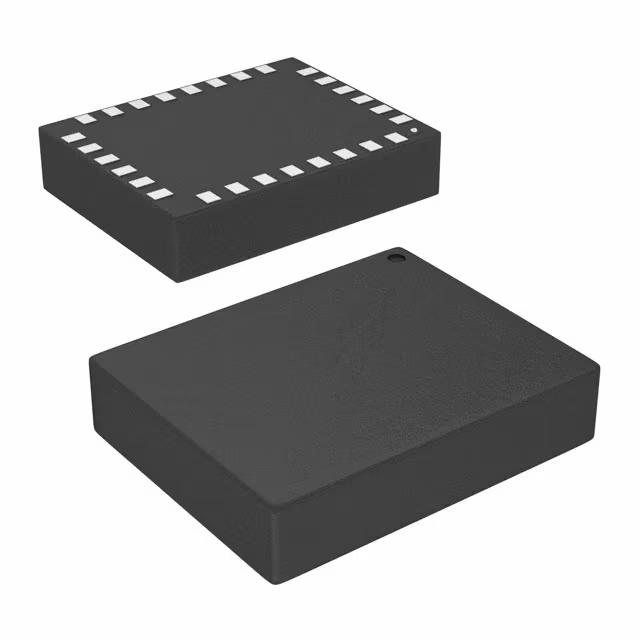
- Part No.:
- LSM330DLC
- Manufacturer:
- STMicroelectronics
- Category:
- IMUs (Inertial Measurement Units)
- Package:
- 28-TFLGA Module
- Datasheet:
-
 LSM330DLC.pdf
- Description:
- IMU ACCEL/MAG I2C/SPI 28LGA
- Quantity:
- Payment:

- Shipping:

Inventory:1,136
Please send an inquiry. Send us your inquiry, and we will respond immediately.
Product details
Overview
LSM330DLC from STMicroelectronics is a system-in-package inertial module integrating a 3-axis digital accelerometer and a 3-axis digital gyroscope, operating from 2.4–3.6 V analog supply and 1.8 V digital I/O. It delivers ±2/±4/±8/±16 g acceleration full-scale ranges and ±250/±500/±2000 dps angular rate ranges with SPI/I²C 16-bit output, enabling motion sensing in space-constrained portable devices.
For engineers reviewing the LSM330DLC datasheet, LSM330DLC pinout, LSM330DLC application, or LSM330DLC equivalent, this page provides verified functional identity, validated LGA-28 package mapping, confirmed dual-sensor timing synchronization, real-world orientation detection capability (6D), and power-mode selection logic for handheld and VR systems.
Technical Context
The LSM330DLC implements independent digital signal paths for its accelerometer and gyroscope blocks, each with configurable ODR (up to 950 Hz for accel, 800 Hz for gyro), programmable high-pass filtering, and FIFO buffering (accel: 32 samples; gyro: 32 samples). Both sensors support synchronized data capture via shared interrupt logic and common clock domain alignment.
Its architecture enables simultaneous low-power operation modes: accelerometer-only active mode at 10 µA, gyroscope-only at 5 mA, or full dual-sensor operation at 6 mA (typical), with dedicated "sleep-to-wake" and "return-to-sleep" state transitions controlled via register bits CTRL_REG1_A[7] and CTRL_REG1_G[7].
Key Specifications
| Parameter | Value and Actual Design Meaning |
|---|---|
| Analog supply voltage | 2.4 V to 3.6 V - supports direct connection to Li-ion battery rails or regulated 3.3 V domains without external LDO. |
| Digital I/O voltage | 1.8 V - matches LPDDR/MIPI host interface levels; no level-shifting required for compatible SoCs. |
| Acceleration full scale | ±2/±4/±8/±16 g - selectable per application: ±2 g for precision tilt, ±16 g for impact logging. |
| Gyroscope full scale | ±250/±500/±2000 dps - ±250 dps for VR head tracking resolution, ±2000 dps for fast robotic joint motion. |
| Communication interface | SPI/I²C dual-mode - 400 kHz I²C Fast Mode or 10 MHz SPI master clock; both deliver 16-bit aligned XYZ data. |
| Operating temperature | −40 °C to +85 °C - qualified for industrial handhelds and automotive infotainment mounting locations. |
| Package | LGA-28L (4 mm × 5 mm × 1.1 mm) - surface-mount land grid array with exposed thermal pad for PCB heat dissipation. |
Pinout & Package
The LSM330DLC is housed in a 28-pin plastic land grid array (LGA-28L) measuring 4 mm × 5 mm × 1.1 mm, featuring an exposed thermal pad on the bottom for enhanced thermal performance and mechanical stability during reflow.
| Pin/Terminal | Circuit Role | Design Meaning |
|---|---|---|
| VDD | Analog supply input | Connects to 2.4–3.6 V source; powers MEMS sensing elements and analog front-end circuitry. |
| VDD_IO | Digital I/O supply | Supplies 1.8 V to SPI/I²C interface buffers and register logic; decoupled separately from VDD. |
| GND | Ground reference | Common return path for analog and digital sections; tied to thermal pad for thermal conduction. |
| SCL/SPC | I²C clock / SPI clock | Multiplexed pin: SCL in I²C mode; SPC in SPI mode - requires mode-select configuration at startup. |
| SDA/SDI | I²C data / SPI data in | Multiplexed bidirectional pin: handles I²C data transfer or SPI command/data writes. |
| SDO/SA0 | SPI data out / I²C address LSB | Outputs SPI read data; also sets I²C slave address bit when used as SA0 in I²C mode. |
| INT1 | Programmable interrupt output | Open-drain output signaling free-fall, motion detection, 6D orientation change, or FIFO threshold events. |
| INT2 | Secondary interrupt output | Configurable for gyroscope-specific events (e.g., high-rate rotation, data-ready, FIFO watermark). |
Key Features
| Feature | Design Value |
|---|---|
| 6D orientation detection | Hardware-accelerated tilt recognition using accelerometer vector magnitude and sign analysis - reduces host CPU load by offloading orientation state machine. |
| Independent sensor power control | Separate enable/disable bits for accelerometer and gyroscope - allows asymmetric power states (e.g., gyro off while accel monitors wake gesture). |
| Dual FIFO buffers | 32-sample FIFO for accelerometer and 32-sample FIFO for gyroscope - enables burst-read efficiency and time-aligned sensor fusion without host polling overhead. |
| Programmable interrupt generator | Configurable thresholds and durations for free-fall, click/double-click, activity/inactivity - eliminates need for external event-detection logic. |
| Factory-trimmed sensitivity | Pre-calibrated zero-g offset and sensitivity across full temperature range - reduces need for runtime calibration in consumer-grade applications. |
Applications
| GPS Navigation Systems | Impact Recognition and Logging |
|---|---|
|
Use Scenario: Dead-reckoning augmentation during GPS signal loss in urban canyons or tunnels. IC Role / Device Role / Timing Role: Accelerometer provides linear acceleration integration; gyroscope supplies angular rate for heading drift correction - both sampled synchronously at 100 Hz. Use Value: Enables <10 m position error over 60 s GPS outage using fused 6D orientation and velocity estimation. |
Use Scenario: Detecting and timestamping mechanical shock events in logistics tracking tags. IC Role / Device Role / Timing Role: Accelerometer configured to ±16 g full scale triggers INT1 on >5 g sustained impulse (>10 ms); gyroscope remains idle to conserve power. Use Value: Captures impact magnitude, direction, and duration without host processor wake-up - extends battery life to >2 years on coin cell. |
| Gaming and VR Input Devices | Vibration Monitoring and Compensation |
|
Use Scenario: Real-time head tracking in mobile VR headsets with sub-20 ms latency. IC Role / Device Role / Timing Role: Gyroscope operates at ±250 dps full scale and 800 Hz ODR; accelerometer runs at 400 Hz for gravity vector stabilization - data fused in hardware FIFO. Use Value: Delivers <2° yaw/pitch RMS error at 100 Hz update rate, meeting Oculus Mobile SDK motion-to-photon latency requirements. |
Use Scenario: Active vibration cancellation in industrial handheld test equipment. IC Role / Device Role / Timing Role: Accelerometer senses platform vibration at 1 kHz sampling; gyroscope detects rotational jitter - both streams fed to FPGA-based adaptive filter. Use Value: Reduces 50–200 Hz structural resonance amplitude by ≥18 dB, improving measurement repeatability of micro-ohmmeters. |
Equivalent & Alternatives
The following parts are listed as comparable options for similar inertial sensing applications.
| Alternative Part | Technical Difference | Application Difference | Selection Advice |
|---|---|---|---|
| LSM6DS3TR-C | Integrated digital motion processor (DMP), lower typical current (1.2 mA vs 6 mA), smaller 2.5×2.5 mm LGA-14 package. | Requires firmware DMP configuration; lacks separate INT2; optimized for always-on wearable motion classification. | Select when ultra-low power and embedded sensor fusion outweigh need for discrete register-level control. |
| ICM-20689 | Higher gyroscope sensitivity (16.4 LSB/dps vs 11.35 LSB/dps at ±250 dps), integrated temperature sensor, supports auxiliary I²C master mode. | Better suited for drone IMUs requiring fine angular resolution; larger 4×4 mm QFN-24 package with different pinout. | Select when angular rate precision and auxiliary sensor bridging are critical, and board layout permits QFN footprint. |
Compared with LSM6DS3TR-C, the LSM330DLC offers greater register-level flexibility and dual-interrupt signaling but consumes more power; versus ICM-20689, it provides tighter factory calibration and simpler interrupt routing at the cost of lower angular resolution and no auxiliary master capability.
Availability
LSM330DLC is available at Aetrix Electronics and suitable for GPS navigation systems, impact logging devices, VR motion controllers, and industrial vibration monitors requiring stable component supply across multi-year production cycles.
Supply support for LSM330DLC includes scheduled delivery planning, volume procurement assistance, BOM continuity management, traceable sourcing, and lifecycle availability coordination for OEM customers, industrial embedded developers, connected-device designers, and electronics production programs.
Manufacturer
STMicroelectronics is a global semiconductor leader headquartered in Geneva, Switzerland, designing and manufacturing MEMS sensors, microcontrollers, power ICs, and automotive-grade components since 1987.
The LSM330DLC belongs to ST's iNEMO inertial module family, engineered specifically for space-constrained portable electronics requiring tightly coupled, low-latency 6-axis motion sensing with minimal host processing overhead.
FAQ
Does the LSM330DLC support simultaneous accelerometer and gyroscope data reads?
Yes. The LSM330DLC supports synchronized sampling via shared internal timing and dual FIFO buffers. When both sensors are enabled, their data streams maintain fixed temporal alignment - critical for sensor fusion algorithms. Register reads use sequential addressing (e.g., OUT_X_L_A → OUT_X_H_A → OUT_Y_L_A → … → OUT_X_L_G) to retrieve interleaved or grouped samples without host-side timestamp interpolation.
What is the function of the exposed thermal pad on the LGA-28 package?
The exposed thermal pad on the bottom of the LGA-28 package serves two primary functions: it provides a low-thermal-resistance path to dissipate heat generated by the integrated gyroscope's drive circuitry, and it enhances mechanical anchoring during reflow soldering. ST recommends connecting it to a solid GND plane via ≥4 thermal vias (0.3 mm diameter) to ensure reliable thermal performance and solder joint integrity.
Can the LSM330DLC detect free-fall without host processor intervention?
Yes. Free-fall detection is implemented entirely in hardware: the accelerometer continuously monitors vector magnitude; when all three axes fall below a user-programmable threshold (INT1_THS_A register) for a defined duration (INT1_DURATION_A), INT1 asserts automatically. No host firmware execution or polling is required - enabling true "wake-on-motion" capability from deep sleep.
Is the LSM330DLC RoHS and REACH compliant?
Yes. The LSM330DLC carries ECOPACK® certification, confirming full compliance with RoHS Directive 2011/65/EU and REACH Regulation (EC) No. 1907/2006. Its packaging uses halogen-free molding compound and lead-free terminations, and material declarations are available through ST's official product page under document number CD00221622.
LSM330DLC Specifications
- Product attributes
- Attribute value
- Manufacturer:
- STMicroelectronics
- Series:
- iNEMO
- Package/Case:
- 28-TFLGA Module
- Packaging:
- Tray
- Product Status:
- Obsolete
- Sensor Type:
- Accelerometer, Magnetometer, 6 Axis
- Output Type:
- I2C, SPI
- Operating Temperature:
- -40°C ~ 85°C
- Grade:
- -
- Qualification:
- -
- Supplier Device Package:
- 28-LGA (4x5)
- Mounting Type:
- Surface Mount
LSM330DLC FAQ
1.How can I place an order for LSM330DLC through Aetrix?
Please submit a Request for Quotation (RFQ) for LSM330DLC on Aetrix. Our sales agent will provide a competitive quotation and guide you through the order confirmation once you accept the terms.
2.Are the price and stock information for LSM330DLC reliable?
The price and inventory of LSM330DLC are updated periodically and may fluctuate due to market conditions. Stock and pricing data are typically refreshed every 24 hours. Quotation validity for LSM330DLC is usually 5 days.
3.What payment methods are accepted for LSM330DLC?
We accept Wire Transfer, PayPal, Credit Card, Western Union, MoneyGram, and Escrow for LSM330DLC transactions.
Note: Certain payment methods may incur a processing fee.
4.How is shipping managed for LSM330DLC?
LSM330DLC orders can be shipped via leading logistics carriers, including DHL, UPS, FedEx, TNT, or Registered Mail.
Once your LSM330DLC order is processed, you will receive an email with the shipment details and tracking number.
Note: Tracking information may take up to 24 hours to appear. Express delivery typically takes 3–5 business days.
5.How can I obtain technical support or documentation for LSM330DLC?
For technical support, including LSM330DLC datasheets, pinout diagrams, or application guidance, please contact our engineering support team. They can provide detailed documentation and assistance for your LSM330DLC requirements.
6.How does Aetrix verify that LSM330DLC is sourced from the original manufacturer or authorized distributors?
All LSM330DLC products on Aetrix are procured from qualified distributors and authorized channels. Our dedicated quality assurance team conducts strict verification, including traceability checks and, if necessary, third-party testing. This ensures that LSM330DLC meets industry standards.
7.What is the process for return or replacement of LSM330DLC?
All LSM330DLC units undergo pre-shipment inspection (PSI). If there is an issue with LSM330DLC, returns or replacements are accepted under the following conditions:
1.Quantity discrepancies, incorrect items, or visible external defects (such as breakage or corrosion), acknowledged by Aetrix.
2.The issue is reported within 90 days of delivery.
3.The LSM330DLC part is unused and in its original packaging.
Return procedure for LSM330DLC:
1.Submit a request within 90 days.
2.Obtain a Return Material Authorization (RMA) from Aetrix.
LSM330DLC Tags

-
BMI323
Bosch Sensortec
-
ICM-42670-P
TDK InvenSense
-
ICM-42605
TDK InvenSense

-
LSM6DSO32TR
STMicroelectronics
-
LSM6DSOTR
STMicroelectronics
-
LSM6DSVTR
STMicroelectronics
-
LSM6DSRTR
STMicroelectronics
-
BMI270
Bosch Sensortec
-
LSM6DSOXTR
STMicroelectronics
-
LSM6DSV16XTR
STMicroelectronics
-
LSM6DSO16ISTR
STMicroelectronics
-
LSM303AGRTR
STMicroelectronics
Tech Hub

A practical engineering and sourcing framework covering lifecycle verification, lifetime-buy calculations, replacement qualification, supplier checks and counterfeit-risk controls.

TTL and CMOS logic families differ in thresholds, loading, output drive, power and timing. This engineering guide compares 74HC and 74HCT, calculates noise margins and checks 3.3 V/5 V compatibility.

A practical engineering guide to 3.3V and 5V logic compatibility, input thresholds, resistor dividers, translator ICs, MOSFET level shifting, I2C pull-ups, timing limits and power-sequencing risks.

The 74HC595 uses push-pull logic outputs, while the TPIC6B595 uses 50 V open-drain DMOS sinks for higher-power loads. This guide compares timing, current limits, 3.3 V interfacing, load wiring, thermal…

The 74HC595 converts serial data into eight stable parallel outputs. This guide covers pin functions, shift and storage timing, OE and MR behavior, drive-current limits, cascading, voltage compatibilit…

A technical comparison of level-sensitive latches and edge-triggered flip-flops, covering timing windows, setup and hold limits, master–slave operation, time borrowing, race-through, HDL inference and…

A D latch stores one bit while Enable controls when data can pass. This reference covers gate-level operation, truth tables, transparency, setup and hold timing, LE versus OE, common ICs and practical …

An SR latch stores one bit through cross-coupled feedback. This engineering reference covers NOR and NAND implementations, truth tables, forbidden-state recovery, gated operation, switch debouncing, fa…

Latch circuits retain one bit through feedback. This technical reference covers SR and D latches, truth tables, transparency, timing limits, latch-versus-flip-flop behavior, applications and common log…

An engineering guide to LED driver operation, constant-current and constant-voltage outputs, linear and switching topologies, dimming, IC selection, calculations, replacement compatibility, and fault c…


