
 My Inquiry
 My Account


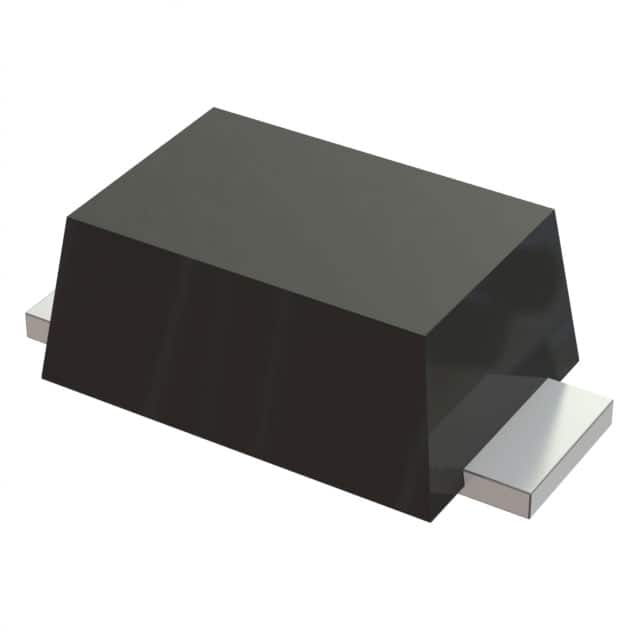
Diodes Incorporated LT4ME70CA
- Part No.:
- LT4ME70CA
- Manufacturer:
- Diodes Incorporated
- Category:
- TVS Diodes
- Package:
- DO-219AA
- Datasheet:
-
 LT4ME70CA.pdf
- Description:
- TRANSIENT VOLTAGE SUPPRESSOR PP
- Quantity:
- Payment:

- Shipping:

Inventory:3,258
Please send an inquiry. Send us your inquiry, and we will respond immediately.
Product details
Overview
LT4ME70CA from Diodes Incorporated is a surface-mount bidirectional transient voltage suppressor (TVS) diode designed for robust ESD and surge protection in DC power rails and signal lines. It features a 70 V stand-off voltage (VRWM), 86 V minimum breakdown voltage (VBR), 113 A peak pulse current (IRSM), 400 W peak pulse power (PPP), and sub-5 ns response time - deployed in automotive infotainment power inputs and USB-C port protection.
For engineers reviewing the LT4ME70CA datasheet, LT4ME70CA pinout, LT4ME70CA application, or LT4ME70CA equivalent, key selection criteria include clamping voltage at rated surge current, junction capacitance under bias, IEC 61000-4-2 contact/air discharge compliance, unidirectional vs. bidirectional polarity marking, and DO-219AA thermal derating behavior at elevated ambient temperatures.
Technical Context
This bidirectional TVS operates symmetrically across both polarities, with no cathode band marking per mechanical data - enabling clamping of positive and negative transients without polarity dependency. Its silicon avalanche structure delivers stable breakdown at 77.8–86.0 V (5% tolerance), and low leakage (<0.5 µA at 70 V) ensures minimal standby power impact on sensitive analog or low-power circuits.
The device uses a planar-junction, epoxy-molded DO-219AA package with MSL1 moisture sensitivity and matte tin terminals, optimized for reflow compatibility and high-reliability automotive environments. Junction capacitance is ≤10 pF at 0 V bias (typical), supporting protection of high-speed interfaces like CAN FD and USB 2.0 without signal integrity degradation.
Key Specifications
| Parameter | Value and Actual Design Meaning |
|---|---|
| Stand-off Voltage (VRWM) | 70 V - Maximum continuous reverse working voltage before significant leakage; defines safe operating rail margin for 60 V nominal systems. |
| Breakdown Voltage (VBR) | 77.8–86.0 V @ 1 mA - Avalanche onset range; ensures predictable clamping initiation during fast transients. |
| Clamping Voltage (VC) | 113 V @ 113 A (8/20 µs) - Peak voltage seen by protected circuit during full-rated surge; determines downstream component stress. |
| Peak Pulse Power (PPP) | 400 W @ 1 ms - Energy-handling capability for short-duration surges; validated per IEC 61000-4-5 waveform. |
| Junction Capacitance (CJ) | <10 pF @ 0 V - Low parasitic capacitance preserves signal rise/fall times in data lines up to 100 Mbps. |
| Response Time | <5.0 ns - Time from transient onset to clamping activation; critical for protecting against ESD events per IEC 61000-4-2. |
| Leakage Current (IR) | <0.5 µA @ 70 V - Negligible DC loading on battery-backed or ultra-low-power circuits. |
Pinout & Package
LT4ME70CA is housed in a DO-219AA surface-mount package (3.8 × 1.9 × 1.18 mm), featuring two symmetrical terminals with no polarity marking - confirming its bidirectional configuration. The package meets UL 94V-0 flammability rating, is halogen- and antimony-free ("Green"), and rated MSL1 for unlimited floor life.
| Pin/Terminal | Circuit Role | Design Meaning |
|---|---|---|
| Anode / Cathode (symmetrical) | Transient conduction path | Both terminals function identically; bidirectional clamping occurs regardless of voltage polarity applied. |
| Case / Mold Compound | Thermal and mechanical interface | Provides 1.0 W steady-state power dissipation at 120°C lead temperature; enables PCB copper pour thermal coupling. |
Key Features
| Feature | Design Value |
|---|---|
| IEC 61000-4-2 ESD immunity | ±30 kV air discharge, ±30 kV contact discharge - exceeds automotive and industrial immunity requirements without external filtering. |
| RoHS 3 & "Green" compliance | Br & Cl <900 ppm, Sb <1000 ppm - satisfies EU environmental mandates and OEM sustainability sourcing policies. |
| Fast transient response | <5 ns turn-on - mitigates nanosecond-scale ESD pulses before IC input structures experience damage. |
| Low clamping ratio (VC/VBR) | ~1.45 - Balances low let-through voltage with robust surge margin; reduces risk of secondary overstress in protected ICs. |
| MSL1 moisture sensitivity | No bake requirement prior to reflow - eliminates production delays and moisture-induced popcorning failures. |
Applications
| Automotive Infotainment Power Input | USB-C Port ESD Protection |
|---|---|
Use Scenario: 12 V supply line feeding head unit MCU and display driver ICs exposed to load dump and jump-start transients. IC Role / Device Role: Primary overvoltage clamp limiting rail excursions to <115 V during ISO 7637-2 Pulse 5a events. Use Value: Prevents latch-up or gate oxide rupture in 3.3 V/5 V logic supplies by holding clamped voltage below absolute maximum ratings of downstream regulators. |
Use Scenario: VBUS and CC lines in automotive-grade USB-C receptacles subject to hot-plug ESD and cable-induced surges. IC Role / Device Role: Bidirectional clamping element placed directly at connector footprint to shunt transients before entering USB controller PHY. Use Value: Maintains signal integrity with <10 pF capacitance while passing IEC 61000-4-2 Level 4 testing without data corruption or link reset. |
| Industrial CAN FD Bus Node | Smart Meter AC/DC Power Supply Input |
Use Scenario: CANH/CANL differential pair in factory automation node connected to long trunk cables susceptible to lightning-induced surges. IC Role / Device Role: Common-mode TVS pair (two LT4ME70CA devices) across bus lines to ground, suppressing common-mode transients up to 400 W. Use Value: Enables reliable communication at 5 Mbps without bit errors or transceiver shutdown, even after repeated 1 kV/500 A surge exposure. |
Use Scenario: Rectified AC input stage of utility smart meter where MOVs are unsuitable due to aging and leakage drift. IC Role / Device Role: Secondary surge limiter after bridge rectifier, absorbing residual 10/1000 µs surges not clamped by primary varistor. Use Value: Provides stable, non-degrading clamping performance over 15+ year field life with <0.5 µA leakage at 70 V, avoiding meter calibration drift. |
Equivalent & Alternatives
The following parts are listed as comparable options for similar bidirectional TVS diode applications.
| Alternative Part | Technical Difference | Application Difference | Selection Advice |
|---|---|---|---|
| SMAJ70A | DO-214AC package; 70 V VRWM, 113 V VC @ 100 A; higher junction capacitance (~25 pF) | Less suitable for >25 Mbps data lines; larger footprint limits high-density layout | Prefer when legacy DO-214AC footprint compatibility is required and signal speed is ≤10 Mbps. |
| TPSMD70CA | DO-214AB package; 70 V VRWM, 115 V VC @ 110 A; RoHS-compliant but not "Green" (Br/Cl content unspecified) | Not qualified to same halogen-free specification; may fail OEM sustainability audits | Acceptable for cost-sensitive industrial designs where "Green" compliance is not mandated. |
Compared with SMAJ70A and TPSMD70CA, LT4ME70CA offers superior high-speed interface support via lower capacitance, tighter thermal resistance in DO-219AA, and verified halogen-free status - making it optimal for next-generation automotive and smart infrastructure designs requiring both performance and compliance.
Availability
LT4ME70CA is available at Aetrix Electronics and suitable for automotive infotainment systems, USB-C peripheral protection, and industrial CAN FD nodes requiring stable component supply, long-term lifecycle assurance, and traceable green-material sourcing.
Supply support for LT4ME70CA includes scheduled delivery planning, volume procurement assistance, BOM continuity management, traceable sourcing, and lifecycle availability coordination for OEM customers, industrial embedded developers, connected-device designers, and electronics production programs.
Manufacturer
Diodes Incorporated is a global semiconductor company specializing in discrete, analog, and mixed-signal solutions, with design centers across Asia, Europe, and the US and manufacturing in IATF 16949-certified facilities.
LT4ME70CA belongs to Diodes' LT4ME series of AEC-Q101-qualified TVS diodes, engineered specifically for automotive-grade surge and ESD protection where reliability, low leakage, and halogen-free compliance are mandatory.
FAQ
Is LT4ME70CA unidirectional or bidirectional?
LT4ME70CA is a bidirectional TVS diode, confirmed by the 'CA' suffix in its part number and absence of cathode band marking per Diodes' mechanical data sheet. It clamps transients of either polarity symmetrically, with identical VBR and VC characteristics in both directions.
What is the maximum operating junction temperature for LT4ME70CA?
The LT4ME70CA has a specified operating junction temperature range of –55 °C to +175 °C. This wide range supports deployment in under-hood automotive environments and industrial enclosures without active cooling, provided PCB thermal design maintains TJ within limits during 400 W pulse events.
Does LT4ME70CA meet AEC-Q101 qualification?
Yes - Diodes Incorporated explicitly states that the LT4ME series is qualified to AEC-Q101 for automotive applications. The device is manufactured in IATF 16949-certified facilities and supports PPAP documentation upon request for automotive OEM programs.
How does LT4ME70CA compare to LT4ME70A in circuit behavior?
LT4ME70A is unidirectional (cathode-banded), while LT4ME70CA is bidirectional (no cathode band). In a circuit, LT4ME70CA protects both positive and negative transients across the same two terminals; LT4ME70A requires correct orientation and only clamps in one direction - making LT4ME70CA preferable for AC-coupled or polarity-agnostic signal lines.
LT4ME70CA Specifications
- Product attributes
- Attribute value
- Manufacturer:
- Diodes Incorporated
- Package/Case:
- DO-219AA
- Series:
- LT4ME
- Packaging:
- Tape & Reel (TR)
- Product Status:
- Active
- Type:
- Zener
- Unidirectional Channels:
- -
- Bidirectional Channels:
- 1
- Voltage - Reverse Standoff (Typ):
- 70V
- Voltage - Breakdown (Min):
- 77.8V
- Voltage - Clamping (Max) @ Ipp:
- 113V
- Current - Peak Pulse (10/1000µs):
- -
- Power - Peak Pulse:
- 400W
- Power Line Protection:
- No
- Applications:
- General Purpose
- Capacitance @ Frequency:
- -
- Operating Temperature:
- -55°C ~ 175°C (TJ)
- Grade:
- -
- Qualification:
- -
- Mounting Type:
- Surface Mount
- Supplier Device Package:
- DO-219AA
LT4ME70CA FAQ
1.How can I place an order for LT4ME70CA through Aetrix?
Please submit a Request for Quotation (RFQ) for LT4ME70CA on Aetrix. Our sales agent will provide a competitive quotation and guide you through the order confirmation once you accept the terms.
2.Are the price and stock information for LT4ME70CA reliable?
The price and inventory of LT4ME70CA are updated periodically and may fluctuate due to market conditions. Stock and pricing data are typically refreshed every 24 hours. Quotation validity for LT4ME70CA is usually 5 days.
3.What payment methods are accepted for LT4ME70CA?
We accept Wire Transfer, PayPal, Credit Card, Western Union, MoneyGram, and Escrow for LT4ME70CA transactions.
Note: Certain payment methods may incur a processing fee.
4.How is shipping managed for LT4ME70CA?
LT4ME70CA orders can be shipped via leading logistics carriers, including DHL, UPS, FedEx, TNT, or Registered Mail.
Once your LT4ME70CA order is processed, you will receive an email with the shipment details and tracking number.
Note: Tracking information may take up to 24 hours to appear. Express delivery typically takes 3–5 business days.
5.How can I obtain technical support or documentation for LT4ME70CA?
For technical support, including LT4ME70CA datasheets, pinout diagrams, or application guidance, please contact our engineering support team. They can provide detailed documentation and assistance for your LT4ME70CA requirements.
6.How does Aetrix verify that LT4ME70CA is sourced from the original manufacturer or authorized distributors?
All LT4ME70CA products on Aetrix are procured from qualified distributors and authorized channels. Our dedicated quality assurance team conducts strict verification, including traceability checks and, if necessary, third-party testing. This ensures that LT4ME70CA meets industry standards.
7.What is the process for return or replacement of LT4ME70CA?
All LT4ME70CA units undergo pre-shipment inspection (PSI). If there is an issue with LT4ME70CA, returns or replacements are accepted under the following conditions:
1.Quantity discrepancies, incorrect items, or visible external defects (such as breakage or corrosion), acknowledged by Aetrix.
2.The issue is reported within 90 days of delivery.
3.The LT4ME70CA part is unused and in its original packaging.
Return procedure for LT4ME70CA:
1.Submit a request within 90 days.
2.Obtain a Return Material Authorization (RMA) from Aetrix.
LT4ME70CA Tags
-
ESD9B5.0ST5G
onsemi
-
DESD3V3E1BL-7B
Diodes Incorporated
-
ESD5Z3.3T1G
onsemi
-
D5V0H1B2LP-7B
Diodes Incorporated
-
D5V0P1B2LP-7B
Diodes Incorporated
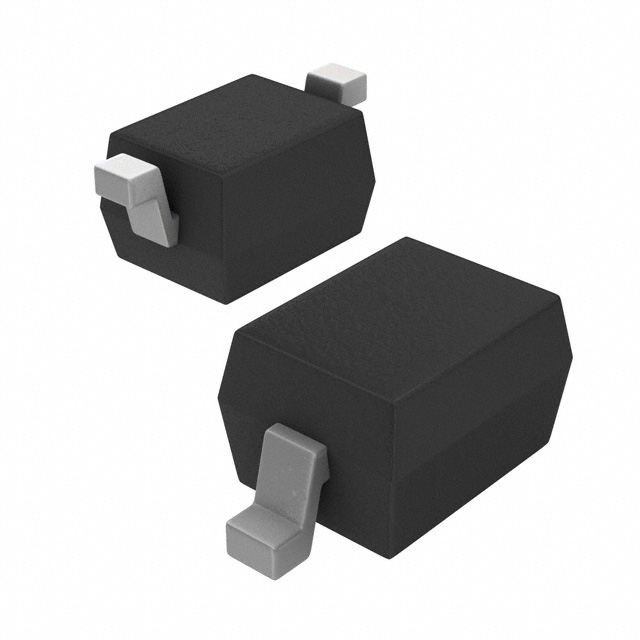
-
DESD5V0U1BA-7
Diodes Incorporated
-
ESD5Z5.0T1G
onsemi
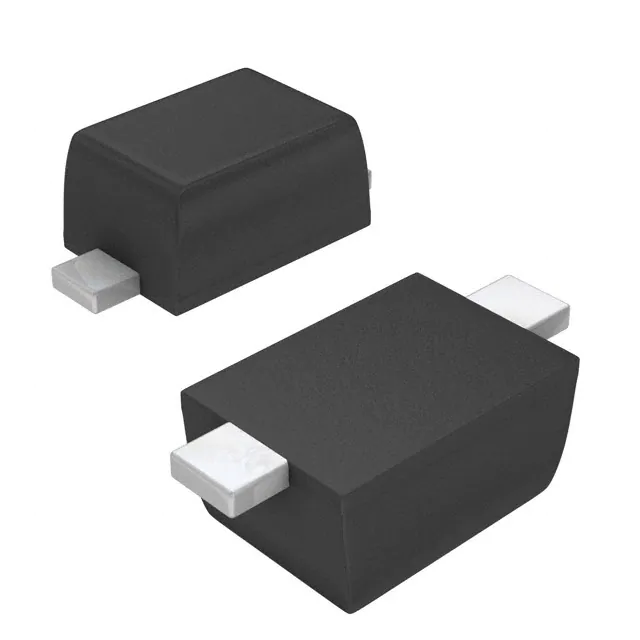
-
DESD5V0U1BB-7
Diodes Incorporated
-
D12V0L1B2LP-7B
Diodes Incorporated
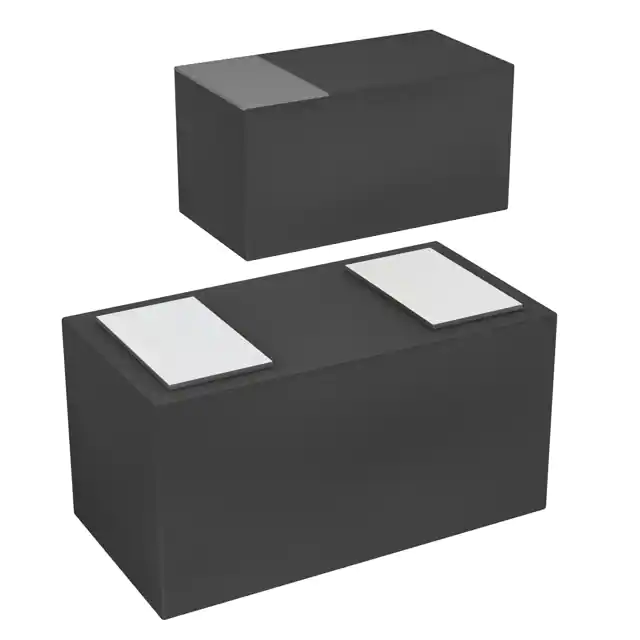
-
PESD2V0Y1BSFYL
Nexperia USA Inc.
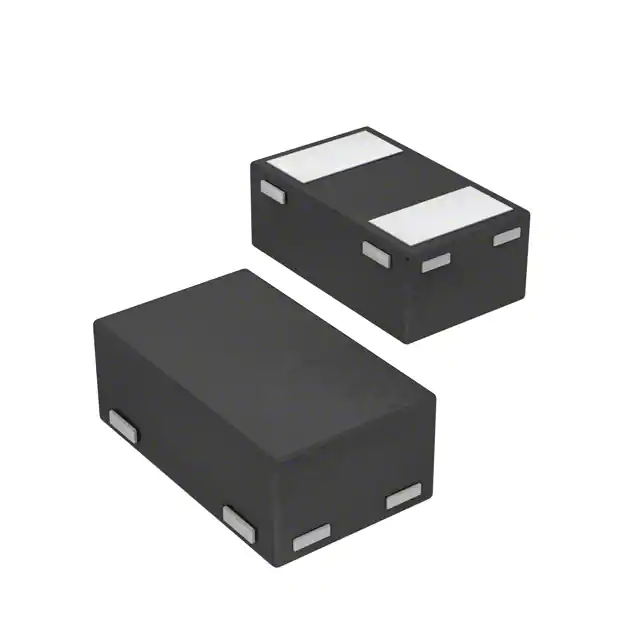
-
DF2S5M4CT,L3F
Toshiba Semiconductor and Storage
-
D5V0L1B2WS-7
Diodes Incorporated
Tech Hub

Hall effect sensor guide covering working principle, linear and digital sensors, Arduino circuits, current sensing, speed detection, automotive applications, A3144 examples, signal filtering and datash…

Product Change Notification guide for electronic components, covering PCN meaning, PCN vs PDN/EOL, common change types, risk levels, form-fit-function review, engineering validation, BOM control, LTB/L…

A practical guide to blend door actuators, covering HVAC function, symptoms, location, AC and heater issues, reset and calibration, replacement cost, electrical diagnosis, compatibility checks, and rep…

Engineering guide to Raspberry Pi alternatives, covering chip-level differences, Orange Pi, ROCK, Jetson, Banana Pi, NanoPi, Compute Module, Pico, GPIO, camera, HAT compatibility, and replacement risks…
Engineering guide to dynamic load response testing for high-current buck converters, covering load step setup, slew rate, Vcore undershoot, overshoot, recovery time, probe location, output capacitors a…
Engineering guide to output capacitor selection for ASIC Vcore rails, covering bulk capacitors, polymer capacitors, MLCC decoupling, DC bias, ESR, ESL, placement, transient response and substitution ri…
Engineering guide to high-current ASIC Vcore rails, covering 12-phase buck architecture, PMBus control, dynamic load testing, output capacitor networks, smart power stage selection, thermal design and …
Voltage regulator guide covering linear, LDO, 7805, Zener, adjustable, buck, VRM and alternator regulators, with design checks, testing methods, troubleshooting and datasheet-based selection.
Amplifier guide covering voltage, current and power amplification, gain, feedback, amplifier classes, audio and RF applications, op-amp circuits, transimpedance amplifiers, datasheet selection and trou…

Machine vision system guide covering components, inspection workflow, camera and lens selection, FOV, pixel resolution, motion blur, strobe lighting, bandwidth, 2D/3D vision, integration, troubleshooti…


