
 My Inquiry
 My Account


Analog Devices Inc./Maxim Integrated MAX5980GTJ+
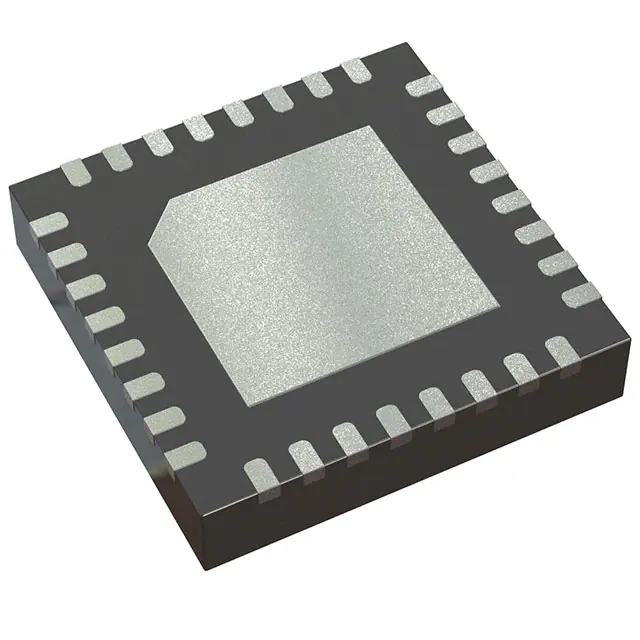
- Part No.:
- MAX5980GTJ+
- Manufacturer:
- Analog Devices Inc./Maxim Integrated
- Category:
- Power Over Ethernet (PoE) Controllers
- Package:
- 32-WFQFN Exposed Pad
- Datasheet:
-
 MAX5980GTJ+.pdf
- Description:
- IC POE CNTRL 4 CHANNEL 32TQFN
- Quantity:
- Payment:

- Shipping:

Inventory:202
Please send an inquiry. Send us your inquiry, and we will respond immediately.
Product details
Overview
MAX5980GTJ+ from Maxim Integrated is a quad IEEE 802.3at/af-compliant Power Sourcing Equipment (PSE) controller for PoE midspan and endpoint systems. It performs PD discovery, classification (including Class 5), current limiting, and DC load-disconnect detection across four independent ports. Each port delivers up to 70W with 0.25Ω current-sense resistor support and operates over –40°C to +105°C.
For engineers reviewing the MAX5980GTJ+ datasheet, MAX5980GTJ+ pinout, MAX5980GTJ+ application, or MAX5980GTJ+ equivalent, this page provides verified technical context, real-world port-level specifications, I²C-configurable timing thresholds, thermal shutdown behavior, and validated alternative PSE controllers for multi-port PoE system design.
Technical Context
The MAX5980GTJ+ implements a fully integrated, per-port state machine for IEEE 802.3at/af detection (two-phase voltage probing), classification (2-event and Class 5), current-limit enforcement (programmable 101–455 mV sense threshold), and foldback protection. Its 9-bit ADC enables real-time port voltage and current monitoring via I²C interface.
It supports three physical configuration modes-auto, semiautomatic, and manual-via hardware pins (AUTO, EN_CL5, MIDSPAN) and register control. The device integrates VEE UVLO/OVLO (29 V / 62 V), thermal shutdown at +140°C, and programmable fault timers (tFAULT = 50–70 ms), all operating from a single 32–60 V analog supply referenced to VEE.
Key Specifications
| Parameter | Value and Actual Design Meaning |
|---|---|
| IEEE Compliance | 802.3at (PoE+) and 802.3af (PoE) compliant; supports Class 5 (up to 70W/port) |
| Port Count | 4 independent PSE ports with full per-port detection, classification, and current limiting |
| Current Sensing | 0.25 Ω external sense resistor; 9-bit ADC with ±3 LSB offset error over –40°C to +105°C |
| Operating Voltage | VAGND–VEE = 32 V to 60 V; VEE UVLO = 29 V, OVLO = 62 V |
| Interface | I²C-compatible 3-wire serial interface (SCL/SDAIN/SDAOUT); supports fast-mode up to 400 kHz |
| Thermal Protection | Thermal shutdown at +140°C with 20°C hysteresis; junction temperature limited to +150°C |
| Package & Temp | 32-pin TQFN-EP (5 mm × 5 mm); rated for –40°C to +105°C ambient operation |
Pinout & Package
MAX5980GTJ+ is housed in a thermally enhanced 32-pin TQFN-EP package (5 mm × 5 mm) with exposed pad connected to VEE. The package supports high-power dissipation (2758.6 mW at TA = +70°C) and automotive-grade thermal performance (θJA = 29°C/W).
| Pin/Terminal | Circuit Role | Design Meaning |
|---|---|---|
| SCL, SDAIN, SDAOUT | I²C serial interface signals | Enable full software configuration of port timing, thresholds, and mode; referenced to DGND |
| OUT1–OUT4 | Port output voltage sense inputs | Monitor port voltage for PGOOD generation and fault detection; each tied to respective port output |
| SENSE1–SENSE4, SVEE1, SVEE2 | Current-sense differential inputs | Kelvin-connected to 0.25 Ω sense resistor; SVEE1 handles ports 1/2, SVEE2 handles ports 3/4 |
| GATE1–GATE4 | External MOSFET gate drivers | Drive high-side N-channel MOSFETs; provide 8.5–10.5 V gate overdrive with strong pulldown (25 mA) |
| EN_CL5, AUTO, MIDSPAN | Hardware mode configuration inputs | Set Class 5 enable, auto/shutdown default, and midspan cadence timing at power-up/reset |
| INT | Open-drain interrupt output | Asserts low on port event (fault, disconnect, classification complete); requires external pullup |
Key Features
| Feature | Design Value |
|---|---|
| Class 5 support | Enables 70W per port delivery with dedicated 2-event classification and 405–455 mV current-limit threshold |
| High-capacitance legacy PD detection | Maintains compatibility with older 802.3af devices using >10 µF input capacitance |
| DC load-disconnect detection | Triggers within 300–400 ms when SENSE_ falls below 1.25–2.5 mV, preventing false disconnects |
| Programmable fault response | Configurable tFAULT (50–70 ms), restart timer (0.8–1.1 s), and foldback voltage thresholds (18–46 V) |
| Single-supply operation | Operates from 32–60 V analog rail (VAGND–VEE); generates internal 3.3 V digital supply (VDD) |
Applications
| Midspan Power Injector | Enterprise Switch PSE Module |
|---|---|
|
Use Scenario: Adds PoE capability to non-PoE Ethernet switches via inline injection between switch and endpoint. IC Role / Device Role / Timing Role: Quad PSE controller managing four independent PoE channels with automatic detection, classification, and power ramp-up. Use Value: Enables Class 5 (70W) delivery to high-power devices like PTZ cameras and thin clients without redesigning core switch hardware. |
Use Scenario: Integrated into Layer 3 managed switches supporting IEEE 802.3at/af across 24–48 ports. IC Role / Device Role / Timing Role: Per-port PSE controller handling detection, classification, current limiting, and thermal monitoring for each PoE channel. Use Value: Provides deterministic 50–70 ms fault response and real-time current/voltage telemetry via I²C for centralized switch firmware control. |
| Industrial PoE Hub | Smart Building Network Node |
|
Use Scenario: Ruggedized PoE hub deployed in factory automation for powering IP cameras, sensors, and wireless APs. IC Role / Device Role / Timing Role: Quad PSE IC operating across –40°C to +105°C with VEE UVLO/OVLO and thermal shutdown. Use Value: Ensures reliable PoE delivery under wide temperature swings and brownout conditions common in industrial environments. |
Use Scenario: Embedded in intelligent lighting or HVAC controllers delivering PoE to occupancy sensors and smart actuators. IC Role / Device Role / Timing Role: Software-configurable PSE enabling field-upgradable power profiles and diagnostics via I²C. Use Value: Supports dynamic power allocation and remote fault logging-critical for predictive maintenance in building management systems. |
Equivalent & Alternatives
The following parts are listed as comparable options for similar PSE controller applications.
| Alternative Part | Technical Difference | Application Difference | Selection Advice |
|---|---|---|---|
| MAX5974A | Single-port 802.3af/at PSE controller; no Class 5 support; smaller 24-pin TQFN | Limited to 30W/port; lacks 2-event classification and programmable foldback | Choose for cost-sensitive, lower-power single-port designs where Class 5 is unnecessary. |
| TPS23861 | Quad-port 802.3at PSE with integrated 100V MOSFET drivers; supports Class 4 only (30W/port) | No Class 5 capability; fixed 10-bit ADC; no high-capacitance legacy PD detection | Select when integrated FET drivers reduce BOM count and Class 5 is not required. |
Compared with MAX5980GTJ+, MAX5974A offers reduced channel count and power capability but lower system cost, while TPS23861 trades Class 5 support and advanced detection for integrated power stages-making MAX5980GTJ+ optimal for future-proof, high-power quad-port PoE infrastructure.
Availability
MAX5980GTJ+ is available at Aetrix Electronics and suitable for midspan injectors, enterprise switches, industrial PoE hubs, and smart building network nodes requiring stable component supply across extended temperature ranges and long production lifecycles.
Supply support for MAX5980GTJ+ includes scheduled delivery planning, volume procurement assistance, BOM continuity management, traceable sourcing, and lifecycle availability coordination for OEM customers, industrial embedded developers, connected-device designers, and electronics production programs.
Manufacturer
Maxim Integrated (now part of Analog Devices) designs precision analog, mixed-signal, and power management ICs for demanding industrial, automotive, and communications applications.
The MAX5980 product line delivers highly configurable, quad-port IEEE 802.3at/af PSE controllers targeting next-generation PoE infrastructure where Class 5 power, thermal robustness, and software-defined operation are essential.
FAQ
What is the maximum power per port supported by the MAX5980GTJ+?
The MAX5980GTJ+ supports up to 70W per port when Class 5 is enabled, complying with IEEE 802.3at (PoE+) standards. This requires proper configuration of the ILIM_ register and use of appropriate external MOSFETs and magnetics. The device maintains full 802.3af compatibility for legacy devices while delivering higher power to Class 5 PDs.
Does the MAX5980GTJ+ integrate MOSFET drivers or require external power switches?
The MAX5980GTJ+ does not integrate power MOSFETs but provides four dedicated gate drivers (GATE1–GATE4) capable of driving external high-side N-channel MOSFETs. Each driver delivers 8.5–10.5 V gate overdrive and supports strong pulldown (25 mA), enabling efficient switching with discrete FETs selected for voltage rating and RDS(on) requirements.
How does the MAX5980GTJ+ handle detection of legacy high-capacitance PDs?
The MAX5980GTJ+ retains high-capacitance detection capability for legacy 802.3af PDs, supporting input capacitances exceeding 10 µF. This is achieved through adaptive timing and voltage-probing sequences during the first and second detection phases (VDPH1 = 3.8–4.2 V, VDPH2 = 8.8–9.4 V), ensuring reliable identification without false negatives.
Can the MAX5980GTJ+ operate in both endpoint and midspan PoE configurations?
Yes, the MAX5980GTJ+ supports both endpoint and midspan configurations. Midspan mode is activated by asserting the MIDSPAN pin high or configuring MIDSPAN_ bits in register R15h. In midspan mode, the device implements cadence timing with ≥2 s retry delay after failed detection, meeting IEEE 802.3at requirements for inline power injectors.
What thermal protection features are implemented in the MAX5980GTJ+?
The MAX5980GTJ+ includes thermal shutdown at +140°C with 20°C hysteresis, ensuring safe operation under overload or poor heatsinking. It also monitors VEE supply for undervoltage (29 V) and overvoltage (62 V) lockout, and provides per-port current limiting with foldback behavior above 18–46 V VAGND–VOUT differential to prevent thermal runaway during sustained faults.
MAX5980GTJ+ Specifications
- Product attributes
- Attribute value
- Manufacturer:
- Analog Devices Inc./Maxim Integrated
- Series:
- -
- Package/Case:
- 32-WFQFN Exposed Pad
- Packaging:
- Tray
- Product Status:
- Active
- Type:
- Controller (PSE)
- Number of Channels:
- 4
- Power - Max:
- 70 W
- Internal Switch(s):
- No
- Auxiliary Sense:
- No
- Standards:
- 802.3at (PoE+), 802.3af (PoE)
- Voltage - Supply:
- 32V ~ 60V
- Current - Supply:
- 5mA
- Operating Temperature:
- -40°C ~ 105°C
- Mounting Type:
- Surface Mount
- Supplier Device Package:
- 32-TQFN (5x5)
MAX5980GTJ+ FAQ
1.How can I place an order for MAX5980GTJ+ through Aetrix?
Please submit a Request for Quotation (RFQ) for MAX5980GTJ+ on Aetrix. Our sales agent will provide a competitive quotation and guide you through the order confirmation once you accept the terms.
2.Are the price and stock information for MAX5980GTJ+ reliable?
The price and inventory of MAX5980GTJ+ are updated periodically and may fluctuate due to market conditions. Stock and pricing data are typically refreshed every 24 hours. Quotation validity for MAX5980GTJ+ is usually 5 days.
3.What payment methods are accepted for MAX5980GTJ+?
We accept Wire Transfer, PayPal, Credit Card, Western Union, MoneyGram, and Escrow for MAX5980GTJ+ transactions.
Note: Certain payment methods may incur a processing fee.
4.How is shipping managed for MAX5980GTJ+?
MAX5980GTJ+ orders can be shipped via leading logistics carriers, including DHL, UPS, FedEx, TNT, or Registered Mail.
Once your MAX5980GTJ+ order is processed, you will receive an email with the shipment details and tracking number.
Note: Tracking information may take up to 24 hours to appear. Express delivery typically takes 3–5 business days.
5.How can I obtain technical support or documentation for MAX5980GTJ+?
For technical support, including MAX5980GTJ+ datasheets, pinout diagrams, or application guidance, please contact our engineering support team. They can provide detailed documentation and assistance for your MAX5980GTJ+ requirements.
6.How does Aetrix verify that MAX5980GTJ+ is sourced from the original manufacturer or authorized distributors?
All MAX5980GTJ+ products on Aetrix are procured from qualified distributors and authorized channels. Our dedicated quality assurance team conducts strict verification, including traceability checks and, if necessary, third-party testing. This ensures that MAX5980GTJ+ meets industry standards.
7.What is the process for return or replacement of MAX5980GTJ+?
All MAX5980GTJ+ units undergo pre-shipment inspection (PSI). If there is an issue with MAX5980GTJ+, returns or replacements are accepted under the following conditions:
1.Quantity discrepancies, incorrect items, or visible external defects (such as breakage or corrosion), acknowledged by Aetrix.
2.The issue is reported within 90 days of delivery.
3.The MAX5980GTJ+ part is unused and in its original packaging.
Return procedure for MAX5980GTJ+:
1.Submit a request within 90 days.
2.Obtain a Return Material Authorization (RMA) from Aetrix.
MAX5980GTJ+ Tags

-
TPS2378DDAR
Texas Instruments
-
TPS23753APWR
Texas Instruments
-
TPS23756PWPR
Texas Instruments
-
TPS23750PWPR
Texas Instruments
-
MP8007GV-Z
Monolithic Power Systems Inc.
-
TPS23861PWR
Texas Instruments
-
TPS23753PWR
Texas Instruments
-
PD69201ILD-TR
Microchip Technology
-
SI3402-B-GM
Skyworks Solutions Inc.
-
SI3402-B-GMR
Skyworks Solutions Inc.
-
SI34071-A01-GMR
Skyworks Solutions Inc.
-
SI3404-A-GMR
Skyworks Solutions Inc.
Tech Hub

A practical engineering guide to 3.3V and 5V logic compatibility, input thresholds, resistor dividers, translator ICs, MOSFET level shifting, I2C pull-ups, timing limits and power-sequencing risks.

The 74HC595 uses push-pull logic outputs, while the TPIC6B595 uses 50 V open-drain DMOS sinks for higher-power loads. This guide compares timing, current limits, 3.3 V interfacing, load wiring, thermal…

The 74HC595 converts serial data into eight stable parallel outputs. This guide covers pin functions, shift and storage timing, OE and MR behavior, drive-current limits, cascading, voltage compatibilit…

A technical comparison of level-sensitive latches and edge-triggered flip-flops, covering timing windows, setup and hold limits, master–slave operation, time borrowing, race-through, HDL inference and…

A D latch stores one bit while Enable controls when data can pass. This reference covers gate-level operation, truth tables, transparency, setup and hold timing, LE versus OE, common ICs and practical …

An SR latch stores one bit through cross-coupled feedback. This engineering reference covers NOR and NAND implementations, truth tables, forbidden-state recovery, gated operation, switch debouncing, fa…

Latch circuits retain one bit through feedback. This technical reference covers SR and D latches, truth tables, transparency, timing limits, latch-versus-flip-flop behavior, applications and common log…

An engineering guide to LED driver operation, constant-current and constant-voltage outputs, linear and switching topologies, dimming, IC selection, calculations, replacement compatibility, and fault c…

Operational amplifier guide covering op amp basics, feedback, ideal vs real op amps, common configurations, buffer circuits, offset, bias current, gain-bandwidth, slew rate, rail-to-rail limits and sel…

Jumper cables guide covering safe connection order, red and black clamp placement, final ground connection, cable gauge, length, clamp quality, copper vs CCA cables, jump starter comparison and battery…


