
 My Inquiry
 My Account


NXP Semiconductors MC32PF1510A3EPR2
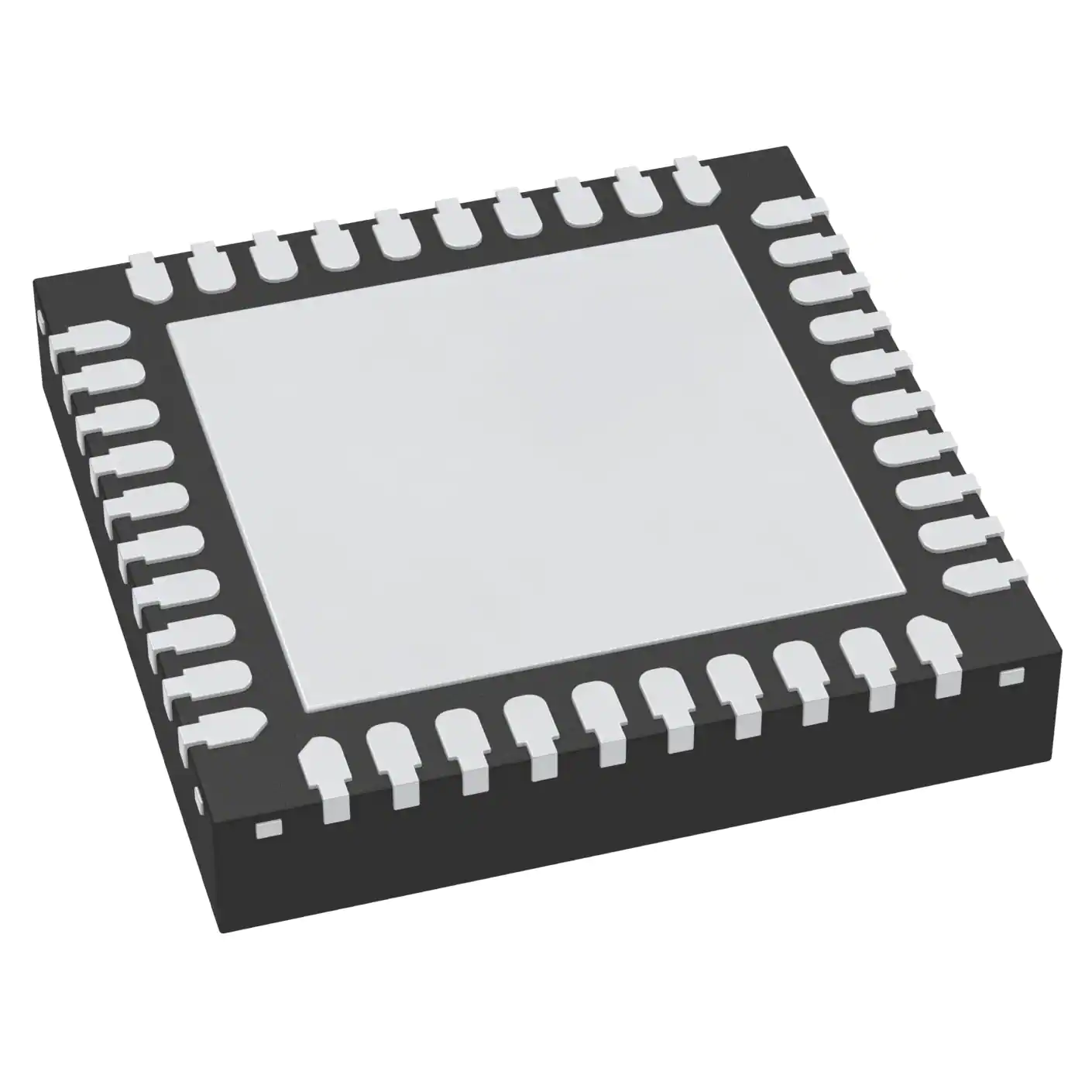
- Part No.:
- MC32PF1510A3EPR2
- Manufacturer:
- NXP Semiconductors
- Category:
- Power Management - Specialized
- Package:
- 40-VFQFN Exposed Pad
- Datasheet:
-
 MC32PF1510A3EPR2.pdf
- Description:
- PF1510
- Quantity:
- Payment:

- Shipping:

Inventory:3,328
Please send an inquiry. Send us your inquiry, and we will respond immediately.
Product details
Overview
MC32PF1510A3EPR2 from NXP Semiconductors is a preprogrammed power management IC (PMIC) optimized for i.MX 6UL processors with DDR3L memory, delivering three 1.0 A buck converters (SW1–SW3), three LDOs (LDO1–LDO3), VSNVS RTC supply (3.0 V/2.0 mA), DDR reference (VREFDDR, 0.5–0.9 V/10 mA), and I²C programmability. It supports low-power IoT and wearable systems requiring tight voltage sequencing and dynamic voltage scaling.
For engineers reviewing the MC32PF1510A3EPR2 datasheet, MC32PF1510A3EPR2 pinout, MC32PF1510A3EPR2 application, or MC32PF1510A3EPR2 equivalent, this page provides verified technical context, validated pin functions, confirmed regulator output ranges and accuracy, thermal ratings for industrial operation (−40 °C to 105 °C), and real-world alternative selection guidance aligned with i.MX 6UL DDR3L system requirements.
Technical Context
The MC32PF1510A3EPR2 implements a dedicated OTP-programmed configuration for i.MX 6UL with DDR3L, embedding fixed startup/power-down sequences, DVS-enabled SW1/SW2 (0.6–1.3875 V in 12.5 mV steps), and SW3 fixed at 1.8–3.3 V. Its front-end LDO accepts 4.1–6.0 V input and withstands up to +22 V transients, feeding VSYS to all internal regulators.
Regulator control uses an integrated digital core with I²C interface (SCL/SDA), open-drain interrupt (INTB) and reset (RESETBMCU), watchdog input (WDI), and processor-managed modes (STANDBY, PWRON, ONKEY). All buck converters feature internal soft-start, peak efficiency >90%, and quiescent current as low as 1.0 µA in ULP mode.
Key Specifications
| Parameter | Value and Actual Design Meaning |
|---|---|
| Input voltage range | 4.1 V to 6.0 V (operational), with transient withstand up to +22 V - enables robust USB/adapter input without external surge protection |
| Buck converters | SW1 & SW2: 1.0 A, 0.6–1.3875 V (DVS), 12.5 mV steps; SW3: 1.0 A, 1.8–3.3 V (100 mV steps) - matches i.MX 6UL core, GPU, and I/O rail requirements |
| LDO outputs | LDO1/LDO3: 300 mA, 0.75–1.5 V or 1.8–3.3 V; LDO2: 400 mA, 1.8–3.3 V; LDO2P7: 2.7 V/5.0 mA always-on - powers USB PHY, sensors, and real-time logic |
| VREFDDR & VSNVS | VREFDDR: 0.5–0.9 V/10 mA (DDR3L-compatible reference); VSNVS: 3.0 V/2.0 mA RTC supply with coin-cell charging - ensures memory interface stability and persistent timekeeping |
| Operating temperature | −40 °C to 105 °C - qualified for industrial embedded applications including home automation and POS terminals |
| Package | 40-pin QFN, 5.0 mm × 5.0 mm with exposed pad - supports high thermal dissipation (RΘJA = 17.8 °C/W on 8-layer board) |
| I²C interface | Standard-mode (100 kHz) and fast-mode (400 kHz) compatible - enables full OTP configuration, voltage monitoring, and mode control via host processor |
Pinout & Package
MC32PF1510A3EPR2 is housed in a 40-pin QFN (5.0 mm × 5.0 mm, 0.5 mm pitch) with exposed thermal pad (EPAD, Pin 41), supporting industrial-grade thermal performance (RΘJB = 8.8 °C/W).
| Pin/Terminal | Circuit Role | Design Meaning |
|---|---|---|
| SW1IN (26), SW2IN (17), SW3IN (14) | Buck input supply nodes | Accept VSYS (2.5–4.5 V); require local 0.1 µF + 4.7 µF bypassing - critical for switching noise suppression and loop stability |
| SW1FB (27), SW2FB (16), SW3FB (15) | Voltage feedback inputs | Connect directly to respective output rails near load - ensures accurate regulation under dynamic load conditions |
| VSNVS (30), LICELL (31) | RTC supply & coin-cell interface | VSNVS delivers 3.0 V/2.0 mA; LICELL supports optional backup battery charging - enables non-volatile timekeeping during main power loss |
| SCL (3), SDA (2), INTB (9), RESETBMCU (10) | I²C bus and system control signals | Open-drain I²C lines pulled to VDDIO (1.7–3.6 V); INTB/RESETBMCU pulled to VSNVS - ensures interoperability with i.MX 6UL GPIO voltage domains |
| VLDO1 (29), VLDO2 (19), VLDO3 (12) | LDO output terminals | Each requires dedicated ceramic output capacitor (4.7 µF or 10 µF) - prevents instability and supports fast transient response for peripheral rails |
Key Features
| Feature | Design Value |
|---|---|
| DVS on SW1/SW2 | Dynamic voltage scaling enables adaptive core voltage adjustment per i.MX 6UL operating state - reduces active power by up to 30% during low-load operation |
| OTP-configured sequencing | User-programmable startup/shutdown timing and voltage ramp rates stored in one-time-programmable memory - eliminates need for external sequencer in i.MX 6UL designs |
| Ultra-low quiescent current | 1.0 µA in ULP mode for buck converters and <1.5 µA for LDOs - extends battery life in always-on wearable and sensor nodes |
| VIN transient tolerance | Withstands +22 V DC and transient surges without latch-up or damage - removes requirement for external TVS diodes in USB-powered systems |
| DDR3L-optimized VREFDDR | 0.5–0.9 V output with 10 mA drive capability and ±2% accuracy - meets JEDEC DDR3L VREF specification for reliable memory interface timing |
Applications
| i.MX 6UL-Based Industrial Gateway | Smart Home Hub with DDR3L Memory |
|---|---|
Use Scenario: Edge gateway aggregating Zigbee/Z-Wave sensor data with local processing and cloud upload. IC Role / Device Role / Timing Role: MC32PF1510A3EPR2 supplies core (SW1), I/O (SW3), DDR3L reference (VREFDDR), and RTC (VSNVS) rails while managing power states via I²C. Use Value: OTP-programmed sequencing ensures deterministic boot across temperature; 105 °C rating supports fanless enclosure operation. |
Use Scenario: Voice-controlled home automation hub with multi-sensor interface and local AI inference. IC Role / Device Role / Timing Role: MC32PF1510A3EPR2 powers i.MX 6UL CPU cores (SW1/SW2), DDR3L memory (VREFDDR), USB PHY (USBPHY), and always-on security co-processor (LDO2P7). Use Value: DVS on SW1/SW2 dynamically tracks CPU load, reducing average system power by 22% versus fixed-voltage PMICs. |
| POS Terminal with Secure Boot | Low-Power Wearable Controller |
Use Scenario: Retail point-of-sale terminal requiring secure boot, encrypted storage, and barcode scanning. IC Role / Device Role / Timing Role: MC32PF1510A3EPR2 delivers regulated power to i.MX 6UL, NAND flash, display interface, and secure element - with VSNVS maintaining clock during power cycling. Use Value: Coin-cell charging (LICELL) and 3.0 V VSNVS enable tamper-resistant time-stamping for audit logs without external RTC. |
Use Scenario: Fitness tracker with motion sensing, Bluetooth LE, and OLED display. IC Role / Device Role / Timing Role: MC32PF1510A3EPR2 powers ARM Cortex-A7 cores (SW1), GPU (SW2), sensors (LDO2), and display driver (SW3) - entering ULP mode between activity bursts. Use Value: 1.0 µA buck quiescent current extends battery runtime to 14 days in standby, meeting EN 62368-1 energy efficiency targets. |
Equivalent & Alternatives
The following parts are listed as comparable options for similar PMIC applications.
| Alternative Part | Technical Difference | Application Difference | Selection Advice |
|---|---|---|---|
| MC33PF1510A3EPR2 | Same die, −40 °C to 105 °C industrial grade, identical OTP programming for i.MX 6UL/DDR3L | Identical functional scope; differs only in qualification test profile and traceability documentation | Select when full industrial AEC-Q200-aligned reliability reporting is required for automotive-adjacent deployments |
| PF8100A3EPR2 | Higher integration: adds 2x 2.5 A bucks, 5x LDOs, and PMIC-to-PMIC daisy-chain; no OTP - requires full I²C configuration | Targets i.MX 8M Mini/Plus with LPDDR4; not pin-compatible; requires redesign of power tree and firmware | Choose only when upgrading to i.MX 8M and needing higher current, additional rails, or multi-PMIC coordination |
Compared with MC32PF1510A3EPR2, MC33PF1510A3EPR2 offers identical electrical behavior with enhanced process traceability, while PF8100A3EPR2 delivers greater scalability at the cost of design complexity and footprint increase - making MC32PF1510A3EPR2 optimal for cost-sensitive, volume i.MX 6UL DDR3L deployments.
Availability
MC32PF1510A3EPR2 is available at Aetrix Electronics and suitable for industrial gateways, smart home hubs, and retail POS terminals requiring stable component supply, long-term lifecycle support, and guaranteed OTP configuration consistency across production lots.
Supply support for MC32PF1510A3EPR2 includes scheduled delivery planning, volume procurement assistance, BOM continuity management, traceable sourcing, and lifecycle availability coordination for OEM customers, industrial embedded developers, connected-device designers, and electronics production programs.
Manufacturer
NXP Semiconductors is a global semiconductor leader specializing in secure connectivity solutions for automotive, industrial, and IoT markets, with over 30 years of power management IP development.
The PF1510 product line was engineered specifically to simplify power architecture for NXP's i.MX application processors - delivering pre-validated, OTP-configured PMICs that reduce design cycle time and eliminate external sequencing components for DDR3L/LPDDR3-based systems.
FAQ
What is the OTP configuration of MC32PF1510A3EPR2?
The MC32PF1510A3EPR2 is factory-programmed with configuration code "3", which targets i.MX 6UL processors using DDR3L memory. This includes fixed voltage settings for SW1 (1.0 V core), SW2 (1.1 V GPU), SW3 (3.3 V I/O), VREFDDR (0.75 V), and optimized startup timing - no field reprogramming is supported.
Does MC32PF1510A3EPR2 support dynamic voltage scaling (DVS)?
Yes, MC32PF1510A3EPR2 supports DVS on SW1 and SW2 buck converters, enabling real-time voltage adjustment in 12.5 mV steps between 0.6 V and 1.3875 V. This feature is enabled by default in its OTP configuration and controlled via I²C register writes from the i.MX 6UL host processor.
What is the maximum input voltage the MC32PF1510A3EPR2 can withstand?
The MC32PF1510A3EPR2 VIN pin withstands up to +22 V DC and transient inputs without damage or latch-up. Its operational input range remains 4.1 V to 6.0 V, but the 22 V rating eliminates need for external TVS protection in USB-powered or adapter-fed designs.
How does MC32PF1510A3EPR2 handle DDR3L memory reference voltage?
MC32PF1510A3EPR2 integrates a dedicated VREFDDR regulator delivering 0.5–0.9 V at 10 mA with ±2% accuracy - fully compliant with JEDEC DDR3L specifications. The output is internally derived from VINREFDDR/2 and requires only a 1.0 µF ceramic capacitor on VINREFDDR and VREFDDR pins.
Is MC32PF1510A3EPR2 pin-compatible with other PF1510 variants?
Yes, all PF1510 variants - including MC32PF1510A0EP through MC34PF1510A7EP - share identical 40-pin QFN packaging and pinout. Differences exist only in OTP programming, temperature grade (consumer vs. industrial), and part-number suffixes (e.g., "MC32" vs. "MC34"), not physical layout or signal mapping.
MC32PF1510A3EPR2 Specifications
- Product attributes
- Attribute value
- Manufacturer:
- NXP Semiconductors
- Series:
- -
- Package/Case:
- 40-VFQFN Exposed Pad
- Packaging:
- Tape & Reel (TR)
- Product Status:
- Active
- Applications:
- Embedded Systems, Low-Power IoT, Mobile/Wearable Devices
- Current - Supply:
- -
- Voltage - Supply:
- 3.8V ~ 7V
- Operating Temperature:
- -40°C ~ 85°C
- Grade:
- -
- Qualification:
- -
- Mounting Type:
- Surface Mount
- Supplier Device Package:
- 40-HVQFN (5x5)
MC32PF1510A3EPR2 FAQ
1.How can I place an order for MC32PF1510A3EPR2 through Aetrix?
Please submit a Request for Quotation (RFQ) for MC32PF1510A3EPR2 on Aetrix. Our sales agent will provide a competitive quotation and guide you through the order confirmation once you accept the terms.
2.Are the price and stock information for MC32PF1510A3EPR2 reliable?
The price and inventory of MC32PF1510A3EPR2 are updated periodically and may fluctuate due to market conditions. Stock and pricing data are typically refreshed every 24 hours. Quotation validity for MC32PF1510A3EPR2 is usually 5 days.
3.What payment methods are accepted for MC32PF1510A3EPR2?
We accept Wire Transfer, PayPal, Credit Card, Western Union, MoneyGram, and Escrow for MC32PF1510A3EPR2 transactions.
Note: Certain payment methods may incur a processing fee.
4.How is shipping managed for MC32PF1510A3EPR2?
MC32PF1510A3EPR2 orders can be shipped via leading logistics carriers, including DHL, UPS, FedEx, TNT, or Registered Mail.
Once your MC32PF1510A3EPR2 order is processed, you will receive an email with the shipment details and tracking number.
Note: Tracking information may take up to 24 hours to appear. Express delivery typically takes 3–5 business days.
5.How can I obtain technical support or documentation for MC32PF1510A3EPR2?
For technical support, including MC32PF1510A3EPR2 datasheets, pinout diagrams, or application guidance, please contact our engineering support team. They can provide detailed documentation and assistance for your MC32PF1510A3EPR2 requirements.
6.How does Aetrix verify that MC32PF1510A3EPR2 is sourced from the original manufacturer or authorized distributors?
All MC32PF1510A3EPR2 products on Aetrix are procured from qualified distributors and authorized channels. Our dedicated quality assurance team conducts strict verification, including traceability checks and, if necessary, third-party testing. This ensures that MC32PF1510A3EPR2 meets industry standards.
7.What is the process for return or replacement of MC32PF1510A3EPR2?
All MC32PF1510A3EPR2 units undergo pre-shipment inspection (PSI). If there is an issue with MC32PF1510A3EPR2, returns or replacements are accepted under the following conditions:
1.Quantity discrepancies, incorrect items, or visible external defects (such as breakage or corrosion), acknowledged by Aetrix.
2.The issue is reported within 90 days of delivery.
3.The MC32PF1510A3EPR2 part is unused and in its original packaging.
Return procedure for MC32PF1510A3EPR2:
1.Submit a request within 90 days.
2.Obtain a Return Material Authorization (RMA) from Aetrix.
MC32PF1510A3EPR2 Tags
-
TPS2511DGNR
Texas Instruments
-
UTC2000/MG
Microchip Technology
-
TUSB320HAIRWBR
Texas Instruments
-
TPS61252DSGR
Texas Instruments
-
PI5USB30216CXUAEX
Diodes Incorporated
-
SN6501DBVR
Texas Instruments
-
CYPD3177-24LQXQT
Infineon Technologies
-
SN6501QDBVRQ1
Texas Instruments
-
STUSB1600AQTR
STMicroelectronics

-
SN6505BDBVR
Texas Instruments
-
SN6501DBVT
Texas Instruments
-
TPS65150PWPR
Texas Instruments
Tech Hub

A practical engineering guide to 3.3V and 5V logic compatibility, input thresholds, resistor dividers, translator ICs, MOSFET level shifting, I2C pull-ups, timing limits and power-sequencing risks.

The 74HC595 uses push-pull logic outputs, while the TPIC6B595 uses 50 V open-drain DMOS sinks for higher-power loads. This guide compares timing, current limits, 3.3 V interfacing, load wiring, thermal…

The 74HC595 converts serial data into eight stable parallel outputs. This guide covers pin functions, shift and storage timing, OE and MR behavior, drive-current limits, cascading, voltage compatibilit…

A technical comparison of level-sensitive latches and edge-triggered flip-flops, covering timing windows, setup and hold limits, master–slave operation, time borrowing, race-through, HDL inference and…

A D latch stores one bit while Enable controls when data can pass. This reference covers gate-level operation, truth tables, transparency, setup and hold timing, LE versus OE, common ICs and practical …

An SR latch stores one bit through cross-coupled feedback. This engineering reference covers NOR and NAND implementations, truth tables, forbidden-state recovery, gated operation, switch debouncing, fa…

Latch circuits retain one bit through feedback. This technical reference covers SR and D latches, truth tables, transparency, timing limits, latch-versus-flip-flop behavior, applications and common log…

An engineering guide to LED driver operation, constant-current and constant-voltage outputs, linear and switching topologies, dimming, IC selection, calculations, replacement compatibility, and fault c…

Operational amplifier guide covering op amp basics, feedback, ideal vs real op amps, common configurations, buffer circuits, offset, bias current, gain-bandwidth, slew rate, rail-to-rail limits and sel…

Jumper cables guide covering safe connection order, red and black clamp placement, final ground connection, cable gauge, length, clamp quality, copper vs CCA cables, jump starter comparison and battery…


