
 My Inquiry
 My Account


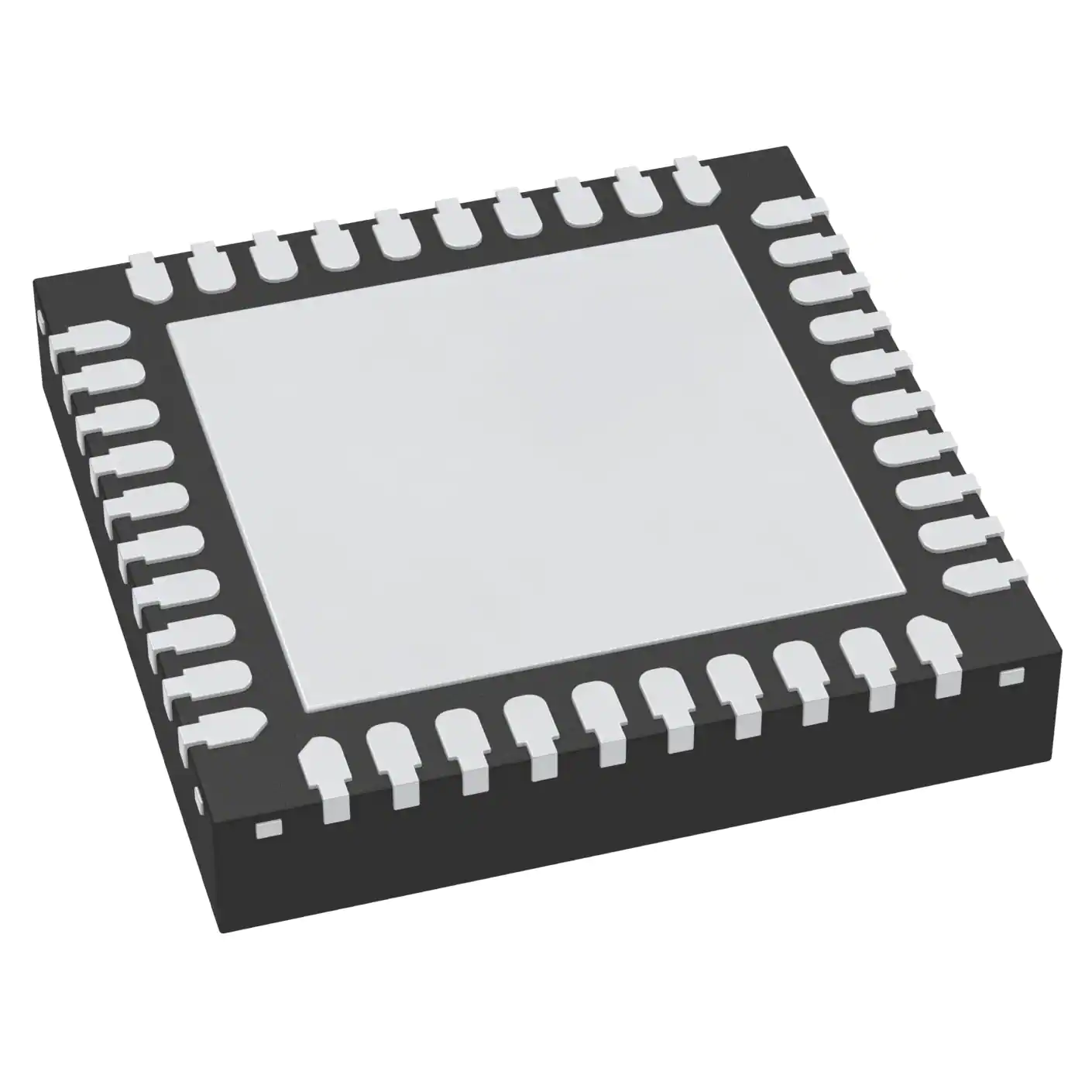
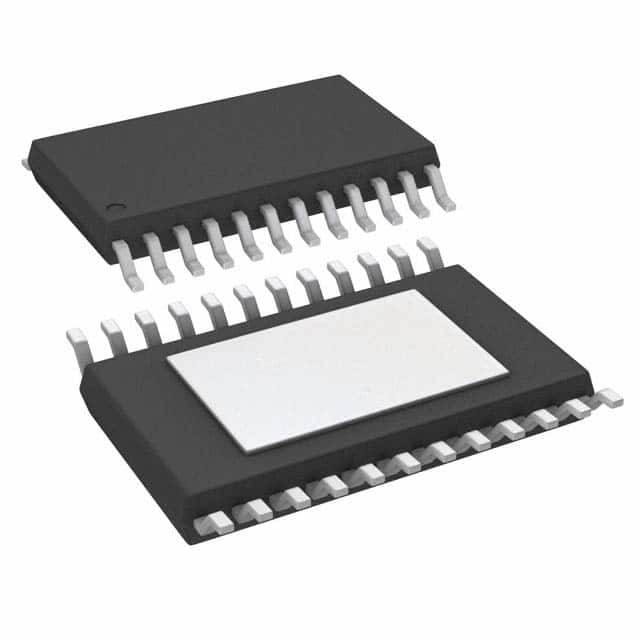
NXP Semiconductors MC32PF1550A3EPR2
- Part No.:
- MC32PF1550A3EPR2
- Manufacturer:
- NXP Semiconductors
- Category:
- Power Management - Specialized
- Package:
- 40-VFQFN Exposed Pad
- Datasheet:
-
 MC32PF1550A3EPR2.pdf
- Description:
- POWER MANAGEMENT IC: 3 BUCK REGS
- Quantity:
- Payment:

- Shipping:

Inventory:3,003
Please send an inquiry. Send us your inquiry, and we will respond immediately.
Product details
Overview
MC32PF1550A3EPR2 from NXP Semiconductors is a preprogrammed power management IC (PMIC) optimized for i.MX 6UL processors with DDR3L memory, delivering three 1.0 A buck converters, three LDOs, RTC supply (VSNVS), DDR reference voltage (VREFDDR), and a linear Li-ion battery charger supporting 100–1000 mA charge current and JEITA-compliant thermal regulation. It operates across −40 °C to 105 °C in industrial environments.
For engineers reviewing the MC32PF1550A3EPR2 datasheet, MC32PF1550A3EPR2 pinout, MC32PF1550A3EPR2 application, or MC32PF1550A3EPR2 equivalent, key selection considerations include its OTP-configured startup sequence for i.MX 6UL/DDR3L, VSYS transient withstand up to +22 V, I²C-controlled dynamic voltage scaling on SW1/SW2, and integrated battery supplement mode with 3.0 A discharge overcurrent protection.
Technical Context
The MC32PF1550A3EPR2 implements a tightly integrated analog-digital PMIC architecture with dedicated regulators for core (VCORE), digital (VDIG), and system (VSYS) rails, plus independent feedback loops for SW1–SW3 buck converters-SW1 and SW2 support dynamic voltage scaling while SW3 delivers fixed 1.8–3.3 V outputs. Its internal 32 kHz and 16 MHz clocks synchronize regulator sequencing and watchdog timing.
Control logic resides in an OTP-programmable state machine that executes user-defined power-up/down sequences, standby/sleep/off modes, and event-driven responses via INTB and WDI interfaces. Battery management includes programmable CV/CC thresholds, thermistor-based JEITA compliance, and a 50 mΩ integrated isolation MOSFET enabling operation with no/low battery.
Key Specifications
| Parameter | Value and Actual Design Meaning |
|---|---|
| Input Voltage Range (VBUSIN) | 4.1 V to 6.0 V; supports USB bus or AC adapter input with 22 V transient withstand capability |
| Buck Converters | SW1/SW2: 0.6–1.3875 V (12.5 mV steps) or 1.1–3.3 V (variable); SW3: 1.8–3.3 V (100 mV steps); all rated 1.0 A |
| LDO Regulators | LDO1/LDO3: 0.75–1.5 V or 1.8–3.3 V, 300 mA with load switch; LDO2: 1.8–3.3 V, 400 mA |
| Battery Charger | Linear charging for single-cell Li-ion/Li-Po; programmable CV (3.5–4.44 V), CC (100–1000 mA), and termination (5–50 mA) |
| RTC & Memory Support | VSNVS: 3.0 V, 2.0 mA; VREFDDR: 0.5–0.9 V, 10 mA; coin cell charger integrated |
| Operating Temperature | −40 °C to 105 °C; qualified for industrial applications per Table 1 ordering code A3EP |
| I²C Interface | Standard-mode (100 kHz) and fast-mode (400 kHz) compatible; enables full configuration and real-time status monitoring |
Pinout & Package
MC32PF1550A3EPR2 is housed in a 40-pin QFN package (5.0 mm × 5.0 mm, exposed pad), compliant with JEDEC MO-220 and RoHS requirements. Thermal resistance RΘJA is 17.8 °C/W on an eight-layer board.
| Pin/Terminal | Circuit Role | Design Meaning |
|---|---|---|
| SW1FB / SW2FB / SW3FB | Buck output voltage feedback | Resistive divider inputs enabling precise regulation of VCORE, VDIG, and peripheral rails |
| VLDO1 / VLDO2 / VLDO3 | LDO output terminals | Provide low-noise, programmable voltages for I/O, sensors, and auxiliary logic |
| VBATT / VSYS / VBUSIN | Power path inputs | Enable seamless transition between battery, system, and USB/adapter sources with integrated power-path FETs |
| SCL / SDA / WDI / INTB | I²C and control signals | Allow processor-hosted configuration, fault reporting, watchdog supervision, and power-state coordination |
| VSNVS / VREFDDR / CHGB | Special-function outputs | Deliver always-on RTC bias, DDR memory reference, and LED status indication with ramp control |
Key Features
| Feature | Design Value |
|---|---|
| OTP-configured startup sequence | User-programmable power-up timing and rail enable order specifically for i.MX 6UL with DDR3L memory interface |
| DVS on SW1 and SW2 | Dynamic voltage scaling reduces CPU core and digital domain power during low-load operation without software intervention |
| Battery supplement mode | Automatically supplements VSYS from VBATT when adapter input drops, maintaining uninterrupted system operation |
| JEITA-compliant thermal charging | Hardware-monitored battery temperature thresholds (−10 °C to 60 °C) disable or throttle charge current per JEITA standard |
| Integrated 50 mΩ BATFET | Enables safe battery disconnection and zero-current shutdown; supports ship mode with <1 µA leakage |
Applications
| Smart Wearables | Industrial IoT Gateways |
|---|---|
Use Scenario: Compact battery-powered wrist-worn health monitor with BLE connectivity and motion sensing. IC Role / Device Role / Timing Role: MC32PF1550A3EPR2 supplies regulated VCORE (1.05 V), VDIG (1.1 V), and sensor LDOs while managing Li-Po charging and RTC backup. Use Value: Ultra-low quiescent current (<1.5 µA in low-power mode) extends runtime; integrated thermistor interface ensures safe charging across ambient temperatures. | Use Scenario: Edge node aggregating sensor data in factory automation, operating continuously on 24 V DC with local battery backup. IC Role / Device Role / Timing Role: MC32PF1550A3EPR2 regulates i.MX 6UL core/digital rails, powers DDR3L memory, and manages dual-input (DC/backup battery) power path. Use Value: VSYS withstands +22 V transients; programmable 3.0 A battery discharge OCP protects against short-circuit faults in harsh environments. |
| POS Terminals | E-Readers |
Use Scenario: Portable retail terminal with barcode scanner, display, and secure element, powered by removable Li-ion battery. IC Role / Device Role / Timing Role: MC32PF1550A3EPR2 delivers sequenced power to ARM core, NAND flash, and USB PHY; handles USB enumeration and battery fuel gauging. Use Value: I²C-controlled DVS lowers active power during idle scanning; LED driver provides visual battery-status feedback with programmable blink patterns. | Use Scenario: Solar-charged e-reader with EPD display, requiring long shelf life and reliable cold-weather startup. IC Role / Device Role / Timing Role: MC32PF1550A3EPR2 powers i.MX 6UL application processor, VREFDDR for memory interface, and coin-cell-backed RTC for timekeeping during deep sleep. Use Value: −40 °C to 105 °C rating ensures operation in unheated storage; OTP-stored configuration eliminates boot-time register writes. |
Equivalent & Alternatives
The following parts are listed as comparable options for similar PMIC applications.
| Alternative Part | Technical Difference | Application Difference | Selection Advice |
|---|---|---|---|
| MC34PF1550A3EPR2 | Identical functionality and pinout; differs only in extended temperature grade (−40 °C to 105 °C vs. −40 °C to 85 °C for MC32 variant) | Targeted at industrial-grade designs requiring full 105 °C operation; shares same i.MX 6UL/DDR3L OTP configuration | Select MC34PF1550A3EPR2 when ambient operating temperature exceeds 85 °C or industrial qualification is mandatory |
| PF8100A0EP | Higher integration: adds PMIC+audio codec; different buck/LDO count (4 buck, 6 LDO); no integrated battery charger | Designed for multimedia-rich i.MX 8M applications; lacks battery management but offers audio signal chain support | Choose PF8100A0EP only if audio subsystem integration is required and external battery charging is acceptable |
Compared with MC34PF1550A3EPR2, the MC32PF1550A3EPR2 offers identical power architecture and i.MX 6UL/DDR3L firmware but is rated for consumer-grade temperature range; versus PF8100A0EP, it trades audio capability for dedicated battery management and lower system BOM cost in resource-constrained IoT endpoints.
Availability
MC32PF1550A3EPR2 is available at Aetrix Electronics and suitable for smart wearables, industrial IoT gateways, and portable POS terminals requiring stable component supply, long-term lifecycle support, and prevalidated i.MX 6UL power sequencing.
Supply support for MC32PF1550A3EPR2 includes scheduled delivery planning, volume procurement assistance, BOM continuity management, traceable sourcing, and lifecycle availability coordination for OEM customers, industrial embedded developers, connected-device designers, and electronics production programs.
Manufacturer
NXP Semiconductors is a global semiconductor leader specializing in secure connectivity solutions for automotive, industrial, and IoT markets, with deep expertise in ARM-based application processors and associated power management.
The PF1550 product line was engineered to deliver highly integrated, OTP-configurable PMICs for NXP's i.MX family-specifically addressing low-power, battery-operated use cases where compact footprint, thermal resilience, and seamless processor co-design are critical.
FAQ
What is the primary target processor for MC32PF1550A3EPR2?
The MC32PF1550A3EPR2 is preprogrammed for the i.MX 6UL application processor with DDR3L memory interface, as confirmed by its A3EP programming code in Table 1 of the PF1550 datasheet. Its OTP configuration defines startup sequencing, voltage rails, and timing parameters specifically aligned to i.MX 6UL power requirements.
Does MC32PF1550A3EPR2 support dynamic voltage scaling (DVS)?
Yes, MC32PF1550A3EPR2 supports DVS on buck converters SW1 and SW2, allowing real-time adjustment of output voltage under processor command via I²C. This feature enables adaptive power reduction for the i.MX 6UL core and digital domains during variable workload conditions.
What battery charging capabilities does MC32PF1550A3EPR2 provide?
MC32PF1550A3EPR2 integrates a linear Li-ion/Li-Po charger supporting 100–1000 mA programmable charge current, 3.5–4.44 V CV voltage, JEITA-compliant thermistor monitoring, and battery supplement mode. It includes a 50 mΩ integrated isolation MOSFET and 3.0 A discharge overcurrent protection.
Is MC32PF1550A3EPR2 compatible with i.MX 7ULP processors?
No-MC32PF1550A3EPR2 is specifically configured for i.MX 6UL with DDR3L, not i.MX 7ULP. The A2EP and A4EP variants in Table 1 are designated for i.MX 7ULP with LPDDR3; using MC32PF1550A3EPR2 with i.MX 7ULP would require reconfiguration unsupported by its OTP image.
What package type and thermal performance does MC32PF1550A3EPR2 use?
MC32PF1550A3EPR2 uses a 40-pin QFN package (5.0 mm × 5.0 mm, exposed pad). Its junction-to-ambient thermal resistance (RΘJA) is 17.8 °C/W on an eight-layer PCB, enabling reliable operation at full load within its −40 °C to 105 °C industrial temperature range.
MC32PF1550A3EPR2 Specifications
- Product attributes
- Attribute value
- Manufacturer:
- NXP Semiconductors
- Series:
- -
- Package/Case:
- 40-VFQFN Exposed Pad
- Packaging:
- Tape & Reel (TR)
- Product Status:
- Active
- Applications:
- Embedded Systems, Low-Power IoT, Mobile/Wearable Devices
- Current - Supply:
- -
- Voltage - Supply:
- 3.8V ~ 7V
- Operating Temperature:
- -40°C ~ 85°C
- Grade:
- -
- Qualification:
- -
- Mounting Type:
- Surface Mount
- Supplier Device Package:
- 40-HVQFN (5x5)
MC32PF1550A3EPR2 FAQ
1.How can I place an order for MC32PF1550A3EPR2 through Aetrix?
Please submit a Request for Quotation (RFQ) for MC32PF1550A3EPR2 on Aetrix. Our sales agent will provide a competitive quotation and guide you through the order confirmation once you accept the terms.
2.Are the price and stock information for MC32PF1550A3EPR2 reliable?
The price and inventory of MC32PF1550A3EPR2 are updated periodically and may fluctuate due to market conditions. Stock and pricing data are typically refreshed every 24 hours. Quotation validity for MC32PF1550A3EPR2 is usually 5 days.
3.What payment methods are accepted for MC32PF1550A3EPR2?
We accept Wire Transfer, PayPal, Credit Card, Western Union, MoneyGram, and Escrow for MC32PF1550A3EPR2 transactions.
Note: Certain payment methods may incur a processing fee.
4.How is shipping managed for MC32PF1550A3EPR2?
MC32PF1550A3EPR2 orders can be shipped via leading logistics carriers, including DHL, UPS, FedEx, TNT, or Registered Mail.
Once your MC32PF1550A3EPR2 order is processed, you will receive an email with the shipment details and tracking number.
Note: Tracking information may take up to 24 hours to appear. Express delivery typically takes 3–5 business days.
5.How can I obtain technical support or documentation for MC32PF1550A3EPR2?
For technical support, including MC32PF1550A3EPR2 datasheets, pinout diagrams, or application guidance, please contact our engineering support team. They can provide detailed documentation and assistance for your MC32PF1550A3EPR2 requirements.
6.How does Aetrix verify that MC32PF1550A3EPR2 is sourced from the original manufacturer or authorized distributors?
All MC32PF1550A3EPR2 products on Aetrix are procured from qualified distributors and authorized channels. Our dedicated quality assurance team conducts strict verification, including traceability checks and, if necessary, third-party testing. This ensures that MC32PF1550A3EPR2 meets industry standards.
7.What is the process for return or replacement of MC32PF1550A3EPR2?
All MC32PF1550A3EPR2 units undergo pre-shipment inspection (PSI). If there is an issue with MC32PF1550A3EPR2, returns or replacements are accepted under the following conditions:
1.Quantity discrepancies, incorrect items, or visible external defects (such as breakage or corrosion), acknowledged by Aetrix.
2.The issue is reported within 90 days of delivery.
3.The MC32PF1550A3EPR2 part is unused and in its original packaging.
Return procedure for MC32PF1550A3EPR2:
1.Submit a request within 90 days.
2.Obtain a Return Material Authorization (RMA) from Aetrix.
MC32PF1550A3EPR2 Tags
-
TPS2511DGNR
Texas Instruments
-
UTC2000/MG
Microchip Technology
-
TUSB320HAIRWBR
Texas Instruments
-
TPS61252DSGR
Texas Instruments
-
PI5USB30216CXUAEX
Diodes Incorporated

-
SN6501DBVR
Texas Instruments
-
CYPD3177-24LQXQT
Infineon Technologies
-
SN6501QDBVRQ1
Texas Instruments
-
STUSB1600AQTR
STMicroelectronics

-
SN6505BDBVR
Texas Instruments
-
SN6501DBVT
Texas Instruments
-
TPS65150PWPR
Texas Instruments
Tech Hub

A practical engineering guide to 3.3V and 5V logic compatibility, input thresholds, resistor dividers, translator ICs, MOSFET level shifting, I2C pull-ups, timing limits and power-sequencing risks.

The 74HC595 uses push-pull logic outputs, while the TPIC6B595 uses 50 V open-drain DMOS sinks for higher-power loads. This guide compares timing, current limits, 3.3 V interfacing, load wiring, thermal…

The 74HC595 converts serial data into eight stable parallel outputs. This guide covers pin functions, shift and storage timing, OE and MR behavior, drive-current limits, cascading, voltage compatibilit…

A technical comparison of level-sensitive latches and edge-triggered flip-flops, covering timing windows, setup and hold limits, master–slave operation, time borrowing, race-through, HDL inference and…

A D latch stores one bit while Enable controls when data can pass. This reference covers gate-level operation, truth tables, transparency, setup and hold timing, LE versus OE, common ICs and practical …

An SR latch stores one bit through cross-coupled feedback. This engineering reference covers NOR and NAND implementations, truth tables, forbidden-state recovery, gated operation, switch debouncing, fa…

Latch circuits retain one bit through feedback. This technical reference covers SR and D latches, truth tables, transparency, timing limits, latch-versus-flip-flop behavior, applications and common log…

An engineering guide to LED driver operation, constant-current and constant-voltage outputs, linear and switching topologies, dimming, IC selection, calculations, replacement compatibility, and fault c…

Operational amplifier guide covering op amp basics, feedback, ideal vs real op amps, common configurations, buffer circuits, offset, bias current, gain-bandwidth, slew rate, rail-to-rail limits and sel…

Jumper cables guide covering safe connection order, red and black clamp placement, final ground connection, cable gauge, length, clamp quality, copper vs CCA cables, jump starter comparison and battery…


