
 My Inquiry
 My Account


NXP Semiconductors MC33394DH
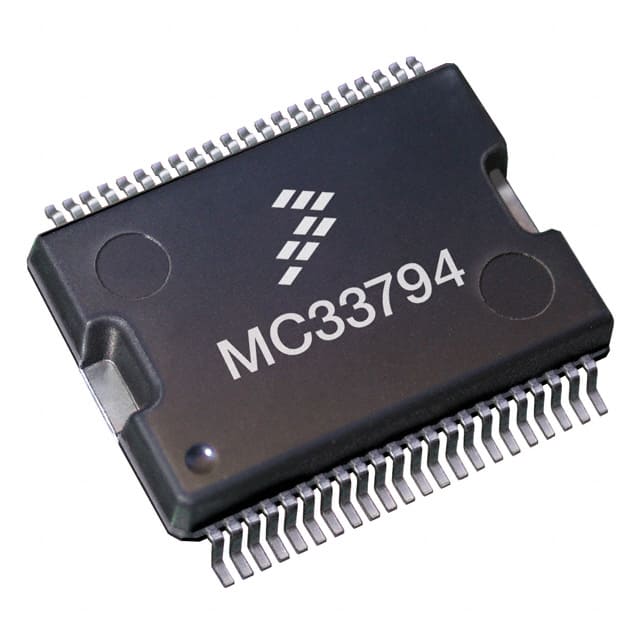
- Part No.:
- MC33394DH
- Manufacturer:
- NXP Semiconductors
- Category:
- Power Management - Specialized
- Package:
- 44-BSSOP (0.433", 11.00mm Width) Exposed Pad
- Datasheet:
-
 MC33394DH.pdf
- Description:
- IC INTERFACE SPECIALIZED 44HSOP
- Quantity:
- Payment:

- Shipping:

Inventory:3,025
Please send an inquiry. Send us your inquiry, and we will respond immediately.
Product details
Overview
MC33394DH from Freescale Semiconductor is a multi-output automotive power supply IC with integrated high-speed CAN transceiver, designed for MPC5XX microcontroller-based ECUs. It delivers VDDH (5.0 V/400 mA), VDD3_3 (3.3 V/120 mA), scalable VDDL (1.25–3.3 V/400 mA), VKAM (adjustable/50 mA), VPP (5.0 V or 3.3 V/150 mA), three 5.0 V sensor supplies (VREF1/2/3, 100 mA each), and switched battery output VSEN (125 mA, clamped at 17 V), operating from 4.0 V to 26.5 V input with 45 V transient tolerance.
For engineers reviewing the MC33394DH datasheet, MC33394DH pinout, MC33394DH application, or MC33394DH equivalent, this page provides verified technical context, validated pin functions for the 44-lead HSOP package, confirmed regulator sequencing behavior, CAN physical layer specifications, and real-world ECU power architecture implications - all derived from Freescale's official Rev. 2.5 technical data.
Technical Context
The MC33394DH integrates a buck-boost switching pre-regulator (VPRE) with internal 3.0 A current limit, feeding multiple LDOs and specialized outputs. Its dual-mode operation switches between buck (VBAT ≥ 7.2 V) and boost (VBAT ≤ 6.7 V) to maintain stable pre-regulation across wide battery conditions, enabling reliable startup down to 4.0 V.
It embeds a high-speed CAN transceiver compliant with ISO 11898, featuring short-circuit protection, bus fault tolerance (CANH/CANL withstand ±26.5 V), and wake-up event signaling via WAKEUP pin. Power sequencing logic ensures strict voltage ramp order during power-up/down, while active reset supervision monitors VDDH, VDD3_3, VDDL, and VKAM independently.
Key Specifications
| Parameter | Value and Actual Design Meaning |
|---|---|
| Input Voltage Range | 4.0 V to 26.5 V DC, with 45 V transient tolerance - supports automotive cold-crank and load-dump conditions. |
| VDDH Output | 5.0 V ±2%, 400 mA - primary MCU core supply with 450 mV dropout and reset monitoring. |
| VDD3_3 Output | 3.3 V ±2.7%, 120 mA - I/O rail with 2.04 V dropout and dedicated POR/HRESET supervision. |
| VDDL Output | Adjustable 1.25–3.3 V (via external resistor divider), 400 mA typical - supports modern low-voltage MPC5XX cores. |
| CAN Transceiver | ISO 11898-compliant high-speed interface with CANH/CANL differential outputs, ±26.5 V bus fault tolerance, and wake-up pulse generation. |
| Power Sequencing | Hardware-controlled startup/shutdown sequence guarantees VDDH powers first, followed by VDD3_3, VDDL, and VKAM - prevents latch-up in MPC5XX systems. |
| Thermal Protection | Junction thermal shutdown at 150–190 °C with 5–20 °C hysteresis - protects against sustained overload in under-hood environments. |
Pinout & Package
The MC33394DH is packaged in a 44-lead HSOP (Heat Sink Overmolded Plastic), case 1291, with exposed thermal pad electrically and thermally connected to GND. Pin numbering follows bottom-view orientation per Freescale Rev. 2.5 documentation.
| Pin/Terminal | Circuit Role | Design Meaning |
|---|---|---|
| 1, 2 VBAT | Battery input supply | Main power input requiring external reverse-battery protection diode; supports 4.0–26.5 V operation with 45 V transient rating. |
| 3 KA_VBAT | Keep-alive battery input | Protected input for backup power path; enables VKAM regulation during ignition-off states without external diode. |
| 5, 6 VKAM / VKAM_FB | Standby memory supply & feedback | Adjustable low-quiescent output tracking VDDL; FB pin enables precise 1.25–3.3 V scaling for SRAM retention. |
| 13, 14 VDD3_3 / VDD3_3FB | 3.3 V system I/O supply & feedback | Regulated output for MCU peripherals; FB loop allows external compensation and tight load regulation (±40 mV). |
| 21, 22 CANRXD / CANTXD | CAN controller interface | CMOS-level SPI-compatible signals connecting to MPC5XX CAN controller - not physical bus pins. |
| 24, 25 CANL / CANH | CAN bus differential drivers | Direct connection to vehicle CAN bus; tolerate ±26.5 V faults and support wake-up on bus activity. |
| 26 HRT | Hardware Reset Timer | RC-programmable timer (external R/C) setting delay between /PRERESET and /HRESET for controlled MCU initialization. |
| 28–31 CS / DI / SCLK / DO | SPI interface | 4-wire serial interface for configuring VPP voltage (3.3 V/5.0 V), enabling/disabling regulators, and reading status. |
| 34 VDDH | 5.0 V core supply | Main MCU core rail; monitored for POR and reset assertion; 400 mA capability with 450 mV dropout at full load. |
| 35–38 VPRE_S / VPRE / VCOMP / INV | Switching pre-regulator control | Enable closed-loop control of buck-boost converter; VPRE_S senses output, VCOMP sets compensation, INV is error amp input. |
| 40 SW2G | Boost MOSFET gate driver | Drives external N-channel MOSFET in boost configuration; sink current up to 400 mA ensures fast turn-off. |
| 42–44 SW1 | Internal switch source terminals | Three parallel source connections for internal 3.0 A n-channel power MOSFET - reduce conduction losses and thermal stress. |
Key Features
| Feature | Design Value |
|---|---|
| Buck-boost pre-regulator | Auto-switching topology maintains VPRE stability across 4.0–26.5 V input, enabling cold-crank operation without external boost stage. |
| Multi-rail power sequencing | Hardware-enforced startup order (VDDH → VDD3_3 → VDDL → VKAM) eliminates need for external sequencer in MPC5XX designs. |
| Integrated CAN physical layer | Eliminates discrete CAN transceiver; reduces BOM count and PCB area while maintaining ISO 11898 compliance and bus fault robustness. |
| Scalable VDDL and VKAM | External resistor-divider programmability supports evolving MPC5XX core voltages (1.25–3.3 V) and low-power standby modes without redesign. |
| VPP programmable FLASH supply | SPI-configurable 3.3 V or 5.0 V output enables in-system programming of different FLASH types using same hardware platform. |
| Active reset supervision | Independent monitoring of four critical rails (VDDH, VDD3_3, VDDL, VKAM) with staggered /PRERESET → /HRESET → /PORESET timing ensures deterministic MCU boot. |
Applications
| Engine Control Unit (ECU) | Transmission Control Module (TCM) |
|---|---|
Use Scenario: Central power management for MPC565-based gasoline/diesel engine controllers handling fuel injection, ignition timing, and OBD-II diagnostics. IC Role / Device Role / Timing Role: Primary power IC supplying all regulated rails, managing CAN communication, and enforcing safe power-up/down sequences during key-on/key-off transitions. Use Value: Eliminates need for 6+ discrete regulators and external CAN transceiver, reducing component count by >30% and improving cold-crank reliability below 6 V. | Use Scenario: Power and communication subsystem for automatic transmission controllers interfacing with solenoid valves, pressure sensors, and shift-by-wire actuators. IC Role / Device Role / Timing Role: Delivers isolated, sequenced VDDH/VDD3_3/VDDL rails to MPC5XX MCU and provides CAN bus interface for TCU-to-ECU coordination. Use Value: Integrated VSEN output drives 125 mA clamped at 17 V for solenoid pre-charge circuits, avoiding external clamp diodes and Zener networks. |
| Body Control Module (BCM) | Advanced Driver Assistance System (ADAS) Sensor Hub |
Use Scenario: Low-power domain controller managing lighting, door locks, window lifts, and HVAC interfaces in 12 V vehicle architectures. IC Role / Device Role / Timing Role: Provides VKAM standby supply with <12 mA sleep current and wake-on-CAN capability for always-on functions. Use Value: VKAM adjustable output supports 1.8 V or 2.5 V SRAM retention, extending battery life during extended parking while enabling instant wake-up. | Use Scenario: Power aggregation node for radar, camera, and ultrasonic sensors requiring synchronized 5.0 V sensor supplies and CAN/FlexRay gateway functionality. IC Role / Device Role / Timing Role: Generates three independent, short-circuit protected 5.0 V sensor rails (VREF1/2/3) with tight tracking to VDDH for analog front-end stability. Use Value: 100 mA per VREF rail with ±40 mV load regulation ensures consistent ADC reference accuracy across temperature and load variations. |
Equivalent & Alternatives
The following parts are listed as comparable options for similar multi-output automotive power supply applications.
| Alternative Part | Technical Difference | Application Difference | Selection Advice |
|---|---|---|---|
| NXP MC33903 | Single-chip solution with integrated watchdog, LIN transceiver, and enhanced SPI command set; lacks VPP programming and VSEN output. | Targeted at simpler body electronics; no FLASH programming voltage or switched battery output for solenoid drive. | Select when LIN interface and watchdog co-location are required, and VPP/VSEN functionality is unnecessary. |
| Renesas ISL78310 | Triple LDO + buck controller (no boost mode); supports 2.5–40 V input but no integrated CAN transceiver or HRT pin. | Requires external CAN PHY and reset timer circuitry; better suited for non-CAN domains like infotainment power rails. | Select for high-efficiency buck-only applications where CAN integration is handled separately and thermal performance above 125 °C is critical. |
Compared with MC33394DH, MC33903 offers tighter system integration for LIN-based modules but sacrifices VPP programmability and VSEN clamping; ISL78310 provides higher efficiency in buck mode and extended temperature range but demands external CAN and reset components - making MC33394DH uniquely suited for MPC5XX-based CAN ECUs needing full power + communication integration.
Availability
MC33394DH is available at Aetrix Electronics and suitable for engine control units, transmission control modules, and body control modules requiring stable component supply across automotive production lifecycles and extended temperature ranges.
Supply support for MC33394DH includes scheduled delivery planning, volume procurement assistance, BOM continuity management, traceable sourcing, and lifecycle availability coordination for OEM customers, industrial embedded developers, connected-device designers, and electronics production programs.
Manufacturer
Freescale Semiconductor (now part of NXP Semiconductors) is a global leader in automotive and industrial microcontrollers and analog power solutions, with deep expertise in vehicle networking and power management ICs.
The MC33394DH belongs to Freescale's automotive power management IC family, specifically engineered to simplify ECU design for MPC5XX microcontrollers by integrating power regulation, CAN physical layer, and intelligent reset sequencing into a single device.
FAQ
What is the minimum input voltage required for MC33394DH to start up and regulate?
The MC33394DH requires a minimum VBAT of 4.0 V to initiate regulation and power sequencing. Its buck-boost architecture enables operation down to this threshold, supporting automotive cold-crank conditions. Startup voltage is specified at 6.2 V for reliable initial VPRE establishment, but functional regulation begins at 4.0 V in boost mode - confirmed in Freescale Rev. 2.5 Section 3, Table 7.
Does MC33394DH support both 3.3 V and 5.0 V FLASH programming voltage outputs?
Yes, the MC33394DH supports both 3.3 V and 5.0 V FLASH programming via its VPP output. Default is 5.0 V (VPP5 = 4.86–5.12 V at 150 mA), but SPI commands can reconfigure it to 3.3 V (VPP3 = 3.22–3.38 V at 150 mA). This dual-mode capability is explicitly documented in Freescale Rev. 2.5 Electrical Characteristics Table on page 10.
How does the MC33394DH handle power sequencing during system shutdown?
The MC33394DH enforces reverse-ordered shutdown: VKAM remains active longest, followed by VDDL, VDD3_3, and finally VDDH. This prevents back-driving and latch-up in MPC5XX MCUs. The sequencing is hardware-controlled and independent of software, ensuring fail-safe behavior even during brown-out or sudden battery disconnect - detailed in Figure 1 and Section 1 of Freescale Rev. 2.5.
Can MC33394DH operate without an external NPN pass transistor for VDDL regulation?
No - the MC33394DH requires an external NPN pass transistor (e.g., MJD31C) to deliver the full 400 mA VDDL output. The IC provides base drive signals (VDDL_B and VDDL_X) and feedback (VDDL_FB), but the pass element is external per Figure 1 and "VDDL Drive" block description in Freescale Rev. 2.5. Without it, VDDL output capability is limited to ~40 mA.
What is the function of the /SLEEP pin on MC33394DH, and what voltage levels trigger sleep mode?
The /SLEEP pin controls entry into ultra-low-power sleep mode. A logic-high level (VIH ≥ 2.2 V) disables most regulators and reduces VBAT current to ≤1000 µA; a logic-low level (VIL ≤ 1.9 V) enables normal operation. Input hysteresis is 0.3 V, and pull-down current is 10–50 µA - values confirmed in Freescale Rev. 2.5 Table 7, "MODE CONTROL" section.
MC33394DH Specifications
- Product attributes
- Attribute value
- Manufacturer:
- NXP Semiconductors
- Series:
- -
- Package/Case:
- 44-BSSOP (0.433", 11.00mm Width) Exposed Pad
- Packaging:
- Tube
- Product Status:
- Obsolete
- Applications:
- Motorola MPC55x, MPC56x Microprocessors
- Current - Supply:
- -
- Voltage - Supply:
- 4V ~ 26.5V
- Operating Temperature:
- -
- Grade:
- -
- Qualification:
- -
- Mounting Type:
- Surface Mount
- Supplier Device Package:
- 44-HSOP
MC33394DH FAQ
1.How can I place an order for MC33394DH through Aetrix?
Please submit a Request for Quotation (RFQ) for MC33394DH on Aetrix. Our sales agent will provide a competitive quotation and guide you through the order confirmation once you accept the terms.
2.Are the price and stock information for MC33394DH reliable?
The price and inventory of MC33394DH are updated periodically and may fluctuate due to market conditions. Stock and pricing data are typically refreshed every 24 hours. Quotation validity for MC33394DH is usually 5 days.
3.What payment methods are accepted for MC33394DH?
We accept Wire Transfer, PayPal, Credit Card, Western Union, MoneyGram, and Escrow for MC33394DH transactions.
Note: Certain payment methods may incur a processing fee.
4.How is shipping managed for MC33394DH?
MC33394DH orders can be shipped via leading logistics carriers, including DHL, UPS, FedEx, TNT, or Registered Mail.
Once your MC33394DH order is processed, you will receive an email with the shipment details and tracking number.
Note: Tracking information may take up to 24 hours to appear. Express delivery typically takes 3–5 business days.
5.How can I obtain technical support or documentation for MC33394DH?
For technical support, including MC33394DH datasheets, pinout diagrams, or application guidance, please contact our engineering support team. They can provide detailed documentation and assistance for your MC33394DH requirements.
6.How does Aetrix verify that MC33394DH is sourced from the original manufacturer or authorized distributors?
All MC33394DH products on Aetrix are procured from qualified distributors and authorized channels. Our dedicated quality assurance team conducts strict verification, including traceability checks and, if necessary, third-party testing. This ensures that MC33394DH meets industry standards.
7.What is the process for return or replacement of MC33394DH?
All MC33394DH units undergo pre-shipment inspection (PSI). If there is an issue with MC33394DH, returns or replacements are accepted under the following conditions:
1.Quantity discrepancies, incorrect items, or visible external defects (such as breakage or corrosion), acknowledged by Aetrix.
2.The issue is reported within 90 days of delivery.
3.The MC33394DH part is unused and in its original packaging.
Return procedure for MC33394DH:
1.Submit a request within 90 days.
2.Obtain a Return Material Authorization (RMA) from Aetrix.
MC33394DH Tags
-
TPS2511DGNR
Texas Instruments
-
UTC2000/MG
Microchip Technology
-
TUSB320HAIRWBR
Texas Instruments
-
TPS61252DSGR
Texas Instruments
-
PI5USB30216CXUAEX
Diodes Incorporated
-
SN6501DBVR
Texas Instruments
-
CYPD3177-24LQXQT
Infineon Technologies
-
SN6501QDBVRQ1
Texas Instruments
-
STUSB1600AQTR
STMicroelectronics

-
SN6505BDBVR
Texas Instruments
-
SN6501DBVT
Texas Instruments
-
TPS65150PWPR
Texas Instruments
Tech Hub

A practical engineering guide to 3.3V and 5V logic compatibility, input thresholds, resistor dividers, translator ICs, MOSFET level shifting, I2C pull-ups, timing limits and power-sequencing risks.

The 74HC595 uses push-pull logic outputs, while the TPIC6B595 uses 50 V open-drain DMOS sinks for higher-power loads. This guide compares timing, current limits, 3.3 V interfacing, load wiring, thermal…

The 74HC595 converts serial data into eight stable parallel outputs. This guide covers pin functions, shift and storage timing, OE and MR behavior, drive-current limits, cascading, voltage compatibilit…

A technical comparison of level-sensitive latches and edge-triggered flip-flops, covering timing windows, setup and hold limits, master–slave operation, time borrowing, race-through, HDL inference and…

A D latch stores one bit while Enable controls when data can pass. This reference covers gate-level operation, truth tables, transparency, setup and hold timing, LE versus OE, common ICs and practical …

An SR latch stores one bit through cross-coupled feedback. This engineering reference covers NOR and NAND implementations, truth tables, forbidden-state recovery, gated operation, switch debouncing, fa…

Latch circuits retain one bit through feedback. This technical reference covers SR and D latches, truth tables, transparency, timing limits, latch-versus-flip-flop behavior, applications and common log…

An engineering guide to LED driver operation, constant-current and constant-voltage outputs, linear and switching topologies, dimming, IC selection, calculations, replacement compatibility, and fault c…

Operational amplifier guide covering op amp basics, feedback, ideal vs real op amps, common configurations, buffer circuits, offset, bias current, gain-bandwidth, slew rate, rail-to-rail limits and sel…

Jumper cables guide covering safe connection order, red and black clamp placement, final ground connection, cable gauge, length, clamp quality, copper vs CCA cables, jump starter comparison and battery…


