
 My Inquiry
 My Account


Microchip Technology MEC1632-AUE
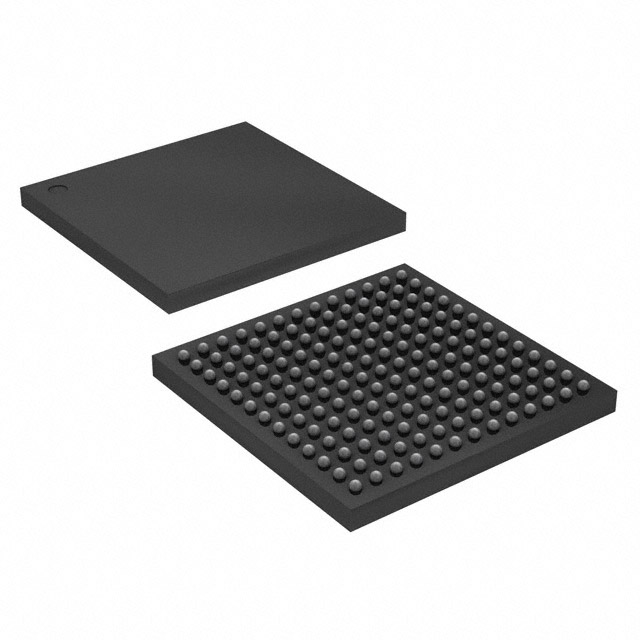
- Part No.:
- MEC1632-AUE
- Manufacturer:
- Microchip Technology
- Category:
- Application Specific Microcontrollers
- Package:
- 169-LFBGA
- Datasheet:
-
 MEC1632-AUE.pdf
- Description:
- IC EMBEDDED CTLR
- Quantity:
- Payment:

- Shipping:

Inventory:116
Please send an inquiry. Send us your inquiry, and we will respond immediately.
Product details
Overview
MEC1632-AUE from Microchip Technology is a 32-bit ARC625D-based embedded controller designed for ACPI-compliant laptop and ultrabook platform power management. It integrates 192 KB embedded Flash, 16 KB dual-ported SRAM, 2 KB EEPROM, four SMBus 2.0 controllers, PECI 3.0 interface, and 142 GPIOs - all operating at 3.3V with VTR/VBAT standby power planes.
For engineers reviewing the MEC1632-AUE datasheet, MEC1632-AUE pinout, MEC1632-AUE application, or MEC1632-AUE equivalent, this device serves as the core embedded controller in Intel/AMD platform I/O subsystems - requiring precise LPC timing, low-power wake event handling, secure flash reprogramming, and multi-interface coexistence (SMBus, PS/2, BC-Link, CEC).
Technical Context
The MEC1632-AUE implements a dedicated ARC625D CPU core with tightly coupled 16 KB SRAM (split instruction/data), boot ROM, and hardware acceleration for multiply/divide/saturation arithmetic. Its interrupt architecture features a maskable aggregator with hardware wake-up event support and JTAG/XNOR debug capability.
It supports dual-power-domain operation: VTR powers active logic including LPC, DMA, and timers; VBAT sustains RTC, hibernation timers, week alarm, and 64-byte RAM during deep sleep. Clocking includes a 32.768 kHz crystal oscillator, silicon oscillators (±2% accuracy), and six independent clock trees for fine-grained power gating.
Key Specifications
| Parameter | Value and Actual Design Meaning |
|---|---|
| Core Architecture | ARC625D 32-bit RISC CPU with single-cycle 32-bit wide dual-ported SRAM access |
| Embedded Memory | 192 KB Flash (10K write cycles), 16 KB SRAM, 2 KB EEPROM (250K cycles), 4 KB Boot ROM |
| LPC Interface | Intel Low Pin Count bus, 24–33 MHz operation with optional wait-state reduction at 33 MHz |
| Power Planes | VTR (standby), VBAT (battery-backed), and VCC (runtime) with integrated reset generator and power-fail detection |
| SMBus Controllers | Four independent SMBus 2.0 masters, each supporting up to 12 assignable ports, DMA-driven, operational in standby |
| Wake & Timing | 6 VBAT-powered wake inputs, hibernation timers (0.5 ms–128 min), week alarm (1 ms–45 days), 32.768 kHz RTC |
| I/O Resources | 142 GPIOs, 18×8 keyboard scan matrix, three PS/2 ports, six PWM/fan tach channels, 16-channel 10-bit ADC (10 µs conversion) |
Pinout & Package
MEC1632-AUE is housed in a 169-pin LFBGA package (RoHS compliant), with ball pitch of 0.8 mm and body size 12 mm × 12 mm. Power delivery includes dedicated VBAT, VTR, VCC, and analog ground (VSS_ADC) pins; critical interfaces (LPC, JTAG, SMBus, UART) are assigned to electrically isolated balls per Microchip's layout guidelines.
| Pin/Terminal | Circuit Role | Design Meaning |
|---|---|---|
| LAD[3:0] | LPC Address/Data Bus | Time-multiplexed 4-bit bidirectional bus for LPC memory and I/O cycles; requires external latching |
| LFRAME# | LPC Frame Signal | Active-low strobe indicating start/end of LPC transaction; defines cycle type (I/O, memory, DMA) |
| LRESET# | LPC Reset Input | Asynchronous reset signal from host; initiates EC cold boot and register initialization |
| JTAG_TDI/TDO/TCK/TMS | JTAG Test Access Port | IEEE 1149.1 boundary-scan interface supporting debug, programming, and test; EC can act as JTAG master |
| SMB[11:00]_DATA/CLK | SMBus Physical Layer | Twelve configurable SMBus data/clock pairs; shared across four controllers with hardware arbitration and fairness logic |
| GPIO[000–174] | General Purpose I/O | 142 programmable digital I/Os with glitch filtering, 6 battery-backed outputs (BGPO), and multiplexed functions (ADC, PWM, TACH) |
Key Features
| Feature | Design Value |
|---|---|
| ACPI-ECI Compliance | Fully implements ACPI Embedded Controller Interface v4.0 with SMI/SCI generation, mailbox registers, and virtual register access without EC intervention |
| Secure Flash Programming | Supports JTAG, BIOS, UART-boot, and gang-programmer reprogramming; includes 4 KB boot block protection and dual password-protected pages |
| VBAT-Powered Subsystem | Maintains RTC, hibernation/week timers, 64-byte RAM, and six wake inputs during full system suspend - enabling instant-on resume |
| BC-Link Expansion | Two high-speed + one low-speed BC-Link masters enable peer-to-peer communication with up to three companion chips (e.g., MEC1618, MEC1620) |
| LED Control Engine | Three dedicated LED pins with 20 mA sink capability, supporting blinking, breathing (piecewise-linear PWM), and 8-bit PWM modes - all operable in deepest EC sleep state |
Applications
| Laptop Platform Power Management | Ultrabook Instant-On Resume |
|---|---|
Use Scenario: Managing S0–S5 power states, thermal throttling, battery charge control, and lid-open/closed detection in x86-based notebooks. IC Role / Device Role / Timing Role: Primary ACPI Embedded Controller interfacing via LPC to PCH; handles SCI events, SMI generation, and firmware-controlled power sequencing. Use Value: Enables OS-transparent power transitions using VBAT-backed hibernation timers and wake-capable GPIOs - reducing resume latency to <100 ms. |
Use Scenario: Maintaining system context during long-duration suspend-to-RAM or suspend-to-disk with minimal battery drain. IC Role / Device Role / Timing Role: VBAT-powered real-time clock, week alarm timer, and 64-byte retention RAM operate independently of main SoC power rails. Use Value: Guarantees accurate wake timing (programmable from 1 ms to 45 days) and preserves critical state without host CPU involvement. |
| Multi-Sensor System Monitoring | Thermal/Fan Control Subsystem |
Use Scenario: Reading temperature, voltage, and current sensors across motherboard, CPU, GPU, and battery via SMBus and ADC. IC Role / Device Role / Timing Role: Four independent SMBus 2.0 controllers manage up to 12 sensor nodes; 16-channel 10-bit ADC acquires analog readings with ±0.5 LSB INL/DNL. Use Value: Eliminates need for external sensor hub IC by integrating sensor polling, conversion, and threshold-triggered wake events in one device. |
Use Scenario: Driving six cooling fans with closed-loop speed control while monitoring tachometer feedback and ambient temperature. IC Role / Device Role / Timing Role: Six PWM outputs (16-bit on/off counters) and six tachometer inputs with 6×2 capture/compare timers enable precise fan RPM regulation. Use Value: Achieves <±3% fan speed accuracy across 20–15,000 RPM range using hardware-timed pulse generation and edge-capture timing. |
Equivalent & Alternatives
The following parts are listed as comparable options for similar embedded controller applications.
| Alternative Part | Technical Difference | Application Difference | Selection Advice |
|---|---|---|---|
| MEC1618-FAU | 156-pin LFBGA; 3 SMBus controllers; 135 GPIOs; no RTC; 1.5 KB EEPROM; lacks BC-Link LS-master | Targeted for legacy notebook designs without week alarm or dual-battery backup requirements | Select when footprint compatibility and lower I/O count are prioritized over RTC, VBAT RAM, and fourth SMBus channel |
| IT8528E | 8051-based core; 128 KB Flash; 8 KB SRAM; 2 SMBus; no PECI/BC-Link; different LPC timing and register mapping | Used in cost-sensitive desktop motherboards and entry-level laptops with simpler power management needs | Choose only if migrating from existing IT85xx firmware stack; not pin- or register-compatible with MEC1632-AUE |
Compared with MEC1632-AUE, MEC1618-FAU offers reduced feature set and smaller package but lacks VBAT-backed RTC and hibernation timers; IT8528E provides lower-cost 8051 execution but omits PECI, BC-Link, and advanced power domain isolation required for modern ultrabooks.
Availability
MEC1632-AUE is available at Aetrix Electronics and suitable for laptop platform design, ultrabook power management systems, and embedded thermal control applications requiring stable component supply, long-term lifecycle support, and traceable sourcing.
Supply support for MEC1632-AUE includes scheduled delivery planning, volume procurement assistance, BOM continuity management, traceable sourcing, and lifecycle availability coordination for OEM customers, industrial embedded developers, connected-device designers, and electronics production programs.
Manufacturer
Microchip Technology Inc. is a U.S.-based semiconductor company specializing in microcontrollers, analog devices, and embedded control solutions for automotive, industrial, and computing markets.
The MEC1632-AUE belongs to Microchip's Mobile Embedded Controller (MEC) product line - engineered specifically for ACPI-compliant, low-power x86 platform management with integrated sensor I/O, secure firmware update, and multi-domain power control.
FAQ
What is the primary function of the MEC1632-AUE in a laptop system?
The MEC1632-AUE serves as the ACPI-compliant embedded controller managing platform-level power states, thermal regulation, battery charging, keyboard/mouse interface, and sensor monitoring. It communicates with the host chipset via LPC and executes firmware that coordinates S0–S5 transitions, wake event handling, and hardware-initiated SMI generation - all while maintaining low power consumption through VTR/VBAT domain separation.
Does the MEC1632-AUE support secure firmware updates, and how is it implemented?
Yes, the MEC1632-AUE supports multiple secure firmware update methods: JTAG programming, BIOS-triggered reflash, UART-boot strap, and gang programmer interface. Security features include 4 KB boot block protection, two password-protected flash pages accessible only via direct JTAG or LPC, and flash lock bits preventing unauthorized read/write - ensuring integrity of critical boot code and configuration data.
Can the MEC1632-AUE operate entirely on VBAT power, and which functions remain active?
Yes, the MEC1632-AUE maintains full functionality of its VBAT-powered subsystem during main power loss: 32.768 kHz RTC, two hibernation timers, week alarm interface, six wake input latches, VBAT-backed 64-byte RAM, and 32.768 kHz crystal oscillator. These features enable reliable wake scheduling and state retention without drawing from VTR or VCC supplies.
How many SMBus controllers does the MEC1632-AUE integrate, and what are their key capabilities?
The MEC1632-AUE integrates four independent SMBus 2.0 controllers, each capable of master or dual-slave operation. They support clock stretching, multi-master arbitration, programmable speeds up to 400 kHz, DMA-driven transfers, and hardware "fairness" logic to prevent bus starvation. Twelve physical ports are assignable across controllers, with three SMBus isolation switches enabling safe hot-plug sensor expansion.
Is the MEC1632-AUE pin-compatible with earlier Microchip MEC family members like the MEC1618?
No, the MEC1632-AUE is not pin-compatible with the MEC1618. It uses a 169-pin LFBGA package versus the MEC1618's 156-pin variant, with revised ball mapping, additional GPIOs, new SMBus port assignments, and relocated JTAG/PECI signals. Migration requires PCB redesign and firmware adaptation due to differences in clock tree allocation, base address registers, and BC-Link master configuration.
MEC1632-AUE Specifications
- Product attributes
- Attribute value
- Manufacturer:
- Microchip Technology
- Series:
- -
- Package/Case:
- 169-LFBGA
- Packaging:
- Tray
- Product Status:
- Active
- Programmable:
- Not Verified
- Applications:
- I/O Controller
- Core Processor:
- ARC-625D
- Program Memory Type:
- FLASH (192kB)
- Controller Series:
- -
- RAM Size:
- 16K x 8
- Interface:
- ACPI, BC-Link, I2C/SMBus, LPC, PECI, PS/2, SPI
- Number of I/O:
- 142
- Voltage - Supply:
- 3.3V
- Operating Temperature:
- 0°C ~ 70°C
- Grade:
- -
- Qualification:
- -
- Mounting Type:
- Surface Mount
- Supplier Device Package:
- 169-LFBGA (11x11)
MEC1632-AUE FAQ
1.How can I place an order for MEC1632-AUE through Aetrix?
Please submit a Request for Quotation (RFQ) for MEC1632-AUE on Aetrix. Our sales agent will provide a competitive quotation and guide you through the order confirmation once you accept the terms.
2.Are the price and stock information for MEC1632-AUE reliable?
The price and inventory of MEC1632-AUE are updated periodically and may fluctuate due to market conditions. Stock and pricing data are typically refreshed every 24 hours. Quotation validity for MEC1632-AUE is usually 5 days.
3.What payment methods are accepted for MEC1632-AUE?
We accept Wire Transfer, PayPal, Credit Card, Western Union, MoneyGram, and Escrow for MEC1632-AUE transactions.
Note: Certain payment methods may incur a processing fee.
4.How is shipping managed for MEC1632-AUE?
MEC1632-AUE orders can be shipped via leading logistics carriers, including DHL, UPS, FedEx, TNT, or Registered Mail.
Once your MEC1632-AUE order is processed, you will receive an email with the shipment details and tracking number.
Note: Tracking information may take up to 24 hours to appear. Express delivery typically takes 3–5 business days.
5.How can I obtain technical support or documentation for MEC1632-AUE?
For technical support, including MEC1632-AUE datasheets, pinout diagrams, or application guidance, please contact our engineering support team. They can provide detailed documentation and assistance for your MEC1632-AUE requirements.
6.How does Aetrix verify that MEC1632-AUE is sourced from the original manufacturer or authorized distributors?
All MEC1632-AUE products on Aetrix are procured from qualified distributors and authorized channels. Our dedicated quality assurance team conducts strict verification, including traceability checks and, if necessary, third-party testing. This ensures that MEC1632-AUE meets industry standards.
7.What is the process for return or replacement of MEC1632-AUE?
All MEC1632-AUE units undergo pre-shipment inspection (PSI). If there is an issue with MEC1632-AUE, returns or replacements are accepted under the following conditions:
1.Quantity discrepancies, incorrect items, or visible external defects (such as breakage or corrosion), acknowledged by Aetrix.
2.The issue is reported within 90 days of delivery.
3.The MEC1632-AUE part is unused and in its original packaging.
Return procedure for MEC1632-AUE:
1.Submit a request within 90 days.
2.Obtain a Return Material Authorization (RMA) from Aetrix.
MEC1632-AUE Tags
-
CYPD3175-24LQXQ
Infineon Technologies

-
SLB9672VU20FW1523XTMA1
Infineon Technologies
-
SLB9670VQ20FW785XTMA1
Infineon Technologies
-
SLB9672XU20FW1523XTMA1
Infineon Technologies
-
SLB9673XU20FW2613XTMA1
Infineon Technologies
-
CYPD3125-40LQXIT
Infineon Technologies
-
AT97SC3204-U2A1A-20
Microchip Technology
-
AT97SC3204-U2A1A-10
Microchip Technology
-
SLM9670AQ20FW1311XTMA1
Infineon Technologies
-
SLB9672XU20FW1613XTMA1
Infineon Technologies
-
SLB9672AU20FW1613XTMA1
Infineon Technologies
-
SLB9673AU20FW2613XTMA1
Infineon Technologies
Tech Hub

TTL and CMOS logic families differ in thresholds, loading, output drive, power and timing. This engineering guide compares 74HC and 74HCT, calculates noise margins and checks 3.3 V/5 V compatibility.

A practical engineering guide to 3.3V and 5V logic compatibility, input thresholds, resistor dividers, translator ICs, MOSFET level shifting, I2C pull-ups, timing limits and power-sequencing risks.

The 74HC595 uses push-pull logic outputs, while the TPIC6B595 uses 50 V open-drain DMOS sinks for higher-power loads. This guide compares timing, current limits, 3.3 V interfacing, load wiring, thermal…

The 74HC595 converts serial data into eight stable parallel outputs. This guide covers pin functions, shift and storage timing, OE and MR behavior, drive-current limits, cascading, voltage compatibilit…

A technical comparison of level-sensitive latches and edge-triggered flip-flops, covering timing windows, setup and hold limits, master–slave operation, time borrowing, race-through, HDL inference and…

A D latch stores one bit while Enable controls when data can pass. This reference covers gate-level operation, truth tables, transparency, setup and hold timing, LE versus OE, common ICs and practical …

An SR latch stores one bit through cross-coupled feedback. This engineering reference covers NOR and NAND implementations, truth tables, forbidden-state recovery, gated operation, switch debouncing, fa…

Latch circuits retain one bit through feedback. This technical reference covers SR and D latches, truth tables, transparency, timing limits, latch-versus-flip-flop behavior, applications and common log…

An engineering guide to LED driver operation, constant-current and constant-voltage outputs, linear and switching topologies, dimming, IC selection, calculations, replacement compatibility, and fault c…

Operational amplifier guide covering op amp basics, feedback, ideal vs real op amps, common configurations, buffer circuits, offset, bias current, gain-bandwidth, slew rate, rail-to-rail limits and sel…


