Melexis Technologies NV MLX90121EFR-DAA-000-RE
- Part No.:
- MLX90121EFR-DAA-000-RE
- Manufacturer:
- Melexis Technologies NV
- Category:
- RFID, RF Access, Monitoring ICs
- Package:
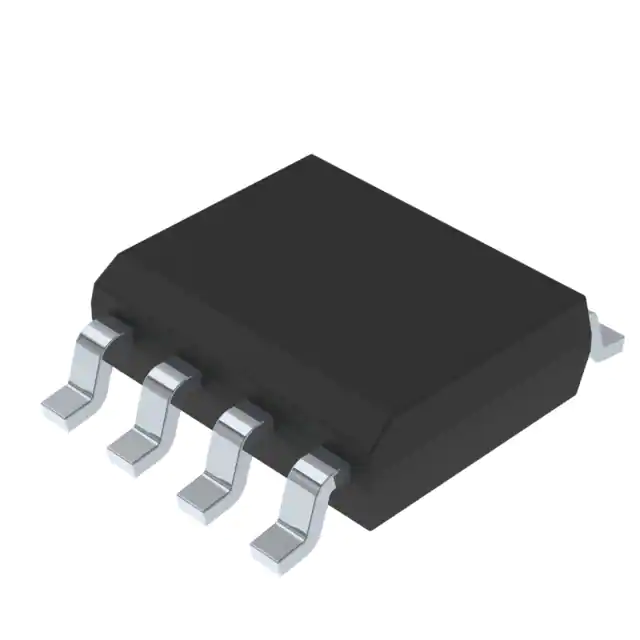
- 20-SSOP (0.209", 5.30mm Width)
- Datasheet:
-
MLX90121EFR-DAA-000-RE.pdf
- Description:
- IC RFID TXRX 13.56MHZ 20-SSOP
- Quantity:
- Payment:

- Shipping:

Inventory:4,931
Please send an inquiry. Send us your inquiry, and we will respond immediately.
Product details
Overview
MLX90121EFR-DAA-000-RE from Melexis is a 13.56 MHz ISO-compliant RFID transceiver IC supporting ISO14443A (0°C to 85°C), ISO14443B, and ISO15693 protocols. It integrates a diode envelope detector receiver, open-drain TX transistor delivering up to 250 mW into 50 Ω, programmable FSK/PSK/ASK encoder-decoder, and serial interface for microcontroller integration in contactless reader systems.
For engineers reviewing the MLX90121EFR-DAA-000-RE datasheet, pinout, applications, or equivalent options, key selection considerations include modulation depth configurability (0–90% via RMOD), dual-subcarrier FSK/PSK decoding (423/484 kHz & 847 kHz), majority voting noise resilience, and SSOP20 package compatibility with handheld and embedded reader designs.
Technical Context
The MLX90121EFR-DAA-000-RE implements a mixed-signal architecture: its receiver uses a diode envelope detector followed by IF filtering and logarithmic amplification for ASK/FSK/PSK demodulation, while its transmitter employs an internal low-RON MOSFET (2–5 Ω) with external matching network support for 250 mW RF output at 5 V. The analog front-end operates across 2.7–5.5 V supply range with standby current as low as 0.1 µA at +25°C.
Digital functionality includes six-programmable 8-bit symbol encoding for ISO14443A/B and ISO15693 frame generation, hardware-accelerated FSK (423/484 kHz) and PSK (847 kHz) decoding, and majority voting with configurable time-slot resolution (down to 4.72 µs). Configuration and data exchange occur over a 6-wire serial interface (CK/DIN/DOUT/DSYNC/MODE/RTB) with register-based control of analog chain parameters including ByPassAll and RSub-carrier selection.
Key Specifications
| Parameter | Value and Actual Design Meaning |
|---|---|
| Operating Frequency | 13.56 MHz carrier - enables compliance with global HF RFID standards including ISO14443 and ISO15693. |
| Supply Voltage Range | 2.7 V to 5.5 V - supports direct integration with 3.3 V or 5 V microcontroller systems without level-shifting. |
| TX Output Power | 250 mW into 50 Ω at 5 V - sufficient for mid-range reader applications (typically 5–10 cm read distance with optimized antenna). |
| Receiver Sensitivity | −45 dBm - ensures reliable tag response detection under low-field conditions typical in portable readers. |
| Modulation Depth Range | 0–90% ASK via external RMOD resistor - allows fine-tuning for optimal tag coupling and EMI reduction. |
| Decoding Standards | ISO14443A (0–85°C), ISO14443B, ISO15693 - covers major contactless smart card and label protocols. |
| Interface Type | 6-wire serial (CK/DIN/DOUT/DSYNC/MODE/RTB) - enables deterministic timing control for real-time protocol handling with low-cost MCUs. |
Pinout & Package
MLX90121EFR-DAA-000-RE is housed in a 20-pin SSOP (Shrink Small Outline Package), 209 mils wide, with 0.65 mm pitch and exposed thermal pad. This RoHS-compliant surface-mount package supports reflow soldering and provides thermal performance suitable for continuous TX operation in compact reader modules.
| Pin/Terminal | Circuit Role | Design Meaning |
|---|---|---|
| TX | Transmitter output drain | Open-drain MOSFET output requiring external choke/matching network; delivers up to 250 mW RF power. |
| RX | Receiver input | High-impedance (100 kΩ) analog input for antenna-coupled signal; requires series limiting resistor (e.g., 4.7 kΩ). |
| RMOD | Modulation depth control | Analog input pin setting ASK modulation depth (0–90%) via external resistor to ground. |
| XTAL1 / XTAL2 | Clock oscillator terminals | Supports 13.56 MHz crystal or ceramic resonator; also accepts external sine/square clock (centered at VDD/2). |
| XBUF | Buffered clock output | Provides 13.56 MHz or 6.78 MHz clock for MCU synchronization; drives 1 kΩ load with <3 ns rise/fall time. |
| CK / DIN / DOUT / DSYNC | Serial interface signals | CMOS-level synchronous interface: CK clocks data, DIN configures/transmits, DOUT outputs decoded data, DSYNC aligns bit timing. |
| MODE / RTB | Mode control inputs | MODE selects configuration (0) or communication (1); RTB selects transmission (0) or reception (1). |
Key Features
| Feature | Design Value |
|---|---|
| Programmable symbol encoder | Six user-defined 8-bit symbols plus hard-coded 0xFF enable ISO14443A/B and ISO15693 frame generation with minimal MCU overhead. |
| Majority voting decoder | Configurable time-slot resolution (4.72–37.6 µs) filters noise/jitter and corrects distorted waveforms in noisy RF environments. |
| Multi-standard analog front-end | Single chip supports ASK (ISO14443A), FSK (ISO14443B), and PSK (ISO15693) demodulation via register-selectable analog path. |
| Low-power idle mode | Idle current ≤3 mA at 5.5 V with analog section off - extends battery life in portable readers between polling cycles. |
| Integrated clock buffer | XBUF pin delivers clean 13.56 MHz or divided-by-2 clock to MCU, eliminating need for separate oscillator circuitry. |
Applications
| Access Control Reader | Contactless Payment Terminal |
|---|---|
Use Scenario: Wall-mounted or desktop reader authenticating employee ID cards or fobs in office buildings or secure facilities. IC Role / Device Role / Timing Role: Primary RFID transceiver handling ISO14443A/B modulation/demodulation, clock distribution, and digital interface to host MCU. Use Value: −45 dBm sensitivity and majority voting ensure reliable reads despite metal enclosures or multi-tag interference; 250 mW TX power sustains 7 cm read range with compact PCB antenna. | Use Scenario: Handheld POS terminal verifying EMV-compliant payment cards during tap-to-pay transactions. IC Role / Device Role / Timing Role: Core HF transceiver executing ISO14443A protocol stack layers (physical and MAC), synchronized via XBUF clock to MCU. Use Value: Programmable encoder reduces firmware complexity for SOF/EOF/pulse generation; 0–90% RMOD tuning optimizes field strength for varying card thicknesses and alignment tolerances. |
| Smart Label Printer | Portable Data Terminal |
Use Scenario: Industrial printer encoding and verifying UHF/HF hybrid smart labels for logistics tracking or asset management. IC Role / Device Role / Timing Role: Bidirectional transceiver performing write-verify cycles on ISO15693 tags using dual-subcarrier FSK mode. Use Value: Dual-subcarrier FSK decoding (423/484 kHz) and 18.88 µs MVTime setting enable high-speed tag interrogation at >26 kbps; SSOP20 footprint fits tight space constraints on print head PCB. | Use Scenario: Ruggedized handheld device scanning inventory tags in warehouses or retail backrooms. IC Role / Device Role / Timing Role: Low-power RFID interface managing intermittent polling, battery-aware sleep/wake transitions, and noise-immune reception. Use Value: 0.1 µA standby current extends battery life between scans; diode-envelope receiver architecture minimizes analog BOM count versus discrete solutions. |
Equivalent & Alternatives
The following parts are listed as comparable options for similar RFID transceiver applications.
| Alternative Part | Technical Difference | Application Difference | Selection Advice |
|---|---|---|---|
| ST25R3916B | Higher integration: integrated voltage regulator, 32-bit CRC engine, and NFC Forum compliance; 3.3 V only; no RMOD pin for analog modulation tuning. | Targeted at NFC-enabled consumer devices requiring full NFC Forum certification; less flexible for custom ISO15693 implementations. | Select ST25R3916B when NFC Forum compliance and embedded CRC offload are required; MLX90121EFR-DAA-000-RE remains preferred for cost-sensitive ISO15693 printers or industrial readers needing analog modulation control. |
| PN5180A | Supports wider frequency range (13.56 MHz + 125 kHz); higher TX power (up to 1 W); more complex SPI interface; requires external LDO and multiple decoupling caps. | Designed for multi-frequency access control panels and automotive keyless entry; over-specified for pure HF-only portable readers. | Choose PN5180A for dual-frequency (LF/HF) systems or high-power gate readers; MLX90121EFR-DAA-000-RE offers lower BOM cost and simpler layout for dedicated 13.56 MHz applications. |
Compared with ST25R3916B and PN5180A, MLX90121EFR-DAA-000-RE delivers optimal balance of ISO standard coverage, analog configurability (RMOD, ByPassAll), and SSOP20 integration for mid-range HF readers-without requiring NFC certification overhead or LF capability, making it ideal for cost-driven industrial and commercial reader designs.
Availability
MLX90121EFR-DAA-000-RE is available at Aetrix Electronics and suitable for access control readers, contactless payment terminals, and smart label printers requiring stable component supply, long-term lifecycle assurance, and consistent parametric performance across production batches.
Supply support for MLX90121EFR-DAA-000-RE includes scheduled delivery planning, volume procurement assistance, BOM continuity management, traceable sourcing, and lifecycle availability coordination for OEM customers, industrial embedded developers, connected-device designers, and electronics production programs.
Manufacturer
Melexis is a Belgian semiconductor company specializing in sensor and wireless ICs for automotive, industrial, and consumer markets, with core expertise in magnetic sensing, infrared thermometry, and RFID technology.
The MLX90121 product line was designed specifically for high-reliability, low-BOM-count HF RFID reader applications-including portable data terminals and access control systems-emphasizing analog flexibility, multi-standard support, and robust noise immunity.
FAQ
What communication interface does the MLX90121EFR-DAA-000-RE use?
The MLX90121EFR-DAA-000-RE uses a 6-wire synchronous serial interface comprising CK (clock), DIN (data in), DOUT (data out), DSYNC (data synchronization), MODE (configuration/communication select), and RTB (transmit/receive select). This interface enables deterministic timing for ISO protocol handling and register configuration without requiring a dedicated microcontroller UART or SPI peripheral.
Does the MLX90121EFR-DAA-000-RE support ISO14443A at full temperature range?
No-the MLX90121EFR-DAA-000-RE's conformance with ISO14443A is limited to 0°C to +85°C per the official datasheet (Rev. 008, Mar-2009). Operation outside this range may result in non-compliant modulation depth, timing, or sensitivity. The full −40°C to +85°C rating applies to ISO14443B and ISO15693 modes.
How is modulation depth controlled on the MLX90121EFR-DAA-000-RE?
Modulation depth on the MLX90121EFR-DAA-000-RE is controlled via the RMOD pin, which accepts an external resistor to ground. With a nominal 10 Ω resistor, ASK depth is 8–14%; increasing resistance raises depth up to 90%. This analog tuning allows optimization for specific tag types, antenna coupling, and regulatory field-strength limits without firmware changes.
What is the purpose of the XBUF pin on the MLX90121EFR-DAA-000-RE?
The XBUF pin on the MLX90121EFR-DAA-000-RE provides a buffered 13.56 MHz clock or its divide-by-2 (6.78 MHz) version for synchronizing external microcontrollers. It drives a 1 kΩ load with <3 ns rise/fall time and eliminates the need for a separate clock generator, simplifying system timing and reducing component count in compact reader designs.
Can the MLX90121EFR-DAA-000-RE operate without an external crystal?
Yes-the MLX90121EFR-DAA-000-RE supports both crystal/resonator-based oscillation (via XTAL1/XTAL2) and external clock injection (sine or square wave applied to XTAL2). When using external clock, the signal must be centered at VDD/2 (for sine) or have 50% duty cycle (for square), and amplitude must meet specified minimums (1–VDD VPP) to ensure stable TX output power and timing accuracy.
MLX90121EFR-DAA-000-RE Specifications
- Product attributes
- Attribute value
- Manufacturer:
- Melexis Technologies NV
- Series:
- MLX90121
- Package/Case:
- 20-SSOP (0.209", 5.30mm Width)
- Packaging:
- Tape & Reel (TR)
- Product Status:
- Obsolete
- Type:
- -
- Frequency:
- -
- Standards:
- -
- Interface:
- -
- Voltage - Supply:
- -
- Operating Temperature:
- -
- Grade:
- -
- Qualification:
- -
- Mounting Type:
- Surface Mount
- Supplier Device Package:
- 20-SSOP
MLX90121EFR-DAA-000-RE FAQ
1.How can I place an order for MLX90121EFR-DAA-000-RE through Aetrix?
Please submit a Request for Quotation (RFQ) for MLX90121EFR-DAA-000-RE on Aetrix. Our sales agent will provide a competitive quotation and guide you through the order confirmation once you accept the terms.
2.Are the price and stock information for MLX90121EFR-DAA-000-RE reliable?
The price and inventory of MLX90121EFR-DAA-000-RE are updated periodically and may fluctuate due to market conditions. Stock and pricing data are typically refreshed every 24 hours. Quotation validity for MLX90121EFR-DAA-000-RE is usually 5 days.
3.What payment methods are accepted for MLX90121EFR-DAA-000-RE?
We accept Wire Transfer, PayPal, Credit Card, Western Union, MoneyGram, and Escrow for MLX90121EFR-DAA-000-RE transactions.
Note: Certain payment methods may incur a processing fee.
4.How is shipping managed for MLX90121EFR-DAA-000-RE?
MLX90121EFR-DAA-000-RE orders can be shipped via leading logistics carriers, including DHL, UPS, FedEx, TNT, or Registered Mail.
Once your MLX90121EFR-DAA-000-RE order is processed, you will receive an email with the shipment details and tracking number.
Note: Tracking information may take up to 24 hours to appear. Express delivery typically takes 3–5 business days.
5.How can I obtain technical support or documentation for MLX90121EFR-DAA-000-RE?
For technical support, including MLX90121EFR-DAA-000-RE datasheets, pinout diagrams, or application guidance, please contact our engineering support team. They can provide detailed documentation and assistance for your MLX90121EFR-DAA-000-RE requirements.
6.How does Aetrix verify that MLX90121EFR-DAA-000-RE is sourced from the original manufacturer or authorized distributors?
All MLX90121EFR-DAA-000-RE products on Aetrix are procured from qualified distributors and authorized channels. Our dedicated quality assurance team conducts strict verification, including traceability checks and, if necessary, third-party testing. This ensures that MLX90121EFR-DAA-000-RE meets industry standards.
7.What is the process for return or replacement of MLX90121EFR-DAA-000-RE?
All MLX90121EFR-DAA-000-RE units undergo pre-shipment inspection (PSI). If there is an issue with MLX90121EFR-DAA-000-RE, returns or replacements are accepted under the following conditions:
1.Quantity discrepancies, incorrect items, or visible external defects (such as breakage or corrosion), acknowledged by Aetrix.
2.The issue is reported within 90 days of delivery.
3.The MLX90121EFR-DAA-000-RE part is unused and in its original packaging.
Return procedure for MLX90121EFR-DAA-000-RE:
1.Submit a request within 90 days.
2.Obtain a Return Material Authorization (RMA) from Aetrix.
MLX90121EFR-DAA-000-RE Tags

-
SL2S2602FTBX
NXP Semiconductors

-
ST25DV04K-IER6S3
STMicroelectronics
-
ST25DV04K-IER6C3
STMicroelectronics

-
LXMSJZNCMD-217
Murata Electronics

-
NT3H2111W0FTTJ
NXP Semiconductors

-
NT3H2111W0FHKH
NXP Semiconductors

-
M24LR04E-RMC6T/2
STMicroelectronics

-
ST25DV04KC-JF6D3
STMicroelectronics
-
ST25DV64KC-IE6S3
STMicroelectronics
-
ST25DV64K-IER6T3
STMicroelectronics

-
NT3H2211W0FTTJ
NXP Semiconductors

-
NT3H2211W0FHKH
NXP Semiconductors
Tech Hub
Comparator circuit design covering voltage thresholds, input limits, open-collector outputs, LM393 wiring, op-amp differences, hysteresis, timing, window detection and practical fault diagnosis.
Schmitt triggers use separate rising and falling thresholds to stabilize slow or noisy signals. This guide covers hysteresis, 74HC14 and 74HCT14 selection, comparator calculations, RC oscillators and p…
Counterfeit components can hide behind convincing markings and passing basic function tests. This engineering reference covers source traceability, external inspection, X-ray, XRF, electrical testing, …
A practical engineering and sourcing framework covering lifecycle verification, lifetime-buy calculations, replacement qualification, supplier checks and counterfeit-risk controls.
TTL and CMOS logic families differ in thresholds, loading, output drive, power and timing. This engineering guide compares 74HC and 74HCT, calculates noise margins and checks 3.3 V/5 V compatibility.
A practical engineering guide to 3.3V and 5V logic compatibility, input thresholds, resistor dividers, translator ICs, MOSFET level shifting, I2C pull-ups, timing limits and power-sequencing risks.
The 74HC595 uses push-pull logic outputs, while the TPIC6B595 uses 50 V open-drain DMOS sinks for higher-power loads. This guide compares timing, current limits, 3.3 V interfacing, load wiring, thermal…
The 74HC595 converts serial data into eight stable parallel outputs. This guide covers pin functions, shift and storage timing, OE and MR behavior, drive-current limits, cascading, voltage compatibilit…
A technical comparison of level-sensitive latches and edge-triggered flip-flops, covering timing windows, setup and hold limits, master–slave operation, time borrowing, race-through, HDL inference and…
A D latch stores one bit while Enable controls when data can pass. This reference covers gate-level operation, truth tables, transparency, setup and hold timing, LE versus OE, common ICs and practical …