Melexis Technologies NV MLX90132SLQ-AEA-000-TU
- Part No.:
- MLX90132SLQ-AEA-000-TU
- Manufacturer:
- Melexis Technologies NV
- Category:
- RFID, RF Access, Monitoring ICs
- Package:
- -
- Datasheet:
-
MLX90132SLQ-AEA-000-TU.pdf
- Description:
- IC RFID READR/TRAN 13.56MZ 32QFN
- Quantity:
- Payment:

- Shipping:

Inventory:2,562
Please send an inquiry. Send us your inquiry, and we will respond immediately.
Product details
Overview
MLX90132SLQ-AEA-000-TU from Melexis is a fully integrated 13.56 MHz multi-protocol RFID/NFC transceiver IC supporting ISO/IEC 14443A/B, 15693, 18000-3 Mode 1, and 18092 (NFC). It delivers up to 300 mW RF output power, operates at baud rates up to 848 kbit/s, and embeds tag emulation for NFC peer-to-peer passive mode. It is used in automotive access/start systems and industrial NFC applications.
For engineers reviewing the MLX90132SLQ-AEA-000-TU datasheet, pinout, applications, or equivalent options, key selection considerations include dual TX/RX analog front-end architecture, SPI/UART interface flexibility, field/tag detection capability, low-power operating states (down to 1 µA in Hibernate), and QFN-32 5×5 mm lead-free package compatibility with antenna matching networks.
Technical Context
The MLX90132SLQ-AEA-000-TU integrates a dual-driver RF transmitter (TX1/TX2) with 180° phase shift and internal load modulation for tag emulation, enabling both reader and card-emulation modes. Its digital section handles full protocol stack layers - from bit/frame encoding/decoding (SOF/EOF/EGT/CRC) to sub-carrier detection - using a 528-byte buffer and programmable symbol encoder/decoder.
It features two independent power domains: VDD (2.7–5.5 V) for digital/analog blocks and VDD_TX (2.7–5.5 V) for high-current drivers, with dedicated GND_TX/GND_RX/GND_DIG pins. Clock recovery from the HF field enables tag mode operation without external crystal, while a 27.12 MHz crystal drives the 13.56 MHz HFO in reader mode.
Key Specifications
| Parameter | Value and Actual Design Meaning |
|---|---|
| Operating Frequency | 13.56 MHz carrier with sub-carrier support from 106 kHz to 848 kHz - enables full ISO/IEC 14443, 15693, and NFC Forum compliance. |
| Max Data Rate | 848 kbit/s - supports high-speed NFC peer-to-peer and fast inventory in industrial RFID readers. |
| RF Output Power | Up to 300 mW into matched antenna - sufficient for mid-range (up to ~10 cm) reader operation without external PA. |
| Interface Options | SPI (up to 2 Mbps) and UART (up to 2 Mbps, default 57.6 kbps) - allows direct connection to most microcontrollers without level-shifting. |
| Power Modes | Hibernate (1 µA), Sleep (20 µA), Tag Detection (45 µA), Ready/Tag Emulation (2.5 mA), Reader (variable) - enables battery-powered and ultra-low-power designs. |
| Protocol Support | ISO/IEC 14443A/B, 15693, 18000-3 Mode 1, 18092 (NFC) - single-chip solution for multi-standard NFC/RFID infrastructure. |
| Antenna Interface | Differential TX1/TX2 outputs with internal 180° phase shift - simplifies matching network design and improves EMI robustness. |
Pinout & Package
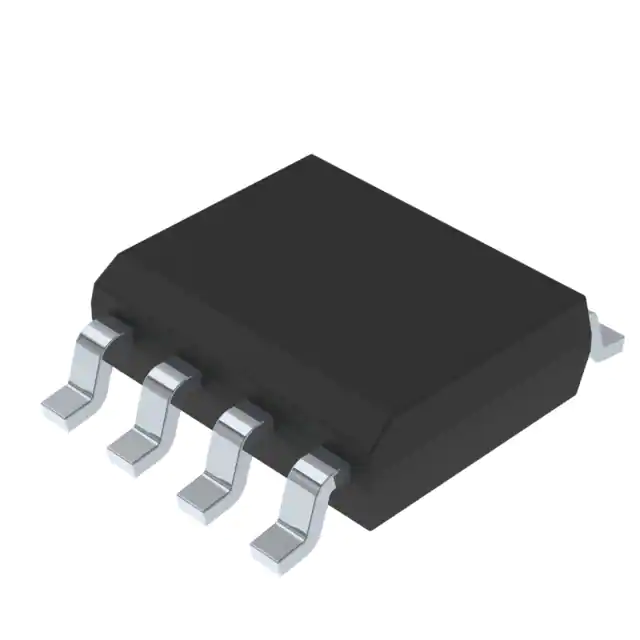
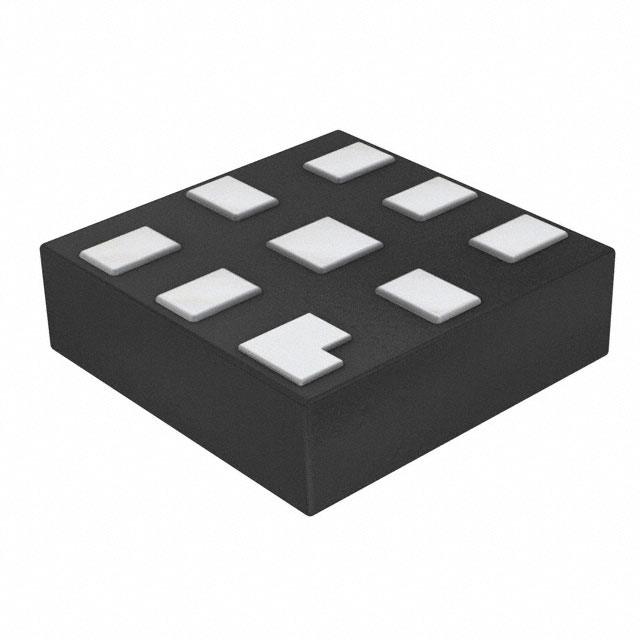
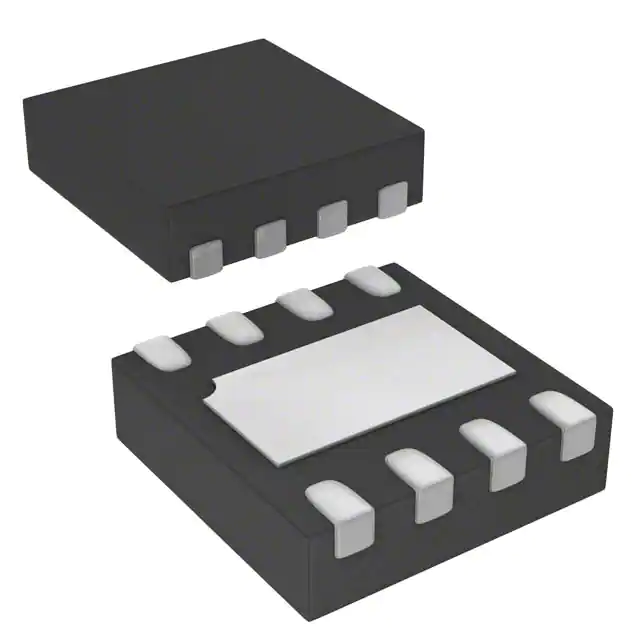
The MLX90132SLQ-AEA-000-TU is housed in a lead-free QFN-32 package (5 mm × 5 mm, 0.5 mm pitch) with exposed thermal pad (EXP) requiring connection to GND for thermal and electrical performance.
| Pin/Terminal | Circuit Role | Design Meaning |
|---|---|---|
| GND_dig (Pin 1) | Digital ground reference | Reference for digital logic, SPI/UART I/O, and internal digital core - must be low-impedance and separated from analog grounds. |
| XIN/XOUT (Pins 2–3) | Crystal oscillator terminals | Connects to 27.12 MHz fundamental-mode crystal - required for stable 13.56 MHz HFO in reader mode; not used in tag emulation. |
| VDD_TX / GND_TX (Pins 5/4) | High-current driver supply | Independent 2.7–5.5 V supply for TX stage - decoupling near device is mandatory to prevent RF noise coupling into digital domain. |
| TX1 / TX2 (Pins 6–7) | Differential RF outputs | Provide 180° phase-shifted square waves at 13.56 MHz - drive external antenna matching network; internally shorted in tag emulation mode. |
| RX1 / RX2 (Pins 21–20) | Differential RF inputs | Connect to antenna resonance point via attenuation components - feed internal diode detectors for analog demodulation in reader and tag modes. |
| UART_TX/IRQ_OUT & UART_RX/IRQ_IN (Pins 25/23) | UART I/O or interrupt signals | Dual-function pins: UART data path in reader mode; IRQ assertion (active-low) for field/tag detection events - requires pull-up for reliable edge detection. |
| NSS / SCK / MOSI / MISO (Pins 26–29) | SPI interface signals | Standard 4-wire SPI slave interface - NSS active-low enables command framing; supports polling or IRQ-driven readout for low-CPU-overhead operation. |
| SSI_0 / SSI_1 (Pins 30–31) | Serial interface select | Hardwired configuration: SSI_1 = GND, SSI_0 = VDD → SPI; SSI_0 = GND → UART - sets interface at power-on reset, no runtime reconfiguration. |
Key Features
| Feature | Design Value |
|---|---|
| Multi-protocol hardware acceleration | On-die bit/frame encoding/decoding (SOF/EOF/EGT/CRC) and sub-carrier detection eliminate MCU firmware overhead for ISO/IEC 14443/15693/NFC stack implementation. |
| Integrated tag emulation engine | Hardware-based load modulation and clock recovery enable true NFC Forum-compliant card emulation without external timing sources or complex software state machines. |
| Enhanced field and tag detection | Dedicated analog detector block generates IRQ_OUT pulse on field presence or tag proximity - enables wake-from-sleep event triggering with <45 µA active current. |
| Dual-domain power architecture | Separate VDD_TX and VDD supplies allow optimized filtering of high-current RF driver noise while maintaining clean digital logic voltage - reduces need for board-level isolation. |
| Configurable low-power states | Six distinct operating states (Hibernate/Sleep/Tag Detect/Ready/Reader/Tag Emulation) with defined current profiles and wake-up sources - supports energy harvesting and battery-life-critical designs. |
Applications
| Automotive Keyless Entry & Start | Industrial White Goods NFC Interface |
|---|---|
Use Scenario: Embedded in vehicle door handle or ignition module to detect and authenticate NFC-enabled fobs or smartphones. IC Role / Device Role / Timing Role: Acts as ISO/IEC 14443A/B and NFC Forum-compliant reader, performing secure challenge-response authentication with cryptographic co-processor. Use Value: Enables contactless vehicle access and push-button start with <10 cm read range and <2.5 mA active current during authentication - extends battery life of fob and reduces system BOM cost vs. discrete RF solutions. | Use Scenario: Integrated into washing machine control panel to allow NFC-based program selection, maintenance diagnostics, or firmware updates via smartphone. IC Role / Device Role / Timing Role: Functions as dual-mode transceiver: reader for user-initiated interactions and tag emulator for service technician tools. Use Value: Eliminates mechanical buttons and proprietary connectors; supports ISO/IEC 15693 for longer-range service tool pairing and 14443A for secure user transactions - all within same 5×5 mm footprint. |
| NFC + Wireless Power Combo Module | Secure Access Control Reader |
Use Scenario: Co-located with Qi wireless charging coil in smart lock or access terminal to provide simultaneous power delivery and secure credential exchange. IC Role / Device Role / Timing Role: Manages NFC communication while rejecting electromagnetic interference from adjacent 100–205 kHz WPC coils using differential RX front-end and programmable AC filter. Use Value: Achieves >300 mW RF output and robust tag detection despite shared PCB area with power transmitter - avoids separate shielding or layout spacing penalties. | Use Scenario: Deployed in office building entry panels to read employee badges compliant with ISO/IEC 14443A (MIFARE) and 15693 (ICODE). IC Role / Device Role / Timing Role: Serves as standards-compliant multi-protocol reader with built-in anti-collision (AC-Filter command) and extended frame support for large credential payloads. Use Value: Reduces firmware development time by offloading frame assembly/disassembly and CRC calculation - supports legacy badge formats and future NFC upgrades without hardware change. |
Equivalent & Alternatives
The following parts are listed as comparable options for similar multi-protocol 13.56 MHz RFID/NFC transceiver applications.
| Alternative Part | Technical Difference | Application Difference | Selection Advice |
|---|---|---|---|
| NXP PN5180A | Supports same ISO standards but adds ISO/IEC 18092 LLCP and higher max UART speed (5 Mbps); uses 40-pin HVQFN vs. MLX90132SLQ-AEA-000-TU's 32-pin QFN. | Targeted at high-throughput mobile point-of-sale and industrial PDA readers where LLCP stack integration is required. | Select PN5180A when LLCP-based peer-to-peer data exchange or faster host interface is mandatory; MLX90132SLQ-AEA-000-TU offers lower pin count and simpler antenna matching. |
| ST25R3916B | Includes integrated analog front-end tuning assist (ATR) and higher sensitivity (-60 dBm typical); supports same protocols but lacks native tag emulation clock recovery. | Better suited for long-range (>15 cm) reader-only deployments in logistics or asset tracking where field strength optimization is critical. | Choose ST25R3916B for maximum read distance in noisy environments; MLX90132SLQ-AEA-000-TU provides superior integrated tag emulation and lower standby current (1 µA vs. 5 µA). |
Compared with PN5180A and ST25R3916B, the MLX90132SLQ-AEA-000-TU delivers the lowest Hibernate current (1 µA), native clock recovery for tag mode (no external crystal needed), and minimal external component count for antenna matching - making it optimal for space-constrained, battery-powered, and dual-mode (reader + card) applications.
Availability
MLX90132SLQ-AEA-000-TU is available at Aetrix Electronics and suitable for automotive access systems, industrial white goods interfaces, NFC/wireless power combo modules, and secure access control readers requiring stable component supply across production lifecycles.
Supply support for MLX90132SLQ-AEA-000-TU includes scheduled delivery planning, volume procurement assistance, BOM continuity management, traceable sourcing, and lifecycle availability coordination for OEM customers, industrial embedded developers, connected-device designers, and electronics production programs.
Manufacturer
Melexis is a Belgian semiconductor company specializing in sensor and wireless ICs for automotive, industrial, and consumer markets, with expertise in magnetic sensing, RF, and low-power mixed-signal design.
The MLX90132 product line was developed to deliver compact, standards-compliant 13.56 MHz NFC/RFID transceivers for embedded applications demanding dual-mode operation, ultra-low power consumption, and minimal external component count.
FAQ
What communication interfaces does the MLX90132SLQ-AEA-000-TU support?
The MLX90132SLQ-AEA-000-TU supports both SPI and UART interfaces. SPI operates up to 2 Mbps (1.5 Mbps in tag emulation with clock recovery enabled), while UART defaults to 57.6 kbps and supports up to 2 Mbps. Interface selection is hardwired via SSI_0/SSI_1 pins at power-on reset - no runtime switching. The MLX90132SLQ-AEA-000-TU does not support I²C or USB interfaces per its datasheet specification.
Does the MLX90132SLQ-AEA-000-TU require an external crystal in all operating modes?
No. The MLX90132SLQ-AEA-000-TU requires a 27.12 MHz crystal only in reader mode to generate the 13.56 MHz HFO. In tag emulation mode, it recovers clock directly from the incoming HF field using its internal clock recovery block - eliminating the need for external crystal and reducing BOM count. The MLX90132SLQ-AEA-000-TU also includes a 32 kHz RC oscillator for low-power timing in sleep/hibernate states.
What is the maximum RF output power of the MLX90132SLQ-AEA-000-TU and how is it achieved?
The MLX90132SLQ-AEA-000-TU delivers up to 300 mW RF output power into a properly matched antenna load. This is achieved through its dual-driver architecture driving TX1 and TX2 differentially with 180° phase shift, supplied by the dedicated VDD_TX rail (2.7–5.5 V). Power level is modulated via ASK with index adjustable between 10% and 100%, set automatically by protocol selection or fine-tuned via internal register writes per the datasheet procedure.
How does the MLX90132SLQ-AEA-000-TU handle ISO/IEC 14443A and 15693 protocol differences?
Upon receiving the Protocol Select command (0x02), the MLX90132SLQ-AEA-000-TU automatically configures its digital demodulator, bit encoder/decoder, and receiver bandwidth for the selected standard. For ISO/IEC 14443A, it enables 106 kbps sub-carrier detection and 7-bit framing; for ISO/IEC 15693, it switches to 26.48 kHz sub-carrier and supports extended frames up to 528 bytes. All CRC, SOF/EOF, and EGT handling is performed in hardware - no host MCU intervention required.
What power-saving features are implemented in the MLX90132SLQ-AEA-000-TU?
The MLX90132SLQ-AEA-000-TU implements six distinct power states: Hibernate (1 µA), Sleep (20 µA), Tag Detection (45 µA), Ready (2.5 mA), Reader (variable), and Tag Emulation (2.5 mA). Wake-up sources include IRQ_IN pulse, NSS edge, timer, or field/tag detector events. The MLX90132SLQ-AEA-000-TU achieves ultra-low standby via independent power domains and automatic clock gating - allowing rapid transition (<2 ms) from Sleep to Ready state using the crystal oscillator settling time.
MLX90132SLQ-AEA-000-TU Specifications
- Product attributes
- Attribute value
- Manufacturer:
- Melexis Technologies NV
- Series:
- *
- Package/Case:
- -
- Packaging:
- Tube
- Product Status:
- Obsolete
- Type:
- -
- Frequency:
- -
- Standards:
- -
- Interface:
- -
- Voltage - Supply:
- -
- Operating Temperature:
- -
- Grade:
- -
- Qualification:
- -
- Mounting Type:
- -
- Supplier Device Package:
- -
MLX90132SLQ-AEA-000-TU FAQ
1.How can I place an order for MLX90132SLQ-AEA-000-TU through Aetrix?
Please submit a Request for Quotation (RFQ) for MLX90132SLQ-AEA-000-TU on Aetrix. Our sales agent will provide a competitive quotation and guide you through the order confirmation once you accept the terms.
2.Are the price and stock information for MLX90132SLQ-AEA-000-TU reliable?
The price and inventory of MLX90132SLQ-AEA-000-TU are updated periodically and may fluctuate due to market conditions. Stock and pricing data are typically refreshed every 24 hours. Quotation validity for MLX90132SLQ-AEA-000-TU is usually 5 days.
3.What payment methods are accepted for MLX90132SLQ-AEA-000-TU?
We accept Wire Transfer, PayPal, Credit Card, Western Union, MoneyGram, and Escrow for MLX90132SLQ-AEA-000-TU transactions.
Note: Certain payment methods may incur a processing fee.
4.How is shipping managed for MLX90132SLQ-AEA-000-TU?
MLX90132SLQ-AEA-000-TU orders can be shipped via leading logistics carriers, including DHL, UPS, FedEx, TNT, or Registered Mail.
Once your MLX90132SLQ-AEA-000-TU order is processed, you will receive an email with the shipment details and tracking number.
Note: Tracking information may take up to 24 hours to appear. Express delivery typically takes 3–5 business days.
5.How can I obtain technical support or documentation for MLX90132SLQ-AEA-000-TU?
For technical support, including MLX90132SLQ-AEA-000-TU datasheets, pinout diagrams, or application guidance, please contact our engineering support team. They can provide detailed documentation and assistance for your MLX90132SLQ-AEA-000-TU requirements.
6.How does Aetrix verify that MLX90132SLQ-AEA-000-TU is sourced from the original manufacturer or authorized distributors?
All MLX90132SLQ-AEA-000-TU products on Aetrix are procured from qualified distributors and authorized channels. Our dedicated quality assurance team conducts strict verification, including traceability checks and, if necessary, third-party testing. This ensures that MLX90132SLQ-AEA-000-TU meets industry standards.
7.What is the process for return or replacement of MLX90132SLQ-AEA-000-TU?
All MLX90132SLQ-AEA-000-TU units undergo pre-shipment inspection (PSI). If there is an issue with MLX90132SLQ-AEA-000-TU, returns or replacements are accepted under the following conditions:
1.Quantity discrepancies, incorrect items, or visible external defects (such as breakage or corrosion), acknowledged by Aetrix.
2.The issue is reported within 90 days of delivery.
3.The MLX90132SLQ-AEA-000-TU part is unused and in its original packaging.
Return procedure for MLX90132SLQ-AEA-000-TU:
1.Submit a request within 90 days.
2.Obtain a Return Material Authorization (RMA) from Aetrix.
MLX90132SLQ-AEA-000-TU Tags

-
SL2S2602FTBX
NXP Semiconductors

-
ST25DV04K-IER6S3
STMicroelectronics
-
ST25DV04K-IER6C3
STMicroelectronics

-
LXMSJZNCMD-217
Murata Electronics

-
NT3H2111W0FTTJ
NXP Semiconductors

-
NT3H2111W0FHKH
NXP Semiconductors

-
M24LR04E-RMC6T/2
STMicroelectronics

-
ST25DV04KC-JF6D3
STMicroelectronics
-
ST25DV64KC-IE6S3
STMicroelectronics
-
ST25DV64K-IER6T3
STMicroelectronics

-
NT3H2211W0FTTJ
NXP Semiconductors

-
NT3H2211W0FHKH
NXP Semiconductors
Tech Hub
Comparator circuit design covering voltage thresholds, input limits, open-collector outputs, LM393 wiring, op-amp differences, hysteresis, timing, window detection and practical fault diagnosis.
Schmitt triggers use separate rising and falling thresholds to stabilize slow or noisy signals. This guide covers hysteresis, 74HC14 and 74HCT14 selection, comparator calculations, RC oscillators and p…
Counterfeit components can hide behind convincing markings and passing basic function tests. This engineering reference covers source traceability, external inspection, X-ray, XRF, electrical testing, …
A practical engineering and sourcing framework covering lifecycle verification, lifetime-buy calculations, replacement qualification, supplier checks and counterfeit-risk controls.
TTL and CMOS logic families differ in thresholds, loading, output drive, power and timing. This engineering guide compares 74HC and 74HCT, calculates noise margins and checks 3.3 V/5 V compatibility.
A practical engineering guide to 3.3V and 5V logic compatibility, input thresholds, resistor dividers, translator ICs, MOSFET level shifting, I2C pull-ups, timing limits and power-sequencing risks.
The 74HC595 uses push-pull logic outputs, while the TPIC6B595 uses 50 V open-drain DMOS sinks for higher-power loads. This guide compares timing, current limits, 3.3 V interfacing, load wiring, thermal…
The 74HC595 converts serial data into eight stable parallel outputs. This guide covers pin functions, shift and storage timing, OE and MR behavior, drive-current limits, cascading, voltage compatibilit…
A technical comparison of level-sensitive latches and edge-triggered flip-flops, covering timing windows, setup and hold limits, master–slave operation, time borrowing, race-through, HDL inference and…
A D latch stores one bit while Enable controls when data can pass. This reference covers gate-level operation, truth tables, transparency, setup and hold timing, LE versus OE, common ICs and practical …