
 My Inquiry
 My Account


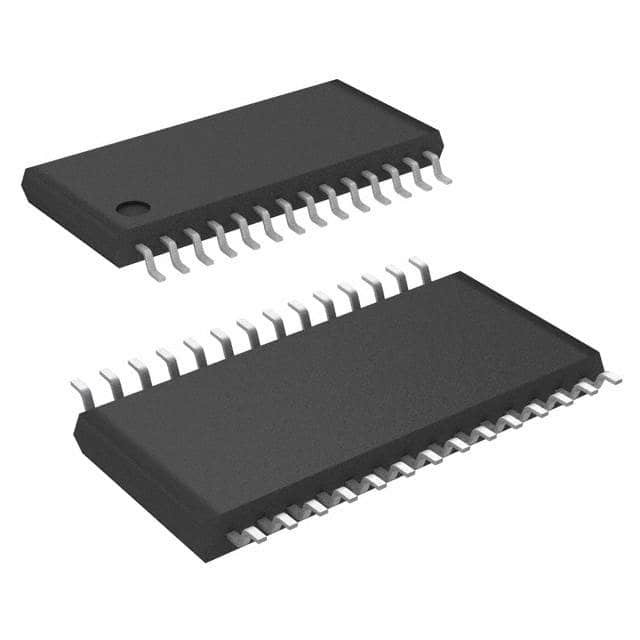
NXP Semiconductors MM908E624ACPEWR2
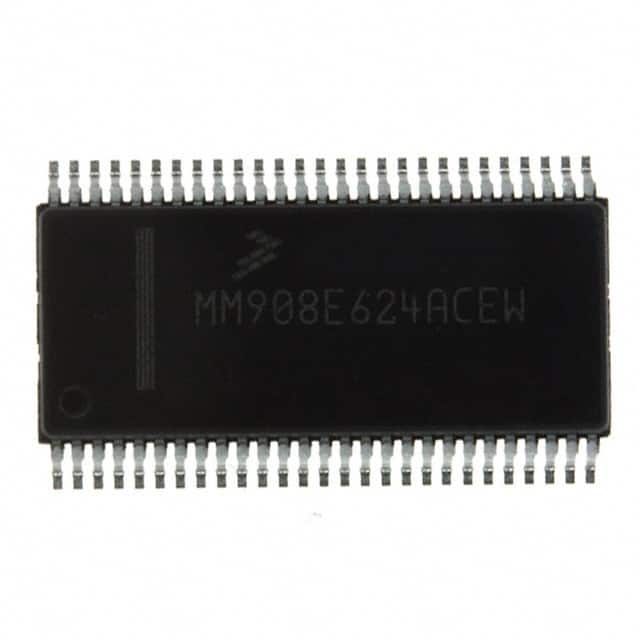
- Part No.:
- MM908E624ACPEWR2
- Manufacturer:
- NXP Semiconductors
- Category:
- Application Specific Microcontrollers
- Package:
- 54-BSSOP (0.295", 7.50mm Width)
- Datasheet:
-
 MM908E624ACPEWR2.pdf
- Description:
- IC SW TRPL HISIDE MCU/LIN 54SOIC
- Quantity:
- Payment:

- Shipping:

Inventory:2,367
Please send an inquiry. Send us your inquiry, and we will respond immediately.
Product details
Overview
MM908E624ACPEWR2 from NXP Semiconductors (formerly Freescale) is an integrated automotive-grade triple high-side switch with embedded HC08 microcontroller and LIN physical layer, designed for relay-driven motor control. It delivers 16 KB flash, 512 B RAM, 10-bit ADC, three diagnostic-capable high-side outputs (HS1–HS3), and a 5.0 V low-dropout regulator - all in a single 54-pin SOICW package for window lift, sunroof, and fan control applications.
For engineers reviewing the MM908E624ACPEWR2 datasheet, MM908E624ACPEWR2 pinout, MM908E624ACPEWR2 application, or MM908E624ACPEWR2 equivalent, key selection criteria include LIN bus compatibility, HS output RDS(ON) at 125 °C (≤3.0 Ω for HS1/HS2, ≤14 Ω for HS3), integrated current-sense amplifier (±25 mV offset), watchdog configuration via external resistor (10–100 kΩ), and -40 °C to +85 °C operating range.
Technical Context
The MM908E624ACPEWR2 integrates two dies in one package: an HC908EY16 MCU die (8 MHz bus, SPI, ESCI, dual 16-bit timers) and a SmartMOS analog die featuring LIN transceiver, voltage regulator, window watchdog, wake-up inputs (L1/L2), and three independently controllable high-side drivers with overtemperature shutdown and current limiting.
Control flow is hybrid: MCU executes application firmware and configures analog functions via SPI; analog die handles real-time power switching, LIN communication, diagnostics (e.g., IRQ_A assertion on fault), and safety-critical monitoring (LVR/HVI thresholds, thermal prewarning at 135 °C). The LIN interface supports normal/slow/fast slew rates with defined propagation symmetry (±11 μs) and bus wake-up detection (tWAKE ≤20 μs).
Key Specifications
| Parameter | Value and Actual Design Meaning |
|---|---|
| Core Architecture | HC08 CPU with 8 MHz internal bus frequency - enables deterministic real-time control of relay sequencing and LIN protocol timing. |
| Flash / RAM | 16 KB flash (15.872 KB user) / 512 B RAM - sufficient for LIN stack, motor control logic, and diagnostic state machines without external memory. |
| High-Side Outputs | HS1/HS2: RDS(ON) ≤3.0 Ω @ 125 °C, 150 mA; HS3: RDS(ON) ≤14 Ω @ 125 °C, 30 mA - supports diverse load types (inductive relays vs. resistive sensors). |
| LIN Physical Layer | Compliant with ISO 9141-2/14229; recessive/dominant thresholds at 0.475 V / 0.6 V VSUP; ±11 μs propagation symmetry - ensures robust communication in noisy automotive environments. |
| Voltage Regulator | 5.0 V ±2.5% output, 110 mA max current, 0.2 V dropout @ 50 mA - powers MCU core and peripherals directly from VSUP (5.5–27 V). |
| Current Sense Amp | Rail-to-rail input (-0.1 to VCC+0.1 V), ±25 mV offset, 1 MHz GBW - enables accurate inline current monitoring for open-load and short-circuit detection. |
| Operating Temperature | -40 °C to +85 °C ambient (TA), junction up to +125 °C - qualified for under-hood and cabin-mounted body electronics. |
Pinout & Package
MM908E624ACPEWR2 uses a 54-pin SOICW (Small Outline Integrated Circuit, Wide-body) package with 0.8 mm lead pitch and exposed thermal pad. Pin assignments are split across MCU and analog dies, with dedicated power, I/O, LIN, and high-side driver terminals.
| Pin/Terminal | Circuit Role | Design Meaning |
|---|---|---|
| HS1, HS2, HS3 | High-side output terminals | Low-RDS(ON) switches driving loads to battery; each includes independent overtemperature shutdown and current limit flags accessible via SPI. |
| LIN | LIN bus transceiver I/O | Single-wire bidirectional interface supporting dominant/recessive states per LIN spec; includes internal pull-up and bus wake-up detection. |
| PWMIN | Direct HS control input | Enables hardware-level PWM control of HS1/HS2 without MCU intervention - critical for fast-response safety functions. |
| +E, -E, OUT | Current sense amplifier inputs/output | Differential inputs (+E/-E) measure shunt voltage; OUT provides amplified signal for ADC sampling or comparator triggering. |
| L1, L2 | Wake-up inputs | Configurable digital wake sources with programmable filter (8–38 μs); trigger transition from Sleep/Stop mode to Normal mode. |
| RST_A, IRQ_A | Analog die status outputs | RST_A signals analog reset assertion; IRQ_A pulses on faults (overcurrent, overtemperature, LIN error) - enables hardware-triggered diagnostics. |
| VDD, VCC, AGND, GND | Power distribution network | VDD = regulated 5 V for MCU; VCC = 5 V for op-amp; AGND/GND separation minimizes noise coupling between analog and digital domains. |
Key Features
| Feature | Design Value |
|---|---|
| Integrated LIN Physical Layer | Eliminates need for external LIN transceiver IC, reducing BOM count and PCB area while ensuring ISO-compliant signaling and wake-up capability. |
| Triple Diagnostic High-Side Drivers | Each HS output reports real-time status (on/off/fault) via SPI registers and asserts IRQ_A on failure - enables predictive maintenance and ASIL-B compatible diagnostics. |
| Embedded Current Sense Amplifier | On-die op-amp with rail-to-rail input and 1 MHz bandwidth allows direct measurement of load current without external components or precision resistors. |
| Window Watchdog with External Resistor | Configurable timeout (97–205 ms) via single external resistor (10–100 kΩ) - provides flexible fail-safe supervision without requiring additional timing components. |
| Dual-Die Thermal Management | Independent junction temperature monitoring (analog die up to 150 °C, MCU up to 125 °C) with prewarning (135 °C) and shutdown (170 °C) - prevents thermal runaway in sustained high-power operation. |
Applications
| Automotive Window Lift Control | Automotive Sunroof Actuation |
|---|---|
Use Scenario: Precise bidirectional control of DC motors driving glass lift mechanisms in passenger vehicles, with soft-start and stall detection. IC Role / Device Role / Timing Role: MM908E624ACPEWR2 acts as the primary LIN node controlling two HS outputs (HS1/HS2) for motor direction, while using HS3 for brake solenoid activation and current sense for torque monitoring. Use Value: Integrated LIN + MCU + drivers reduce system latency to <10 μs between command and HS activation, enabling responsive anti-pinch behavior compliant with ECE R21. | Use Scenario: Sequenced opening/closing of panoramic sunroofs with position feedback, obstacle detection, and automatic retraction on obstruction. IC Role / Device Role / Timing Role: MM908E624ACPEWR2 serves as the local controller interpreting LIN commands, managing motor direction via HS1/HS2, and monitoring current via +E/-E to detect jamming events. Use Value: On-chip 10-bit ADC and current sense amplifier enable real-time current profiling (±2% accuracy), eliminating need for external shunt amplifiers and improving jam detection reliability. |
| Automotive HVAC Fan Control | Industrial Relay Panel Management |
Use Scenario: Variable-speed control of blower motors in climate control systems, with thermal derating and overcurrent protection. IC Role / Device Role / Timing Role: MM908E624ACPEWR2 implements PWM-based speed regulation using HS1/HS2, monitors motor temperature via analog die junction sensor, and communicates status over LIN to HVAC ECU. Use Value: Built-in thermal shutdown (170 °C) and current limiting (600 mA for HS1/HS2) prevent motor burnout during stalled conditions without external protection circuitry. | Use Scenario: Centralized control of multiple 12 V/24 V relays in industrial automation panels, with remote diagnostics and firmware updates via LIN. IC Role / Device Role / Timing Role: MM908E624ACPEWR2 replaces discrete relay drivers and microcontrollers in DIN-rail mounted I/O modules, using HS1–HS3 to drive contactor coils and LIN for master-slave coordination. Use Value: Single-package integration reduces panel footprint by >40% versus discrete solutions and enables unified firmware management across distributed nodes. |
Equivalent & Alternatives
The following parts are listed as comparable options for similar integrated high-side switch with microcontroller applications.
| Alternative Part | Technical Difference | Application Difference | Selection Advice |
|---|---|---|---|
| MC33883AER2 | Standalone 3-channel high-side driver (no MCU or LIN); requires external microcontroller and LIN transceiver. | Suitable only when separate MCU control is preferred; lacks integrated diagnostics and current sensing. | Select MC33883AER2 if existing architecture uses discrete MCU and LIN PHY, and higher channel count (up to 6) is needed. |
| SPC560B50L5 | 32-bit Power Architecture MCU with CAN, no integrated high-side drivers or LIN PHY; requires external driver ICs. | Targeted at higher-performance body controllers needing CAN connectivity and complex scheduling - not a drop-in replacement. | Choose SPC560B50L5 for next-generation platforms requiring CAN FD, ASIL-B software partitioning, and scalable processing beyond HC08 capabilities. |
Compared with MC33883AER2 and SPC560B50L5, MM908E624ACPEWR2 uniquely combines LIN PHY, MCU, and triple high-side drivers in one package - reducing component count, simplifying layout, and enabling faster time-to-market for cost-sensitive automotive body electronics.
Availability
MM908E624ACPEWR2 is available at Aetrix Electronics and suitable for automotive window lift, sunroof actuation, and HVAC fan control requiring stable component supply across extended temperature ranges and long production lifecycles.
Supply support for MM908E624ACPEWR2 includes scheduled delivery planning, volume procurement assistance, BOM continuity management, traceable sourcing, and lifecycle availability coordination for OEM customers, industrial embedded developers, connected-device designers, and electronics production programs.
Manufacturer
NXP Semiconductors is a global semiconductor leader specializing in secure connectivity solutions for automotive, industrial, and IoT applications, with deep expertise in automotive-grade mixed-signal ICs.
The MM908E624ACPEWR2 belongs to NXP's SmartMOS family - engineered specifically for automotive body electronics to integrate power switching, microcontroller intelligence, and LIN communication into a single robust package.
FAQ
What is the maximum junction temperature specification for the MM908E624ACPEWR2 analog die?
The MM908E624ACPEWR2 analog die has a maximum junction temperature of 150 °C, with thermal prewarning triggered at 135 °C and thermal shutdown at 170 °C. These thresholds are monitored independently from the MCU die, which is rated to 125 °C. Operation above 150 °C risks permanent damage, and the device latches off HS outputs upon reaching shutdown threshold - a behavior confirmed in the Thermal Ratings section of the datasheet for MM908E624ACPEWR2.
Does the MM908E624ACPEWR2 support hardware PWM control of its high-side outputs without MCU intervention?
Yes, the MM908E624ACPEWR2 supports direct hardware PWM control of HS1 and HS2 via the PWMIN pin, allowing pulse-width modulation independent of the embedded HC08 MCU. This feature enables safety-critical functions like emergency brake activation or stall recovery to operate even if the MCU is halted. HS3 is not PWM-capable and must be controlled exclusively through SPI commands - a distinction clearly documented in the Pin Definitions table for MM908E624ACPEWR2.
How does the MM908E624ACPEWR2 implement LIN bus wake-up functionality?
The MM908E624ACPEWR2 implements LIN bus wake-up through its LIN transceiver, which detects dominant-level pulses on the LIN pin and triggers a wake event within ≤20 μs (tWAKE). Upon detection, the analog die exits Sleep/Stop mode, asserts RST_A, and signals IRQ_A to notify the MCU. This process is fully autonomous and does not require MCU clocking - a capability verified in the Dynamic Electrical Characteristics section of the MM908E624ACPEWR2 datasheet.
What are the key differences between the HS1/HS2 and HS3 high-side outputs in the MM908E624ACPEWR2?
HS1 and HS2 share identical specifications: RDS(ON) ≤3.0 Ω @ 125 °C, 600 mA current limit, and PWMIN control capability. HS3 differs significantly: RDS(ON) ≤14 Ω @ 125 °C, 200 mA current limit, and no PWMIN support - it is software-controlled only via SPI. These distinctions are explicitly defined in the Static Electrical Characteristics tables for MM908E624ACPEWR2 and reflect optimized use cases (motor drive vs. auxiliary load control).
Can the MM908E624ACPEWR2's current sense amplifier be used for open-load detection?
Yes, the MM908E624ACPEWR2's current sense amplifier supports open-load detection by measuring differential voltage across a shunt resistor connected to +E and -E pins. With ±25 mV input offset and rail-to-rail input range, it reliably detects near-zero current conditions typical of open circuits. The amplified OUT signal is routed to the MCU's 10-bit ADC, enabling firmware-based threshold comparison - a method validated in application notes for MM908E624ACPEWR2 in automotive relay monitoring systems.
MM908E624ACPEWR2 Specifications
- Product attributes
- Attribute value
- Manufacturer:
- NXP Semiconductors
- Series:
- -
- Package/Case:
- 54-BSSOP (0.295", 7.50mm Width)
- Packaging:
- Tape & Reel (TR)
- Product Status:
- Active
- Programmable:
- Not Verified
- Applications:
- Mirror Control
- Core Processor:
- HC08
- Program Memory Type:
- FLASH (16kB)
- Controller Series:
- 908E
- RAM Size:
- 512 x 8
- Interface:
- SCI, SPI
- Number of I/O:
- 16
- Voltage - Supply:
- 5.5V ~ 18V
- Operating Temperature:
- -40°C ~ 85°C
- Grade:
- Automotive
- Qualification:
- -
- Mounting Type:
- Surface Mount
- Supplier Device Package:
- 54-SOIC
MM908E624ACPEWR2 FAQ
1.How can I place an order for MM908E624ACPEWR2 through Aetrix?
Please submit a Request for Quotation (RFQ) for MM908E624ACPEWR2 on Aetrix. Our sales agent will provide a competitive quotation and guide you through the order confirmation once you accept the terms.
2.Are the price and stock information for MM908E624ACPEWR2 reliable?
The price and inventory of MM908E624ACPEWR2 are updated periodically and may fluctuate due to market conditions. Stock and pricing data are typically refreshed every 24 hours. Quotation validity for MM908E624ACPEWR2 is usually 5 days.
3.What payment methods are accepted for MM908E624ACPEWR2?
We accept Wire Transfer, PayPal, Credit Card, Western Union, MoneyGram, and Escrow for MM908E624ACPEWR2 transactions.
Note: Certain payment methods may incur a processing fee.
4.How is shipping managed for MM908E624ACPEWR2?
MM908E624ACPEWR2 orders can be shipped via leading logistics carriers, including DHL, UPS, FedEx, TNT, or Registered Mail.
Once your MM908E624ACPEWR2 order is processed, you will receive an email with the shipment details and tracking number.
Note: Tracking information may take up to 24 hours to appear. Express delivery typically takes 3–5 business days.
5.How can I obtain technical support or documentation for MM908E624ACPEWR2?
For technical support, including MM908E624ACPEWR2 datasheets, pinout diagrams, or application guidance, please contact our engineering support team. They can provide detailed documentation and assistance for your MM908E624ACPEWR2 requirements.
6.How does Aetrix verify that MM908E624ACPEWR2 is sourced from the original manufacturer or authorized distributors?
All MM908E624ACPEWR2 products on Aetrix are procured from qualified distributors and authorized channels. Our dedicated quality assurance team conducts strict verification, including traceability checks and, if necessary, third-party testing. This ensures that MM908E624ACPEWR2 meets industry standards.
7.What is the process for return or replacement of MM908E624ACPEWR2?
All MM908E624ACPEWR2 units undergo pre-shipment inspection (PSI). If there is an issue with MM908E624ACPEWR2, returns or replacements are accepted under the following conditions:
1.Quantity discrepancies, incorrect items, or visible external defects (such as breakage or corrosion), acknowledged by Aetrix.
2.The issue is reported within 90 days of delivery.
3.The MM908E624ACPEWR2 part is unused and in its original packaging.
Return procedure for MM908E624ACPEWR2:
1.Submit a request within 90 days.
2.Obtain a Return Material Authorization (RMA) from Aetrix.
MM908E624ACPEWR2 Tags
-
CYPD3175-24LQXQ
Infineon Technologies

-
SLB9672VU20FW1523XTMA1
Infineon Technologies
-
SLB9670VQ20FW785XTMA1
Infineon Technologies
-
SLB9672XU20FW1523XTMA1
Infineon Technologies
-
SLB9673XU20FW2613XTMA1
Infineon Technologies
-
CYPD3125-40LQXIT
Infineon Technologies
-
AT97SC3204-U2A1A-20
Microchip Technology
-
AT97SC3204-U2A1A-10
Microchip Technology
-
SLM9670AQ20FW1311XTMA1
Infineon Technologies
-
SLB9672XU20FW1613XTMA1
Infineon Technologies
-
SLB9672AU20FW1613XTMA1
Infineon Technologies
-
SLB9673AU20FW2613XTMA1
Infineon Technologies
Tech Hub

A practical engineering guide to 3.3V and 5V logic compatibility, input thresholds, resistor dividers, translator ICs, MOSFET level shifting, I2C pull-ups, timing limits and power-sequencing risks.

The 74HC595 uses push-pull logic outputs, while the TPIC6B595 uses 50 V open-drain DMOS sinks for higher-power loads. This guide compares timing, current limits, 3.3 V interfacing, load wiring, thermal…

The 74HC595 converts serial data into eight stable parallel outputs. This guide covers pin functions, shift and storage timing, OE and MR behavior, drive-current limits, cascading, voltage compatibilit…

A technical comparison of level-sensitive latches and edge-triggered flip-flops, covering timing windows, setup and hold limits, master–slave operation, time borrowing, race-through, HDL inference and…

A D latch stores one bit while Enable controls when data can pass. This reference covers gate-level operation, truth tables, transparency, setup and hold timing, LE versus OE, common ICs and practical …

An SR latch stores one bit through cross-coupled feedback. This engineering reference covers NOR and NAND implementations, truth tables, forbidden-state recovery, gated operation, switch debouncing, fa…

Latch circuits retain one bit through feedback. This technical reference covers SR and D latches, truth tables, transparency, timing limits, latch-versus-flip-flop behavior, applications and common log…

An engineering guide to LED driver operation, constant-current and constant-voltage outputs, linear and switching topologies, dimming, IC selection, calculations, replacement compatibility, and fault c…

Operational amplifier guide covering op amp basics, feedback, ideal vs real op amps, common configurations, buffer circuits, offset, bias current, gain-bandwidth, slew rate, rail-to-rail limits and sel…

Jumper cables guide covering safe connection order, red and black clamp placement, final ground connection, cable gauge, length, clamp quality, copper vs CCA cables, jump starter comparison and battery…


