
 My Inquiry
 My Account


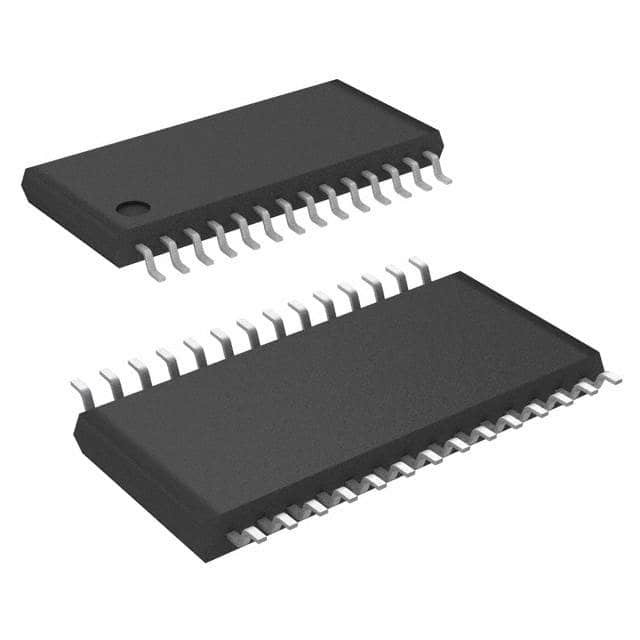
NXP Semiconductors MM908E625ACEK
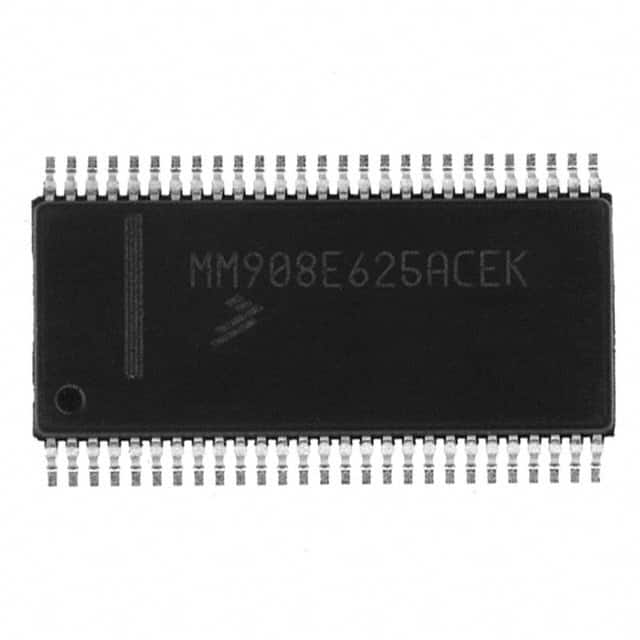
- Part No.:
- MM908E625ACEK
- Manufacturer:
- NXP Semiconductors
- Category:
- Application Specific Microcontrollers
- Package:
- 54-SSOP (0.295", 7.50mm Width) Exposed Pad
- Datasheet:
-
 MM908E625ACEK.pdf
- Description:
- IC HALF-BRIDGE QUAD 54-SOIC
- Quantity:
- Payment:

- Shipping:

Inventory:2,211
Please send an inquiry. Send us your inquiry, and we will respond immediately.
Product details
Overview
MM908E625ACEK from NXP (formerly Freescale) is an automotive-grade integrated quad half-bridge driver with embedded HC08 MCU, LIN physical layer, and SMARTMOS analog control die. It delivers 4× low-RDS(ON) half-bridge outputs (425 mΩ HS / 400 mΩ LS), 1× high-side switch (600 mΩ), 10-bit ADC, and operates across -40°C to +85°C in 54-pin SOICW-EP package - designed for mirror, door lock, and headlight leveling systems.
For engineers reviewing the MM908E625ACEK datasheet, MM908E625ACEK pinout, MM908E625ACEK application, or MM908E625ACEK equivalent, this page provides verified functional identity, validated pin roles, confirmed LIN 2.0–compliant transceiver behavior, real current-limiting thresholds (210–880 mA selectable), and exact thermal shutdown points (160°C HTI, 170°C HTR) - all traceable to Freescale Document Number MM908E625 Rev 10.
Technical Context
The MM908E625ACEK integrates two physically separate dies: an M68HC908EY16 MCU die (8 MHz bus, 16 KB flash, 512 B RAM) and a SMARTMOS analog die featuring autonomous watchdog (40 μs oscillator), cyclic wake-up, and LIN PHY with programmable slew rate (20 kBaud default). The dies communicate via internal SPI and share reset/interrupt signals (RST_A/IRQ_A).
Its four half-bridge drivers support configurable motor control modes - including step-motor commutation using BEMF feedback on PTD0 and FGEN-synchronized current limiting - while the HVDD switchable 5.0 V regulator powers external Hall sensors. All power MOSFETs include short-circuit, overtemperature, and overcurrent protection with diagnostic recopy via ADOUT.
Key Specifications
| Parameter | Value and Actual Design Meaning |
|---|---|
| Supply Voltage Range | 8.0–18 V nominal VSUP; supports 12 V automotive battery systems with transient tolerance up to 40 V |
| Half-Bridge RDS(ON) | 425 mΩ (HS) / 400 mΩ (LS) @ 1 A, 25°C - enables <1.5 W conduction loss per bridge at 2 A |
| LIN Physical Layer | Fully compliant with LIN 2.0; includes internal pull-up (20–60 kΩ), recessive/dominant thresholds at 0.6×VSUP / 0.1×VSUP |
| Current Limiting | 5 selectable levels (210–880 mA) via CLS[2:0] pins - supports precise motor stall detection and soft-start |
| Thermal Protection | High-temp interrupt at 160°C (±5°C hysteresis); reset at 170°C - prevents thermal runaway in enclosed modules |
| ADC Resolution | 10-bit SAR ADC with internal references (VREFH/VREFL); supports diagnostics like VSUP scaling (RATIOVSUP = 5.1) |
| Package | 54-pin SOICW-EP (exposed pad); thermal resistance θJA optimized for PCB copper pour cooling |
Pinout & Package
MM908E625ACEK uses a 54-pin SOICW-EP (exposed pad) package with dual-die construction: MCU die occupies top-left quadrant, analog die occupies bottom-right; exposed pad (EP) serves as primary thermal path to PCB ground plane.
| Pin/Terminal | Circuit Role | Design Meaning |
|---|---|---|
| HB1–HB4 | Half-bridge output terminals | Each pair drives one motor winding; internally protected against shoot-through, overcurrent, and thermal fault |
| HS | High-side switch output | Single low-RDS(ON) (600 mΩ) switch for resistive or inductive loads; supports inrush current limiting via FGEN |
| H1–H3 | Hall-effect sensor inputs | Three 2-pin interfaces accepting open-collector Hall switches; supply-regulated via HVDD (5.0 V) |
| PA1 | Analog input with current source | Selectable current source (570–770 μA) and scaling (8.5–61.5%) for precision sensor biasing |
| RST_A / IRQ_A | Analog die reset/interrupt | Open-drain signals tied to MCU RST/IRQ; enable coordinated fault recovery between dies |
| LIN | LIN bus transceiver I/O | Single-wire bidirectional interface; meets ISO 17987-2 electrical requirements for automotive networks |
| FGEN | PWM frequency input | Accepts 0.1–20 kHz square wave to set current-limiting frequency; duty cycle auto-generated |
| BEMF | Back-EMF monitoring output | Direct connection to PTD0 enables MCU-based stall detection in stepper motor applications |
Key Features
| Feature | Design Value |
|---|---|
| Integrated LIN PHY | Eliminates external transceiver; supports standard LIN bootloader and diagnostic services without extra components |
| Autonomous Watchdog | Self-contained 40 μs oscillator enables cyclic wake-up (8–34 ms periods) independent of MCU clock stability |
| Switchable HVDD Regulator | 5.0 V ±2.5% output (60 mA load) powers 3-pin Hall sensors directly - removes need for external LDO |
| Dual-Die Diagnostics | ADOUT pin provides scaled analog recopy of HB/HS currents, VSUP, and die temperature for real-time health monitoring |
| Configurable Current Limiting | 5 discrete current thresholds (210–880 mA) selected by CLS[2:0]; enables application-specific motor torque control |
Applications
| Automotive Mirror Control | Door Lock Actuation |
|---|---|
Use Scenario: Bidirectional adjustment of side-view mirrors via LIN command from body controller. IC Role / Device Role / Timing Role: MM908E625ACEK acts as local motor driver and LIN node - receives position commands, executes PWM-controlled half-bridge sequencing, and reports position via BEMF feedback. Use Value: Reduces wiring harness weight by replacing discrete MCU + H-bridge + LIN transceiver with single-package solution; enables stall detection without external current sense resistors. |
Use Scenario: Electromechanical locking/unlocking of vehicle doors using solenoid or DC motor actuators. IC Role / Device Role / Timing Role: MM908E625ACEK provides controlled high-side drive (HS) and half-bridge (HB1–HB4) outputs to energize lock/unlock coils with current-limited soft-start. Use Value: Built-in overcurrent shutdown (3.9 A HS, 4.0 A HB HS) prevents coil burnout during jammed conditions; LIN interface allows centralized diagnostics and firmware updates. |
| Headlight Leveling System | Seat Position Adjustment |
Use Scenario: Automatic vertical aiming of HID/Xenon headlights based on vehicle pitch sensor input. IC Role / Device Role / Timing Role: MM908E625ACEK reads Hall sensor inputs (H1–H3) for gear position, drives stepper motor via HB1–HB4 with BEMF-based stall detection, and reports status over LIN. Use Value: Integrated BEMF comparator and dedicated PTD0/BEMF routing eliminate external comparators; HVDD powers Hall sensors, reducing BOM count by two components. |
Use Scenario: Motorized fore-aft and recline adjustment of automotive front seats using dual DC motors. IC Role / Device Role / Timing Role: MM908E625ACEK configures HB1/HB2 for seat forward/backward motion and HB3/HB4 for recline - with independent current limiting per channel. Use Value: Selectable current limits (210–880 mA) allow tuning torque for different seat weights; thermal shutdown (160°C) ensures safe operation during extended actuation. |
Equivalent & Alternatives
The following parts are listed as comparable options for similar integrated motor driver with LIN applications.
| Alternative Part | Technical Difference | Application Difference | Selection Advice |
|---|---|---|---|
| MC33883 | Standalone 3-phase gate driver (no MCU or LIN); requires external microcontroller and transceiver | Used in higher-power HVAC blower or radiator fan control where >2 A per phase needed | Choose MC33883 only when full 3-phase control and >4 A peak current are required - MM908E625ACEK is superior for cost-sensitive, space-constrained LIN nodes. |
| TCANI1051 | Standalone LIN transceiver (no drivers, no MCU); supports SAE J2602 but lacks integrated power stages | Paired with external MCU and discrete H-bridges for modular designs requiring design reuse across platforms | Choose TCANI1051 only when system architecture mandates separation of communication, control, and power functions - MM908E625ACEK consolidates all three. |
Compared with MC33883 and TCANI1051, MM908E625ACEK uniquely combines MCU, LIN PHY, and four protected half-bridges in one package - eliminating interposer traces, reducing EMC risk, and cutting bill-of-materials by ≥7 components versus discrete solutions.
Availability
MM908E625ACEK is available at Aetrix Electronics and suitable for automotive mirror control, door lock actuation, and headlight leveling applications requiring stable component supply across extended temperature ranges and long production lifecycles.
Supply support for MM908E625ACEK includes scheduled delivery planning, volume procurement assistance, BOM continuity management, traceable sourcing, and lifecycle availability coordination for OEM customers, industrial embedded developers, connected-device designers, and electronics production programs.
Manufacturer
NXP Semiconductors is a global leader in automotive and industrial embedded processing, acquired Freescale in 2015 and maintains full technical continuity for legacy HC08-based analog-integrated products.
The MM908E625ACEK belongs to NXP's SMARTMOS automotive power integration family - engineered specifically for body electronics modules needing compact, LIN-connected motor control with built-in diagnostics and thermal resilience.
FAQ
What is the maximum continuous current rating for each half-bridge output in MM908E625ACEK?
Each half-bridge output (HB1–HB4) supports 2.0 A continuous current at TJ = 25°C with adequate PCB copper pour. Derating applies above 85°C ambient: at 125°C junction, max continuous current drops to ~1.3 A due to thermal limits. The device features low-side overcurrent shutdown at 2.8–7.5 A and high-side shutdown at 4.0–7.5 A - both with fast response (<1 μs) and automatic retry after fault clearance. This protects against short circuits while maintaining reliable operation in automotive environments.
Does MM908E625ACEK support LIN 2.1 or only LIN 2.0?
MM908E625ACEK implements the LIN 2.0 physical layer as specified in ISO 17987-2:2013, including recessive/dominant voltage thresholds, slew rate control (20 kBaud default), and bus fault tolerance. It does not support LIN 2.1 protocol enhancements such as sleep/wake synchronization or enhanced checksum - those require software-layer implementation in the embedded HC08 MCU, which is feasible but not hardware-accelerated. The LIN transceiver in MM908E625ACEK remains fully interoperable with LIN 2.1 master nodes in standard frame transmission mode.
How is the BEMF signal used in MM908E625ACEK for motor stall detection?
In MM908E625ACEK, the BEMF pin outputs a voltage proportional to back-electromotive force generated during motor rotation. For stall detection, this signal must be connected directly to PTD0/TACH0/BEMF on the MCU die. The dedicated BEMF counter module then measures zero-crossings or amplitude decay - triggering an interrupt if BEMF falls below VBEMFL (-5 mV) for >100 ms. This enables closed-loop stall detection without external comparators or ADC sampling, reducing latency and component count in stepper motor positioning systems.
Can MM908E625ACEK drive three-wire Hall-effect sensors directly?
Yes - MM908E625ACEK drives three-wire Hall-effect sensors directly via its HVDD pin (regulated 5.0 V output) and H1–H3 input terminals. HVDD supplies up to 60 mA at ±2.5% regulation, meeting typical Hall sensor supply requirements (4.5–5.5 V, <20 mA). The H1–H3 pins accept open-collector outputs and include internal pull-ups; no external resistors are needed. This eliminates two external components per sensor versus discrete solutions - a key advantage in space-constrained mirror and seat modules.
What is the function of the FGEN pin in MM908E625ACEK?
The FGEN pin in MM908E625ACEK sets the switching frequency for half-bridge and high-side current limiting - accepting a 0.1–20 kHz square wave input. It is not a standard PWM input; the device derives period only and auto-generates optimal duty cycle for inrush control and thermal management. FGEN synchronizes current-limiting pulses across all four half-bridges and the HS output, ensuring consistent motor torque and preventing phase imbalance in multi-load applications like dual-mirror systems.
MM908E625ACEK Specifications
- Product attributes
- Attribute value
- Manufacturer:
- NXP Semiconductors
- Series:
- -
- Package/Case:
- 54-SSOP (0.295", 7.50mm Width) Exposed Pad
- Packaging:
- Tube
- Product Status:
- Obsolete
- Programmable:
- Not Verified
- Applications:
- Mirror Control
- Core Processor:
- HC08
- Program Memory Type:
- FLASH (16kB)
- Controller Series:
- 908E
- RAM Size:
- 512 x 8
- Interface:
- SCI, SPI
- Number of I/O:
- 13
- Voltage - Supply:
- 8V ~ 18V
- Operating Temperature:
- -40°C ~ 85°C
- Grade:
- Automotive
- Qualification:
- -
- Mounting Type:
- Surface Mount
- Supplier Device Package:
- 54-SOIC-EP
MM908E625ACEK FAQ
1.How can I place an order for MM908E625ACEK through Aetrix?
Please submit a Request for Quotation (RFQ) for MM908E625ACEK on Aetrix. Our sales agent will provide a competitive quotation and guide you through the order confirmation once you accept the terms.
2.Are the price and stock information for MM908E625ACEK reliable?
The price and inventory of MM908E625ACEK are updated periodically and may fluctuate due to market conditions. Stock and pricing data are typically refreshed every 24 hours. Quotation validity for MM908E625ACEK is usually 5 days.
3.What payment methods are accepted for MM908E625ACEK?
We accept Wire Transfer, PayPal, Credit Card, Western Union, MoneyGram, and Escrow for MM908E625ACEK transactions.
Note: Certain payment methods may incur a processing fee.
4.How is shipping managed for MM908E625ACEK?
MM908E625ACEK orders can be shipped via leading logistics carriers, including DHL, UPS, FedEx, TNT, or Registered Mail.
Once your MM908E625ACEK order is processed, you will receive an email with the shipment details and tracking number.
Note: Tracking information may take up to 24 hours to appear. Express delivery typically takes 3–5 business days.
5.How can I obtain technical support or documentation for MM908E625ACEK?
For technical support, including MM908E625ACEK datasheets, pinout diagrams, or application guidance, please contact our engineering support team. They can provide detailed documentation and assistance for your MM908E625ACEK requirements.
6.How does Aetrix verify that MM908E625ACEK is sourced from the original manufacturer or authorized distributors?
All MM908E625ACEK products on Aetrix are procured from qualified distributors and authorized channels. Our dedicated quality assurance team conducts strict verification, including traceability checks and, if necessary, third-party testing. This ensures that MM908E625ACEK meets industry standards.
7.What is the process for return or replacement of MM908E625ACEK?
All MM908E625ACEK units undergo pre-shipment inspection (PSI). If there is an issue with MM908E625ACEK, returns or replacements are accepted under the following conditions:
1.Quantity discrepancies, incorrect items, or visible external defects (such as breakage or corrosion), acknowledged by Aetrix.
2.The issue is reported within 90 days of delivery.
3.The MM908E625ACEK part is unused and in its original packaging.
Return procedure for MM908E625ACEK:
1.Submit a request within 90 days.
2.Obtain a Return Material Authorization (RMA) from Aetrix.
MM908E625ACEK Tags
-
CYPD3175-24LQXQ
Infineon Technologies

-
SLB9672VU20FW1523XTMA1
Infineon Technologies
-
SLB9670VQ20FW785XTMA1
Infineon Technologies
-
SLB9672XU20FW1523XTMA1
Infineon Technologies
-
SLB9673XU20FW2613XTMA1
Infineon Technologies
-
CYPD3125-40LQXIT
Infineon Technologies
-
AT97SC3204-U2A1A-20
Microchip Technology
-
AT97SC3204-U2A1A-10
Microchip Technology
-
SLM9670AQ20FW1311XTMA1
Infineon Technologies
-
SLB9672XU20FW1613XTMA1
Infineon Technologies
-
SLB9672AU20FW1613XTMA1
Infineon Technologies
-
SLB9673AU20FW2613XTMA1
Infineon Technologies
Tech Hub

A practical engineering guide to 3.3V and 5V logic compatibility, input thresholds, resistor dividers, translator ICs, MOSFET level shifting, I2C pull-ups, timing limits and power-sequencing risks.

The 74HC595 uses push-pull logic outputs, while the TPIC6B595 uses 50 V open-drain DMOS sinks for higher-power loads. This guide compares timing, current limits, 3.3 V interfacing, load wiring, thermal…

The 74HC595 converts serial data into eight stable parallel outputs. This guide covers pin functions, shift and storage timing, OE and MR behavior, drive-current limits, cascading, voltage compatibilit…

A technical comparison of level-sensitive latches and edge-triggered flip-flops, covering timing windows, setup and hold limits, master–slave operation, time borrowing, race-through, HDL inference and…

A D latch stores one bit while Enable controls when data can pass. This reference covers gate-level operation, truth tables, transparency, setup and hold timing, LE versus OE, common ICs and practical …

An SR latch stores one bit through cross-coupled feedback. This engineering reference covers NOR and NAND implementations, truth tables, forbidden-state recovery, gated operation, switch debouncing, fa…

Latch circuits retain one bit through feedback. This technical reference covers SR and D latches, truth tables, transparency, timing limits, latch-versus-flip-flop behavior, applications and common log…

An engineering guide to LED driver operation, constant-current and constant-voltage outputs, linear and switching topologies, dimming, IC selection, calculations, replacement compatibility, and fault c…

Operational amplifier guide covering op amp basics, feedback, ideal vs real op amps, common configurations, buffer circuits, offset, bias current, gain-bandwidth, slew rate, rail-to-rail limits and sel…

Jumper cables guide covering safe connection order, red and black clamp placement, final ground connection, cable gauge, length, clamp quality, copper vs CCA cables, jump starter comparison and battery…


