
 My Inquiry
 My Account


onsemi MMT05A260T3

- Part No.:
- MMT05A260T3
- Manufacturer:
- onsemi
- Category:
- Thyristors
- Package:
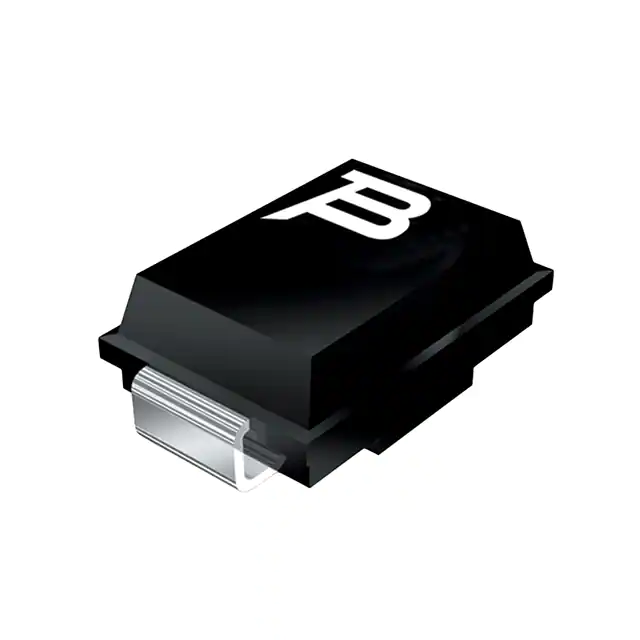
- DO-214AC, SMA
- Datasheet:
-
 MMT05A260T3.pdf
- Description:
- THYRISTOR 200V 150A DO-214AC
- Quantity:
- Payment:

- Shipping:

Inventory:4,530
Please send an inquiry. Send us your inquiry, and we will respond immediately.
Product details
Overview
MMT05A260T3 from onsemi is a bidirectional thyristor surge protective device (TSPD) designed for secondary overvoltage protection in telecom line interfaces. It features 265–365 V breakover voltage range, 50 A peak surge current (10 × 1000 µs), 2000 V/µs critical dv/dt rating, and SMA surface-mount package. It operates across −40°C to +125°C and shorts fail-safe under overstress-used in customer-premises telecom equipment against lightning and power-crossing transients.
For engineers reviewing the MMT05A260T3 datasheet, pinout, applications, or equivalent options, key selection criteria include bidirectional clamping voltage stability, holding current (340 mA typ), off-state leakage (<5 µA at VDM), thermal robustness up to +175°C junction, and UL registration (E210057) for telecom compliance.
Technical Context
This TSPD functions as a crowbar-type protector triggered by voltage breakover-not avalanche or zener action. It latches into low-impedance conduction when transient voltage exceeds its bidirectional V(BO) (265–365 V), sustaining conduction until surge current falls below IH (340 mA typical). Turn-off is passive and current-dependent, with no external gate control.
Its design targets telecom secondary protection where coordination with upstream PPTC or heat coils is required. The device exhibits minimal voltage variation with transient amplitude or slew rate, and avoids wear-out mechanisms inherent in gas discharge tubes or MOVs-enabling long-term reliability in repeated surge events.
Key Specifications
| Parameter | Value and Actual Design Meaning |
|---|---|
| Breakover Voltage (VBO) | 265–365 V (bidirectional, defines precise clamping threshold before crowbar activation) |
| Peak Surge Current (IPPS4) | 50 A (10 × 1000 µs waveform; determines maximum single-event energy handling) |
| Holding Current (IH) | 340 mA typical (minimum current needed to sustain conduction; sets minimum load requirement for reliable turn-off) |
| Critical dv/dt | 2000 V/µs (prevents false triggering from fast-rising noise; ensures immunity to EFT/burst transients) |
| Off-State Leakage (ID2) | 5.0 µA max at VDM = 200 V (low standby power loss and minimal signal distortion in idle state) |
| On-State Voltage (VT) | 1.53–3.0 V at 1.0 A (defines conduction loss and self-heating during clamping) |
| Capacitance | 22–50 pF (low RF impedance; preserves high-frequency signal integrity on telecom lines) |
Pinout & Package
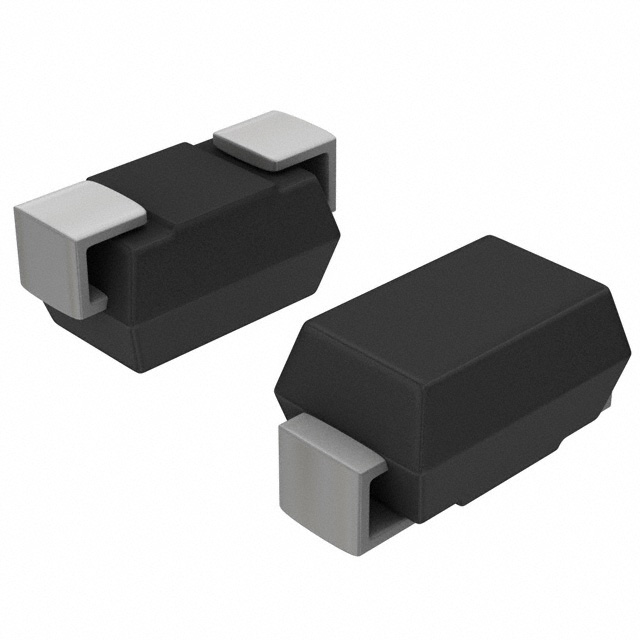
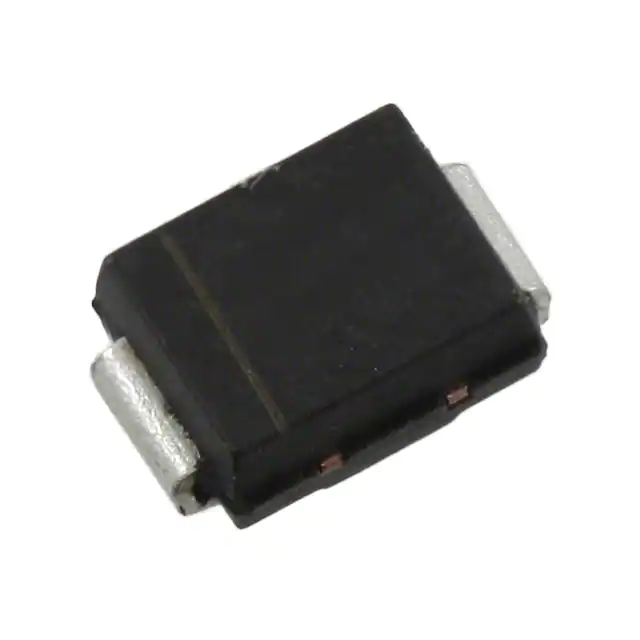
SMA package (Case 403D−02), surface-mount, non-polarized-MT1 and MT2 terminals are symmetrical and interchangeable. No gate terminal; bidirectional operation requires no orientation during placement.
| Pin/Terminal | Circuit Role | Design Meaning |
|---|---|---|
| MT1 | Anode/Cathode (bidirectional main terminal) | One of two identical, interchangeable current paths; connects to tip or ring line in telecom interface |
| MT2 | Anode/Cathode (bidirectional main terminal) | Second identical terminal; completes crowbar path across protected line pair without polarity constraint |
Key Features
| Feature | Design Value |
|---|---|
| Bidirectional crowbar protection | Single-device replacement for back-to-back diac or dual-TVS solutions-reduces BOM count and PCB area in tip/ring line protection |
| Fail-safe short-circuit behavior | Guarantees continued protection even after end-of-life overstress-prevents silent failure modes common in MOVs or GDTs |
| Stable VBO vs. temperature | ±0.08%/°C coefficient ensures consistent clamping across −40°C to +125°C operating range-critical for outdoor telecom cabinets |
| UL Registration (E210057) | Validates compliance with safety standards for telecom equipment-reduces certification effort for end-product approvals |
| High dv/dt immunity | 2000 V/µs rating prevents spurious triggering from fast transients like ESD or switching noise-improves system robustness |
Applications
| DSL Line Interface Protection | VoIP Gateway Tip/Ring Protection |
|---|---|
|
Use Scenario: Protecting analog telephone line inputs in DSLAMs and residential gateways from lightning-induced surges on outside plant wiring. IC Role / Device Role / Timing Role: Crowbar-type overvoltage protector placed between tip/ring and line transformer-activates within nanoseconds upon exceeding VBO. Use Value: Coordinates with upstream PPTC to limit fault current while maintaining <5 µA leakage-preserving line supervision and battery feed integrity. |
Use Scenario: Secondary surge protection in VoIP adapters connecting to PSTN lines in customer premises equipment (CPE). IC Role / Device Role / Timing Role: Bidirectional voltage-triggered switch that shorts line pair during surge, diverting >50 A away from PHY ICs and isolation transformers. Use Value: Fail-safe shorting ensures no unprotected operation post-surge-meeting Telcordia GR-1089 and IEC 61000-4-5 requirements without monitoring circuitry. |
| PBX Analog Extension Port | ISDN S/T Interface Protection |
|
Use Scenario: Safeguarding analog extension ports in enterprise PBX systems against induced surges from nearby AC mains or lightning. IC Role / Device Role / Timing Role: Standby-mode protector with <2 µA leakage at 50 V-maintains loop continuity and supervisory signaling during normal operation. Use Value: Stable 265–365 V VBO range accommodates varying line voltages across global deployments-no recalibration needed per region. |
Use Scenario: Protecting ISDN basic rate (2B+D) S/T interface circuits from longitudinal surges entering via building entry points. IC Role / Device Role / Timing Role: Low-capacitance (22–50 pF) bidirectional clamp-minimizes signal distortion on 144 kbps digital signals while providing 50 A surge handling. Use Value: Enables direct integration into S/T line filter modules without degrading D-channel timing margins or bit error rate performance. |
Equivalent & Alternatives
The following parts are listed as comparable options for similar thyristor surge protector applications.
| Alternative Part | Technical Difference | Application Difference | Selection Advice |
|---|---|---|---|
| SM2T270AY | Higher VBO (270–400 V), lower IH (150 mA), same SMA package | Better suited for higher-voltage AC-powered telecom gear; may not latch reliably in low-current DC-fed interfaces | Select when protecting 270 V nominal lines or coordinating with higher-hold-current upstream protectors |
| MMT05A310T3 | Higher VBO (320–400 V), same IH (340 mA), identical thermal and surge ratings | Used where higher line voltage tolerance is required-e.g., legacy PBX with elevated ringing voltage | Drop-in substitute only if system withstand voltage exceeds 320 V; verify coordination with existing PPTC hold current |
Compared with SM2T270AY and MMT05A310T3, the MMT05A260T3 offers optimal balance of clamping voltage (265–365 V), holding current (340 mA), and 50 A surge capability-making it the preferred choice for standard 100–150 Vrms telecom line interfaces requiring robust, fail-safe secondary protection.
Availability
MMT05A260T3 is available at Aetrix Electronics and suitable for DSL line interface protection, VoIP gateway tip/ring protection, PBX analog extension port hardening, and ISDN S/T interface protection requiring stable component supply, UL-registered surge devices, and long-lifecycle availability.
Supply support for MMT05A260T3 includes scheduled delivery planning, volume procurement assistance, BOM continuity management, traceable sourcing, and lifecycle availability coordination for OEM customers, industrial embedded developers, connected-device designers, and electronics production programs.
Manufacturer
onsemi (formerly ON Semiconductor) is a global semiconductor supplier specializing in energy-efficient, high-reliability components for automotive, industrial, and communications markets-with emphasis on protection, power management, and sensing technologies.
The MMT05A260T3 belongs to onsemi's Thyristor Surge Protector (TSPD) product line, engineered specifically for secondary-level overvoltage protection in telecom infrastructure-addressing Telcordia, ITU, and IEC regulatory requirements with fail-safe, bidirectional crowbar action.
FAQ
What is the primary function of the MMT05A260T3 in a telecom line interface?
The MMT05A260T3 serves as a bidirectional crowbar-type surge protector that activates when line voltage exceeds its breakover range (265–365 V), shorting the tip/ring pair to divert surge current away from sensitive PHY and codec ICs. Its fail-safe short-circuit behavior ensures continued protection even after overstress, distinguishing it from non-fail-safe alternatives like MOVs.
Does the MMT05A260T3 require a gate drive or external trigger circuit?
No, the MMT05A260T3 is a gateless, voltage-triggered thyristor device. It relies solely on intrinsic breakover characteristics-no external bias, gate resistor, or control signal is needed. Activation occurs automatically when applied voltage across MT1–MT2 exceeds VBO under specified dv/dt conditions, making it inherently simple and reliable for line protection.
How does the MMT05A260T3 coordinate with upstream PPTC devices in telecom protection schemes?
The MMT05A260T3 coordinates with polymeric PTCs by acting as the voltage-clamping element while the PPTC limits fault current. During a surge, the MMT05A260T3 fires first to clamp voltage, then the PPTC heats up and trips to interrupt current-ensuring the MMT05A260T3 remains within its 50 A surge rating and thermal limits. This two-stage approach meets Telcordia GR-1089 requirements.
What is the significance of the "PBG" marking on the MMT05A260T3 device body?
The "PBG" marking on the MMT05A260T3 indicates its specific device variant and Pb-free compliance per onsemi's packaging standard. It distinguishes the MMT05A260T3 from related variants: MMT05A230T3 (PBF) and MMT05A310T3 (PBJ). This marking enables traceability, confirms RoHS compliance, and ensures correct identification during automated optical inspection (AOI) and assembly verification.
Can the MMT05A260T3 be used in DC-powered telecom equipment such as battery-backed VoIP adapters?
Yes, the MMT05A260T3 supports DC operation due to its bidirectional symmetry and holding current specification (340 mA typical). In DC-fed VoIP adapters, it remains in high-impedance standby until surge overvoltage triggers conduction, then latches until current drops below IH. Its low off-state leakage (<5 µA at 200 V) ensures compatibility with battery-supervised line detection circuits.
MMT05A260T3 Specifications
- Product attributes
- Attribute value
- Manufacturer:
- onsemi
- Package/Case:
- DO-214AC, SMA
- Series:
- -
- Packaging:
- Tape & Reel (TR)
- Product Status:
- Obsolete
- Voltage - Breakover:
- 320V
- Voltage - Off State:
- 200V
- Voltage - On State:
- 3 V
- Current - Peak Pulse (8/20µs):
- 150 A
- Current - Peak Pulse (10/1000µs):
- 50 A
- Current - Hold (Ih):
- 150 mA
- Number of Elements:
- 1
- Capacitance:
- 50pF
- Grade:
- -
- Qualification:
- -
- Mounting Type:
- Surface Mount
- Supplier Device Package:
- SMA
MMT05A260T3 FAQ
1.How can I place an order for MMT05A260T3 through Aetrix?
Please submit a Request for Quotation (RFQ) for MMT05A260T3 on Aetrix. Our sales agent will provide a competitive quotation and guide you through the order confirmation once you accept the terms.
2.Are the price and stock information for MMT05A260T3 reliable?
The price and inventory of MMT05A260T3 are updated periodically and may fluctuate due to market conditions. Stock and pricing data are typically refreshed every 24 hours. Quotation validity for MMT05A260T3 is usually 5 days.
3.What payment methods are accepted for MMT05A260T3?
We accept Wire Transfer, PayPal, Credit Card, Western Union, MoneyGram, and Escrow for MMT05A260T3 transactions.
Note: Certain payment methods may incur a processing fee.
4.How is shipping managed for MMT05A260T3?
MMT05A260T3 orders can be shipped via leading logistics carriers, including DHL, UPS, FedEx, TNT, or Registered Mail.
Once your MMT05A260T3 order is processed, you will receive an email with the shipment details and tracking number.
Note: Tracking information may take up to 24 hours to appear. Express delivery typically takes 3–5 business days.
5.How can I obtain technical support or documentation for MMT05A260T3?
For technical support, including MMT05A260T3 datasheets, pinout diagrams, or application guidance, please contact our engineering support team. They can provide detailed documentation and assistance for your MMT05A260T3 requirements.
6.How does Aetrix verify that MMT05A260T3 is sourced from the original manufacturer or authorized distributors?
All MMT05A260T3 products on Aetrix are procured from qualified distributors and authorized channels. Our dedicated quality assurance team conducts strict verification, including traceability checks and, if necessary, third-party testing. This ensures that MMT05A260T3 meets industry standards.
7.What is the process for return or replacement of MMT05A260T3?
All MMT05A260T3 units undergo pre-shipment inspection (PSI). If there is an issue with MMT05A260T3, returns or replacements are accepted under the following conditions:
1.Quantity discrepancies, incorrect items, or visible external defects (such as breakage or corrosion), acknowledged by Aetrix.
2.The issue is reported within 90 days of delivery.
3.The MMT05A260T3 part is unused and in its original packaging.
Return procedure for MMT05A260T3:
1.Submit a request within 90 days.
2.Obtain a Return Material Authorization (RMA) from Aetrix.
MMT05A260T3 Tags
-
TISP4015L1AJR-S
Bourns Inc.
-
TISP4015L1BJR-S
Bourns Inc.
-
SMP100LC-270
STMicroelectronics
-
TISP4240M3BJR-S
Bourns Inc.
-
SMP100LC-35
STMicroelectronics
-
SMP100LC-65
STMicroelectronics
-
SMP100LC-8
STMicroelectronics
-
TISP4P035L1NR-S
Bourns Inc.
-
TISP4350H3BJR-S
Bourns Inc.
-
TISP4011H1BJR-S
Bourns Inc.
-
SMP100LC-400
STMicroelectronics
-
P0300SALRP
Littelfuse Inc.
Tech Hub

Counterfeit components can hide behind convincing markings and passing basic function tests. This engineering reference covers source traceability, external inspection, X-ray, XRF, electrical testing, …

A practical engineering and sourcing framework covering lifecycle verification, lifetime-buy calculations, replacement qualification, supplier checks and counterfeit-risk controls.

TTL and CMOS logic families differ in thresholds, loading, output drive, power and timing. This engineering guide compares 74HC and 74HCT, calculates noise margins and checks 3.3 V/5 V compatibility.

A practical engineering guide to 3.3V and 5V logic compatibility, input thresholds, resistor dividers, translator ICs, MOSFET level shifting, I2C pull-ups, timing limits and power-sequencing risks.

The 74HC595 uses push-pull logic outputs, while the TPIC6B595 uses 50 V open-drain DMOS sinks for higher-power loads. This guide compares timing, current limits, 3.3 V interfacing, load wiring, thermal…

The 74HC595 converts serial data into eight stable parallel outputs. This guide covers pin functions, shift and storage timing, OE and MR behavior, drive-current limits, cascading, voltage compatibilit…

A technical comparison of level-sensitive latches and edge-triggered flip-flops, covering timing windows, setup and hold limits, master–slave operation, time borrowing, race-through, HDL inference and…

A D latch stores one bit while Enable controls when data can pass. This reference covers gate-level operation, truth tables, transparency, setup and hold timing, LE versus OE, common ICs and practical …

An SR latch stores one bit through cross-coupled feedback. This engineering reference covers NOR and NAND implementations, truth tables, forbidden-state recovery, gated operation, switch debouncing, fa…

Latch circuits retain one bit through feedback. This technical reference covers SR and D latches, truth tables, transparency, timing limits, latch-versus-flip-flop behavior, applications and common log…


