
 My Inquiry
 My Account


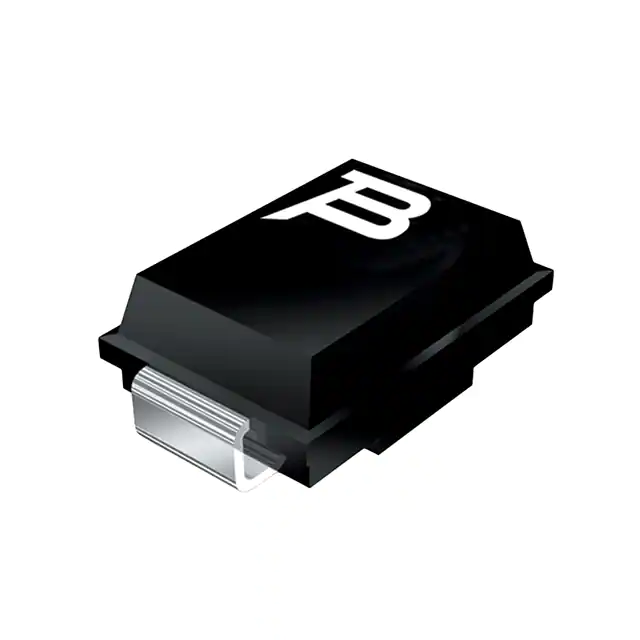
onsemi MMT05A260T3G

- Part No.:
- MMT05A260T3G
- Manufacturer:
- onsemi
- Category:
- Thyristors
- Package:
- DO-214AC, SMA
- Datasheet:
-
 MMT05A260T3G.pdf
- Description:
- THYRISTOR 200V 150A DO-214AC
- Quantity:
- Payment:

- Shipping:

Inventory:7,535
Please send an inquiry. Send us your inquiry, and we will respond immediately.
Product details
Overview
MMT05A260T3 from onsemi is a bidirectional thyristor surge protective device (TSPD) designed for secondary overvoltage protection in telecom line interfaces. It features a 265–365 V breakover voltage range, 50 A peak surge current capability (10 × 1000 µs), 2000 V/µs critical dv/dt rating, 1.53 V typical on-state voltage at 1.0 A, and fails short-circuit under overstress-enabling robust lightning and induction surge suppression in customer-premises equipment.
For engineers reviewing the MMT05A260T3 datasheet, pinout, applications, or equivalent options, key selection criteria include bidirectional clamping behavior, holding current (150–340 mA), off-state leakage (<2.0 µA at 50 V), thermal stability up to +125°C operating junction temperature, and UL registration (File #E210057) for telecom safety compliance.
Technical Context
The MMT05A260T3 operates as a breakover-triggered crowbar protector: it remains high-impedance until transient voltage exceeds its bidirectional breakover threshold (265–365 V), then latches into low-impedance conduction until surge current falls below its holding current (150–340 mA). Its dv/dt immunity of 2000 V/µs prevents false triggering during fast transients.
Unlike MOVs or GDTs, this TSPD exhibits no wear-out mechanism and maintains stable voltage limiting across varying surge amplitudes and rates. It is rated for instantaneous peak power dissipation of 2000 W and supports surface-mount assembly in the SMA package with lead temperature tolerance up to 260°C for 10 seconds.
Key Specifications
| Parameter | Value and Actual Design Meaning |
|---|---|
| Breakover Voltage (VBO) | 265–365 V (bidirectional, defines clamping onset under 60 Hz or fast dv/dt conditions) |
| Peak Surge Current (IPPS4) | 50 A (10 × 1000 µs waveform; determines survivability against lightning-induced surges) |
| Holding Current (IH) | 150–340 mA (minimum current required to sustain conduction; ensures clean turn-off after surge decay) |
| Critical dv/dt Rating | 2000 V/µs (prevents spurious triggering during fast-rising noise or ringing) |
| On-State Voltage (VT) | 1.53 V typ @ 1.0 A (low conduction loss reduces thermal stress during clamping) |
| Off-State Leakage (ID1) | <2.0 µA @ 50 V (minimal standby power impact and signal integrity preservation) |
| Capacitance | 22–50 pF @ 1 MHz (low parasitic capacitance avoids high-frequency signal attenuation in telecom lines) |
Pinout & Package
The MMT05A260T3 is housed in an SMA (DO-214AC) package per Case 403D-02, with no polarity marking-MT1 and MT2 terminals are functionally symmetric for bidirectional operation.
| Pin/Terminal | Circuit Role | Design Meaning |
|---|---|---|
| MT1 | Anode/Cathode (bidirectional) | One main terminal; interchangeable with MT2; connects to either tip or ring line in telecom interface |
| MT2 | Anode/Cathode (bidirectional) | Second main terminal; interchangeable with MT1; completes bidirectional crowbar path across protected line pair |
Key Features
| Feature | Design Value |
|---|---|
| Bidirectional clamping | Single-device protection for both polarities of telecom line signals without external diode bridges |
| Fail-safe short-circuit mode | Guarantees continued overvoltage blocking even after end-of-life overstress-prevents latent unprotected operation |
| No wear-out mechanism | Unlimited surge endurance under rated conditions, unlike MOV degradation or GDT electrode erosion |
| Stable voltage limit vs. surge amplitude | Clamping voltage remains consistent across 10–1000 µs surge durations-enables predictable system-level protection design |
| UL registration (E210057) | Validated compliance for telecom safety standards including Telcordia GR-1089, ITU K.20/K.21, IEC 60950, FCC Part 68 |
Applications
| DSL Line Interface Protection | POTS Telephone Line Protection |
|---|---|
Use Scenario: Protecting ADSL/VDSL line cards from lightning-induced surges entering via outside plant wiring. IC Role / Device Role / Timing Role: Bidirectional crowbar clamping element placed between tip/ring and ground, upstream of PPTC and transformer. Use Value: Maintains signal integrity with ≤50 pF capacitance while delivering 50 A surge handling-meets Telcordia GR-1089 Category A requirements. |
Use Scenario: Secondary surge protection for analog telephone handsets and base stations connected to public switched telephone network (PSTN). IC Role / Device Role / Timing Role: Fast-acting overvoltage limiter that triggers before line voltage exceeds 365 V, shunting energy to ground. Use Value: Fail-short behavior ensures fault visibility and prevents silent failure-critical for life-safety voice communication systems. |
| ISDN BRI Interface Protection | VoIP Gateway Line Card Protection |
Use Scenario: Safeguarding ISDN Basic Rate Interface (BRI) S/T bus lines against induced transients from nearby AC wiring or switching loads. IC Role / Device Role / Timing Role: High-dv/dt immune (2000 V/µs) TSPD placed differential across BRI pairs to clamp common-mode surges. Use Value: Stable 265–365 V breakover window ensures reliable triggering without nuisance tripping during normal 100 kHz signaling. |
Use Scenario: Protecting Ethernet-powered VoIP gateways with integrated FXS/FXO ports exposed to legacy PSTN wiring. IC Role / Device Role / Timing Role: Primary semiconductor-based surge suppressor in cascade with PPTC and filter components on line-side PCB traces. Use Value: UL E210057 registration enables direct certification acceptance for FCC Part 68 and IEC 60950-1 compliance testing. |
Equivalent & Alternatives
The following parts are listed as comparable options for similar thyristor surge protection applications.
| Alternative Part | Technical Difference | Application Difference | Selection Advice |
|---|---|---|---|
| SM2T270AY | Higher breakover voltage (270–400 V), lower surge rating (40 A), same SMA package | Suitable for higher-voltage telecom systems where 365 V clamping margin is insufficient | Select when system nominal line voltage exceeds 200 V RMS and requires wider VBO headroom |
| TPSM120M | Lower breakover (120–170 V), higher surge (100 A), DO-214AB package | Optimized for low-voltage data lines (e.g., RS-485, CAN) rather than telecom AC line protection | Choose only for non-telecom applications requiring sub-200 V clamping and >50 A surge capacity |
Compared with SM2T270AY and TPSM120M, the MMT05A260T3 delivers optimal balance of 265–365 V clamping range, 50 A surge capability, and UL-registered telecom compliance-making it the preferred choice for secondary protection in standard POTS, DSL, and ISDN line interfaces.
Availability
MMT05A260T3 is available at Aetrix Electronics and suitable for DSL line card protection, POTS telephone interface hardening, and ISDN BRI surge suppression requiring stable component supply, full traceability, and long-term lifecycle support.
Supply support for MMT05A260T3 includes scheduled delivery planning, volume procurement assistance, BOM continuity management, traceable sourcing, and lifecycle availability coordination for OEM customers, industrial embedded developers, connected-device designers, and electronics production programs.
Manufacturer
onsemi (formerly ON Semiconductor) is a global semiconductor supplier specializing in energy-efficient power management, analog, sensor, and logic solutions for automotive, industrial, and communications markets.
The MMT05A260T3 belongs to onsemi's Thyristor Surge Protector (TSPD) product line, engineered specifically for secondary overvoltage protection in telecom customer-premises equipment meeting Telcordia, ITU, IEC, and FCC regulatory requirements.
FAQ
What is the primary function of the MMT05A260T3 in a telecom circuit?
The MMT05A260T3 serves as a bidirectional thyristor surge protective device (TSPD) that acts as a crowbar limiter-remaining non-conductive until line voltage exceeds its 265–365 V breakover threshold, then latching into low-impedance conduction to divert surge current to ground. Its fail-short behavior ensures continued protection visibility, and it is commonly deployed in secondary protection stages of DSL, POTS, and ISDN line interfaces downstream of gas discharge tubes or primary protectors.
Does the MMT05A260T3 require external triggering or bias circuitry?
No, the MMT05A260T3 is a self-triggering, breakover-activated device with no gate or control terminal. It relies solely on applied voltage across MT1 and MT2 exceeding its intrinsic breakover threshold under specified dv/dt and current conditions. This eliminates need for external trigger circuitry, simplifying board layout and reducing BOM count compared to gated thyristors or TVS+SCR hybrid solutions.
How does the MMT05A260T3 compare to MOV-based protectors in telecom applications?
Unlike metal-oxide varistors (MOVs), the MMT05A260T3 exhibits no wear-out mechanism, stable clamping voltage across surge amplitude and duration, and fails predictably short-circuit-whereas MOVs degrade with repeated surges and may fail open or short unpredictably. The MMT05A260T3 also offers superior dv/dt immunity (2000 V/µs vs. ~100 V/µs for typical MOVs), reducing false triggering in noisy telecom environments.
What is the significance of the UL File #E210057 registration for the MMT05A260T3?
The UL File #E210057 registration confirms that the MMT05A260T3 has been evaluated and recognized by Underwriters Laboratories for compliance with safety standards applicable to telecom surge protectors-including Telcordia GR-1089, ITU-T K.20/K.21, IEC 60950-1, and FCC Part 68. This registration streamlines end-equipment certification by eliminating need for retesting the component's surge performance and failure mode behavior during system-level approval.
Can the MMT05A260T3 be used in DC power line protection?
The MMT05A260T3 is not recommended for standalone DC power line protection because its holding current (150–340 mA) may prevent natural turn-off if DC load current exceeds this threshold, resulting in sustained short-circuit conduction. It is optimized for AC-coupled telecom line protection where current naturally crosses zero, enabling reliable commutation. For DC applications, discrete SCR+trigger circuits or specialized DC-rated TSPDs are required.
MMT05A260T3G Specifications
- Product attributes
- Attribute value
- Manufacturer:
- onsemi
- Package/Case:
- DO-214AC, SMA
- Series:
- -
- Packaging:
- Tape & Reel (TR)
- Product Status:
- Obsolete
- Voltage - Breakover:
- 320V
- Voltage - Off State:
- 200V
- Voltage - On State:
- 3 V
- Current - Peak Pulse (8/20µs):
- 150 A
- Current - Peak Pulse (10/1000µs):
- 50 A
- Current - Hold (Ih):
- 150 mA
- Number of Elements:
- 1
- Capacitance:
- 50pF
- Grade:
- -
- Qualification:
- -
- Mounting Type:
- Surface Mount
- Supplier Device Package:
- SMA
MMT05A260T3G FAQ
1.How can I place an order for MMT05A260T3G through Aetrix?
Please submit a Request for Quotation (RFQ) for MMT05A260T3G on Aetrix. Our sales agent will provide a competitive quotation and guide you through the order confirmation once you accept the terms.
2.Are the price and stock information for MMT05A260T3G reliable?
The price and inventory of MMT05A260T3G are updated periodically and may fluctuate due to market conditions. Stock and pricing data are typically refreshed every 24 hours. Quotation validity for MMT05A260T3G is usually 5 days.
3.What payment methods are accepted for MMT05A260T3G?
We accept Wire Transfer, PayPal, Credit Card, Western Union, MoneyGram, and Escrow for MMT05A260T3G transactions.
Note: Certain payment methods may incur a processing fee.
4.How is shipping managed for MMT05A260T3G?
MMT05A260T3G orders can be shipped via leading logistics carriers, including DHL, UPS, FedEx, TNT, or Registered Mail.
Once your MMT05A260T3G order is processed, you will receive an email with the shipment details and tracking number.
Note: Tracking information may take up to 24 hours to appear. Express delivery typically takes 3–5 business days.
5.How can I obtain technical support or documentation for MMT05A260T3G?
For technical support, including MMT05A260T3G datasheets, pinout diagrams, or application guidance, please contact our engineering support team. They can provide detailed documentation and assistance for your MMT05A260T3G requirements.
6.How does Aetrix verify that MMT05A260T3G is sourced from the original manufacturer or authorized distributors?
All MMT05A260T3G products on Aetrix are procured from qualified distributors and authorized channels. Our dedicated quality assurance team conducts strict verification, including traceability checks and, if necessary, third-party testing. This ensures that MMT05A260T3G meets industry standards.
7.What is the process for return or replacement of MMT05A260T3G?
All MMT05A260T3G units undergo pre-shipment inspection (PSI). If there is an issue with MMT05A260T3G, returns or replacements are accepted under the following conditions:
1.Quantity discrepancies, incorrect items, or visible external defects (such as breakage or corrosion), acknowledged by Aetrix.
2.The issue is reported within 90 days of delivery.
3.The MMT05A260T3G part is unused and in its original packaging.
Return procedure for MMT05A260T3G:
1.Submit a request within 90 days.
2.Obtain a Return Material Authorization (RMA) from Aetrix.
MMT05A260T3G Tags
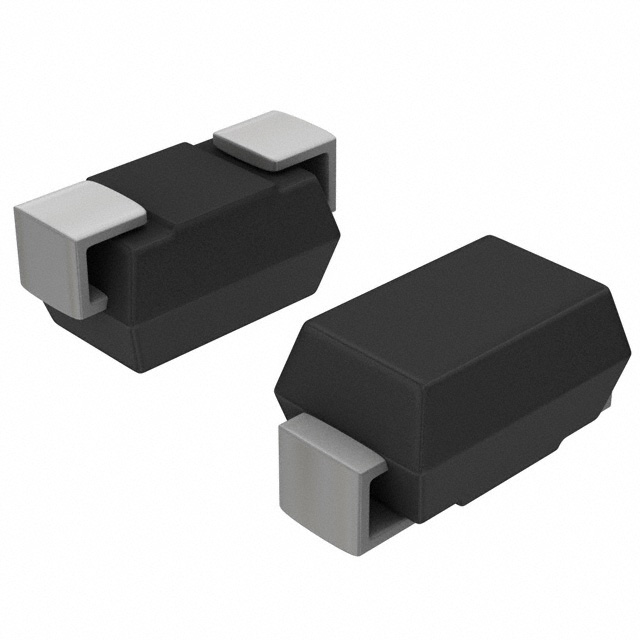
-
TISP4015L1AJR-S
Bourns Inc.
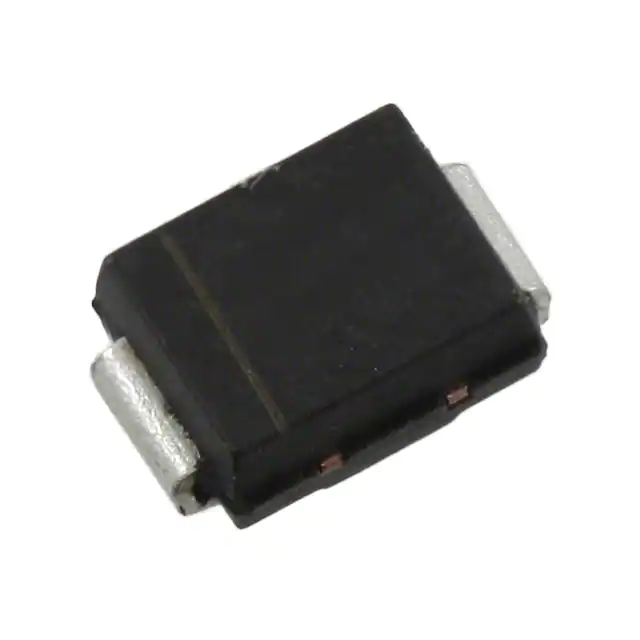
-
TISP4015L1BJR-S
Bourns Inc.
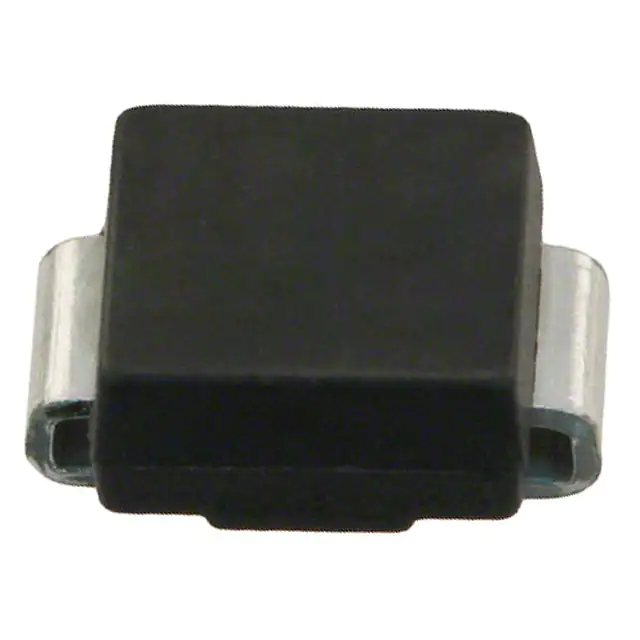
-
SMP100LC-270
STMicroelectronics
-
TISP4240M3BJR-S
Bourns Inc.
-
SMP100LC-35
STMicroelectronics
-
SMP100LC-65
STMicroelectronics
-
SMP100LC-8
STMicroelectronics
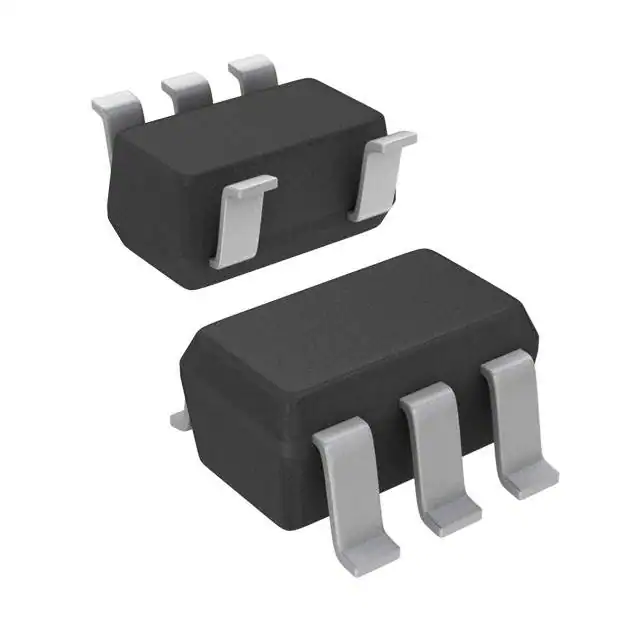
-
TISP4P035L1NR-S
Bourns Inc.
-
TISP4350H3BJR-S
Bourns Inc.
-
TISP4011H1BJR-S
Bourns Inc.
-
SMP100LC-400
STMicroelectronics
-
P0300SALRP
Littelfuse Inc.
Tech Hub

Counterfeit components can hide behind convincing markings and passing basic function tests. This engineering reference covers source traceability, external inspection, X-ray, XRF, electrical testing, …

A practical engineering and sourcing framework covering lifecycle verification, lifetime-buy calculations, replacement qualification, supplier checks and counterfeit-risk controls.

TTL and CMOS logic families differ in thresholds, loading, output drive, power and timing. This engineering guide compares 74HC and 74HCT, calculates noise margins and checks 3.3 V/5 V compatibility.

A practical engineering guide to 3.3V and 5V logic compatibility, input thresholds, resistor dividers, translator ICs, MOSFET level shifting, I2C pull-ups, timing limits and power-sequencing risks.

The 74HC595 uses push-pull logic outputs, while the TPIC6B595 uses 50 V open-drain DMOS sinks for higher-power loads. This guide compares timing, current limits, 3.3 V interfacing, load wiring, thermal…

The 74HC595 converts serial data into eight stable parallel outputs. This guide covers pin functions, shift and storage timing, OE and MR behavior, drive-current limits, cascading, voltage compatibilit…

A technical comparison of level-sensitive latches and edge-triggered flip-flops, covering timing windows, setup and hold limits, master–slave operation, time borrowing, race-through, HDL inference and…

A D latch stores one bit while Enable controls when data can pass. This reference covers gate-level operation, truth tables, transparency, setup and hold timing, LE versus OE, common ICs and practical …

An SR latch stores one bit through cross-coupled feedback. This engineering reference covers NOR and NAND implementations, truth tables, forbidden-state recovery, gated operation, switch debouncing, fa…

Latch circuits retain one bit through feedback. This technical reference covers SR and D latches, truth tables, transparency, timing limits, latch-versus-flip-flop behavior, applications and common log…


