
 My Inquiry
 My Account


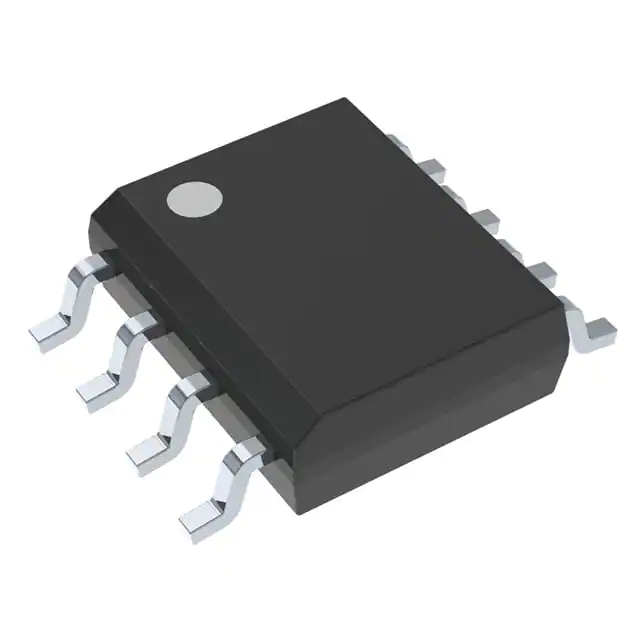
Monolithic Power Systems Inc. MP201DS-LF-Z
- Part No.:
- MP201DS-LF-Z
- Manufacturer:
- Monolithic Power Systems Inc.
- Category:
- Power Management - Specialized
- Package:
- 8-SOIC (0.154", 3.90mm Width)
- Datasheet:
-
 MP201DS-LF-Z.pdf
- Description:
- IC REG LDO 42V 30MA
- Quantity:
- Payment:

- Shipping:

Inventory:4,613
Please send an inquiry. Send us your inquiry, and we will respond immediately.
Product details
Overview
MP201DS-LF-Z from Monolithic Power Systems is a dedicated dying gasp storage and release control IC for telecom power backup systems. It charges an external storage capacitor to a user-programmable voltage (up to 32 V) during normal operation, then dumps up to 2.5 A into the input rail when VIN drops below a programmable release threshold (e.g., 10.2 V), sustaining regulated input voltage for critical system response. Used in DSL/PON modems and home gateways to maintain communication during AC loss.
For engineers reviewing the MP201DS-LF-Z datasheet, MP201DS-LF-Z pinout, MP201DS-LF-Z application, or MP201DS-LF-Z equivalent, key selection criteria include programmable storage/release voltages, 2.5 A dump current capability, built-in 260 mA charge current limiting, GASP open-drain flag signaling, and SOIC-8 thermal performance (θJA = 90°C/W).
Technical Context
The MP201 implements dual feedback regulation: FB1 sets storage voltage (VSTRG = VIN to 2×VIN–0.8 V, max 32 V) via external resistor divider; FB2 sets release voltage (VRELEASE) with ±3% tolerance at 1.0 V reference. It uses bootstrap charging (BST pin tied to DC/DC switch node) to boost STRG above VIN during normal operation.
During brownout, it activates a high-current LDO-like release path from STRG to VIN, regulating VIN near VRELEASE until STRG depletes. The GASP pin provides TTL-compatible open-drain status (high when FB2 > 1.05×VFB2, low when FB2 < 1.00×VFB2) with 73 μs rising/falling delay.
Key Specifications
| Parameter | Value and Actual Design Meaning |
|---|---|
| Input Voltage Range | 4.5 V to 18 V - supports standard telecom DC rails including 12 V and 15 V systems. |
| Storage Voltage Range | VIN to (2×VIN – 0.8 V), max 32 V - enables high-energy density storage with minimal capacitance. |
| Dump Current Limit | 2.0 A to 3.0 A (typ. 2.5 A) - sustains ≥1 A load for ~20 ms with 22 V/2700 μF storage cap. |
| Charge Current Limit | 0.2 A to 0.33 A (typ. 260 mA) - prevents inrush damage to storage capacitor and input source. |
| Feedback Reference Voltage | 1.00 V ±3% (FB1 & FB2) - enables precise, resistor-programmable storage and release thresholds. |
| GASP Output Delay | Rising: 73 μs; Falling: 0.7 μs - ensures fast, glitch-free power-fail detection and signaling. |
| Thermal Shutdown | 150 °C with 30 °C hysteresis - protects against sustained overloads without latch-up. |
Pinout & Package
MP201DS-LF-Z is housed in a standard SOIC-8 package (5.0 mm × 6.2 mm, 1.27 mm pitch) with exposed pad not present; θJA = 90°C/W on 4-layer PCB.
| Pin/Terminal | Circuit Role | Design Meaning |
|---|---|---|
| 1 - BST | Bootstrap driver | Connects via RC network to DC/DC switch node to generate gate drive for internal charge pump; enables VSTRG > VIN. |
| 2 - VIN | Main supply input | 4.5–18 V input rail; powers internal circuitry and serves as dump target during dying gasp. |
| 3 - FB2 | Release voltage sense | Resistor divider input setting VRELEASE = VFB2 × (1 + R3/R4); triggers dump when VIN falls below threshold. |
| 4 - GND | Analog/digital ground | System reference for all feedback and regulation; requires low-impedance PCB connection with multiple vias. |
| 5 - FB1 | Storage voltage sense | Resistor divider input setting VSTRG = VFB1 × (1 + R1/R2); regulates storage capacitor voltage during refresh. |
| 6 - GASP | Open-drain status output | Active-low signal indicating active dying gasp; pulled low when FB2 < 1.00×VFB2; 4 mA sink capability. |
| 7 - STRG | Storage capacitor terminal | High-voltage node (up to 32 V) connected directly to electrolytic storage capacitor; carries full dump current. |
| 8 - VMAX | Internal LDO supply | Bypassed with 2.2 nF ceramic capacitor; powers internal logic and regulation circuitry independent of VIN transients. |
Key Features
| Feature | Design Value |
|---|---|
| User-programmable storage voltage | VSTRG set by external R1/R2 divider with 1.00 V reference; supports 15–23 V typical in xDSL designs. |
| Programmable release voltage with stability optimization | VRELEASE set by R3/R4; recommended R3 = 300–500 kΩ with 15 pF Cf for stable loop response under load. |
| Integrated charge current limiting | 260 mA pre-charge limit prevents surge into large storage capacitors during startup and refresh cycles. |
| Dying gasp flag with fast timing | GASP pin asserts within 73 μs of UVLO detection, enabling immediate firmware response before system reset. |
| Thermally robust SOIC-8 layout | No exposed pad required; validated 1.39 W power dissipation at TA = 25°C per JEDEC MS-012 AA. |
Applications
| Cable Modem Power Backup | PON Optical Network Terminal (ONT) |
|---|---|
|
Use Scenario: Maintains DOCSIS registration and upstream transmission during brief AC outage (≤50 ms). IC Role / Device Role / Timing Role: Dying gasp controller that sustains 12 V input rail using 22 V/2700 μF storage cap while MCU initiates graceful shutdown. Use Value: Prevents service interruption and re-synchronization delays by extending operational time beyond input dropout duration. |
Use Scenario: Powers GPON MAC and optical transmitter during utility power loss to complete OLT handshaking and alarm reporting. IC Role / Device Role / Timing Role: Regulates VIN at 10.2 V for ≥30 ms using programmable release threshold and 2.5 A dump capability. Use Value: Enables compliance with TR-104/GR-902 requirements for 20–50 ms hold-up time without oversized bulk capacitance. |
| Home Gateway UPS Interface | DSLAM Line Card Hold-Up |
|
Use Scenario: Bridges power gap between wall adapter disconnect and battery switchover in dual-supply residential gateways. IC Role / Device Role / Timing Role: Acts as fast-acting intermediate hold-up stage; GASP signal triggers battery enable logic before VIN collapse. Use Value: Eliminates brownout resets and TCP session drops by decoupling slow battery activation from immediate power-loss response. |
Use Scenario: Provides localized hold-up for individual ADSL2+ line cards during distributed power supply ripple or transient dips. IC Role / Device Role / Timing Role: Per-card dying gasp IC ensuring line card remains online while central PSU recovers or alarms. Use Value: Improves system MTBF by isolating fault propagation-only affected card resets, not entire DSLAM shelf. |
Equivalent & Alternatives
The following parts are listed as comparable options for similar dying gasp control applications.
| Alternative Part | Technical Difference | Application Difference | Selection Advice |
|---|---|---|---|
| TI TPS23861 | IEEE 802.3at PoE PSE controller with integrated dying gasp; no standalone storage voltage programming; 1.2 A max dump current. | Designed for PoE-powered devices only; requires PD negotiation; lacks direct STRG/VMAX pin architecture. | Select when PoE interface is mandatory and dying gasp is secondary to power classification. |
| Analog Devices ADM1278 | Hot-swap controller with programmable UVLO and GPIO alert; no internal charge pump or storage regulation; dump path requires external MOSFET. | Requires ≥4 additional components (MOSFET, gate driver, sense resistor, caps) to emulate MP201 function. | Select when hot-swap protection is primary requirement and dying gasp is implemented via discrete FET + MCU control. |
Compared with TPS23861 and ADM1278, MP201DS-LF-Z delivers turnkey dying gasp functionality in SOIC-8 with no external power switches, single-resistor programmability for both storage and release, and 2.5 A native dump current-reducing BOM count by ≥6 components and eliminating layout-sensitive gate-drive design.
Availability
MP201DS-LF-Z is available at Aetrix Electronics and suitable for cable modem power backup, PON ONT hold-up, and home gateway UPS interface requiring stable component supply across industrial temperature range (–40°C to +125°C) and long-life telecom deployments.
Supply support for MP201DS-LF-Z includes scheduled delivery planning, volume procurement assistance, BOM continuity management, traceable sourcing, and lifecycle availability coordination for OEM customers, industrial embedded developers, connected-device designers, and electronics production programs.
Manufacturer
Monolithic Power Systems (MPS) is a fabless semiconductor company specializing in high-performance analog and power ICs, with focus on efficiency, integration, and reliability in power management solutions.
The MP201 belongs to MPS's Telecom Power Management product line, engineered specifically for broadband access equipment requiring deterministic, low-component-count hold-up during input power failure.
FAQ
What is the maximum allowable storage capacitor voltage rating for MP201DS-LF-Z?
The absolute maximum voltage at the STRG pin is 32 V, and the recommended operating storage voltage is up to 23 V (as validated in the datasheet design example). Electrolytic capacitors rated for 25 V are commonly used, leveraging MP201's tight regulation to safely operate at 90% derating (22.5 V), unlike general-purpose applications requiring 70–80% derating.
Can MP201DS-LF-Z operate with a 24 V input supply?
No - the absolute maximum VIN rating is 22 V, and the recommended operating range is strictly 4.5 V to 18 V. Applying 24 V exceeds ABS MAX by 2 V and risks permanent damage per the datasheet's Absolute Maximum Ratings table. For 24 V systems, a front-end buck converter must step down to ≤18 V before MP201 input.
How does the BST pin function during normal operation?
BST connects to the DC/DC converter's switch node through a series RC network (typically 10 Ω + 22 nF). When the DC/DC is enabled and switching, this generates a boosted gate drive that allows the internal charge pump to elevate STRG above VIN - enabling storage at 20–23 V even from a 12 V input, which maximizes energy (E = ½CV²) without increasing capacitance.
Is external compensation required for the release loop?
Yes - stability of the release regulation loop depends on the R3/R4 divider and feedforward capacitor Cf (recommended 15 pF). Table 2 in the datasheet specifies Cf = 15 pF for all release voltages; omitting Cf or using incorrect value causes oscillation or delayed release response, as confirmed in Typical Performance Characteristics waveforms.
What is the purpose of the VMAX pin and its required capacitor?
VMAX supplies the internal LDO that powers the MP201's logic, comparators, and gate drivers independently of VIN transients. A 2.2 nF ceramic capacitor is mandatory between VMAX and GND to suppress high-frequency noise and prevent false triggering during dump events - omission results in erratic GASP behavior and premature shutdown.
Does MP201DS-LF-Z support automatic recharging after a dying gasp event?
Yes - after the storage capacitor discharges and VIN recovers above the INUVVth threshold (2.5–3.5 V), the MP201 automatically resumes pre-charge and refresh cycles. No external reset or enable signal is needed; the device self-recovers once input voltage stabilizes within operating range.
Can the GASP pin drive an LED directly?
Yes - with appropriate current-limiting resistor. GASP sinks up to 4 mA with 0.2–0.3 V saturation voltage at 4 mA. For a 12 V rail and red LED (VF ≈ 1.8 V), a 2.2 kΩ resistor limits current to ~4.6 mA, staying within spec and providing clear visual indication of dying gasp activation.
MP201DS-LF-Z Specifications
- Product attributes
- Attribute value
- Manufacturer:
- Monolithic Power Systems Inc.
- Series:
- -
- Package/Case:
- 8-SOIC (0.154", 3.90mm Width)
- Packaging:
- Tape & Reel (TR)
- Product Status:
- Not For New Designs
- Applications:
- Energy Storage Device
- Current - Supply:
- 250µA
- Voltage - Supply:
- 4.5V ~ 18V
- Operating Temperature:
- -40°C ~ 125°C
- Grade:
- -
- Qualification:
- -
- Mounting Type:
- Surface Mount
- Supplier Device Package:
- 8-SOIC
MP201DS-LF-Z FAQ
1.How can I place an order for MP201DS-LF-Z through Aetrix?
Please submit a Request for Quotation (RFQ) for MP201DS-LF-Z on Aetrix. Our sales agent will provide a competitive quotation and guide you through the order confirmation once you accept the terms.
2.Are the price and stock information for MP201DS-LF-Z reliable?
The price and inventory of MP201DS-LF-Z are updated periodically and may fluctuate due to market conditions. Stock and pricing data are typically refreshed every 24 hours. Quotation validity for MP201DS-LF-Z is usually 5 days.
3.What payment methods are accepted for MP201DS-LF-Z?
We accept Wire Transfer, PayPal, Credit Card, Western Union, MoneyGram, and Escrow for MP201DS-LF-Z transactions.
Note: Certain payment methods may incur a processing fee.
4.How is shipping managed for MP201DS-LF-Z?
MP201DS-LF-Z orders can be shipped via leading logistics carriers, including DHL, UPS, FedEx, TNT, or Registered Mail.
Once your MP201DS-LF-Z order is processed, you will receive an email with the shipment details and tracking number.
Note: Tracking information may take up to 24 hours to appear. Express delivery typically takes 3–5 business days.
5.How can I obtain technical support or documentation for MP201DS-LF-Z?
For technical support, including MP201DS-LF-Z datasheets, pinout diagrams, or application guidance, please contact our engineering support team. They can provide detailed documentation and assistance for your MP201DS-LF-Z requirements.
6.How does Aetrix verify that MP201DS-LF-Z is sourced from the original manufacturer or authorized distributors?
All MP201DS-LF-Z products on Aetrix are procured from qualified distributors and authorized channels. Our dedicated quality assurance team conducts strict verification, including traceability checks and, if necessary, third-party testing. This ensures that MP201DS-LF-Z meets industry standards.
7.What is the process for return or replacement of MP201DS-LF-Z?
All MP201DS-LF-Z units undergo pre-shipment inspection (PSI). If there is an issue with MP201DS-LF-Z, returns or replacements are accepted under the following conditions:
1.Quantity discrepancies, incorrect items, or visible external defects (such as breakage or corrosion), acknowledged by Aetrix.
2.The issue is reported within 90 days of delivery.
3.The MP201DS-LF-Z part is unused and in its original packaging.
Return procedure for MP201DS-LF-Z:
1.Submit a request within 90 days.
2.Obtain a Return Material Authorization (RMA) from Aetrix.
MP201DS-LF-Z Tags
-
TPS2511DGNR
Texas Instruments
-
UTC2000/MG
Microchip Technology
-
TUSB320HAIRWBR
Texas Instruments
-
TPS61252DSGR
Texas Instruments
-
PI5USB30216CXUAEX
Diodes Incorporated

-
SN6501DBVR
Texas Instruments
-
CYPD3177-24LQXQT
Infineon Technologies
-
SN6501QDBVRQ1
Texas Instruments
-
STUSB1600AQTR
STMicroelectronics

-
SN6505BDBVR
Texas Instruments
-
SN6501DBVT
Texas Instruments
-
TPS65150PWPR
Texas Instruments
Tech Hub

Operational amplifier guide covering op amp basics, feedback, ideal vs real op amps, common configurations, buffer circuits, offset, bias current, gain-bandwidth, slew rate, rail-to-rail limits and sel…

Jumper cables guide covering safe connection order, red and black clamp placement, final ground connection, cable gauge, length, clamp quality, copper vs CCA cables, jump starter comparison and battery…

LDO regulator guide covering low dropout voltage, power dissipation, thermal design, PSRR, output noise, capacitor stability, adjustable LDO circuits, LDO vs buck converter and datasheet selection chec…

Conditional Access Module guide covering CAM meaning, CI/CI+ interface, smart card authorization, DVB security workflow, TV and set-top box compatibility, internal electronics, ESD protection, connecto…

Guide to electronic component obsolescence covering EOL risk, PCN/PDN notices, last-time buy planning, replacement options, form-fit-function validation, counterfeit risk and BOM lifecycle management.

18650 battery guide covering lithium-ion cell basics, 3.6V/3.7V voltage, 4.2V charging, mAh and Wh capacity, protected cells, chargers, BMS, series-parallel packs, holders, welding and sourcing checks.…

Hall effect sensor guide covering working principle, linear and digital sensors, Arduino circuits, current sensing, speed detection, automotive applications, A3144 examples, signal filtering and datash…

Product Change Notification guide for electronic components, covering PCN meaning, PCN vs PDN/EOL, common change types, risk levels, form-fit-function review, engineering validation, BOM control, LTB/L…

A practical guide to blend door actuators, covering HVAC function, symptoms, location, AC and heater issues, reset and calibration, replacement cost, electrical diagnosis, compatibility checks, and rep…

Engineering guide to Raspberry Pi alternatives, covering chip-level differences, Orange Pi, ROCK, Jetson, Banana Pi, NanoPi, Compute Module, Pico, GPIO, camera, HAT compatibility, and replacement risks…


