
 My Inquiry
 My Account


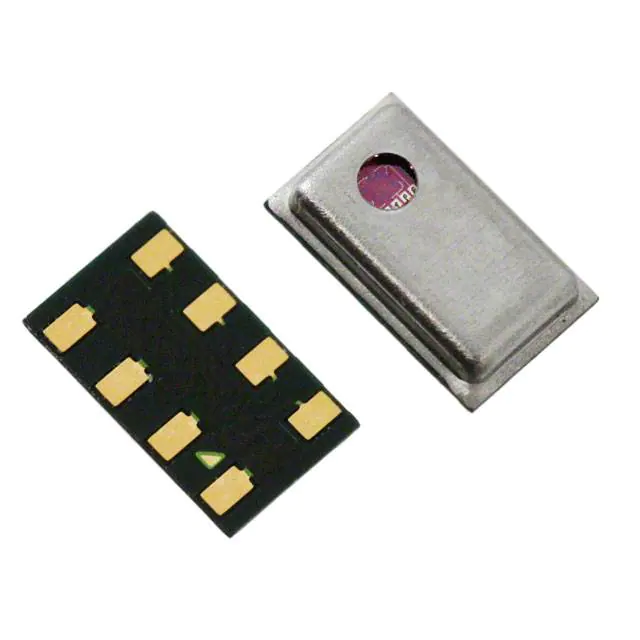
NXP Semiconductors MPL3115A2
- Part No.:
- MPL3115A2
- Manufacturer:
- NXP Semiconductors
- Category:
- Pressure Sensors, Transducers
- Package:
- 8-TLGA
- Datasheet:
-
 MPL3115A2.pdf
- Description:
- SENSOR 15.95PSIA 24BIT 8LGA
- Quantity:
- Payment:

- Shipping:

Inventory:4,189
Please send an inquiry. Send us your inquiry, and we will respond immediately.
Product details
Overview
MPL3115A2 from NXP Semiconductors is an I²C digital absolute pressure sensor with integrated altimetry, temperature compensation, and autonomous data acquisition. It delivers 20-bit pressure (Pa), 20-bit altitude (m), and 12-bit temperature (°C) outputs across a 20–110 kPa range and −40 °C to +85 °C operating temperature, enabling high-accuracy elevation tracking in portable navigation systems.
For engineers reviewing the MPL3115A2 datasheet, MPL3115A2 pinout, MPL3115A2 application, or MPL3115A2 equivalent, key selection considerations include its 0.0625 m altimeter resolution, programmable interrupts (INT1/INT2), embedded 32-sample FIFO for up to 12-day logging, and dual-mode operation (barometer/altimeter) with US Standard Atmosphere 1976 conversion.
Technical Context
The MPL3115A2 integrates a piezoresistive MEMS pressure sensor, on-die temperature sensor, 20-bit ADC, digital signal processing ASIC, and I²C interface - all within a single 3 × 5 × 1.1 mm LGA package. Its internal compensation eliminates MCU-side calibration overhead.
It supports three operational modes: STANDBY (2 µA), ACTIVE (40 µA typical at 1 Hz, 128× oversample), and OFF. Autonomous acquisition is configurable from 1 second to 9 hours, with interrupt routing to INT1 or INT2 for pressure/altitude thresholds, temperature windows, data-ready events, or FIFO status.
Key Specifications
| Parameter | Value and Actual Design Meaning |
|---|---|
| Pressure Range | 20–110 kPa absolute - covers Earth surface elevations from −700 m to 11,775 m |
| Altitude Resolution | 0.0625 m (1 LSB) - enables sub-meter elevation change detection in altimeter mode |
| I²C Address | 0x60 (7-bit) - fixed slave address simplifies multi-device bus design without address conflict risk |
| Supply Voltage | 1.95–3.6 V (VDD) and 1.62–3.6 V (VDDIO) - supports direct connection to 2.5 V or 3.3 V system rails |
| Operating Temp | −40 °C to +85 °C - qualified for industrial and outdoor wearable environments |
| Accuracy (50–110 kPa) | ±0.4 kPa over −10 °C to +70 °C - enables <10 m altitude error at sea level under typical conditions |
| FIFO Depth | 32 samples - stores pressure/altitude + temperature pairs autonomously for offline analysis |
Pinout & Package
Package: 8-pin LGA (3.0 × 5.0 × 1.1 mm), RoHS-compliant, moisture-sensitive level 3.
| Pin/Terminal | Circuit Role | Design Meaning |
|---|---|---|
| VDD | Analog power supply | 1.95–3.6 V input; requires 10 µF + 100 nF decoupling near pin 1 |
| CAP | External compensation capacitor | Connects to internal regulator bypass; value specified in layout guidelines |
| GND | Ground reference | Common return for analog and digital sections; must be low-impedance |
| VDDIO | Digital I/O supply | 1.62–3.6 V; independent of VDD, enabling mixed-voltage system interfacing |
| INT2 | Programmable interrupt output 2 | Open-drain/push-pull configurable; routes SRC_PTH, SRC_PW, SRC_TTH, FIFO events |
| INT1 | Programmable interrupt output 1 | Independent routing from INT2; supports data-ready, delta-change, or min/max alerts |
| SDL | I²C serial data line | Bi-directional, supports 400 kHz standard mode and 4 MHz fast mode with 20 pF bus load |
| SCL | I²C serial clock line | Master-generated clock; timing compliant with I²C specification including hold/setup requirements |
Key Features
| Feature | Design Value |
|---|---|
| On-chip temperature compensation | Eliminates external thermistor and MCU-based correction, reducing BOM and firmware complexity |
| Autonomous acquisition engine | Configurable interval (1 s–9 h) with FIFO storage - enables battery-powered devices to sleep between readings |
| Dual interrupt outputs (INT1/INT2) | Independent, user-routable sources - allows concurrent monitoring of altitude threshold and temperature drift |
| Barometer/altimeter mode switch | Single register bit toggle - avoids recalibration or hardware changes when switching use cases |
| User offset correction registers | Volatility-stored override of factory calibration - compensates for PCB stress-induced pressure offset post-soldering |
Applications
| Smartphone Altitude Assist | GPS Dead Reckoning |
|---|---|
|
Use Scenario: Indoor floor-level detection during GPS-denied navigation in multi-story buildings. IC Role / Device Role / Timing Role: MPL3115A2 provides real-time barometric altitude deltas to supplement inertial sensors and correct vertical drift. Use Value: Enables ±1.5 m floor-level accuracy using 0.0625 m resolution and 128× oversampled pressure data. |
Use Scenario: Maintaining position accuracy during GPS signal loss in urban canyons or tunnels. IC Role / Device Role / Timing Role: MPL3115A2 supplies altitude and pressure trend data to dead reckoning algorithms between GPS fixes. Use Value: Reduces vertical position error accumulation by >40% compared to accelerometer-only solutions. |
| Portable Weather Station | Wearable Fitness Tracker |
|
Use Scenario: Field-deployable microclimate monitoring with long-term unattended logging. IC Role / Device Role / Timing Role: MPL3115A2 autonomously acquires pressure/temperature every 10 minutes and stores 32 samples in FIFO. Use Value: Supports 5+ days of continuous logging before host MCU readout, minimizing wake cycles and power draw. |
Use Scenario: Elevation gain tracking during hiking or trail running with minimal size/weight impact. IC Role / Device Role / Timing Role: MPL3115A2 operates in altimeter mode with interrupt-driven data capture on ascent/descent thresholds. Use Value: Delivers cumulative elevation gain with <0.5% error versus survey-grade reference, validated at 50–110 kPa. |
Equivalent & Alternatives
The following parts are listed as comparable options for similar precision pressure sensing applications.
| Alternative Part | Technical Difference | Application Difference | Selection Advice |
|---|---|---|---|
| BMP280 (Bosch) | Higher max I²C speed (3.4 MHz), no FIFO, ±0.12 hPa pressure accuracy (vs. ±0.4 kPa), smaller 2.0 × 2.0 mm package | Lacks altimeter-specific registers and US Standard Atmosphere conversion engine; requires host-side altitude math | Prefer BMP280 for space-constrained designs where host MCU handles computation and FIFO is unnecessary. |
| LPS22HB (STMicroelectronics) | Lower typical current (4 µA @ 1 Hz), 24-bit pressure output, no integrated temperature sensor for pressure compensation | Requires external temperature measurement for full pressure compensation; no native altimeter mode or OFF_H register | Choose LPS22HB when ultra-low power dominates and system already includes high-accuracy temperature sensing. |
Compared with BMP280 and LPS22HB, the MPL3115A2 uniquely integrates altimeter-specific firmware, factory-calibrated offset storage, and dual-interrupt autonomous triggering - reducing host processing load and enabling faster time-to-altitude in resource-constrained embedded systems.
Availability
MPL3115A2 is available at Aetrix Electronics and suitable for smartphone navigation, GPS enhancement, portable weather instrumentation, and wearable fitness tracking requiring stable component supply and long-lifecycle support.
Supply support for MPL3115A2 includes scheduled delivery planning, volume procurement assistance, BOM continuity management, traceable sourcing, and lifecycle availability coordination for OEM customers, industrial embedded developers, connected-device designers, and electronics production programs.
Manufacturer
NXP Semiconductors is a global semiconductor company specializing in secure connectivity solutions for automotive, industrial, and IoT applications, with leadership in sensor fusion and embedded processing.
The MPL3115A2 belongs to NXP's precision environmental sensor family, designed specifically for handheld and wearable devices needing calibrated, low-power, self-contained altitude and barometric pressure measurement without host MCU computational burden.
FAQ
What is the primary function of the MPL3115A2?
The MPL3115A2 is a fully compensated I²C digital pressure sensor optimized for altimetry and barometry. It directly outputs 20-bit pressure in Pascals, 20-bit altitude in meters (using US Standard Atmosphere 1976), and 12-bit temperature in °C - all with on-chip temperature compensation and no host MCU calibration required. Its core function is to deliver accurate, ready-to-use elevation and atmospheric pressure data.
Does the MPL3115A2 require external calibration after soldering?
The MPL3115A2 includes factory-trimmed offset values stored in on-chip NVM, so no external calibration is required for baseline operation. However, it provides volatile offset correction registers (OFF_H, OFF_T) to compensate for mechanical stress-induced shifts post-reflow. Users may apply these corrections during initialization to achieve ±0.4 kPa accuracy over −10 °C to +70 °C - but the MPL3115A2 functions accurately out-of-box without them.
How does the MPL3115A2 handle pressure-to-altitude conversion?
The MPL3115A2 performs pressure-to-altitude conversion internally using the US Standard Atmosphere 1976 model and a user-programmable sea-level pressure offset (OFF_H register). When configured in altimeter mode, it outputs altitude directly as a 20-bit two's complement value in meters with 0.0625 m LSB resolution - eliminating the need for host-side floating-point computation or lookup tables. The MPL3115A2 applies this conversion in real time during each measurement cycle.
Can the MPL3115A2 operate without an external microcontroller?
No - the MPL3115A2 requires an external I²C master (e.g., MCU or processor) to configure registers, initiate measurements, and read results. It has no standalone operation capability. However, once configured, it supports autonomous data acquisition with programmable intervals (1 s–9 h) and stores up to 32 samples in its internal FIFO - allowing the host MCU to remain in low-power sleep between periodic reads. The MPL3115A2 itself cannot execute code or make decisions independently.
What are the key differences between MPL3115A2 and MPL3115A2R1?
The MPL3115A2 and MPL3115A2R1 share identical electrical, mechanical, and functional specifications - differing only in packaging and ordering format. The MPL3115A2 ships in trays (98ASA002260D), while the MPL3115A2R1 is supplied in tape-and-reel format (same part number suffix R1, same 98ASA002260D package code). Both use the same 8-pin LGA footprint, pinout, and firmware; no design or performance differences exist between the two variants. The choice depends solely on assembly process requirements.
MPL3115A2 Specifications
- Product attributes
- Attribute value
- Manufacturer:
- NXP Semiconductors
- Series:
- -
- Package/Case:
- 8-TLGA
- Packaging:
- Tray
- Product Status:
- Obsolete
- Applications:
- Board Mount
- Pressure Type:
- Absolute
- Operating Pressure:
- 7.25PSI ~ 15.95PSI (50kPa ~ 110kPa)
- Output Type:
- I2C
- Output:
- 24 b
- Accuracy:
- ±0.058PSI (±0.4kPa)
- Voltage - Supply:
- 1.95V ~ 3.6V
- Port Size:
- -
- Port Style:
- No Port
- Features:
- Temperature Compensated
- Termination Style:
- SMD (SMT) Tab
- Maximum Pressure:
- 72.52PSI (500kPa)
- Operating Temperature:
- -40°C ~ 85°C
- Grade:
- -
- Qualification:
- -
- Mounting Type:
- Surface Mount
- Supplier Device Package:
- 8-LGA (3x5)
MPL3115A2 FAQ
1.How can I place an order for MPL3115A2 through Aetrix?
Please submit a Request for Quotation (RFQ) for MPL3115A2 on Aetrix. Our sales agent will provide a competitive quotation and guide you through the order confirmation once you accept the terms.
2.Are the price and stock information for MPL3115A2 reliable?
The price and inventory of MPL3115A2 are updated periodically and may fluctuate due to market conditions. Stock and pricing data are typically refreshed every 24 hours. Quotation validity for MPL3115A2 is usually 5 days.
3.What payment methods are accepted for MPL3115A2?
We accept Wire Transfer, PayPal, Credit Card, Western Union, MoneyGram, and Escrow for MPL3115A2 transactions.
Note: Certain payment methods may incur a processing fee.
4.How is shipping managed for MPL3115A2?
MPL3115A2 orders can be shipped via leading logistics carriers, including DHL, UPS, FedEx, TNT, or Registered Mail.
Once your MPL3115A2 order is processed, you will receive an email with the shipment details and tracking number.
Note: Tracking information may take up to 24 hours to appear. Express delivery typically takes 3–5 business days.
5.How can I obtain technical support or documentation for MPL3115A2?
For technical support, including MPL3115A2 datasheets, pinout diagrams, or application guidance, please contact our engineering support team. They can provide detailed documentation and assistance for your MPL3115A2 requirements.
6.How does Aetrix verify that MPL3115A2 is sourced from the original manufacturer or authorized distributors?
All MPL3115A2 products on Aetrix are procured from qualified distributors and authorized channels. Our dedicated quality assurance team conducts strict verification, including traceability checks and, if necessary, third-party testing. This ensures that MPL3115A2 meets industry standards.
7.What is the process for return or replacement of MPL3115A2?
All MPL3115A2 units undergo pre-shipment inspection (PSI). If there is an issue with MPL3115A2, returns or replacements are accepted under the following conditions:
1.Quantity discrepancies, incorrect items, or visible external defects (such as breakage or corrosion), acknowledged by Aetrix.
2.The issue is reported within 90 days of delivery.
3.The MPL3115A2 part is unused and in its original packaging.
Return procedure for MPL3115A2:
1.Submit a request within 90 days.
2.Obtain a Return Material Authorization (RMA) from Aetrix.
MPL3115A2 Tags
-
DPS368XTSA1
Infineon Technologies
-
DPS310XTSA1
Infineon Technologies
-
LPS22HHTR
STMicroelectronics

-
ICP-20100
TDK InvenSense
-
ICP-10110
TDK InvenSense
-
LPS22DFTR
STMicroelectronics
-
LPS22HBTR
STMicroelectronics
-
BMP390
Bosch Sensortec
-
BMP581
Bosch Sensortec
-
BMP384
Bosch Sensortec
-
2511020213301
Würth Elektronik
-
ILPS22QSTR
STMicroelectronics
Tech Hub

A practical engineering guide to 3.3V and 5V logic compatibility, input thresholds, resistor dividers, translator ICs, MOSFET level shifting, I2C pull-ups, timing limits and power-sequencing risks.

The 74HC595 uses push-pull logic outputs, while the TPIC6B595 uses 50 V open-drain DMOS sinks for higher-power loads. This guide compares timing, current limits, 3.3 V interfacing, load wiring, thermal…

The 74HC595 converts serial data into eight stable parallel outputs. This guide covers pin functions, shift and storage timing, OE and MR behavior, drive-current limits, cascading, voltage compatibilit…

A technical comparison of level-sensitive latches and edge-triggered flip-flops, covering timing windows, setup and hold limits, master–slave operation, time borrowing, race-through, HDL inference and…

A D latch stores one bit while Enable controls when data can pass. This reference covers gate-level operation, truth tables, transparency, setup and hold timing, LE versus OE, common ICs and practical …

An SR latch stores one bit through cross-coupled feedback. This engineering reference covers NOR and NAND implementations, truth tables, forbidden-state recovery, gated operation, switch debouncing, fa…

Latch circuits retain one bit through feedback. This technical reference covers SR and D latches, truth tables, transparency, timing limits, latch-versus-flip-flop behavior, applications and common log…

An engineering guide to LED driver operation, constant-current and constant-voltage outputs, linear and switching topologies, dimming, IC selection, calculations, replacement compatibility, and fault c…

Operational amplifier guide covering op amp basics, feedback, ideal vs real op amps, common configurations, buffer circuits, offset, bias current, gain-bandwidth, slew rate, rail-to-rail limits and sel…

Jumper cables guide covering safe connection order, red and black clamp placement, final ground connection, cable gauge, length, clamp quality, copper vs CCA cables, jump starter comparison and battery…


