
 My Inquiry
 My Account


Monolithic Power Systems Inc. MPQ7790GF-AEC1-Z
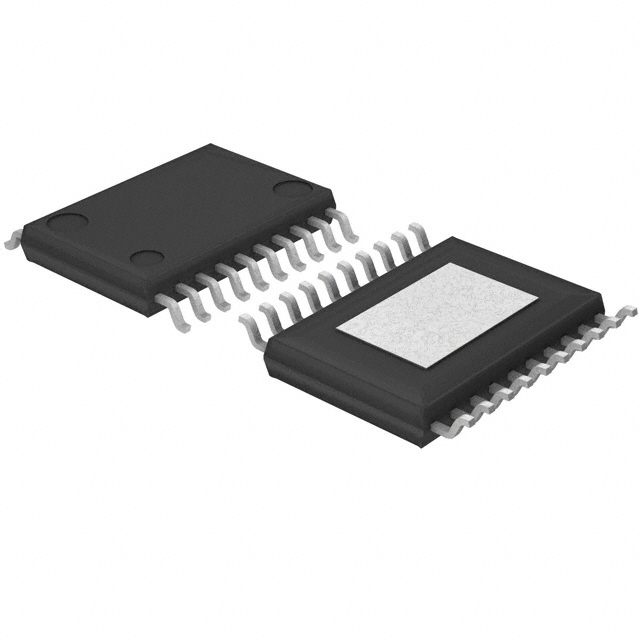
- Part No.:
- MPQ7790GF-AEC1-Z
- Manufacturer:
- Monolithic Power Systems Inc.
- Category:
- Audio Amplifiers
- Package:
- 20-TSSOP (0.173", 4.40mm Width) Exposed Pad
- Datasheet:
-
 MPQ7790GF-AEC1-Z.pdf
- Description:
- 18V, 15W, LOW-EMI, MONO BTL CLAS
- Quantity:
- Payment:

- Shipping:

Inventory:4,169
Please send an inquiry. Send us your inquiry, and we will respond immediately.
Product details
Overview
MPQ7790GF-AEC1-Z from Monolithic Power Systems is an AEC-Q100 Grade-1 qualified, mono bridge-tied load (BTL) Class-D audio amplifier delivering 15W into 8Ω at 16V PVCC with ≤0.05% THD+N, 90% efficiency, and integrated 300mΩ MOSFETs. It operates from 5.5–18V PVCC, features adjustable power limiting, automatic shutdown on zero-input detection, and is designed for automotive infotainment and emergency call systems.
For engineers reviewing the MPQ7790GF-AEC1-Z datasheet, MPQ7790GF-AEC1-Z pinout, MPQ7790GF-AEC1-Z application, or MPQ7790GF-AEC1-Z equivalent, this page provides verified technical context, validated pin functions, real-world operating specifications, automotive-grade thermal and fault protection behavior, and confirmed alternative options for AEC-Q100 mono BTL amplifier selection.
Technical Context
The MPQ7790GF-AEC1-Z implements a fixed-frequency (240–360 kHz) PWM-based Class-D architecture with internal high-side bootstrap drivers (BSTA/BSTB), dual N-channel output stage per half-bridge, and analog input biasing at 2.5V. Its BTL topology delivers differential voltage swing across the speaker without output coupling capacitors.
It integrates signal absence detection via CAP_D-controlled delay, open-drain /FAULT reporting for over-temperature (150°C trip, 130°C hysteresis) and over-current events, and PLIMIT-based virtual rail control that scales peak output voltage as 9× the applied PLIMIT voltage - enabling precise anti-clipping without external DSP.
Key Specifications
| Parameter | Value and Actual Design Meaning |
|---|---|
| PVCC Range | 5.5V to 18V - supports full automotive battery range including cold-crank (≥4.6V UVLO) and load-dump transients. |
| Output Power | 15W @ 16V/8Ω/10% THD - sufficient for mid-range automotive cabin speakers without heatsink in TSSOP-20 EP package. |
| THD+N | 0.05% @ 5W/1kHz/18V/8Ω - meets high-fidelity requirements for eCall voice clarity and telematics audio playback. |
| Efficiency | 90% @ 9W/12V/8Ω/10% THD - reduces thermal load and extends battery runtime in always-on vehicle modules. |
| Switching Frequency | 270–360 kHz - enables compact LC filter design while staying above audible range and minimizing EMI in AM band. |
| Gain Control | 20/26/32/36 dB via GAIN0/GAIN1 pins - allows system-level gain staging without external op-amps or digital configuration. |
| Quiescent Current | 7 mA active, 100 µA standby - enables low-power wake-on-audio operation in battery-backed domains. |
| Thermal Protection | 150°C shutdown with 20°C hysteresis - prevents permanent damage during sustained high-power operation in enclosed enclosures. |
Pinout & Package
The MPQ7790GF-AEC1-Z is housed in a thermally enhanced TSSOP-20 EP (exposed pad) package, with 0.65 mm pitch and exposed thermal pad soldered to PCB ground plane for θJC = 6.5°C/W performance.
| Pin/Terminal | Circuit Role | Design Meaning |
|---|---|---|
| 1, 20 PVCC | Main power supply input | Bypassed with 1µF X7R ceramic near pin; supplies all power MOSFETs and gate drivers. |
| 2, 19 PGND | Power ground reference | Must be connected directly to thermal pad and bulk capacitor ground; separates high-current return paths from analog ground. |
| 3 SWB | Negative BTL output switch node | Drives speaker negative terminal via LC filter; high dv/dt node requiring minimized trace area and magnetic bead filtering. |
| 4 BSTB | Bootstrap supply for B-side high-side MOSFET | Requires 0.1–0.22µF ceramic capacitor to SWB; enables full enhancement of high-side N-MOSFET in B half-bridge. |
| 5 VDR | Internal gate drive and PLIMIT supply | Bypassed to AGND with 0.1–10µF capacitor; powers internal logic, gate drivers, and power limiter reference. |
| 6 PLIMIT | Adjustable power limit control | Voltage sets "virtual rail" = 9×PLIMIT; resistor divider from AVCC to AGND configures clipping threshold independent of PVCC. |
| 7 AVCC | Analog reference voltage source | Internal 2.5V reference; requires ≥1µF bypass to AGND for stable gain and THD performance. |
| 8 AGND | Analog ground reference | Separate from PGND; connects to AVCC bypass, INx bias network, and PLIMIT divider ground for noise immunity. |
| 9, 10 GAIN0/GAIN1 | Digital gain select inputs | Set closed-loop gain to 20/26/32/36 dB; internally pulled down; no external pull-up required. |
| 11 EN | Active-high enable control | Logic threshold: 2.0V min rising, 1.0V max falling; controls startup/shutdown sequence and pop elimination circuitry. |
| 12 INB, 13 INA | Differential analog audio inputs | Biased at 2.5V internally; accept AC-coupled line-level signals; input impedance varies 20–90kΩ depending on gain setting. |
| 14 Cap_D | Input absence detection delay timing | External capacitor sets hold time before auto-shutdown; connect to AGND to disable feature. |
| 15 In Absence | Open-drain zero-signal flag | High when audio present; pulls low after Cap_D timeout; used to trigger system sleep mode in battery-powered ECUs. |
| 16 /FAULT | Open-drain fault indicator | Pulls low on over-temperature or over-current; resets automatically after fault condition clears and thermal recovery. |
| 17 BSTA | Bootstrap supply for A-side high-side MOSFET | Same function as BSTB but for positive BTL output; requires dedicated 0.1–0.22µF capacitor to SWA. |
| 18 SWA | Positive BTL output switch node | Drives speaker positive terminal; complementary to SWB; both nodes require identical EMI filtering and layout care. |
Key Features
| Feature | Design Value |
|---|---|
| Integrated 300mΩ MOSFETs | Eliminates need for external power stage, reducing BOM count and PCB area by >40% vs discrete solutions. |
| Start-up/shutdown pop elimination | Hardware-controlled soft-ramp of output stage prevents audible transients during ignition cycling or ECU wake/sleep. |
| Adjustable power limiter (PLIMIT) | Enables precise output voltage ceiling without firmware or external DAC; avoids speaker damage under mismatched loads. |
| Automatic shutdown on zero-input detection | Reduces quiescent current to 100 µA in parked vehicle scenarios; configurable delay prevents false triggers from brief silence. |
| AEC-Q100 Grade-1 qualification | Validated for -40°C to +125°C junction temperature operation with full PPAP support - suitable for engine bay and dashboard mounting. |
| EMI reduction technique | Fixed-frequency modulation + optimized gate drive slew rate + integrated bootstrap architecture lowers radiated emissions below CISPR 25 Class 5 limits. |
Applications
| Automotive E-Call System | Telematics Control Unit (TCU) |
|---|---|
|
Use Scenario: Voice communication during emergency activation with battery backup power. IC Role / Device Role / Timing Role: Mono BTL amplifier driving 8Ω speaker with <100ms wake-from-standby latency and pop-free start. Use Value: 15W output ensures intelligible voice transmission in noisy cabin environments; 100 µA standby extends backup battery life to >72 hours. |
Use Scenario: Audio feedback for navigation prompts, OTA update status, and hands-free calling. IC Role / Device Role / Timing Role: Fixed-frequency Class-D driver with AEC-Q100 reliability for continuous operation in instrument cluster or center console. Use Value: 90% efficiency minimizes heat buildup in sealed plastic enclosures; THD+N ≤0.05% preserves speech clarity at 5W output. |
| Driver Monitoring System (DMS) Alert | Passenger Entertainment Interface |
|
Use Scenario: Audible alert for drowsiness or distraction detection in ADAS-equipped vehicles. IC Role / Device Role / Timing Role: Low-latency mono amplifier triggered by CAN message; must activate within 50ms of interrupt. Use Value: EN pin enables deterministic wake; PLIMIT prevents clipping on small 4Ω OEM speakers; /FAULT reports thermal overload during prolonged alerts. |
Use Scenario: Rear-seat entertainment audio output for headrest displays or wireless headphones. IC Role / Device Role / Timing Role: High-fidelity analog-input amplifier supporting variable gain (20–36 dB) to match diverse source levels. Use Value: GAIN0/GAIN1 pins allow hardware-selectable gain without I²C bus overhead; 2.5V input bias simplifies connection to DAC outputs. |
Equivalent & Alternatives
The following parts are listed as comparable options for similar mono BTL Class-D amplifier applications.
| Alternative Part | Technical Difference | Application Difference | Selection Advice |
|---|---|---|---|
| TAS5414QRTQRQ1 | Pin-compatible TSSOP-24; higher 25W output (16V/4Ω); includes I²C control and digital input support. | Requires microcontroller interface for configuration; lacks analog zero-signal auto-shutdown and PLIMIT analog adjust. | Select when digital audio interface or higher power is needed; avoid if analog-only, low-BOM, or ultra-low-standby design is required. |
| MAX9744G/V+T | 28W output (14.4V/4Ω); thermal foldback instead of hard shutdown; no integrated bootstrap or PLIMIT. | Higher thermal derating above 85°C; requires external bootstrap diodes/caps; no auto-sleep capability. | Choose for cost-sensitive non-AEC-Q100 applications where 125°C operation is not mandatory and external components are acceptable. |
Compared with TAS5414QRTQRQ1 and MAX9744G/V+T, the MPQ7790GF-AEC1-Z uniquely combines AEC-Q100 Grade-1 qualification, analog-only simplicity, hardware-configurable gain and power limiting, and sub-100µA auto-sleep - making it optimal for safety-critical, low-complexity automotive audio nodes.
Availability
MPQ7790GF-AEC1-Z is available at Aetrix Electronics and suitable for automotive E-call systems, telematics control units, driver monitoring alerts, and passenger entertainment interfaces requiring stable component supply across extended temperature ranges and long production lifecycles.
Supply support for MPQ7790GF-AEC1-Z includes scheduled delivery planning, volume procurement assistance, BOM continuity management, traceable sourcing, and lifecycle availability coordination for OEM customers, industrial embedded developers, connected-device designers, and electronics production programs.
Manufacturer
Monolithic Power Systems (MPS) is a fabless semiconductor company specializing in high-performance power management ICs, with over 20 years of automotive-grade product development and AEC-Q100 validation expertise.
The MPQ7790 belongs to MPS's automotive audio amplifier product line, engineered specifically for robust, low-EMI, high-efficiency mono BTL amplification in safety-critical vehicle subsystems - prioritizing reliability, thermal resilience, and analog configurability over digital complexity.
FAQ
What is the minimum PVCC voltage required for reliable operation?
The MPQ7790GF-AEC1-Z has a guaranteed UVLO turn-on threshold of 4.6V at 25°C and 4.3V across –40°C to +125°C. Operation below 4.3V may cause unpredictable enable behavior or latch-up; design must ensure PVCC remains ≥4.6V during cold-crank to maintain functional safety compliance.
How does the PLIMIT function prevent speaker damage?
PLIMIT sets a "virtual rail" equal to 9× the applied voltage, capping peak-to-peak output swing independently of PVCC. For example, 1.4V on PLIMIT limits output to ~26Vpp, restricting maximum power to 10W into 8Ω - preventing mechanical over-excursion and thermal failure in mismatched or aging speakers.
Can the MPQ7790GF-AEC1-Z drive 4Ω loads reliably?
Yes - it delivers 7.5W at 12V/4Ω/10% THD with 0.15% THD+N. However, thermal dissipation increases significantly; θJA must be ≤25°C/W (4-layer PCB) to sustain full output. Derate power linearly above 85°C ambient, and verify short-circuit protection holds under 4Ω load faults.
What is the purpose of the Cap_D pin and how is its value selected?
Cap_D sets the delay before auto-shutdown activates after audio signal loss. Using Equation Tdelay = 1.6×10⁸ × C (seconds), a 100nF capacitor yields ~16s hold time. Select value based on expected silence duration: 47nF (~7.5s) for voice prompts, 220nF (~35s) for music playback gaps.
Does the /FAULT pin require an external pull-up resistor?
Yes - /FAULT is open-drain and requires a 4.7kΩ to 10kΩ pull-up to AVCC or system IO voltage (≤5.5V). Without pull-up, the fault state cannot be read by host MCU. The pin asserts low only during active over-temperature or over-current events and returns high automatically after recovery.
How does the MPQ7790GF-AEC1-Z achieve low EMI without spread-spectrum modulation?
It uses fixed-frequency PWM with optimized gate drive slew rate control, integrated bootstrap architecture to minimize high-di/dt loop area, and internal dead-time tuning (40ns typical). Combined with recommended Murata NFZ2M-series magnetic beads on SWA/SWB and PVCC, it meets CISPR 25 Class 5 radiated emissions limits.
Is the AGND pin required to be isolated from PGND on the PCB?
Yes - AGND must be routed as a separate net tied to the AVCC bypass capacitor and analog input network, then connected to PGND at a single point near the thermal pad. This prevents switching noise from PGND from modulating the 2.5V input bias and degrading THD+N performance.
MPQ7790GF-AEC1-Z Specifications
- Product attributes
- Attribute value
- Manufacturer:
- Monolithic Power Systems Inc.
- Series:
- -
- Package/Case:
- 20-TSSOP (0.173", 4.40mm Width) Exposed Pad
- Packaging:
- Tape & Reel (TR)
- Product Status:
- Active
- Type:
- Class D
- Output Type:
- 1-Channel (Mono)
- Max Output Power x Channels @ Load:
- 15W x 1 @ 8Ohm
- Voltage - Supply:
- 5.5V ~ 18V
- Features:
- -
- Mounting Type:
- Surface Mount
- Operating Temperature:
- -40°C ~ 125°C (TJ)
- Grade:
- Automotive
- Qualification:
- AEC-Q100
- Supplier Device Package:
- 20-TSSOP-EP
MPQ7790GF-AEC1-Z FAQ
1.How can I place an order for MPQ7790GF-AEC1-Z through Aetrix?
Please submit a Request for Quotation (RFQ) for MPQ7790GF-AEC1-Z on Aetrix. Our sales agent will provide a competitive quotation and guide you through the order confirmation once you accept the terms.
2.Are the price and stock information for MPQ7790GF-AEC1-Z reliable?
The price and inventory of MPQ7790GF-AEC1-Z are updated periodically and may fluctuate due to market conditions. Stock and pricing data are typically refreshed every 24 hours. Quotation validity for MPQ7790GF-AEC1-Z is usually 5 days.
3.What payment methods are accepted for MPQ7790GF-AEC1-Z?
We accept Wire Transfer, PayPal, Credit Card, Western Union, MoneyGram, and Escrow for MPQ7790GF-AEC1-Z transactions.
Note: Certain payment methods may incur a processing fee.
4.How is shipping managed for MPQ7790GF-AEC1-Z?
MPQ7790GF-AEC1-Z orders can be shipped via leading logistics carriers, including DHL, UPS, FedEx, TNT, or Registered Mail.
Once your MPQ7790GF-AEC1-Z order is processed, you will receive an email with the shipment details and tracking number.
Note: Tracking information may take up to 24 hours to appear. Express delivery typically takes 3–5 business days.
5.How can I obtain technical support or documentation for MPQ7790GF-AEC1-Z?
For technical support, including MPQ7790GF-AEC1-Z datasheets, pinout diagrams, or application guidance, please contact our engineering support team. They can provide detailed documentation and assistance for your MPQ7790GF-AEC1-Z requirements.
6.How does Aetrix verify that MPQ7790GF-AEC1-Z is sourced from the original manufacturer or authorized distributors?
All MPQ7790GF-AEC1-Z products on Aetrix are procured from qualified distributors and authorized channels. Our dedicated quality assurance team conducts strict verification, including traceability checks and, if necessary, third-party testing. This ensures that MPQ7790GF-AEC1-Z meets industry standards.
7.What is the process for return or replacement of MPQ7790GF-AEC1-Z?
All MPQ7790GF-AEC1-Z units undergo pre-shipment inspection (PSI). If there is an issue with MPQ7790GF-AEC1-Z, returns or replacements are accepted under the following conditions:
1.Quantity discrepancies, incorrect items, or visible external defects (such as breakage or corrosion), acknowledged by Aetrix.
2.The issue is reported within 90 days of delivery.
3.The MPQ7790GF-AEC1-Z part is unused and in its original packaging.
Return procedure for MPQ7790GF-AEC1-Z:
1.Submit a request within 90 days.
2.Obtain a Return Material Authorization (RMA) from Aetrix.
MPQ7790GF-AEC1-Z Tags
-Exposed-Pad.jpg)
-
TS34119CS RLG
Taiwan Semiconductor Corporation

-
LM386MX-1/NOPB
Texas Instruments
-
TPA711DGNR
Texas Instruments
-
LM386N-4/NOPB
Texas Instruments
-
TS4990IST
STMicroelectronics
-
PAM8302AASCR
Diodes Incorporated
-
TPA6130A2RTJR
Texas Instruments
-
TPA6111A2DGNR
Texas Instruments
-
LM4861MX/NOPB
Texas Instruments
-
LM386M-1/NOPB
Texas Instruments
-
NCS2211DR2G
onsemi
-
IS31AP2005-DLS2-TR
Lumissil Microsystems
Tech Hub

Operational amplifier guide covering op amp basics, feedback, ideal vs real op amps, common configurations, buffer circuits, offset, bias current, gain-bandwidth, slew rate, rail-to-rail limits and sel…

Jumper cables guide covering safe connection order, red and black clamp placement, final ground connection, cable gauge, length, clamp quality, copper vs CCA cables, jump starter comparison and battery…

LDO regulator guide covering low dropout voltage, power dissipation, thermal design, PSRR, output noise, capacitor stability, adjustable LDO circuits, LDO vs buck converter and datasheet selection chec…

Conditional Access Module guide covering CAM meaning, CI/CI+ interface, smart card authorization, DVB security workflow, TV and set-top box compatibility, internal electronics, ESD protection, connecto…

Guide to electronic component obsolescence covering EOL risk, PCN/PDN notices, last-time buy planning, replacement options, form-fit-function validation, counterfeit risk and BOM lifecycle management.

18650 battery guide covering lithium-ion cell basics, 3.6V/3.7V voltage, 4.2V charging, mAh and Wh capacity, protected cells, chargers, BMS, series-parallel packs, holders, welding and sourcing checks.…

Hall effect sensor guide covering working principle, linear and digital sensors, Arduino circuits, current sensing, speed detection, automotive applications, A3144 examples, signal filtering and datash…

Product Change Notification guide for electronic components, covering PCN meaning, PCN vs PDN/EOL, common change types, risk levels, form-fit-function review, engineering validation, BOM control, LTB/L…

A practical guide to blend door actuators, covering HVAC function, symptoms, location, AC and heater issues, reset and calibration, replacement cost, electrical diagnosis, compatibility checks, and rep…

Engineering guide to Raspberry Pi alternatives, covering chip-level differences, Orange Pi, ROCK, Jetson, Banana Pi, NanoPi, Compute Module, Pico, GPIO, camera, HAT compatibility, and replacement risks…


