
 My Inquiry
 My Account


NXP Semiconductors MPXM2010DT1
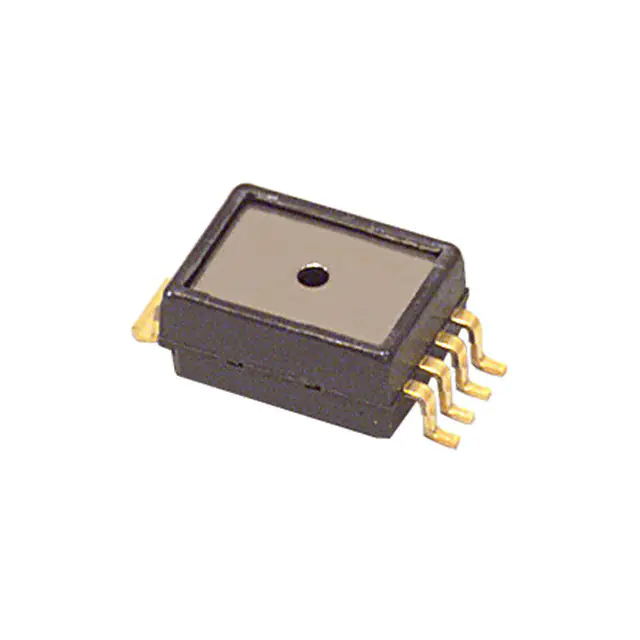
- Part No.:
- MPXM2010DT1
- Manufacturer:
- NXP Semiconductors
- Category:
- Pressure Sensors, Transducers
- Package:
- 5-SMD Module
- Datasheet:
-
 MPXM2010DT1.pdf
- Description:
- SENSOR 1.45PSID .025V 5MPAK
- Quantity:
- Payment:

- Shipping:

Inventory:4,555
Please send an inquiry. Send us your inquiry, and we will respond immediately.
Product details
Overview
MPXM2010DT1 from NXP Semiconductors is a silicon piezoresistive differential pressure sensor in MPAK package (Case 1320A-02), delivering ratiometric voltage output proportional to applied pressure up to 10 kPa. It features on-chip temperature compensation over 0 °C to 85 °C, ±1.0 %VFSS linearity, and 2.5 mV/kPa sensitivity. Used in respiratory diagnostics and air movement control systems where stable low-pressure measurement is critical.
For engineers reviewing the MPXM2010DT1 datasheet, MPXM2010DT1 pinout, MPXM2010DT1 application, or MPXM2010DT1 equivalent, this page provides verified technical context, calibrated performance specifications, package-validated pin definitions, and application-specific design value - all confirmed for the MPXM2010DT1 variant within the MPX2010 family.
Technical Context
The MPXM2010DT1 integrates a monolithic silicon diaphragm with embedded strain gauge and thin-film resistor network, laser-trimmed for precise span/offset calibration and temperature compensation. Its ratiometric output scales directly with supply voltage (10–16 Vdc), enabling stable operation without external reference.
Designed for differential pressure sensing (P1 > P2), it delivers 24–26 mV full-scale span at 10 Vdc excitation, with offset bounded between –1.0 mV and +1.0 mV. Input and output impedances are 1300–2550 Ω and 1400–3000 Ω respectively, supporting direct interface to instrumentation amplifiers or ADCs without buffering.
Key Specifications
| Parameter | Value and Actual Design Meaning |
|---|---|
| Operating Pressure Range | 0–10 kPa: Full linear measurement range for low-differential applications like breathing flow or HVAC duct monitoring. |
| Supply Voltage | 10–16 Vdc: Ratiometric operation ensures output scaling matches supply, simplifying system-level calibration. |
| Full Scale Span | 24–26 mV at 10 Vdc: Directly usable analog output requiring minimal gain for 12-bit+ ADC resolution. |
| Linearity Error | ±1.0 %VFSS (end-point method): Predictable worst-case error budget for medical or industrial safety-critical thresholds. |
| Temperature Compensation | 0 °C to 85 °C: Validated span and offset stability across ambient conditions typical of portable medical devices. |
| Response Time | 1.0 ms (10%–90%): Enables real-time capture of transient pressure events such as inhalation/exhalation cycles. |
| Output Impedance | 1400–3000 Ω: Matches standard instrumentation amplifier input impedance without loading distortion. |
Pinout & Package
MPXM2010DT1 uses the MPAK package (Case 1320A-02), a surface-mount, 4-pin leaded package optimized for automated assembly and media-isolated pressure port integration.
| Pin/Terminal | Circuit Role | Design Meaning |
|---|---|---|
| GND | Ground reference | Common return path for supply and output; must be low-impedance to minimize offset drift. |
| +VOUT | Positive output terminal | Delivers voltage proportional to pressure differential; referenced to GND and VS. |
| VS | Power supply input | Accepts 10–16 Vdc; output scales ratiometrically - critical for supply noise rejection. |
| –VOUT | Negative output terminal | Completes differential output pair; enables common-mode rejection in balanced readout circuits. |
Key Features
| Feature | Design Value |
|---|---|
| Differential pressure sensing | Measures pressure difference between P1 (port side) and P2 (vacuum side), enabling bidirectional flow detection in ventilators. |
| Laser-trimmed calibration | Eliminates need for external trimming components; factory-set span/offset reduces BOM count and production test time. |
| Ratiometric output | Output voltage scales linearly with VS, allowing use of same supply for sensor and ADC reference - improves system accuracy. |
| On-chip temperature compensation | Stabilizes both full-scale span and offset across 0–85 °C, removing need for external thermal correction algorithms. |
| Media isolation via silicone gel | Protects die and wire bonds from moisture and particulates while transmitting pressure signal - suitable for humid air or saline environments. |
Applications
| Respiratory Flow Monitoring | Air Movement Control in HVAC |
|---|---|
Use Scenario: Real-time measurement of inspiratory/expiratory airflow in portable ventilators and CPAP machines. IC Role / Device Role / Timing Role: Differential pressure transducer converting airway pressure differentials into calibrated analog voltage signals. Use Value: 1.0 ms response time captures rapid breathing dynamics; ±1.0 %VFSS linearity supports accurate tidal volume calculation per breath cycle. | Use Scenario: Duct static pressure feedback in commercial HVAC controllers to modulate fan speed and maintain airflow setpoints. IC Role / Device Role / Timing Role: Low-range pressure sensor providing closed-loop feedback for variable air volume (VAV) box actuators. Use Value: 10 kPa full scale matches typical HVAC duct pressure ranges; ratiometric output maintains accuracy despite 10–16 Vdc supply variation in building power systems. |
| Medical Diagnostic Spirometry | Industrial Process Pressure Switching |
Use Scenario: Integration into handheld spirometers for forced vital capacity (FVC) and peak expiratory flow rate (PEFR) measurements. IC Role / Device Role / Timing Role: Primary pressure-to-voltage converter in battery-powered diagnostic instruments requiring low power and high repeatability. Use Value: Offset stability of ±0.5 %VFSS after 1000-hour pulsed cycling ensures consistent calibration across device lifetime and field use. | Use Scenario: Threshold-based pressure activation in pneumatic control systems, e.g., detecting filter clogging or valve actuation status. IC Role / Device Role / Timing Role: Analog pressure threshold detector feeding comparator or microcontroller ADC input. Use Value: 2.5 mV/kPa sensitivity enables precise 1–2 kPa trip point resolution; unibody-compatible packaging allows direct mounting onto pressurized housings. |
Equivalent & Alternatives
The following parts are listed as comparable options for similar differential pressure sensing applications.
| Alternative Part | Technical Difference | Application Difference | Selection Advice |
|---|---|---|---|
| MPX2010DP | Unibody package (Case 344C-01), identical electrical specs, same 4-pin pinout but different mechanical footprint and port orientation. | Requires PCB layout change due to Case 344C-01 body dimensions and side-mounted marking; suited for through-hole or custom gasketed mounts. | Select when mechanical integration with legacy unibody designs or specific port sealing requirements outweigh SMT assembly benefits. |
| MPXM2010GS | Same MPAK package (Case 1320A-02) and pinout; differs only in tape-and-reel vs. tray packaging - no functional or parametric distinction from MPXM2010DT1. | No application difference; identical performance, calibration, and media compatibility. | Select for high-volume automated placement where tape-and-reel delivery aligns with production logistics. |
Compared with MPX2010DP, MPXM2010DT1 offers SMT-compatible MPAK packaging for higher-density layouts and reflow compatibility; compared with MPXM2010GS, it shares identical sensing performance but differs only in tray packaging format - making MPXM2010DT1 optimal for medium-batch prototyping and pilot runs.
Availability
MPXM2010DT1 is available at Aetrix Electronics and suitable for respiratory diagnostics, HVAC air movement control, and industrial pressure switching requiring stable component supply, calibrated traceability, and long-term lifecycle support.
Supply support for MPXM2010DT1 includes scheduled delivery planning, volume procurement assistance, BOM continuity management, traceable sourcing, and lifecycle availability coordination for OEM customers, industrial embedded developers, connected-device designers, and electronics production programs.
Manufacturer
NXP Semiconductors is a global semiconductor company specializing in secure connectivity solutions for automotive, industrial, and IoT applications, with deep expertise in sensor signal conditioning and embedded analog front-ends.
The MPX2010 series was designed specifically for high-accuracy, temperature-stable low-pressure measurement in medical and environmental monitoring systems - emphasizing factory-calibrated linearity, media-isolated construction, and ratiometric simplicity.
FAQ
What is the pressure range and type supported by the MPXM2010DT1?
The MPXM2010DT1 is a differential pressure sensor with a full-scale range of 0–10 kPa (0–1.45 PSI). It measures the pressure difference between its P1 (pressure) and P2 (vacuum) ports, where P1 > P2 is required for proper operation. This range is validated for use in respiratory flow and HVAC static pressure applications, with burst pressure rated at 100 kPa and overpressure limit at 75 kPa.
How does the ratiometric output of MPXM2010DT1 affect system design?
The MPXM2010DT1 output voltage scales linearly with its supply voltage (VS = 10–16 Vdc), meaning its full-scale span and offset track VS changes. This allows designers to use the same supply rail for both the MPXM2010DT1 and an ADC's reference voltage, eliminating ratio errors caused by independent supply variations - a key advantage in battery-powered or noisy industrial power environments.
Is MPXM2010DT1 compatible with humid or condensing air environments?
Yes - the MPXM2010DT1 uses silicone gel encapsulation to isolate the silicon die and wire bonds from ambient media while transmitting pressure. It is qualified for use with dry clean air; however, NXP confirms compatibility with humid air in applications like respiratory diagnostics when operated within specified temperature and pressure limits. For aggressive media (e.g., saline, oils), consult AN3728 or contact NXP for validation data.
What is the operating temperature range for MPXM2010DT1, and how is temperature compensation implemented?
The MPXM2010DT1 operates from –40 °C to +125 °C, with full temperature compensation of span and offset guaranteed from 0 °C to +85 °C. Compensation is achieved via integrated thin-film resistors on the same silicon diaphragm as the strain gauge, dynamically laser-trimmed during manufacturing - no external components or software correction are needed to meet the ±1.0 %VFSS linearity spec across that range.
Can MPXM2010DT1 be used in absolute or gauge pressure configurations?
No - the MPXM2010DT1 is exclusively a differential pressure sensor. It requires two distinct ports (P1 and P2) and outputs voltage based on their pressure difference. For gauge pressure (P1 vs. atmospheric reference), use MPX2010GP; for absolute pressure, NXP offers other series (e.g., MPX5xxx). The MPXM2010DT1 pinout, calibration, and internal architecture are fixed for differential operation only.
MPXM2010DT1 Specifications
- Product attributes
- Attribute value
- Manufacturer:
- NXP Semiconductors
- Series:
- MPX2010
- Package/Case:
- 5-SMD Module
- Packaging:
- Tape & Reel (TR)
- Product Status:
- Obsolete
- Applications:
- Board Mount
- Pressure Type:
- Differential
- Operating Pressure:
- 1.45PSI (10kPa)
- Output Type:
- Wheatstone Bridge
- Output:
- 0 mV ~ 25 mV (10V)
- Accuracy:
- ±1%
- Voltage - Supply:
- 10V ~ 16V
- Port Size:
- -
- Port Style:
- No Port
- Features:
- Temperature Compensated
- Termination Style:
- Gull Wing
- Maximum Pressure:
- 10.88PSI (75kPa)
- Operating Temperature:
- -40°C ~ 125°C
- Grade:
- -
- Qualification:
- -
- Mounting Type:
- Surface Mount
- Supplier Device Package:
- 5-MPAK
MPXM2010DT1 FAQ
1.How can I place an order for MPXM2010DT1 through Aetrix?
Please submit a Request for Quotation (RFQ) for MPXM2010DT1 on Aetrix. Our sales agent will provide a competitive quotation and guide you through the order confirmation once you accept the terms.
2.Are the price and stock information for MPXM2010DT1 reliable?
The price and inventory of MPXM2010DT1 are updated periodically and may fluctuate due to market conditions. Stock and pricing data are typically refreshed every 24 hours. Quotation validity for MPXM2010DT1 is usually 5 days.
3.What payment methods are accepted for MPXM2010DT1?
We accept Wire Transfer, PayPal, Credit Card, Western Union, MoneyGram, and Escrow for MPXM2010DT1 transactions.
Note: Certain payment methods may incur a processing fee.
4.How is shipping managed for MPXM2010DT1?
MPXM2010DT1 orders can be shipped via leading logistics carriers, including DHL, UPS, FedEx, TNT, or Registered Mail.
Once your MPXM2010DT1 order is processed, you will receive an email with the shipment details and tracking number.
Note: Tracking information may take up to 24 hours to appear. Express delivery typically takes 3–5 business days.
5.How can I obtain technical support or documentation for MPXM2010DT1?
For technical support, including MPXM2010DT1 datasheets, pinout diagrams, or application guidance, please contact our engineering support team. They can provide detailed documentation and assistance for your MPXM2010DT1 requirements.
6.How does Aetrix verify that MPXM2010DT1 is sourced from the original manufacturer or authorized distributors?
All MPXM2010DT1 products on Aetrix are procured from qualified distributors and authorized channels. Our dedicated quality assurance team conducts strict verification, including traceability checks and, if necessary, third-party testing. This ensures that MPXM2010DT1 meets industry standards.
7.What is the process for return or replacement of MPXM2010DT1?
All MPXM2010DT1 units undergo pre-shipment inspection (PSI). If there is an issue with MPXM2010DT1, returns or replacements are accepted under the following conditions:
1.Quantity discrepancies, incorrect items, or visible external defects (such as breakage or corrosion), acknowledged by Aetrix.
2.The issue is reported within 90 days of delivery.
3.The MPXM2010DT1 part is unused and in its original packaging.
Return procedure for MPXM2010DT1:
1.Submit a request within 90 days.
2.Obtain a Return Material Authorization (RMA) from Aetrix.
MPXM2010DT1 Tags
-
DPS368XTSA1
Infineon Technologies
-
DPS310XTSA1
Infineon Technologies
-
LPS22HHTR
STMicroelectronics

-
ICP-20100
TDK InvenSense
-
ICP-10110
TDK InvenSense
-
LPS22DFTR
STMicroelectronics
-
LPS22HBTR
STMicroelectronics
-
BMP390
Bosch Sensortec
-
BMP581
Bosch Sensortec
-
BMP384
Bosch Sensortec
-
2511020213301
Würth Elektronik
-
ILPS22QSTR
STMicroelectronics
Tech Hub

A practical engineering guide to 3.3V and 5V logic compatibility, input thresholds, resistor dividers, translator ICs, MOSFET level shifting, I2C pull-ups, timing limits and power-sequencing risks.

The 74HC595 uses push-pull logic outputs, while the TPIC6B595 uses 50 V open-drain DMOS sinks for higher-power loads. This guide compares timing, current limits, 3.3 V interfacing, load wiring, thermal…

The 74HC595 converts serial data into eight stable parallel outputs. This guide covers pin functions, shift and storage timing, OE and MR behavior, drive-current limits, cascading, voltage compatibilit…

A technical comparison of level-sensitive latches and edge-triggered flip-flops, covering timing windows, setup and hold limits, master–slave operation, time borrowing, race-through, HDL inference and…

A D latch stores one bit while Enable controls when data can pass. This reference covers gate-level operation, truth tables, transparency, setup and hold timing, LE versus OE, common ICs and practical …

An SR latch stores one bit through cross-coupled feedback. This engineering reference covers NOR and NAND implementations, truth tables, forbidden-state recovery, gated operation, switch debouncing, fa…

Latch circuits retain one bit through feedback. This technical reference covers SR and D latches, truth tables, transparency, timing limits, latch-versus-flip-flop behavior, applications and common log…

An engineering guide to LED driver operation, constant-current and constant-voltage outputs, linear and switching topologies, dimming, IC selection, calculations, replacement compatibility, and fault c…

Operational amplifier guide covering op amp basics, feedback, ideal vs real op amps, common configurations, buffer circuits, offset, bias current, gain-bandwidth, slew rate, rail-to-rail limits and sel…

Jumper cables guide covering safe connection order, red and black clamp placement, final ground connection, cable gauge, length, clamp quality, copper vs CCA cables, jump starter comparison and battery…


