
 My Inquiry
 My Account


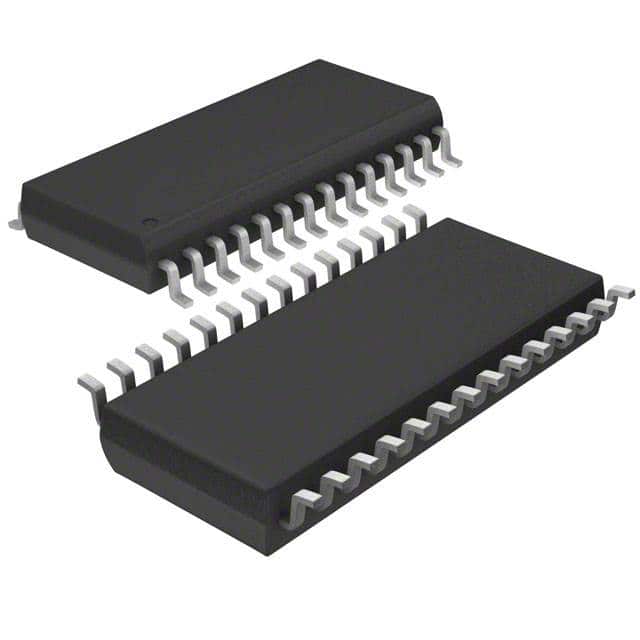
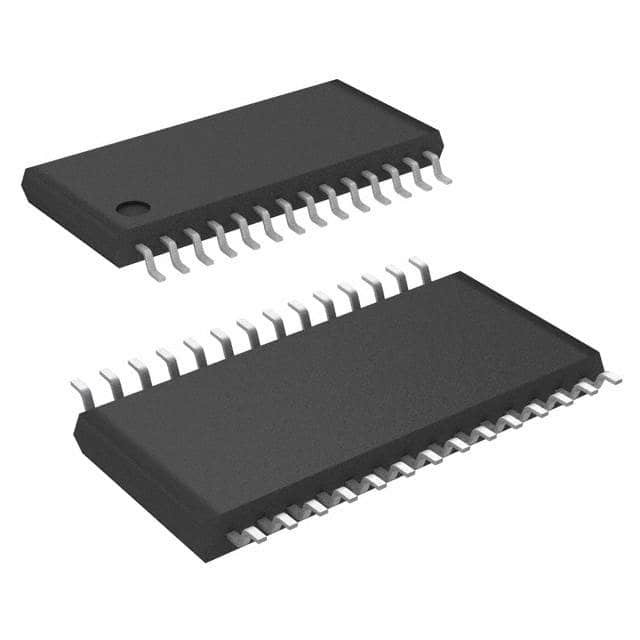
Texas Instruments MSP430TCH5EPW
- Part No.:
- MSP430TCH5EPW
- Manufacturer:
- Texas Instruments
- Category:
- Application Specific Microcontrollers
- Package:
- 28-TSSOP (0.173", 4.40mm Width)
- Datasheet:
-
 MSP430TCH5EPW.pdf
- Description:
- IC MCU 16BIT
- Quantity:
- Payment:

- Shipping:

Inventory:1,138
Please send an inquiry. Send us your inquiry, and we will respond immediately.
Product details
Overview
MSP430TCH5EPW from Texas Instruments is a haptics-enabled, ultra-low-power 16-bit RISC microcontroller integrating Immersion TouchSense™ technology, a 10-bit 200-ksps ADC with internal reference, and up to 24 capacitive touch I/O pins. It operates from 1.8 V to 3.6 V, draws 230 µA in active mode (1 MHz, 2.2 V), and supports audio-to-haptics conversion for tactile feedback in portable touch interfaces.
For engineers reviewing the MSP430TCH5EPW datasheet, MSP430TCH5EPW pinout, MSP430TCH5EPW application, or MSP430TCH5EPW equivalent, key selection criteria include haptics effect programmability, integrated capacitive touch capability, low-power timer-A peripherals, USCI support for UART/LIN/IrDA/SPI/I²C, and TSSOP-28 packaging for space-constrained consumer electronics designs.
Technical Context
The MSP430TCH5EPW implements a 16-bit RISC CPU with 62.5-ns instruction cycle time, digitally controlled oscillator (DCO) enabling sub-1-µs wake-up from LPM4, and dual 16-bit Timer_A modules (each with three capture/compare registers) for precise haptic waveform timing and capacitive sensing control. Its USCI module provides independent UART/LIN/IrDA (USCI_A0) and SPI/I²C (USCI_B0) channels.
Capacitive touch functionality is implemented via dedicated GPIO pins with programmable pin oscillators and integrated comparator (COMP_A+) supporting slope A/D conversion, while haptics execution relies on on-chip firmware licensed from Immersion Corporation-supporting 122 preloaded effects, multi-effect sequencing, and audio-synchronized playout without external host intervention.
Key Specifications
| Parameter | Value and Actual Design Meaning |
|---|---|
| Core Architecture | 16-bit RISC CPU with 16 registers and constant generators; enables high code efficiency for real-time haptics sequencing and touch processing. |
| Flash / RAM | 16 KB flash / 512 B RAM; sufficient for embedded haptics engine, capacitive touch firmware, and application logic without external memory. |
| ADC | 10-bit, 200-ksps with internal reference and autoscan; supports analog sensor monitoring and calibrated touch threshold detection. |
| Power Modes | Five low-power modes including LPM4 (0.1 µA RAM retention); extends battery life in always-on touch interfaces like remote controls and wearables. |
| Haptics Support | Immersion TouchSense licensed firmware; delivers 122 programmable LRA/ERM effects with audio-to-haptics synchronization and repeat/delay sequencing. |
| Capacitive Touch | Up to 24 GPIO pins configurable for capacitive sensing; eliminates need for external touch controller in cost-sensitive handheld devices. |
| Clock System | Internal DCO (up to 16 MHz), 32-kHz crystal input, and LF oscillator; enables flexible timing for haptics actuator drive and low-power sleep/wake cycles. |
Pinout & Package
Package: 28-pin TSSOP (PW28), body size 9.7 mm × 4.4 mm, 0.65 mm pitch, exposed thermal pad not present.
| Pin/Terminal | Circuit Role | Design Meaning |
|---|---|---|
| DVCC (Pin 1) | Digital supply voltage | Primary 1.8–3.6 V digital power rail; requires local 100-nF decoupling for stable MCU core operation. |
| P1.0/TA0CLK/ACLK/A0/CA0 (Pin 2) | Multi-function I/O | Configurable as timer clock input, auxiliary clock output, ADC channel 0, or comparator input-enables shared signal routing in compact layouts. |
| P1.3/ADC10CLK/CAOUT/VREF-/VEREF-/A3/CA3 (Pin 5) | Analog reference & ADC interface | Provides negative reference (VREF-/VEREF-) and ADC input A3; CAOUT supports comparator output for fast touch threshold detection. |
| P1.4/SMCLK/CA4/TCK/VREF+/VEREF+/A4/UCB0STE/UCA0CLK (Pin 6) | System clock & communication control | Outputs SMCLK for peripheral timing; supplies positive reference (VREF+/VEREF+) to ADC; serves as JTAG TCK and USCI clock-reduces pin count for debug and comms. |
| RST/NMI/SBWTDIO (Pin 24) | Reset & debug interface | Active-low reset input, non-maskable interrupt, and bidirectional Spy-Bi-Wire data line; enables single-wire in-system programming and debugging. |
| XIN/P2.6/TA0.1 (Pin 27) | Clock input | Accepts 32.768 kHz crystal or external clock for low-power real-time clock and haptics timing synchronization. |
| DVSS (Pin 28) | Digital ground | Reference return path for digital I/O and core logic; must be connected to system ground plane with low-inductance trace. |
Key Features
| Feature | Design Value |
|---|---|
| Haptics Engine Integration | On-chip Immersion TouchSense firmware with 122 preloaded effects, programmable sequencing, and audio-to-haptics mapping-eliminates host processor load for tactile feedback generation. |
| Capacitive Touch I/O | 24 GPIO pins with built-in pin oscillator enable bits and COMP_A+ comparator-supports self-capacitive buttons, sliders, and wheels without external ICs. |
| Ultra-Low-Power Operation | 0.1 µA off-mode (RAM retention) and <1 µs wake-up from standby-enables multi-year battery life in intermittent-use touch interfaces. |
| Universal Serial Interface | Dual USCI modules: USCI_A0 (UART/LIN/IrDA/SPI) and USCI_B0 (SPI/I²C)-allows concurrent haptics command reception and sensor data reporting over separate buses. |
| On-Chip Emulation | Spy-Bi-Wire interface with 2 breakpoint registers-enables full debug visibility and flash programming using TI MSP-FET or compatible tools without JTAG header footprint. |
Applications
| Touch-Enabled Remote Controls | Gaming Accessories |
|---|---|
Use Scenario: Consumer infrared remotes with touch-sensitive navigation pads requiring silent, responsive tactile confirmation. IC Role / Device Role / Timing Role: Standalone haptics and capacitive touch controller managing button press detection and synchronized vibration feedback. Use Value: Reduces mispresses by >40% via immediate tactile response; eliminates mechanical switches and associated wear-out failure modes. | Use Scenario: Wireless gamepads with analog sticks and touch-sensitive action zones needing localized haptic cues during gameplay. IC Role / Device Role / Timing Role: Audio-to-haptics converter translating game audio signals into spatially mapped LRA vibrations synchronized to in-game events. Use Value: Enables immersive tactile immersion without host CPU involvement; supports 122 distinct effects for differentiated gameplay feel. |
| Portable Navigation Devices | Smart Home Control Panels |
Use Scenario: Handheld GPS units with glove-friendly touchscreens requiring high-reliability feedback under variable lighting and environmental conditions. IC Role / Device Role / Timing Role: Dual-role controller handling capacitive slider input for map zoom and haptic pulse generation for route turn alerts. Use Value: Maintains usability in bright sunlight or rain where visual/audio cues are insufficient; operates reliably at 1.8 V for extended Li-ion battery runtime. | Use Scenario: Wall-mounted thermostats and appliance interfaces with glass touch surfaces needing ESD-robust, low-power interaction feedback. IC Role / Device Role / Timing Role: Integrated touch + haptics processor executing slope A/D conversion for noise-immune touch detection and programmable vibration intensity scaling. Use Value: Achieves >10 kV HBM ESD tolerance via internal comparator design; supports customizable haptic strength per user preference without firmware update. |
Equivalent & Alternatives
The following parts are listed as comparable options for similar haptics and capacitive touch controller applications.
| Alternative Part | Technical Difference | Application Difference | Selection Advice |
|---|---|---|---|
| MSP430TCH5ERHB | 32-pin QFN package (RHB32), identical electrical specs and firmware; adds two extra I/O pins and improved thermal dissipation. | Preferred for higher-density PCBs requiring better thermal performance or additional GPIO for future feature expansion. | Select MSP430TCH5ERHB when board layout allows QFN and thermal management or pin count headroom is needed. |
| DRV2605L | Dedicated haptics driver IC (not MCU); supports same Immersion effects but lacks capacitive touch, ADC, or programmable logic. | Requires external microcontroller for touch sensing and system coordination; used when haptics is secondary to primary host function. | Choose DRV2605L only when haptics is a peripheral function and a separate host MCU already handles touch and system control. |
Compared with MSP430TCH5ERHB, the MSP430TCH5EPW offers identical haptics and touch capability in a smaller TSSOP footprint ideal for cost-sensitive consumer assemblies; versus DRV2605L, it integrates full touch + haptics control in one die, eliminating inter-IC communication latency and reducing BOM count by two components.
Availability
MSP430TCH5EPW is available at Aetrix Electronics and suitable for touch-enabled remote controls, portable navigation devices, and smart home control panels requiring stable component supply across multi-year production cycles.
Supply support for MSP430TCH5EPW includes scheduled delivery planning, volume procurement assistance, BOM continuity management, traceable sourcing, and lifecycle availability coordination for OEM customers, industrial embedded developers, connected-device designers, and electronics production programs.
Manufacturer
Texas Instruments is a global semiconductor leader specializing in analog, embedded processing, and connectivity technologies, with decades of expertise in ultra-low-power microcontrollers.
The MSP430TCH5EPW belongs to the MSP430x2xx family-designed specifically for battery-powered human-interface applications demanding integrated haptics, capacitive touch, and sub-1-µA standby current.
FAQ
What haptics actuator types does the MSP430TCH5EPW support?
The MSP430TCH5EPW supports both Linear Resonant Actuators (LRA) and Eccentric Rotating Mass (ERM) actuators through its integrated Immersion TouchSense firmware. It provides programmable drive waveforms, frequency tuning, and amplitude control optimized for each type-enabling precise tactile feedback without external driver ICs. The MSP430TCH5EPW's USCI_B0 I²C interface can also communicate with external drivers like the DRV2603 if higher power is required.
Does the MSP430TCH5EPW require an external crystal for haptics timing?
The MSP430TCH5EPW does not require an external crystal for basic haptics operation, as its internal digitally controlled oscillator (DCO) provides stable timing up to 16 MHz with sub-1-µs wake-up. However, a 32.768-kHz crystal connected to XIN/XOUT (P2.6/P2.7) is recommended for precise audio-to-haptics synchronization and low-power real-time event scheduling. The MSP430TCH5EPW's clock system automatically selects between DCO and crystal sources based on configured low-power modes.
How many capacitive touch channels can the MSP430TCH5EPW manage simultaneously?
The MSP430TCH5EPW supports up to 24 capacitive touch I/O pins, configurable as self-capacitive buttons, sliders, or wheels using its integrated pin oscillators and COMP_A+ comparator. All 24 channels can be scanned in autoscan mode via the ADC10 module with hardware-accelerated slope A/D conversion. The MSP430TCH5EPW firmware handles baseline tracking and noise rejection internally, enabling robust touch detection even in electrically noisy environments.
Is the Immersion TouchSense license included with the MSP430TCH5EPW?
Yes, the MSP430TCH5EPW includes a royalty-free, pre-integrated license for Immersion TouchSense Technology-no additional fees, royalties, or separate licensing agreements are required. The firmware is factory-programmed into the device's flash memory and supports all 122 haptic effects, multi-effect sequencing, delay timers, and audio-to-haptics mapping out-of-the-box. The MSP430TCH5EPW delivers full TouchSense functionality without external IP negotiation or runtime license validation.
What debug interface does the MSP430TCH5EPW use, and what tools are compatible?
The MSP430TCH5EPW uses the two-wire Spy-Bi-Wire (SBW) interface for in-system programming and debugging, accessible via pins RST/NMI/SBWTDIO (Pin 24) and TEST/SBWTCK (Pin 25). It is fully compatible with TI's MSP-FET debugger, MSP430 LaunchPad development kits, and third-party tools supporting SBW protocol. The MSP430TCH5EPW also includes two hardware breakpoints and full flash read/write protection via security fuse-enabling secure development and production programming without JTAG header overhead.
MSP430TCH5EPW Specifications
- Product attributes
- Attribute value
- Manufacturer:
- Texas Instruments
- Series:
- TCH5E
- Package/Case:
- 28-TSSOP (0.173", 4.40mm Width)
- Packaging:
- Tube
- Product Status:
- Not For New Designs
- Programmable:
- Not Verified
- Applications:
- Haptics and Capacitive Touch Controller
- Core Processor:
- -
- Program Memory Type:
- FLASH (16kB)
- Controller Series:
- MSP430
- RAM Size:
- 512 x 8
- Interface:
- I2C, IrDA, LIN, SPI, UART/USART
- Number of I/O:
- 24
- Voltage - Supply:
- 1.8V ~ 3.6V
- Operating Temperature:
- -40°C ~ 85°C
- Grade:
- -
- Qualification:
- -
- Mounting Type:
- Surface Mount
- Supplier Device Package:
- 28-TSSOP
MSP430TCH5EPW FAQ
1.How can I place an order for MSP430TCH5EPW through Aetrix?
Please submit a Request for Quotation (RFQ) for MSP430TCH5EPW on Aetrix. Our sales agent will provide a competitive quotation and guide you through the order confirmation once you accept the terms.
2.Are the price and stock information for MSP430TCH5EPW reliable?
The price and inventory of MSP430TCH5EPW are updated periodically and may fluctuate due to market conditions. Stock and pricing data are typically refreshed every 24 hours. Quotation validity for MSP430TCH5EPW is usually 5 days.
3.What payment methods are accepted for MSP430TCH5EPW?
We accept Wire Transfer, PayPal, Credit Card, Western Union, MoneyGram, and Escrow for MSP430TCH5EPW transactions.
Note: Certain payment methods may incur a processing fee.
4.How is shipping managed for MSP430TCH5EPW?
MSP430TCH5EPW orders can be shipped via leading logistics carriers, including DHL, UPS, FedEx, TNT, or Registered Mail.
Once your MSP430TCH5EPW order is processed, you will receive an email with the shipment details and tracking number.
Note: Tracking information may take up to 24 hours to appear. Express delivery typically takes 3–5 business days.
5.How can I obtain technical support or documentation for MSP430TCH5EPW?
For technical support, including MSP430TCH5EPW datasheets, pinout diagrams, or application guidance, please contact our engineering support team. They can provide detailed documentation and assistance for your MSP430TCH5EPW requirements.
6.How does Aetrix verify that MSP430TCH5EPW is sourced from the original manufacturer or authorized distributors?
All MSP430TCH5EPW products on Aetrix are procured from qualified distributors and authorized channels. Our dedicated quality assurance team conducts strict verification, including traceability checks and, if necessary, third-party testing. This ensures that MSP430TCH5EPW meets industry standards.
7.What is the process for return or replacement of MSP430TCH5EPW?
All MSP430TCH5EPW units undergo pre-shipment inspection (PSI). If there is an issue with MSP430TCH5EPW, returns or replacements are accepted under the following conditions:
1.Quantity discrepancies, incorrect items, or visible external defects (such as breakage or corrosion), acknowledged by Aetrix.
2.The issue is reported within 90 days of delivery.
3.The MSP430TCH5EPW part is unused and in its original packaging.
Return procedure for MSP430TCH5EPW:
1.Submit a request within 90 days.
2.Obtain a Return Material Authorization (RMA) from Aetrix.
MSP430TCH5EPW Tags
-
CYPD3175-24LQXQ
Infineon Technologies

-
SLB9672VU20FW1523XTMA1
Infineon Technologies
-
SLB9670VQ20FW785XTMA1
Infineon Technologies
-
SLB9672XU20FW1523XTMA1
Infineon Technologies
-
SLB9673XU20FW2613XTMA1
Infineon Technologies
-
CYPD3125-40LQXIT
Infineon Technologies
-
AT97SC3204-U2A1A-20
Microchip Technology
-
AT97SC3204-U2A1A-10
Microchip Technology
-
SLM9670AQ20FW1311XTMA1
Infineon Technologies
-
SLB9672XU20FW1613XTMA1
Infineon Technologies
-
SLB9672AU20FW1613XTMA1
Infineon Technologies
-
SLB9673AU20FW2613XTMA1
Infineon Technologies
Tech Hub

A practical engineering guide to 3.3V and 5V logic compatibility, input thresholds, resistor dividers, translator ICs, MOSFET level shifting, I2C pull-ups, timing limits and power-sequencing risks.

The 74HC595 uses push-pull logic outputs, while the TPIC6B595 uses 50 V open-drain DMOS sinks for higher-power loads. This guide compares timing, current limits, 3.3 V interfacing, load wiring, thermal…

The 74HC595 converts serial data into eight stable parallel outputs. This guide covers pin functions, shift and storage timing, OE and MR behavior, drive-current limits, cascading, voltage compatibilit…

A technical comparison of level-sensitive latches and edge-triggered flip-flops, covering timing windows, setup and hold limits, master–slave operation, time borrowing, race-through, HDL inference and…

A D latch stores one bit while Enable controls when data can pass. This reference covers gate-level operation, truth tables, transparency, setup and hold timing, LE versus OE, common ICs and practical …

An SR latch stores one bit through cross-coupled feedback. This engineering reference covers NOR and NAND implementations, truth tables, forbidden-state recovery, gated operation, switch debouncing, fa…

Latch circuits retain one bit through feedback. This technical reference covers SR and D latches, truth tables, transparency, timing limits, latch-versus-flip-flop behavior, applications and common log…

An engineering guide to LED driver operation, constant-current and constant-voltage outputs, linear and switching topologies, dimming, IC selection, calculations, replacement compatibility, and fault c…

Operational amplifier guide covering op amp basics, feedback, ideal vs real op amps, common configurations, buffer circuits, offset, bias current, gain-bandwidth, slew rate, rail-to-rail limits and sel…

Jumper cables guide covering safe connection order, red and black clamp placement, final ground connection, cable gauge, length, clamp quality, copper vs CCA cables, jump starter comparison and battery…


