
 My Inquiry
 My Account


NXP Semiconductors NX20P0477UKZ
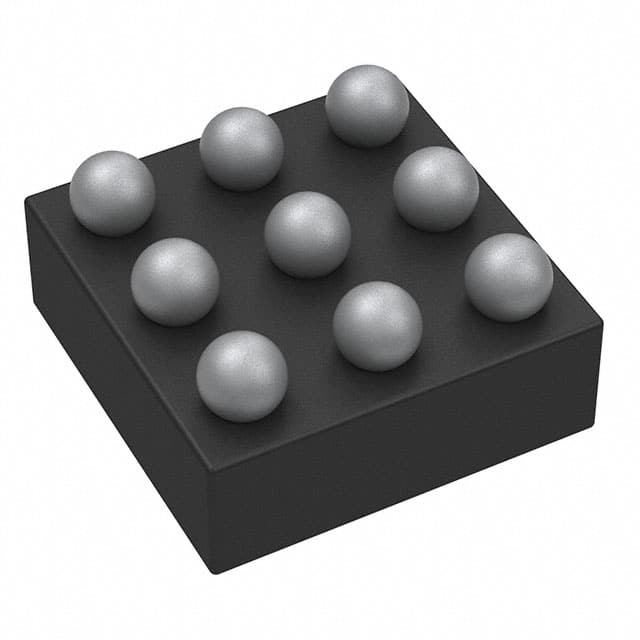
- Part No.:
- NX20P0477UKZ
- Manufacturer:
- NXP Semiconductors
- Category:
- Surge Suppression Ics
- Package:
- 9-UFBGA, WLCSP
- Datasheet:
-
 NX20P0477UKZ.pdf
- Description:
- USB TYPE-C CORROSION PREVENTION
- Quantity:
- Payment:

- Shipping:

Inventory:9,799
Please send an inquiry. Send us your inquiry, and we will respond immediately.
Product details
Overview
NX20P0477UKZ from NXP Semiconductors is a single-chip USB Type-C CC line overvoltage protection IC with integrated anti-moisture corrosion prevention. It provides 28 V DC tolerance on CON_CC1/CON_CC2, 60 ns OVP turn-off time, <1 µA CC1/CC2 leakage current, and operates across –40°C to +85°C in a WLCSP-9 package. It protects smartphone and tablet port controllers from VBUS-induced shorts and moisture-triggered electrochemical corrosion.
For engineers reviewing the NX20P0477UKZ datasheet, NX20P0477UKZ pinout, NX20P0477UKZ application, or NX20P0477UKZ equivalent, key selection criteria include its 250 mΩ RDS(ON), ±40 V surge rating on CC lines, IEC 61000-4-2 ESD immunity (8 kV contact / 15 kV air), ultra-low 2.5 µA standby current source, and tap-water detection logic that holds FLAGB low during moisture events.
Technical Context
The NX20P0477UKZ integrates dual bidirectional analog switches between system-side CC1/CC2 and connector-side CON_CC1/CON_CC2, each with 250 mΩ RDS(ON) and fast 60 ns overvoltage disconnect response. Its internal current source delivers 2.5 µA (typical) during standby-replacing standard USB-PD Rp currents (80/180/330 µA)-to suppress galvanic corrosion in humid environments.
It implements a three-stage detection sequence (startup, standby, tap water detection) with TSRC_WAIT and TCC_DEB timing windows, enabling reliable water presence identification via voltage ramp monitoring on CON_CC pins. The Rd clamp circuit ensures safe operation during dead-battery conditions, while FLAGB provides open-drain fault signaling.
Key Specifications
| Parameter | Value and Actual Design Meaning |
|---|---|
| OVP Threshold | 28 V DC tolerance on CON_CC pins-prevents damage from VBUS short-circuit coupling into CC lines. |
| OVP Response Time | 60 ns turn-off-ensures immediate switch isolation before transient overvoltage damages downstream CC/PD controller. |
| CC Leakage Current | <1 µA at CC1/CC2-minimizes false sink detection and preserves battery life in always-on port monitoring. | RDS(ON) | 250 mΩ-enables low insertion loss for USB-PD communication signals without signal integrity degradation. |
| ESD Rating | IEC 61000-4-2: 8 kV contact / 15 kV air-meets industrial-grade robustness for exposed Type-C connectors. |
| Surge Protection | ±40 V on CON_CC1/CON_CC2-handles high-energy transients from hot-plug or cable discharge events. |
| Operating Temp | –40°C to +85°C-supports full functionality in consumer handheld thermal envelopes. |
Pinout & Package
Package: WLCSP-9, 1.49 × 1.49 × 0.555 mm, 0.4 mm pitch, bottom-side solder bumps.
| Pin/Terminal | Circuit Role | Design Meaning |
|---|---|---|
| CON_CC1 | Connector-side CC1 terminal | Direct interface to USB Type-C receptacle CC1 pin; rated for 28 V DC and ±40 V surge. |
| CON_CC2 | Connector-side CC2 terminal | Direct interface to USB Type-C receptacle CC2 pin; identical protection and tolerance as CON_CC1. |
| CC1 | System-side CC1 terminal | Connects to CC/PD controller's CC1 input; isolated from CON_CC1 during OVP or moisture detection. |
| CC2 | System-side CC2 terminal | Connects to CC/PD controller's CC2 input; independently switched and protected like CC1. |
| VSYS | System power supply input | Valid operating range 2.7 V to 5.5 V; powers internal logic and switches; UVLO threshold enables shutdown below VSYSUVLO. |
| FLAGB | Open-drain fault indicator | Pulled low during OVP event or detected moisture; requires external pull-up for host interrupt or status monitoring. |
| GND | Ground reference | Common return path for all analog and digital functions; must be low-impedance connection to system ground plane. |
| CP_EN | Charge pump enable control | Active-high input enabling internal charge pump for gate drive; tied high or controlled by system for power sequencing. |
| NC | No-connect bump | Unused die pad; left floating or grounded per layout guidelines-no electrical function. |
Key Features
| Feature | Design Value |
|---|---|
| Anti-moisture corrosion algorithm | Replaces standard 80/180/330 µA Rp currents with 2.5 µA typ. current source-reducing galvanic ion migration in humid or wet environments. |
| Tap water detection logic | Monitors CON_CC voltage ramp during TSRC_WAIT and TCC_DEB windows to distinguish water from valid sink attachment-holds switches off and asserts FLAGB. |
| Dual independent CC switches | Separate 250 mΩ RDS(ON) paths for CC1 and CC2-enables asymmetric fault handling and prevents cross-line coupling during faults. |
| Rd clamp in dead-battery mode | Prevents reverse current flow and maintains safe biasing when VSYS = 0 V-ensuring no unintended conduction during battery removal or deep discharge. |
| Ultra-fast OVP response | 60 ns switch disable time-limits energy delivered to downstream CC/PD controller during VBUS-to-CC short events. |
Applications
| Smartphone Charging Port Protection | Tablet USB-C Docking Interface |
|---|---|
Use Scenario: Exposed USB-C port subjected to frequent hot-plug, condensation, and accidental liquid exposure in handheld use. IC Role / Device Role / Timing Role: Dual-channel CC line protector and moisture detector-intercepts VBUS-coupled transients and disables CC path within 60 ns while flagging water presence. Use Value: Prevents electrochemical corrosion of CC pins and avoids false sink detection caused by tap water, extending port lifetime beyond 10,000 insertion cycles. | Use Scenario: Tablet docked to multi-port USB-C hub where CC lines experience repeated plug/unplug and potential moisture ingress at hinge or port seam. IC Role / Device Role / Timing Role: System-side CC isolator with Rd clamp-maintains safe biasing during battery depletion and enables rapid reconnection after undocking. Use Value: Eliminates need for mechanical port covers or conformal coating while meeting IEC 61000-4-2 Level 4 ESD requirements on exposed CC pins. |
| Portable Medical Monitor USB-C Interface | USB-C Audio Dongle with IPX4 Rating |
Use Scenario: Clinical-grade portable monitor used in humid hospital environments with frequent cleaning using alcohol wipes near USB-C service port. IC Role / Device Role / Timing Role: Corrosion-prevention current source manager-reduces CC line current to 2.5 µA during idle to inhibit electrolytic degradation of gold-plated contacts. Use Value: Maintains reliable PD negotiation after 2+ years of clinical use without contact resistance drift or intermittent CC communication failure. | Use Scenario: Compact USB-C to 3.5 mm audio adapter exposed to sweat and light rain during outdoor use. IC Role / Device Role / Timing Role: Surge-protected CC line switch with ±40 V transient immunity-absorbs ESD and cable discharge without latch-up or parameter shift. Use Value: Enables IPX4-compliant design without external TVS diodes on CC lines, reducing BOM count and PCB area by 1.2 mm². |
Equivalent & Alternatives
The following parts are listed as comparable options for similar USB Type-C CC line protection applications.
| Alternative Part | Technical Difference | Application Difference | Selection Advice |
|---|---|---|---|
| TI TPD6S300A | Single-channel, no moisture detection; 30 V OVP; 120 ns response; no programmable current source. | Supports basic OVP/ESD only-lacks corrosion prevention and tap-water detection logic. | Choose for cost-sensitive designs where moisture exposure is negligible and dual-channel isolation is not required. |
| ON Semi NCP392 | Dual-channel, 24 V OVP; 100 ns response; no integrated current source; requires external Rp resistor network. | Relies on external components for sink detection-increases layout complexity and leakage sensitivity. | Choose when existing design uses discrete Rp configuration and board space allows added passives. |
Compared with TPD6S300A and NCP392, the NX20P0477UKZ uniquely integrates tap-water detection, ultra-low 2.5 µA standby current sourcing, and dual independent 28 V/60 ns switches-enabling robust, maintenance-free USB-C port protection in high-humidity consumer and medical devices without external components.
Availability
NX20P0477UKZ is available at Aetrix Electronics and suitable for smartphones, tablets, and portable medical monitors requiring stable component supply, long-term lifecycle support, and compliance with IEC 61000-4-2 ESD and USB-IF Type-C specifications.
Supply support for NX20P0477UKZ includes scheduled delivery planning, volume procurement assistance, BOM continuity management, traceable sourcing, and lifecycle availability coordination for OEM customers, industrial embedded developers, connected-device designers, and electronics production programs.
Manufacturer
NXP Semiconductors is a global semiconductor company headquartered in Eindhoven, Netherlands, specializing in secure connectivity solutions for automotive, industrial, and consumer applications.
The NX20P0477UKZ belongs to NXP's USB Type-C Protection portfolio, designed specifically to address electrochemical corrosion, VBUS-coupled overvoltage, and moisture-induced false sink detection in compact mobile and portable USB-C interfaces.
FAQ
What is the primary function of the NX20P0477UKZ in a USB Type-C system?
The NX20P0477UKZ serves as a dual-channel CC line protection IC that prevents overvoltage damage, electrochemical corrosion, and false sink detection in USB Type-C ports. It actively monitors CON_CC1/CON_CC2 for 28 V transients and moisture, disconnects within 60 ns, and replaces standard Rp currents with a 2.5 µA corrosion-inhibiting source-making it essential for reliable port operation in smartphones and tablets where environmental exposure is common. The NX20P0477UKZ integrates this functionality in a 1.49 mm × 1.49 mm WLCSP package.
How does the NX20P0477UKZ detect tap water on the USB-C connector?
The NX20P0477UKZ detects tap water through a timed voltage-ramp analysis on CON_CC pins. When water bridges the pins, the device enters TSRC_WAIT and then TCC_DEB windows, enabling its internal current source to raise CON_CC voltage. If the resulting ramp profile matches water signature-not a valid sink-the switch remains off and FLAGB is pulled low. This behavior is confirmed in NX20P0477FS REV 0, and the NX20P0477UKZ executes it autonomously without host intervention.
Does the NX20P0477UKZ require external components for basic operation?
No, the NX20P0477UKZ operates autonomously with only VSYS supply and GND-no external resistors, capacitors, or TVS diodes are needed for core OVP, corrosion prevention, or moisture detection. Its integrated 2.5 µA current source, Rd clamp, and ±40 V surge protection eliminate typical external BOM items. However, an external pull-up on FLAGB is required for host notification, and decoupling capacitance (e.g., 1 µF) on VSYS is recommended per NX20P0477FS REV 0. The NX20P0477UKZ is optimized for minimal footprint and maximum integration.
What is the significance of the 250 mΩ RDS(ON) specification in the NX20P0477UKZ?
The 250 mΩ RDS(ON) ensures minimal voltage drop and signal attenuation across the CC path during normal USB-PD communication, preserving signal integrity for Rp/Rd detection and PD message exchange. At typical CC currents (<100 µA), this results in <25 µV drop-well below USB-IF noise margins. Combined with 60 ns OVP response, this low on-resistance enables both high-fidelity signaling and instantaneous fault isolation. The NX20P0477UKZ achieves this while maintaining thermal safety in the 1.49 mm WLCSP package under continuous 5 V operation.
Can the NX20P0477UKZ be used in systems with dead-battery conditions?
Yes, the NX20P0477UKZ includes a dedicated Rd clamp circuit on CON_CC1/CON_CC2 that ensures safe biasing and prevents reverse current flow when VSYS = 0 V-such as during battery removal or deep discharge. This feature maintains port integrity and avoids latch-up or leakage paths that could drain residual battery charge. The NX20P0477UKZ remains in a known-safe state without external supervision, making it suitable for always-connected USB-C accessories and field-serviceable portable devices.
NX20P0477UKZ Specifications
- Product attributes
- Attribute value
- Manufacturer:
- NXP Semiconductors
- Package/Case:
- 9-UFBGA, WLCSP
- Series:
- -
- Packaging:
- Tape & Reel (TR)
- Product Status:
- Active
- Voltage - Clamping:
- 28V
- Technology:
- Internal Switch
- Number of Circuits:
- 2
- Applications:
- -
- Grade:
- -
- Qualification:
- -
- Mounting Type:
- Surface Mount
- Supplier Device Package:
- 9-WLCSP (1.49x1.49)
NX20P0477UKZ FAQ
1.How can I place an order for NX20P0477UKZ through Aetrix?
Please submit a Request for Quotation (RFQ) for NX20P0477UKZ on Aetrix. Our sales agent will provide a competitive quotation and guide you through the order confirmation once you accept the terms.
2.Are the price and stock information for NX20P0477UKZ reliable?
The price and inventory of NX20P0477UKZ are updated periodically and may fluctuate due to market conditions. Stock and pricing data are typically refreshed every 24 hours. Quotation validity for NX20P0477UKZ is usually 5 days.
3.What payment methods are accepted for NX20P0477UKZ?
We accept Wire Transfer, PayPal, Credit Card, Western Union, MoneyGram, and Escrow for NX20P0477UKZ transactions.
Note: Certain payment methods may incur a processing fee.
4.How is shipping managed for NX20P0477UKZ?
NX20P0477UKZ orders can be shipped via leading logistics carriers, including DHL, UPS, FedEx, TNT, or Registered Mail.
Once your NX20P0477UKZ order is processed, you will receive an email with the shipment details and tracking number.
Note: Tracking information may take up to 24 hours to appear. Express delivery typically takes 3–5 business days.
5.How can I obtain technical support or documentation for NX20P0477UKZ?
For technical support, including NX20P0477UKZ datasheets, pinout diagrams, or application guidance, please contact our engineering support team. They can provide detailed documentation and assistance for your NX20P0477UKZ requirements.
6.How does Aetrix verify that NX20P0477UKZ is sourced from the original manufacturer or authorized distributors?
All NX20P0477UKZ products on Aetrix are procured from qualified distributors and authorized channels. Our dedicated quality assurance team conducts strict verification, including traceability checks and, if necessary, third-party testing. This ensures that NX20P0477UKZ meets industry standards.
7.What is the process for return or replacement of NX20P0477UKZ?
All NX20P0477UKZ units undergo pre-shipment inspection (PSI). If there is an issue with NX20P0477UKZ, returns or replacements are accepted under the following conditions:
1.Quantity discrepancies, incorrect items, or visible external defects (such as breakage or corrosion), acknowledged by Aetrix.
2.The issue is reported within 90 days of delivery.
3.The NX20P0477UKZ part is unused and in its original packaging.
Return procedure for NX20P0477UKZ:
1.Submit a request within 90 days.
2.Obtain a Return Material Authorization (RMA) from Aetrix.
NX20P0477UKZ Tags
-
TVS3300DRVR
Texas Instruments

-
TCPP01-M12
STMicroelectronics
-
TPD4S214YFFR
Texas Instruments
-
TPD6S300ARUKR
Texas Instruments
-
TBU-CA085-300-WH
Bourns Inc.
-
TBU-CA065-500-WH
Bourns Inc.
-
TBU-CA040-100-WH
Bourns Inc.
-
TBU-CA085-500-WH
Bourns Inc.
-
TBU-CA085-200-WH
Bourns Inc.
-
NX20P0408UKZ
NXP Semiconductors
-
TBU-CA085-100-WH
Bourns Inc.
-
TBU-CA050-300-WH
Bourns Inc.
Tech Hub

A practical engineering guide to 3.3V and 5V logic compatibility, input thresholds, resistor dividers, translator ICs, MOSFET level shifting, I2C pull-ups, timing limits and power-sequencing risks.

The 74HC595 uses push-pull logic outputs, while the TPIC6B595 uses 50 V open-drain DMOS sinks for higher-power loads. This guide compares timing, current limits, 3.3 V interfacing, load wiring, thermal…

The 74HC595 converts serial data into eight stable parallel outputs. This guide covers pin functions, shift and storage timing, OE and MR behavior, drive-current limits, cascading, voltage compatibilit…

A technical comparison of level-sensitive latches and edge-triggered flip-flops, covering timing windows, setup and hold limits, master–slave operation, time borrowing, race-through, HDL inference and…

A D latch stores one bit while Enable controls when data can pass. This reference covers gate-level operation, truth tables, transparency, setup and hold timing, LE versus OE, common ICs and practical …

An SR latch stores one bit through cross-coupled feedback. This engineering reference covers NOR and NAND implementations, truth tables, forbidden-state recovery, gated operation, switch debouncing, fa…

Latch circuits retain one bit through feedback. This technical reference covers SR and D latches, truth tables, transparency, timing limits, latch-versus-flip-flop behavior, applications and common log…

An engineering guide to LED driver operation, constant-current and constant-voltage outputs, linear and switching topologies, dimming, IC selection, calculations, replacement compatibility, and fault c…

Operational amplifier guide covering op amp basics, feedback, ideal vs real op amps, common configurations, buffer circuits, offset, bias current, gain-bandwidth, slew rate, rail-to-rail limits and sel…

Jumper cables guide covering safe connection order, red and black clamp placement, final ground connection, cable gauge, length, clamp quality, copper vs CCA cables, jump starter comparison and battery…


