Send an Inquiry

To receive a quote for your project, please fill in the following information, and we’ll get back to you promptly.

Name*
Company*
Email Address*
Phone/WhatsApp
Part Number*
Quantity*
Message
Submit Inventory List

Please fill in the following information, and we’ll get back to you promptly.

Name*
Company*
Email Address*
Phone/WhatsApp
Upload My List
Message

Vishay General Semiconductor - Diodes Division P4KA9.1AHE3/73
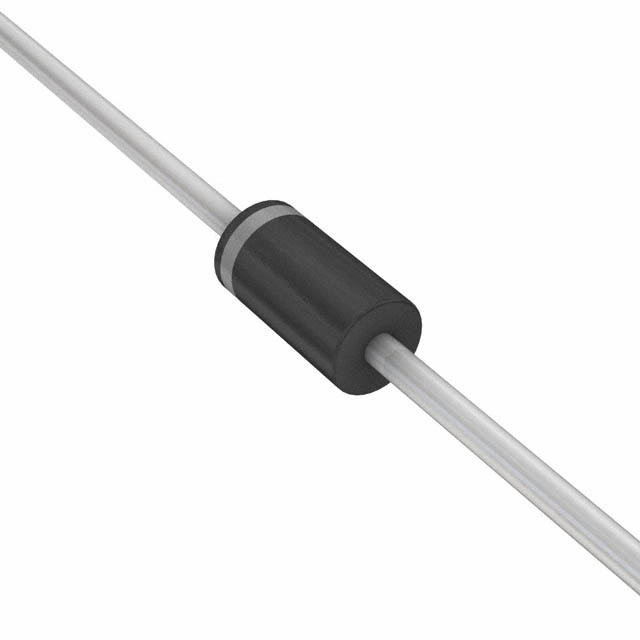
Part No.:
P4KA9.1AHE3/73
Manufacturer:
Vishay General Semiconductor - Diodes Division
Category:
TVS Diodes
Package:
DO-204AL, DO-41, Axial
Datasheet:
AetrixP4KA9.1AHE3/73.pdf
Description:
TVS DIODE 7.78VWM 13.4VC DO204AL
Quantity:
Payment:
Payment
Shipping:
Shipping

Inventory:7,723

Please send an inquiry. Send us your inquiry, and we will respond immediately.

Part Number
Quantity*
Price
Name*
Company
Email*
Comments

Product details

Overview

P4KA9.1AHE3/73 from Vishay General Semiconductor is a unidirectional automotive-grade transient voltage suppressor (TVS) diode in DO-204AL (DO-41) package, with 9.55 V maximum breakdown voltage (VBR), 13.4 V clamping voltage (VC) at 29.9 A peak pulse current, and 400 W peak pulse power rating under 10/1000 µs waveform - designed for robust protection of automotive sensor signal lines and MOSFET gate drivers against load dump and inductive switching transients.

For engineers reviewing the P4KA9.1AHE3/73 datasheet, P4KA9.1AHE3/73 pinout, P4KA9.1AHE3/73 application, or P4KA9.1AHE3/73 equivalent, key selection criteria include AEC-Q101 qualification, ±0.068 %/°C VBR temperature coefficient, 7.78 V stand-off voltage (VWM), 10 µA max reverse leakage at VWM, and compatibility with high-reliability soldering per J-STD-002 and JESD22-B102.

Technical Context

The P4KA9.1AHE3/73 employs Vishay's patented PAR® construction to achieve low incremental surge resistance and fast response time (<1 ns), enabling effective suppression of fast-rising transients such as ISO 7637-2 Pulse 1 and Pulse 2a. Its unidirectional polarity and 185 °C maximum junction temperature support operation in under-hood automotive environments.

Rated for 400 W peak pulse power (10/1000 µs), it delivers 29.9 A IPPM while maintaining 13.4 V clamping voltage - critical for protecting 12 V automotive electronics without over-clamping into functional interruption. The device is qualified to AEC-Q101 and meets RoHS 2002/95/EC and WEEE 2002/96/EC.

Key Specifications

Parameter Value and Actual Design Meaning
Breakdown Voltage VBR 8.65–9.55 V at 1.0 mA - defines precise voltage threshold where avalanche conduction begins, ensuring reliable triggering before downstream IC damage.
Clamping Voltage VC 13.4 V at 29.9 A IPPM - limits transient voltage seen by protected circuitry, staying safely below typical 15 V absolute maximum ratings of automotive MCUs and transceivers.
Stand-off Voltage VWM 7.78 V - maximum continuous reverse working voltage; allows safe operation across nominal 5–7 V signal rails without leakage-induced power loss.
Peak Pulse Power PPPM 400 W (10/1000 µs) - sustains high-energy transients like load dump surges without thermal runaway, validated per ANSI/IEEE C62.35.
Junction Temperature Range −65 °C to +185 °C - enables deployment in engine control units (ECUs), body control modules (BCMs), and ADAS sensors exposed to extreme ambient conditions.
Temperature Coefficient of VBR +0.068 %/°C - ensures predictable voltage shift over temperature, supporting stable protection margins in wide-range thermal environments.
Reverse Leakage ID ≤10 µA at VWM, TJ = 150 °C - minimizes standby current drain in always-on automotive subsystems such as CAN wake-up receivers.

Pinout & Package

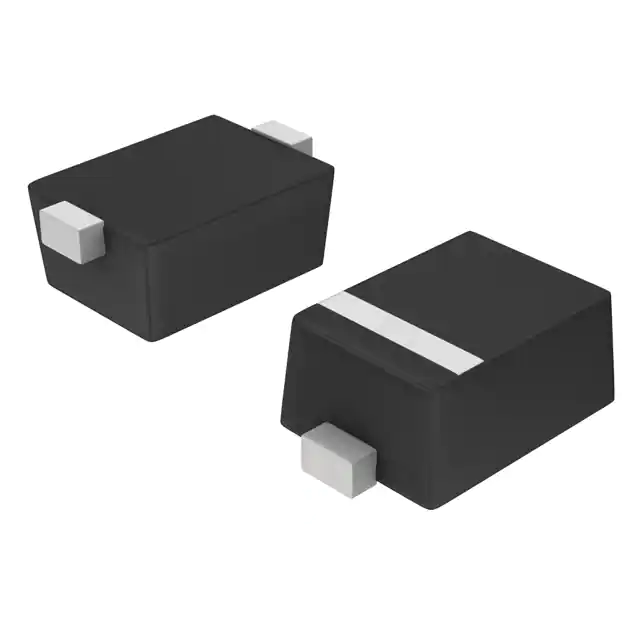
Package: DO-204AL (DO-41), molded epoxy case with matte tin-plated leads; cathode indicated by color band; UL 94 V-0 rated molding compound.

Pin/Terminal Circuit Role Design Meaning
Anode Current entry during forward conduction; connected to ground or low-side reference in unidirectional TVS configuration Enables standard cathode-to-line placement for clamping transients to GND; supports common automotive grounding schemes.
Cathode Transient voltage sensing and clamping node; connected to protected line (e.g., sensor output or MOSFET gate) Color-banded end provides unambiguous polarity identification during manual assembly and automated optical inspection (AOI).

Key Features

Feature Design Value
Patented PAR® construction Reduces incremental surge resistance for tighter clamping and improved energy handling consistency across repetitive transients.
AEC-Q101 qualification Validates reliability under automotive stress conditions including temperature cycling, mechanical shock, and humidity testing - required for safety-critical ECUs.
10/1000 µs waveform rating Matches real-world automotive surge profiles (e.g., ISO 7637-2), enabling direct comparison with system-level test requirements.
Solderable per J-STD-002/JESD22-B102 Supports lead-free reflow and wave soldering up to 260 °C for 40 s, ensuring compatibility with modern automotive PCB assembly lines.
JESD201 Class 2 whisker resistance Prevents tin whisker growth under thermal/humidity stress, eliminating latent field failures in long-life automotive applications.

Applications

Automotive Sensor Protection Powertrain Control Module (PCM) Input Protection

Use Scenario: Protecting analog outputs of pressure, temperature, and position sensors in engine bay environments subject to load dump and alternator ripple.

IC Role / Device Role / Timing Role: Unidirectional TVS clamping transient spikes on sensor signal lines to prevent latch-up or input-stage damage in ADC front-ends.

Use Value: Maintains signal integrity with ≤10 µA leakage at 7.78 V VWM, ensuring minimal offset error in precision 12-bit sensor interfaces.

Use Scenario: Safeguarding digital inputs (e.g., crankshaft/camshaft position signals) and PWM-controlled actuator drivers in PCM boards.

IC Role / Device Role / Timing Role: Fast-response (sub-ns) clamping of inductive kickback from solenoid and injector drivers.

Use Value: 13.4 V clamping at 29.9 A prevents overvoltage on 5 V logic inputs while surviving >1000 surge events per AEC-Q101 lifetime testing.

Body Control Module (BCM) LIN Bus Protection ADAS Camera Module Power Rail Protection

Use Scenario: Shielding LIN transceiver pins from ESD and cable discharge events in door modules and seat controllers.

IC Role / Device Role / Timing Role: Standby-mode TVS absorbing 8 kV contact ESD per IEC 61000-4-2 without affecting 19.2 kbps data timing.

Use Value: Low capacitance (<50 pF at VWM, inferred from family curve Fig. 4) avoids signal edge degradation on LIN bus lines.

Use Scenario: Protecting 12 V camera power input against jump-start surges and battery reversal transients in rear-view and surround-view systems.

IC Role / Device Role / Timing Role: Primary overvoltage clamp on main supply rail upstream of DC/DC converters and image sensors.

Use Value: 400 W peak power rating handles 12 V system load dump (ISO 16750-2) without failure, verified at TJ = 150 °C.

Equivalent & Alternatives

The following parts are listed as comparable options for similar transient voltage suppression applications.

Alternative Part Technical Difference Application Difference Selection Advice
SMAJ9.0A Lower peak pulse power (400 W same), but higher VC = 14.4 V at 27.8 A; non-AEC-Q101; DO-214AC package Lacks automotive qualification and has larger footprint; suitable only for industrial/commercial designs with relaxed reliability requirements Select SMAJ9.0A only if AEC-Q101 is not mandated and board space permits SMC/SMA package conversion.
1.5KE9.1A Same VBR range (8.65–9.55 V), but higher VC = 15.0 V at 26.7 A; 1500 W rating; DO-201 package; no AEC-Q101 Higher clamping voltage risks violating 15 V abs-max limits of protected ICs; larger DO-201 case incompatible with DO-41 footprints Choose 1.5KE9.1A only when higher energy absorption is needed and layout allows larger package; not drop-in compatible.

Compared with SMAJ9.0A and 1.5KE9.1A, the P4KA9.1AHE3/73 uniquely combines AEC-Q101 qualification, DO-41 footprint compatibility, and lowest clamping voltage (13.4 V) in its VBR class - making it the only option for space-constrained, safety-compliant automotive signal line protection.

Availability

P4KA9.1AHE3/73 is available at Aetrix Electronics and suitable for automotive sensor protection, powertrain control module (PCM) input safeguarding, and body control module (BCM) LIN bus hardening requiring stable component supply across multi-year vehicle production cycles.

Supply support for P4KA9.1AHE3/73 includes scheduled delivery planning, volume procurement assistance, BOM continuity management, traceable sourcing, and lifecycle availability coordination for OEM customers, industrial embedded developers, connected-device designers, and electronics production programs.

Manufacturer

Vishay General Semiconductor is a global leader in discrete semiconductors, specializing in high-reliability diodes, rectifiers, and protection devices for automotive, industrial, and computing markets.

The P4KA9.1AHE3/73 belongs to Vishay's automotive-grade TVS diode family engineered specifically for AEC-Q101 compliance and under-hood transient immunity - targeting ECU, BCM, and ADAS subsystems where failure is not an option.

FAQ

What is the maximum clamping voltage of the P4KA9.1AHE3/73 under specified test conditions?

The P4KA9.1AHE3/73 has a maximum clamping voltage (VC) of 13.4 V at 29.9 A peak pulse current (IPPM) using the standardized 10/1000 µs waveform. This value is measured per ANSI/IEEE C62.35 and guarantees that protected circuits see no more than 13.4 V during surge events - well within the safe operating range of most 12 V automotive ICs.

Is the P4KA9.1AHE3/73 qualified for automotive use per industry standards?

Yes, the P4KA9.1AHE3/73 is AEC-Q101 qualified and designated as high-reliability/automotive grade (HE3 suffix). It meets RoHS 2002/95/EC and WEEE 2002/96/EC directives, and its construction, testing, and packaging comply with automotive environmental stress requirements including temperature cycling, humidity, and mechanical shock.

What does the "HE3" suffix indicate in P4KA9.1AHE3/73?

The "HE3" suffix in P4KA9.1AHE3/73 denotes RoHS-compliant, high-reliability/automotive-grade construction meeting JESD201 Class 2 whisker resistance and solderability per J-STD-002 and JESD22-B102. It confirms full AEC-Q101 qualification and UL 94 V-0 flammability rating of the epoxy molding compound.

Can the P4KA9.1AHE3/73 be used in bidirectional configurations?

No, the P4KA9.1AHE3/73 is available in uni-directional polarity only, as explicitly stated in the Vishay datasheet. For bidirectional transient suppression, engineers must select a dedicated bi-directional TVS such as the P4SMA9.0A or equivalent - the P4KA9.1AHE3/73 cannot be reverse-connected to achieve symmetrical clamping.

What is the stand-off voltage (VWM) and why is it important for P4KA9.1AHE3/73 applications?

The P4KA9.1AHE3/73 has a stand-off voltage (VWM) of 7.78 V - the maximum continuous reverse voltage it can block without significant leakage. This parameter ensures compatibility with 5 V and 7.5 V signal rails, preventing false triggering while allowing safe operation near nominal supply levels in automotive sensor and communication interfaces.

P4KA9.1AHE3/73 Specifications

Product attributes
Attribute value
Manufacturer:
Vishay General Semiconductor - Diodes Division
Package/Case:
DO-204AL, DO-41, Axial
Series:
PAR®
Packaging:
Tape & Box (TB)
Product Status:
Obsolete
Type:
Zener
Unidirectional Channels:
1
Bidirectional Channels:
-
Voltage - Reverse Standoff (Typ):
7.78V
Voltage - Breakdown (Min):
8.65V
Voltage - Clamping (Max) @ Ipp:
13.4V
Current - Peak Pulse (10/1000µs):
29.9A
Power - Peak Pulse:
400W
Power Line Protection:
No
Applications:
-
Capacitance @ Frequency:
-
Operating Temperature:
-65°C ~ 185°C (TJ)
Grade:
Automotive
Qualification:
AEC-Q101
Mounting Type:
Through Hole
Supplier Device Package:
DO-204AL (DO-41)

P4KA9.1AHE3/73 FAQ

1.How can I place an order for P4KA9.1AHE3/73 through Aetrix?

Please submit a Request for Quotation (RFQ) for P4KA9.1AHE3/73 on Aetrix. Our sales agent will provide a competitive quotation and guide you through the order confirmation once you accept the terms.

2.Are the price and stock information for P4KA9.1AHE3/73 reliable?

The price and inventory of P4KA9.1AHE3/73 are updated periodically and may fluctuate due to market conditions. Stock and pricing data are typically refreshed every 24 hours. Quotation validity for P4KA9.1AHE3/73 is usually 5 days.

3.What payment methods are accepted for P4KA9.1AHE3/73?

We accept Wire Transfer, PayPal, Credit Card, Western Union, MoneyGram, and Escrow for P4KA9.1AHE3/73 transactions.

Note: Certain payment methods may incur a processing fee.

4.How is shipping managed for P4KA9.1AHE3/73?

P4KA9.1AHE3/73 orders can be shipped via leading logistics carriers, including DHL, UPS, FedEx, TNT, or Registered Mail.

Once your P4KA9.1AHE3/73 order is processed, you will receive an email with the shipment details and tracking number.

Note: Tracking information may take up to 24 hours to appear. Express delivery typically takes 3–5 business days.

5.How can I obtain technical support or documentation for P4KA9.1AHE3/73?

For technical support, including P4KA9.1AHE3/73 datasheets, pinout diagrams, or application guidance, please contact our engineering support team. They can provide detailed documentation and assistance for your P4KA9.1AHE3/73 requirements.

6.How does Aetrix verify that P4KA9.1AHE3/73 is sourced from the original manufacturer or authorized distributors?

All P4KA9.1AHE3/73 products on Aetrix are procured from qualified distributors and authorized channels. Our dedicated quality assurance team conducts strict verification, including traceability checks and, if necessary, third-party testing. This ensures that P4KA9.1AHE3/73 meets industry standards.

7.What is the process for return or replacement of P4KA9.1AHE3/73?

All P4KA9.1AHE3/73 units undergo pre-shipment inspection (PSI). If there is an issue with P4KA9.1AHE3/73, returns or replacements are accepted under the following conditions:

1.Quantity discrepancies, incorrect items, or visible external defects (such as breakage or corrosion), acknowledged by Aetrix.

2.The issue is reported within 90 days of delivery.

3.The P4KA9.1AHE3/73 part is unused and in its original packaging.

Return procedure for P4KA9.1AHE3/73:

1.Submit a request within 90 days.

2.Obtain a Return Material Authorization (RMA) from Aetrix.

P4KA9.1AHE3/73 Tags
  • P4KA9.1AHE3/73
  • P4KA9.1AHE3/73 PDF
  • P4KA9.1AHE3/73 Datasheet
  • P4KA9.1AHE3/73 Specifications
  • P4KA9.1AHE3/73 Images
  • Vishay General Semiconductor - Diodes Division
  • Vishay General Semiconductor - Diodes Division P4KA9.1AHE3/73
  • Buy P4KA9.1AHE3/73
  • P4KA9.1AHE3/73 Price
  • P4KA9.1AHE3/73 Distributor
  • P4KA9.1AHE3/73 Supplier
  • P4KA9.1AHE3/73 Wholesale
Related Products
ESD9B5.0ST5G
ESD9B5.0ST5G

onsemi

DESD3V3E1BL-7B
DESD3V3E1BL-7B

Diodes Incorporated

ESD5Z3.3T1G
ESD5Z3.3T1G

onsemi

D5V0H1B2LP-7B
D5V0H1B2LP-7B

Diodes Incorporated

D5V0P1B2LP-7B
D5V0P1B2LP-7B

Diodes Incorporated

DESD5V0U1BA-7
DESD5V0U1BA-7

Diodes Incorporated

ESD5Z5.0T1G
ESD5Z5.0T1G

onsemi

DESD5V0U1BB-7
DESD5V0U1BB-7

Diodes Incorporated

D12V0L1B2LP-7B
D12V0L1B2LP-7B

Diodes Incorporated

PESD2V0Y1BSFYL
PESD2V0Y1BSFYL

Nexperia USA Inc.

DF2S5M4CT,L3F
DF2S5M4CT,L3F

Toshiba Semiconductor and Storage

D5V0L1B2WS-7
D5V0L1B2WS-7

Diodes Incorporated

Tech Hub

Search

Search

PRODUCT

PRODUCT

PHONE

PHONE

USER

USER