
 My Inquiry
 My Account


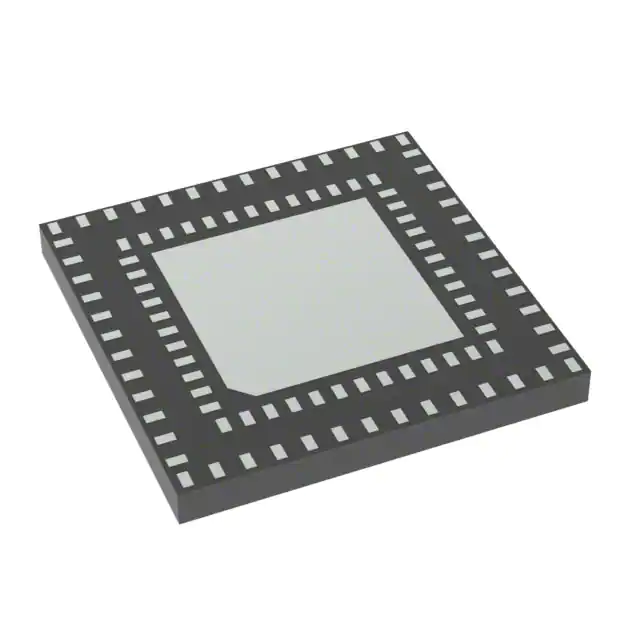
Renesas P9145-I0NQGI
- Part No.:
- P9145-I0NQGI
- Manufacturer:
- Renesas
- Category:
- Power Management - Specialized
- Package:
- 100-VFQFN Dual Rows, Exposed Pad
- Datasheet:
-
 P9145-I0NQGI.pdf
- Description:
- IC PMIC PWR MGMT MULTI-CH
- Quantity:
- Payment:

- Shipping:

Inventory:3,413
Please send an inquiry. Send us your inquiry, and we will respond immediately.
Product details
Overview
P9145-I0NQGI from Integrated Device Technology is a programmable multi-channel PMIC for Intel® Atom™ SoCs, integrating seven current-mode step-down converters (up to 2 MHz switching), seven general-purpose LDOs, SVID interface compliant with IMVP7 protocol, 10-bit ADC, and 16 GPIOs - deployed in client computing power delivery subsystems.
For engineers reviewing the P9145-I0NQGI datasheet, P9145-I0NQGI pinout, P9145-I0NQGI application, or P9145-I0NQGI equivalent, key selection factors include SVID-controlled VCC/VNN/VDDQ rail management, OTP-programmable power sequencing, scalable output current via IDTP9147 add-on sources, and high-speed I²C host interface support.
Technical Context
The P9145-I0NQGI implements dual-interface control: SVID handles real-time voltage ID negotiation and system control signals for VCC, VNN, and VDDQ rails per IMVP7, while high-speed I²C manages configuration, monitoring, and non-volatile OTP programming of power sequences and settings. It supports distributed architecture via dedicated interface for IDTP9147 add-on power sources.
Power regulation includes seven synchronous buck converters operating at 2.0 MHz with current-mode control, seven independent LDOs, 12 programmable enable outputs, and integrated 10-bit ADC for system telemetry - all coordinated through centralized state-machine-based power sequencing logic.
Key Specifications
| Parameter | Value and Actual Design Meaning |
|---|---|
| Input Voltage Range | 4.5 V to 5.5 V - supports standard 5 V system rail with ±10% tolerance for robustness against supply variation. |
| Switching Frequency | 2.0 MHz - enables use of compact external inductors and capacitors, reducing solution footprint in space-constrained Atom SoC platforms. |
| Buck Regulators | 7 channels - provides independent, current-mode controlled DC/DC conversion for core, memory, and I/O rails in Intel Atom systems. |
| LDO Regulators | 7 channels - delivers low-noise, fast-transient auxiliary supplies for analog, reference, or always-on circuitry without switching noise coupling. |
| SVID Compliance | IMVP7 - enables dynamic voltage scaling and bidirectional communication with Intel Atom SoC for precise VCC/VNN/VDDQ rail control. |
| I²C Interface | High-speed mode (up to 3.4 Mbps) - allows rapid configuration updates, telemetry reads, and OTP programming during system initialization or runtime. |
| ADC Resolution | 10-bit - provides sufficient granularity for monitoring input/output voltages, temperatures, or current sense signals across multiple rails. |
Pinout & Package
Package: 100-lead 8 mm × 8 mm dual-row QFN (VFQFPN, NQG100 package code), exposed thermal pad, RoHS-compliant, industrial temperature grade (–40°C to +85°C).
| Pin/Terminal | Circuit Role | Design Meaning |
|---|---|---|
| VIN | Main input supply | Accepts 4.5–5.5 V system rail; powers internal LDOs and buck controller bias circuits. |
| SVID_SCLK / SVID_SDATA | IMVP7 serial interface | Dedicated two-wire bus for real-time voltage ID negotiation and system control signal exchange with Intel Atom SoC. |
| I2C_SDA / I2C_SCL | High-speed I²C interface | Configures PMIC registers, reads ADC/GPIO status, programs OTP settings, and monitors fault conditions. |
| EN_BUCKx / EN_LDOx | Programmable enable outputs | 12 individually controllable outputs for sequencing power-up/down of downstream regulators or system blocks. |
| GPIO[15:0] | General-purpose I/O | 16 bidirectional pins configurable as inputs (with pull-up/down), outputs, or interrupt sources for board-level signaling. |
Key Features
| Feature | Design Value |
|---|---|
| OTP-programmable power sequence | Enables field-agnostic boot order and timing for all 7 bucks, 7 LDOs, and 12 enables - eliminating need for external sequencer or firmware intervention. |
| Scalable output current architecture | Supports parallel operation with IDTP9147 add-on distributed power sources to increase total current capability beyond monolithic limits. |
| Integrated 10-bit ADC | Monitors up to 16 analog inputs (e.g., rail voltages, die temperature, current sense) without requiring external sensor ICs or ADCs. |
| IMVP7-compliant SVID interface | Directly interfaces with Intel Atom SoC for dynamic VCC/VNN/VDDQ voltage scaling, margining, and fault reporting per specification. |
| High-speed I²C host interface | Enables real-time telemetry, dynamic reconfiguration, and secure OTP updates during system operation or manufacturing test. |
Applications
| Intel Atom Client Platform Power Delivery | Embedded Computing Power Subsystem |
|---|---|
Use Scenario: Powering Intel Atom Z3000-series SoCs in fanless tablets and ultra-thin notebooks with strict thermal and area constraints. IC Role / Device Role / Timing Role: Centralized PMIC managing VCC, VNN, VDDQ, and auxiliary rails via SVID and I²C, coordinating sequencing with SoC boot requirements. Use Value: Reduces BOM count by integrating 7 bucks + 7 LDOs + ADC + GPIOs + sequencer, while enabling IMVP7-compliant dynamic voltage scaling. | Use Scenario: Supplying multiple voltage domains in ruggedized industrial gateways with extended temperature operation and remote firmware update capability. IC Role / Device Role / Timing Role: Primary power controller handling cold-boot sequencing, brown-out detection, and telemetry reporting over I²C to host MCU. Use Value: OTP-programmed default sequence ensures reliable startup without host software dependency; 16 GPIOs support custom reset, watchdog, or status signaling. |
| Scalable Distributed Power Node | Low-Power IoT Edge Controller |
Use Scenario: Serving as master PMIC in modular compute modules where additional current is added via IDTP9147 daughterboards for higher-performance configurations. IC Role / Device Role / Timing Role: Host controller for distributed architecture - configures and monitors IDTP9147 units via dedicated interface while maintaining synchronized sequencing. Use Value: Enables flexible SKU differentiation (e.g., base vs. performance variant) using same mainboard layout and firmware, lowering NRE and inventory complexity. | Use Scenario: Powering ARM-based edge AI controllers with mixed-signal peripherals requiring clean, sequenced, and monitored supplies. IC Role / Device Role / Timing Role: Multi-rail regulator and system manager - supplies core, memory, and analog rails while providing ADC-based thermal supervision and GPIO-driven wake-on-event. Use Value: Eliminates discrete supervisor + ADC + sequencer ICs; 10-bit ADC resolution supports accurate battery voltage and temperature tracking in battery-backed designs. |
Equivalent & Alternatives
The following parts are listed as comparable options for similar multi-channel PMIC applications.
| Alternative Part | Technical Difference | Application Difference | Selection Advice |
|---|---|---|---|
| RTQ2136B-QA | 6-channel buck + 4-channel LDO; no SVID interface; supports I²C only; lower integration (no ADC, fewer GPIOs) | Targeted at automotive infotainment SoCs (AEC-Q100 Grade 2); lacks IMVP7 compliance and distributed power extension | Select when automotive qualification and functional safety features outweigh need for Intel-specific SVID control. |
| TPS6521905RSLR | 6-buck + 4-LDO + 10-bit ADC + 12 GPIOs; supports I²C and PMBus; no SVID; fixed internal sequencing (non-OTP) | Optimized for TI Sitara AM6x processors; uses PMBus for telemetry; no native Intel SoC protocol support | Prefer for Sitara-based designs requiring PMBus compatibility and pre-validated thermal management profiles. |
Compared with RTQ2136B-QA and TPS6521905RSLR, the P9145-I0NQGI uniquely delivers IMVP7 SVID compliance, OTP-programmable sequencing, and IDTP9147 scalability - making it irreplaceable for Intel Atom client platforms requiring full specification alignment and modular power expansion.
Availability
P9145-I0NQGI is available at Aetrix Electronics and suitable for Intel Atom client platforms, embedded computing power subsystems, scalable distributed power nodes, and low-power IoT edge controllers requiring stable component supply and long-term industrial-grade availability.
Supply support for P9145-I0NQGI includes scheduled delivery planning, volume procurement assistance, BOM continuity management, traceable sourcing, and lifecycle availability coordination for OEM customers, industrial embedded developers, connected-device designers, and electronics production programs.
Manufacturer
Integrated Device Technology (IDT), now part of Renesas Electronics, is a fabless semiconductor company specializing in timing, memory interface, RF, wireless power, and power management solutions.
The IDTP9145 product line targets Intel Atom SoC platforms, delivering highly integrated, SVID-compliant, and field-programmable power management to reduce board area, BOM cost, and firmware overhead in client and embedded computing.
FAQ
What is the primary function of the P9145-I0NQGI in Intel Atom systems?
The P9145-I0NQGI serves as the central power management IC for Intel Atom SoCs, providing regulated voltage rails (7 bucks + 7 LDOs), IMVP7-compliant SVID communication for VCC/VNN/VDDQ control, OTP-programmable sequencing, and system telemetry via its 10-bit ADC and 16 GPIOs. Its design directly supports Intel's power architecture requirements without external sequencers or supervisors.
Does the P9145-I0NQGI support distributed power scaling, and how is it implemented?
Yes, the P9145-I0NQGI supports distributed power scaling through a dedicated interface for IDTP9147 add-on power sources. This allows system designers to increase total output current capacity beyond the monolithic limits of the P9145-I0NQGI alone, enabling flexible SKU differentiation while retaining identical mainboard layout and firmware.
What interfaces does the P9145-I0NQGI provide, and what are their roles?
The P9145-I0NQGI provides two critical interfaces: an IMVP7-compliant SVID interface (SVID_SCLK/SVID_SDATA) for real-time voltage ID negotiation and system control with the Intel Atom SoC, and a high-speed I²C interface (I2C_SDA/I2C_SCL) for configuration, telemetry readback, OTP programming, and fault monitoring - both essential for full system power management.
Is the power sequencing behavior of the P9145-I0NQGI fixed or programmable?
The power sequencing behavior of the P9145-I0NQGI is fully OTP-programmable. Users can define custom startup/shutdown order, timing delays, and dependency relationships for all 7 buck regulators, 7 LDOs, and 12 enable outputs - stored in on-chip one-time-programmable memory, ensuring deterministic behavior without host CPU involvement during boot.
What package type and thermal characteristics does the P9145-I0NQGI use?
The P9145-I0NQGI uses a 100-lead 8 mm × 8 mm dual-row VFQFPN package (NQG100 code) with an exposed thermal pad. It is rated for industrial temperature range (–40°C to +85°C), supports RoHS compliance, and is optimized for efficient heat dissipation in compact client and embedded platforms where airflow is limited.
P9145-I0NQGI Specifications
- Product attributes
- Attribute value
- Manufacturer:
- Renesas
- Series:
- -
- Package/Case:
- 100-VFQFN Dual Rows, Exposed Pad
- Packaging:
- Tube
- Product Status:
- Obsolete
- Applications:
- Processor-Based Systems
- Current - Supply:
- -
- Voltage - Supply:
- 4.5V ~ 5.5V
- Operating Temperature:
- -40°C ~ 85°C
- Grade:
- -
- Qualification:
- -
- Mounting Type:
- Surface Mount
- Supplier Device Package:
- 100-VFQFPN (8x8)
P9145-I0NQGI FAQ
1.How can I place an order for P9145-I0NQGI through Aetrix?
Please submit a Request for Quotation (RFQ) for P9145-I0NQGI on Aetrix. Our sales agent will provide a competitive quotation and guide you through the order confirmation once you accept the terms.
2.Are the price and stock information for P9145-I0NQGI reliable?
The price and inventory of P9145-I0NQGI are updated periodically and may fluctuate due to market conditions. Stock and pricing data are typically refreshed every 24 hours. Quotation validity for P9145-I0NQGI is usually 5 days.
3.What payment methods are accepted for P9145-I0NQGI?
We accept Wire Transfer, PayPal, Credit Card, Western Union, MoneyGram, and Escrow for P9145-I0NQGI transactions.
Note: Certain payment methods may incur a processing fee.
4.How is shipping managed for P9145-I0NQGI?
P9145-I0NQGI orders can be shipped via leading logistics carriers, including DHL, UPS, FedEx, TNT, or Registered Mail.
Once your P9145-I0NQGI order is processed, you will receive an email with the shipment details and tracking number.
Note: Tracking information may take up to 24 hours to appear. Express delivery typically takes 3–5 business days.
5.How can I obtain technical support or documentation for P9145-I0NQGI?
For technical support, including P9145-I0NQGI datasheets, pinout diagrams, or application guidance, please contact our engineering support team. They can provide detailed documentation and assistance for your P9145-I0NQGI requirements.
6.How does Aetrix verify that P9145-I0NQGI is sourced from the original manufacturer or authorized distributors?
All P9145-I0NQGI products on Aetrix are procured from qualified distributors and authorized channels. Our dedicated quality assurance team conducts strict verification, including traceability checks and, if necessary, third-party testing. This ensures that P9145-I0NQGI meets industry standards.
7.What is the process for return or replacement of P9145-I0NQGI?
All P9145-I0NQGI units undergo pre-shipment inspection (PSI). If there is an issue with P9145-I0NQGI, returns or replacements are accepted under the following conditions:
1.Quantity discrepancies, incorrect items, or visible external defects (such as breakage or corrosion), acknowledged by Aetrix.
2.The issue is reported within 90 days of delivery.
3.The P9145-I0NQGI part is unused and in its original packaging.
Return procedure for P9145-I0NQGI:
1.Submit a request within 90 days.
2.Obtain a Return Material Authorization (RMA) from Aetrix.
P9145-I0NQGI Tags
-
TPS2511DGNR
Texas Instruments
-
UTC2000/MG
Microchip Technology
-
TUSB320HAIRWBR
Texas Instruments
-
TPS61252DSGR
Texas Instruments
-
PI5USB30216CXUAEX
Diodes Incorporated
-
SN6501DBVR
Texas Instruments
-
CYPD3177-24LQXQT
Infineon Technologies
-
SN6501QDBVRQ1
Texas Instruments
-
STUSB1600AQTR
STMicroelectronics

-
SN6505BDBVR
Texas Instruments
-
SN6501DBVT
Texas Instruments
-
TPS65150PWPR
Texas Instruments
Tech Hub

TTL and CMOS logic families differ in thresholds, loading, output drive, power and timing. This engineering guide compares 74HC and 74HCT, calculates noise margins and checks 3.3 V/5 V compatibility.

A practical engineering guide to 3.3V and 5V logic compatibility, input thresholds, resistor dividers, translator ICs, MOSFET level shifting, I2C pull-ups, timing limits and power-sequencing risks.

The 74HC595 uses push-pull logic outputs, while the TPIC6B595 uses 50 V open-drain DMOS sinks for higher-power loads. This guide compares timing, current limits, 3.3 V interfacing, load wiring, thermal…

The 74HC595 converts serial data into eight stable parallel outputs. This guide covers pin functions, shift and storage timing, OE and MR behavior, drive-current limits, cascading, voltage compatibilit…

A technical comparison of level-sensitive latches and edge-triggered flip-flops, covering timing windows, setup and hold limits, master–slave operation, time borrowing, race-through, HDL inference and…

A D latch stores one bit while Enable controls when data can pass. This reference covers gate-level operation, truth tables, transparency, setup and hold timing, LE versus OE, common ICs and practical …

An SR latch stores one bit through cross-coupled feedback. This engineering reference covers NOR and NAND implementations, truth tables, forbidden-state recovery, gated operation, switch debouncing, fa…

Latch circuits retain one bit through feedback. This technical reference covers SR and D latches, truth tables, transparency, timing limits, latch-versus-flip-flop behavior, applications and common log…

An engineering guide to LED driver operation, constant-current and constant-voltage outputs, linear and switching topologies, dimming, IC selection, calculations, replacement compatibility, and fault c…

Operational amplifier guide covering op amp basics, feedback, ideal vs real op amps, common configurations, buffer circuits, offset, bias current, gain-bandwidth, slew rate, rail-to-rail limits and sel…


