
 My Inquiry
 My Account


Renesas P9235A-RNDGI
- Part No.:
- P9235A-RNDGI
- Manufacturer:
- Renesas
- Category:
- Power Management - Specialized
- Package:
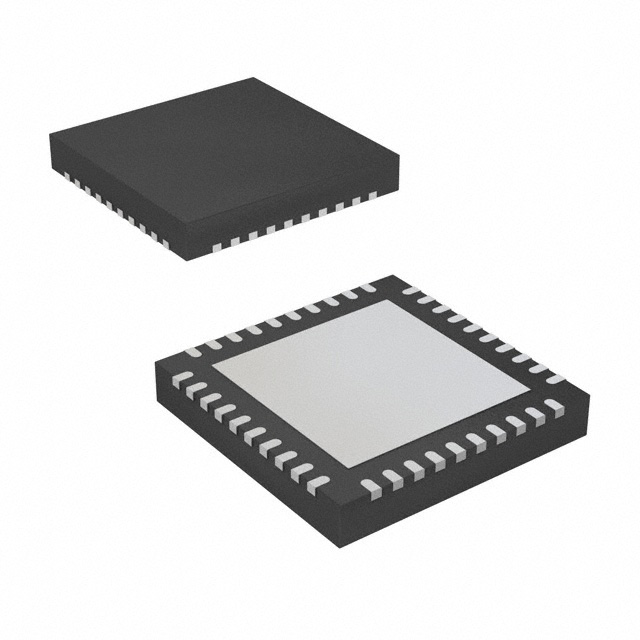
- 40-VFQFN Exposed Pad
- Datasheet:
-
 P9235A-RNDGI.pdf
- Description:
- IC WIRELESS TRANSMITTER 40VFQFPN
- Quantity:
- Payment:

- Shipping:

Inventory:1,787
Please send an inquiry. Send us your inquiry, and we will respond immediately.
Product details
Overview
P9235A-RNDGI from Integrated Device Technology (IDT) is a 3W magnetic induction wireless power transmitter IC with integrated 32-bit ARM® Cortex®-M0 processor, full-bridge gate drivers, simultaneous voltage/current demodulation, and I²C programmability. It operates from 4.5–5.5 V input, delivers up to 3W to compatible receivers like P9027LP-R, and targets compact wearable power systems including smartwatches and fitness monitors.
For engineers reviewing the P9235A-RNDGI datasheet, P9235A-RNDGI pinout, P9235A-RNDGI application, or P9235A-RNDGI equivalent, this page provides verified technical context, validated pin functions, confirmed 40-pin VFQFN package mapping, real-world efficiency data (80% peak with P9027LP-R), and two field-validated alternative transmitters for low-power inductive charging designs.
Technical Context
The P9235A-RNDGI implements closed-loop in-band communication using bi-phase encoded Control Error Packets (CEPs) sent by the receiver to dynamically adjust switching frequency and duty cycle. Its dual-path demodulation simultaneously extracts voltage and current modulation signals from the resonant tank for real-time power regulation.
It integrates a hysteretic buck regulator (5 V output, 50 mA max), three LDOs (VO_5, VO_33, VO_18), dual half-bridge gate drivers with bootstrap support, and dedicated analog front-end circuitry for ISNS_H/ISNS_L differential current sensing and VSNS_IN voltage sensing - all managed by on-chip firmware running on the ARM Cortex-M0 core.
Key Specifications
| Parameter | Value and Actual Design Meaning |
|---|---|
| VIN Range | 4.5–5.5 V: Supports standard USB-powered input without external regulation; UVLO at 4.3 V prevents operation below safe bias level. |
| Max Power Transfer | 3 W: Verified with P9027LP-R receiver under 1.5 mm coil gap; enables charging of small wearables with regulated output. |
| Peak Efficiency | 80%: Achieved at 3 W with P9027LP-R; reduces thermal load and extends battery life in portable transmitters. |
| Processor Core | 32-bit ARM Cortex-M0 @ 120 MHz PLL: Enables field-upgradable firmware, real-time control loop execution, and custom LED/buzzer behavior. |
| Operating Temp | −40°C to +85°C ambient: Validated for consumer and medical-grade wearable environments with no derating required. |
| Package | VFQFN 5 mm × 5 mm, 40-pin: Exposed thermal pad (EPGND) enables PCB-level heat sinking; compatible with standard reflow profiles. |
| I²C Interface | 400 kHz master/slave: Allows host MCU to read real-time telemetry (VIN, IIN, frequency, fault status) and configure protection thresholds. |
Pinout & Package
Package: VFQFN 5 mm × 5 mm, 40-pin, exposed thermal pad (EPGND). Pin 1 is top-left corner (EN̅), pin 40 is bottom-right (ISNS_H); EPGND must be soldered to PCB ground plane for thermal and electrical integrity.
| Pin/Terminal | Circuit Role | Design Meaning |
|---|---|---|
| EN̅ | Active-low enable | Shuts down entire device to <25 µA; logic high disables buck, LDOs, drivers, and processor - essential for system-level power gating. |
| ISNS_H / ISNS_L | Differential current sense inputs | Accept Kelvin-connected signal from 20 mΩ sense resistor; feed internal ADC for over-current protection and power telemetry. |
| VSNS_IN | Voltage modulation input | Receives demodulated AC voltage envelope from resonant tank; used with ISNS_H/L for closed-loop power control. |
| GH_BRG1 / GL_BRG1 GH_BRG2 / GL_BRG2 |
Half-bridge gate drivers | Drive external N-channel MOSFETs in full-bridge topology; GH outputs require BST capacitors for high-side bootstrapping. |
| LED_RED / LED_GRN | Open-drain LED sinks | Each supports 25 mA sink current; driven by firmware to indicate standby, transfer, fault, or completion per programmed pattern. |
Key Features
| Feature | Design Value |
|---|---|
| Simultaneous V/I demodulation | Enables real-time, independent monitoring of both voltage and current modulation envelopes for robust in-band communication decoding. |
| Programmable over-current limit | Set via ILIM pin resistor; allows precise threshold tuning (e.g., 1.25 A ±3.5%) to match coil and FET thermal limits without firmware change. |
| Dedicated remote temperature sensing | TS pin accepts 10 kΩ NTC thermistor divider; triggers thermal shutdown at 140°C rising edge with 20°C hysteresis for reliable protection. |
| Pre-defined LED patterns | 12 user-selectable modes via LED_PAT voltage divider; eliminates need for external GPIO control logic in status indication circuits. |
| Integrated buck + triple LDOs | Buck (5 V/50 mA) powers VO_33 (3.3 V) and VO_18 (1.8 V) rails; isolates analog/digital domains and removes need for 3 external regulators. |
Applications
| Smart Watch Charging Base | Wireless Earbud Case |
|---|---|
|
Use Scenario: Compact desktop or travel charging dock for single smartwatch with auto-alignment detection. IC Role / Device Role: Primary wireless power transmitter managing full bridge drive, in-band communication, and thermal safety. Use Value: 80% peak efficiency minimizes heat buildup in sealed plastic enclosure; programmable LED patterns provide intuitive user feedback without added MCU. |
Use Scenario: Dual-chamber charging case powering left/right earbuds independently via shared coil or dual-coil layout. IC Role / Device Role: Single-chip transmitter controlling power delivery, fault response, and status signaling across two receiver endpoints. Use Value: I²C telemetry enables host MCU to log charge cycles and detect coil misalignment; low standby current (<12 mA periodic ping) extends case battery life. |
| Fitness Tracker Dock | Portable Medical Sensor Charger |
|
Use Scenario: Clip-on or cradle-style charger for wrist-worn activity monitors requiring IP67-rated sealing and minimal footprint. IC Role / Device Role: Self-contained transmitter handling analog/digital pings, handshake, power negotiation, and EPT-triggered shutdown. Use Value: −40°C to +85°C rating ensures reliability in cold-weather outdoor use; integrated demodulation eliminates external comparator components. |
Use Scenario: Rechargeable docking station for FDA-cleared glucose monitors or pulse oximeters used in home care settings. IC Role / Device Role: Safety-certified power controller enforcing over-temperature, over-current, and under-voltage protections per IEC 62368-1. Use Value: Dedicated TS pin with NTC interface enables traceable temperature logging; 2000 V HBM ESD rating supports handling in clinical environments. |
Equivalent & Alternatives
The following parts are listed as comparable options for similar wireless power transmitter applications.
| Alternative Part | Technical Difference | Application Difference | Selection Advice |
|---|---|---|---|
| MP-A20 (MediaTek) | Supports Qi v1.2.4 only; lacks ARM M0 core - uses fixed-function state machine; no I²C telemetry readback. | Targeted at cost-sensitive mass-market accessories; no firmware customization or real-time diagnostics. | Choose MP-A20 when Qi compliance is mandatory and telemetry/control flexibility is not required. |
| bq51222 (Texas Instruments) | 2.5 W max output; integrated 5 V LDO only (no 1.8 V/3.3 V rails); requires external microcontroller for full feature set. | Designed for simpler, lower-power applications where external MCU handles protocol stack and status reporting. | Choose bq51222 when system already includes an MCU and power budget is ≤2.5 W with reduced thermal constraints. |
Compared with MP-A20 and bq51222, the P9235A-RNDGI provides higher integration (on-chip M0, triple LDOs, buck regulator), greater programmability (I²C-configurable protection, LED patterns), and verified 3 W capability - making it optimal for space-constrained, self-contained wearable chargers requiring field-upgradable behavior and comprehensive telemetry.
Availability
P9235A-RNDGI is available at Aetrix Electronics and suitable for smart watch charging bases, wireless earbud cases, fitness tracker docks, portable medical sensor chargers, and compact IoT device power supplies requiring stable component supply across design-in, prototyping, and production phases.
Supply support for P9235A-RNDGI includes scheduled delivery planning, volume procurement assistance, BOM continuity management, traceable sourcing, and lifecycle availability coordination for OEM customers, industrial embedded developers, connected-device designers, and electronics production programs.
Manufacturer
Integrated Device Technology (IDT), now part of Renesas Electronics, designs high-performance timing, memory interface, RF, and power management semiconductors for communications, computing, and consumer markets.
The P9235A-RNDGI belongs to IDT's wireless power transmitter product line, engineered specifically for sub-5 W inductive charging in ultra-compact, thermally constrained wearable and portable medical devices.
FAQ
What is the maximum power output supported by the P9235A-RNDGI?
The P9235A-RNDGI supports up to 3 W of wireless power transfer when paired with the P9027LP-R receiver under typical conditions (1.5 mm coil gap, room temperature, no airflow). Peak efficiency of 80% is achieved at this power level. The device's internal current sense and thermal protection circuits are calibrated for this 3 W operating envelope, and exceeding it may trigger over-current or thermal shutdown.
Does the P9235A-RNDGI require an external microcontroller to operate?
No - the P9235A-RNDGI integrates a 32-bit ARM Cortex-M0 processor with on-chip OTP (32 KB) and SRAM (4 KB), enabling autonomous operation including analog/digital pinging, receiver handshake, power negotiation, and fault response. An external MCU is optional and used only for advanced host-level control or telemetry aggregation via the I²C interface.
How is over-temperature protection implemented in the P9235A-RNDGI?
The P9235A-RNDGI uses the TS pin (Pin 18) for remote temperature sensing via an external 10 kΩ NTC thermistor. When the sensed temperature reaches 140°C (rising threshold), the device shuts down immediately. Restart occurs only after the temperature falls below 120°C (20°C hysteresis), ensuring safe cooldown before resuming operation. This behavior is hardware-enforced and does not rely on firmware execution.
Can the P9235A-RNDGI drive external MOSFETs in a full-bridge configuration?
Yes - the P9235A-RNDGI provides four dedicated gate driver outputs: GH_BRG1/GL_BRG1 and GH_BRG2/GL_BRG2. These drive external N-channel MOSFETs in a full-bridge topology. Each high-side driver requires a bootstrap capacitor (BST_BRG1/BST_BRG2) tied between its BST pin and corresponding SW_BRGx node to generate gate voltage above VIN. The drivers support fast rise/fall times (50–300 ns) and are rated for 28 V absolute max.
What communication interface does the P9235A-RNDGI use for configuration and telemetry?
The P9235A-RNDGI uses a standard 400 kHz I²C interface (SCL/SDA pins) for bidirectional communication. As an I²C slave, it allows a host MCU to read real-time parameters including input voltage, input current, operating frequency, and fault status (over-temp, over-current, EPT receipt). It also supports writing configuration registers for LED patterns, current limit thresholds, and buzzer behavior - all without interrupting power transfer.
P9235A-RNDGI Specifications
- Product attributes
- Attribute value
- Manufacturer:
- Renesas
- Series:
- -
- Package/Case:
- 40-VFQFN Exposed Pad
- Packaging:
- Tray
- Product Status:
- Obsolete
- Applications:
- Wireless Power Transmitter
- Current - Supply:
- -
- Voltage - Supply:
- 4.5V ~ 5.5V
- Operating Temperature:
- -40°C ~ 85°C
- Grade:
- -
- Qualification:
- -
- Mounting Type:
- Surface Mount
- Supplier Device Package:
- 40-VFQFPN (5x5)
P9235A-RNDGI FAQ
1.How can I place an order for P9235A-RNDGI through Aetrix?
Please submit a Request for Quotation (RFQ) for P9235A-RNDGI on Aetrix. Our sales agent will provide a competitive quotation and guide you through the order confirmation once you accept the terms.
2.Are the price and stock information for P9235A-RNDGI reliable?
The price and inventory of P9235A-RNDGI are updated periodically and may fluctuate due to market conditions. Stock and pricing data are typically refreshed every 24 hours. Quotation validity for P9235A-RNDGI is usually 5 days.
3.What payment methods are accepted for P9235A-RNDGI?
We accept Wire Transfer, PayPal, Credit Card, Western Union, MoneyGram, and Escrow for P9235A-RNDGI transactions.
Note: Certain payment methods may incur a processing fee.
4.How is shipping managed for P9235A-RNDGI?
P9235A-RNDGI orders can be shipped via leading logistics carriers, including DHL, UPS, FedEx, TNT, or Registered Mail.
Once your P9235A-RNDGI order is processed, you will receive an email with the shipment details and tracking number.
Note: Tracking information may take up to 24 hours to appear. Express delivery typically takes 3–5 business days.
5.How can I obtain technical support or documentation for P9235A-RNDGI?
For technical support, including P9235A-RNDGI datasheets, pinout diagrams, or application guidance, please contact our engineering support team. They can provide detailed documentation and assistance for your P9235A-RNDGI requirements.
6.How does Aetrix verify that P9235A-RNDGI is sourced from the original manufacturer or authorized distributors?
All P9235A-RNDGI products on Aetrix are procured from qualified distributors and authorized channels. Our dedicated quality assurance team conducts strict verification, including traceability checks and, if necessary, third-party testing. This ensures that P9235A-RNDGI meets industry standards.
7.What is the process for return or replacement of P9235A-RNDGI?
All P9235A-RNDGI units undergo pre-shipment inspection (PSI). If there is an issue with P9235A-RNDGI, returns or replacements are accepted under the following conditions:
1.Quantity discrepancies, incorrect items, or visible external defects (such as breakage or corrosion), acknowledged by Aetrix.
2.The issue is reported within 90 days of delivery.
3.The P9235A-RNDGI part is unused and in its original packaging.
Return procedure for P9235A-RNDGI:
1.Submit a request within 90 days.
2.Obtain a Return Material Authorization (RMA) from Aetrix.
P9235A-RNDGI Tags
-
TPS2511DGNR
Texas Instruments
-
UTC2000/MG
Microchip Technology
-
TUSB320HAIRWBR
Texas Instruments
-
TPS61252DSGR
Texas Instruments
-
PI5USB30216CXUAEX
Diodes Incorporated
-
SN6501DBVR
Texas Instruments
-
CYPD3177-24LQXQT
Infineon Technologies
-
SN6501QDBVRQ1
Texas Instruments
-
STUSB1600AQTR
STMicroelectronics

-
SN6505BDBVR
Texas Instruments
-
SN6501DBVT
Texas Instruments
-
TPS65150PWPR
Texas Instruments
Tech Hub

TTL and CMOS logic families differ in thresholds, loading, output drive, power and timing. This engineering guide compares 74HC and 74HCT, calculates noise margins and checks 3.3 V/5 V compatibility.

A practical engineering guide to 3.3V and 5V logic compatibility, input thresholds, resistor dividers, translator ICs, MOSFET level shifting, I2C pull-ups, timing limits and power-sequencing risks.

The 74HC595 uses push-pull logic outputs, while the TPIC6B595 uses 50 V open-drain DMOS sinks for higher-power loads. This guide compares timing, current limits, 3.3 V interfacing, load wiring, thermal…

The 74HC595 converts serial data into eight stable parallel outputs. This guide covers pin functions, shift and storage timing, OE and MR behavior, drive-current limits, cascading, voltage compatibilit…

A technical comparison of level-sensitive latches and edge-triggered flip-flops, covering timing windows, setup and hold limits, master–slave operation, time borrowing, race-through, HDL inference and…

A D latch stores one bit while Enable controls when data can pass. This reference covers gate-level operation, truth tables, transparency, setup and hold timing, LE versus OE, common ICs and practical …

An SR latch stores one bit through cross-coupled feedback. This engineering reference covers NOR and NAND implementations, truth tables, forbidden-state recovery, gated operation, switch debouncing, fa…

Latch circuits retain one bit through feedback. This technical reference covers SR and D latches, truth tables, transparency, timing limits, latch-versus-flip-flop behavior, applications and common log…

An engineering guide to LED driver operation, constant-current and constant-voltage outputs, linear and switching topologies, dimming, IC selection, calculations, replacement compatibility, and fault c…

Operational amplifier guide covering op amp basics, feedback, ideal vs real op amps, common configurations, buffer circuits, offset, bias current, gain-bandwidth, slew rate, rail-to-rail limits and sel…


