
 My Inquiry
 My Account


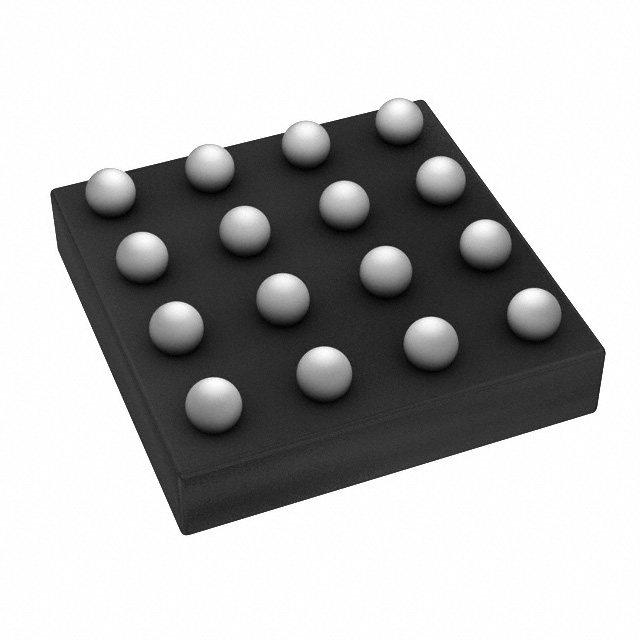
Diodes Incorporated PAM8902ZER-P
- Part No.:
- PAM8902ZER-P
- Manufacturer:
- Diodes Incorporated
- Category:
- Audio Amplifiers
- Package:
- 16-WFBGA, WLCSP
- Datasheet:
-
 PAM8902ZER-P.pdf
- Description:
- IC AMP CLASS D MONO 16CSP
- Quantity:
- Payment:

- Shipping:

Inventory:4,744
Please send an inquiry. Send us your inquiry, and we will respond immediately.
Product details
Overview
PAM8902ZER-P from Diodes Incorporated is a mono Class-D audio amplifier with integrated 1.5MHz boost converter, designed specifically for driving piezoelectric and ceramic speakers. It delivers 30 VPP (10.6 Vrms) output from a 3.6 V supply, supports selectable gain modes (18/22/26 dB), and integrates thermal, overvoltage, undervoltage, and short-circuit protection in a 16-ball CSP package.
For engineers reviewing the PAM8902ZER-P datasheet, PAM8902ZER-P pinout, PAM8902ZER-P application, or PAM8902ZER-P equivalent, this page provides verified technical context, real-world design meanings of key specs, validated pin functions, and confirmed alternative options for ceramic speaker drive circuits requiring high-voltage swing from low-input rails.
Technical Context
The PAM8902ZER-P integrates a fixed-frequency 1.5 MHz boost converter generating 8 V / 12 V / 17.5 V outputs via VSET pin configuration, enabling direct drive of high-impedance piezo loads without external HV amplification. Its fully differential Class-D stage operates at 225–475 kHz switching frequency with built-in low-pass filtering to suppress PWM carrier noise.
It implements programmable soft-start, three discrete gain settings via GSET pin logic states, and comprehensive protection including thermal shutdown with 30°C hysteresis, latch-free OTP recovery, and non-latching UVLO at 2.2 V with 0.2 V hysteresis - all optimized for space-constrained portable audio systems.
Key Specifications
| Parameter | Value and Actual Design Meaning |
|---|---|
| Output Voltage Swing | 30 VPP (10.6 Vrms) into piezo/ceramic load - enables full-scale actuation of high-Z acoustic elements from 3.6 V rail |
| Boost Converter Frequency | 1.5 MHz fixed switching - allows use of small 1 µH inductor and compact 10 µF output capacitor |
| Gain Settings | 18 dB / 22 dB / 26 dB via GSET pin - eliminates need for external gain-setting resistors in most configurations |
| THD+N | 0.3% at 5 Vrms output - ensures clean audio reproduction without audible distortion in voice-band applications |
| Shutdown Current | < 1 µA - preserves battery life in always-on portable devices during idle periods |
| Operating Supply Range | 2.5 V to 5.5 V - compatible with single-cell Li-ion, Li-poly, and dual-cell alkaline power sources |
| Protection Features | Thermal, OCP, OVP, UVLO, SCP - autonomous fault handling without host MCU intervention required |
Pinout & Package
Package: 16-ball CSP (1.95 mm × 1.95 mm, 0.4 mm pitch), RoHS-compliant, moisture-sensitive level 3.
| Pin/Terminal | Circuit Role | Design Meaning |
|---|---|---|
| PVCC | Audio amplifier power supply input | Accepts boosted voltage (up to 17.5 V) from internal DC-DC converter to enable high-VPP output |
| VOUT | Boost converter regulated output | Provides stable 8/12/17.5 V supply to PVCC; connects directly to external ceramic capacitor (10 µF) |
| SW | Boost converter switching node | Drives external inductor; requires low-ESR ceramic capacitor (1 µF) and Schottky diode for optimal efficiency |
| OUT+ / OUT− | Differential Class-D audio outputs | Drive piezo/ceramic speaker differentially; no coupling capacitor needed due to internal DC biasing |
| GSET | Amplifier gain selection input | Logic-level pin (AVDD/GND/floating) sets closed-loop gain to 18/22/26 dB - no external resistors required |
| VSET | Boost output voltage selection input | Configures boost regulator output to 8 V (GND), 12 V (floating), or 17.5 V (AVDD) - determines max speaker drive capability |
| ENA | Global enable control | Active-high logic input; <1 µA shutdown current when pulled low - enables rapid power gating in battery systems |
Key Features
| Feature | Design Value |
|---|---|
| Integrated boost + Class-D architecture | Eliminates need for external high-voltage DC-DC and separate audio driver IC - reduces BOM count by ≥3 components |
| Programmable soft-start | Prevents inrush current and pop-noise during power-up - critical for user-facing audio actuators in handheld devices |
| Three-stage gain selection | Enables precise signal chain optimization: lower gain improves SNR and headroom; higher gain maximizes output amplitude |
| Internal audio low-pass filter | Rejects 225–475 kHz Class-D carrier energy - avoids need for external RC filters and associated board area/signal loss |
| Thermal protection with auto-recovery | Shuts down at 150°C junction temperature and resumes operation after 30°C cooldown - prevents permanent damage during transient overload |
Applications
| Wireless Handsets | Portable DVD Players |
|---|---|
|
Use Scenario: Driving piezoelectric buzzer or ceramic speaker for ringtone/alert feedback in slim smartphone form factors. IC Role / Device Role / Timing Role: Audio power driver delivering 30 VPP swing from 3.6 V battery without external boost stage. Use Value: Enables loud, clear alert tones in <9 mm thickness devices while maintaining >90 dB SNR and <0.3% THD+N. |
Use Scenario: Generating audible feedback and menu navigation tones in battery-powered portable DVD players. IC Role / Device Role / Timing Role: Mono Class-D amplifier with integrated 17.5 V boost supply for ceramic speaker excitation. Use Value: Delivers full-range audio response down to 150 Hz using only 10 nF input capacitor and internal gain setting - no external op-amps or filters required. |
| Electronic Dictionaries | Digital Still Cameras |
|
Use Scenario: Producing pronunciation playback and UI beeps in compact, low-power electronic dictionaries. IC Role / Device Role / Timing Role: Low-quiescent-current (10–48 mA) audio amplifier with programmable gain and shutdown mode. Use Value: Achieves >100-hour battery life on two AAA cells while supporting 26 dB gain for intelligible voice playback at low volume levels. |
Use Scenario: Driving haptic feedback actuators and shutter-sound emulators in DSLR/mirrorless cameras. IC Role / Device Role / Timing Role: High-voltage Class-D driver operating in 50–500 Hz haptic band with configurable 8 V boost output. Use Value: Provides tactile response with 14.1 VPP swing at 8 V boost setting - eliminates need for discrete MOSFET H-bridge in compact camera modules. |
Equivalent & Alternatives
The following parts are listed as comparable options for similar mono Class-D piezo driver applications.
| Alternative Part | Technical Difference | Application Difference | Selection Advice |
|---|---|---|---|
| TAS5707RTWR | Standalone Class-D amplifier (no integrated boost); requires external 12 V supply and I²C configuration | Supports multi-channel and advanced DSP features but lacks on-chip HV generation for piezo loads | Choose when system already provides stable 12 V rail and requires programmable EQ or volume control |
| MAX9788ETE+ | Integrated boost + Class-D in 20-pin TQFN; fixed 12 V boost output; no VSET/GSET pin flexibility | Limited to 12 V output and 20 dB gain - insufficient for 30 VPP ceramic speaker drive at full amplitude | Choose only for cost-sensitive designs where 22.6 VPP (8 V boost) output meets acoustic requirements |
Compared with TAS5707RTWR and MAX9788ETE+, the PAM8902ZER-P uniquely combines 17.5 V programmable boost, 30 VPP output, and pin-selectable gain in a 1.95 mm × 1.95 mm CSP - making it the only option capable of full-amplitude piezo actuation from a single 3.6 V Li-ion cell without external HV circuitry.
Availability
PAM8902ZER-P is available at Aetrix Electronics and suitable for wireless handsets, portable DVD players, electronic dictionaries, and digital still cameras requiring stable component supply with guaranteed long-term manufacturability.
Supply support for PAM8902ZER-P includes scheduled delivery planning, volume procurement assistance, BOM continuity management, traceable sourcing, and lifecycle availability coordination for OEM customers, industrial embedded developers, connected-device designers, and electronics production programs.
Manufacturer
Diodes Incorporated is a global manufacturer of discrete semiconductors and analog ICs, specializing in power management, signal integrity, and precision analog solutions for consumer, industrial, and computing markets.
The PAM8902 belongs to Diodes' Piezo/Ceramic Speaker Driver product line, engineered to replace bulky transformer-based or multi-IC solutions with single-chip, high-efficiency Class-D amplifiers that deliver high-voltage swing from low-input rails.
FAQ
What is the maximum ceramic speaker impedance the PAM8902ZER-P can drive effectively?
The PAM8902ZER-P is optimized for high-impedance piezoelectric and ceramic speakers ranging from 10 kΩ to 100 kΩ. Its 30 VPP output swing and low output impedance (<1 Ω) ensure full actuation across this range without current-limiting distortion. Performance degrades above 100 kΩ due to capacitive loading effects on the Class-D output stage.
Can the PAM8902ZER-P operate without an external Schottky diode?
Yes - the external Schottky diode may be omitted only when VSET = GND or floating AND load capacitance ≤1 µF AND signal frequency <4 kHz. For haptic applications (50–500 Hz) or full-audio bandwidth operation, the diode is mandatory to maintain efficiency and prevent thermal stress on the internal switch.
How does the VSET pin affect boost converter efficiency and thermal performance?
VSET selects boost output voltage: 8 V (GND), 12 V (floating), or 17.5 V (AVDD). Higher VSET settings increase PVCC voltage and enable greater speaker swing but raise quiescent current (e.g., 48 mA at 17.5 V vs. 12 mA at 8 V) and junction temperature. Thermal design must scale accordingly - θJA is 90°C/W in CSP package.
Is the PAM8902ZER-P pin-compatible with other variants in the PAM8902 family?
No - PAM8902ZER-P uses the 16-ball CSP package, while PAM8902KER-P uses QFN4x4-16. Pin numbering differs between packages despite identical bump-to-pin mapping. Layouts are not interchangeable; PCB redesign is required when switching packages. The "NOT RECOMMENDED FOR NEW DESIGN" note applies only to the legacy PAM8902H variant, not ZER-P.
PAM8902ZER-P Specifications
- Product attributes
- Attribute value
- Manufacturer:
- Diodes Incorporated
- Series:
- -
- Package/Case:
- 16-WFBGA, WLCSP
- Packaging:
- Tape & Reel (TR)
- Product Status:
- Obsolete
- Type:
- Class D
- Output Type:
- 1-Channel (Mono)
- Max Output Power x Channels @ Load:
- -
- Voltage - Supply:
- 2.7V ~ 5.5V
- Features:
- Short-Circuit and Thermal Protection
- Mounting Type:
- Surface Mount
- Operating Temperature:
- -40°C ~ 85°C (TA)
- Grade:
- -
- Qualification:
- -
- Supplier Device Package:
- 16-CSP (1.95x1.95)
PAM8902ZER-P FAQ
1.How can I place an order for PAM8902ZER-P through Aetrix?
Please submit a Request for Quotation (RFQ) for PAM8902ZER-P on Aetrix. Our sales agent will provide a competitive quotation and guide you through the order confirmation once you accept the terms.
2.Are the price and stock information for PAM8902ZER-P reliable?
The price and inventory of PAM8902ZER-P are updated periodically and may fluctuate due to market conditions. Stock and pricing data are typically refreshed every 24 hours. Quotation validity for PAM8902ZER-P is usually 5 days.
3.What payment methods are accepted for PAM8902ZER-P?
We accept Wire Transfer, PayPal, Credit Card, Western Union, MoneyGram, and Escrow for PAM8902ZER-P transactions.
Note: Certain payment methods may incur a processing fee.
4.How is shipping managed for PAM8902ZER-P?
PAM8902ZER-P orders can be shipped via leading logistics carriers, including DHL, UPS, FedEx, TNT, or Registered Mail.
Once your PAM8902ZER-P order is processed, you will receive an email with the shipment details and tracking number.
Note: Tracking information may take up to 24 hours to appear. Express delivery typically takes 3–5 business days.
5.How can I obtain technical support or documentation for PAM8902ZER-P?
For technical support, including PAM8902ZER-P datasheets, pinout diagrams, or application guidance, please contact our engineering support team. They can provide detailed documentation and assistance for your PAM8902ZER-P requirements.
6.How does Aetrix verify that PAM8902ZER-P is sourced from the original manufacturer or authorized distributors?
All PAM8902ZER-P products on Aetrix are procured from qualified distributors and authorized channels. Our dedicated quality assurance team conducts strict verification, including traceability checks and, if necessary, third-party testing. This ensures that PAM8902ZER-P meets industry standards.
7.What is the process for return or replacement of PAM8902ZER-P?
All PAM8902ZER-P units undergo pre-shipment inspection (PSI). If there is an issue with PAM8902ZER-P, returns or replacements are accepted under the following conditions:
1.Quantity discrepancies, incorrect items, or visible external defects (such as breakage or corrosion), acknowledged by Aetrix.
2.The issue is reported within 90 days of delivery.
3.The PAM8902ZER-P part is unused and in its original packaging.
Return procedure for PAM8902ZER-P:
1.Submit a request within 90 days.
2.Obtain a Return Material Authorization (RMA) from Aetrix.
PAM8902ZER-P Tags
-Exposed-Pad.jpg)
-
TS34119CS RLG
Taiwan Semiconductor Corporation

-
LM386MX-1/NOPB
Texas Instruments
-
TPA711DGNR
Texas Instruments
-
LM386N-4/NOPB
Texas Instruments
-
TS4990IST
STMicroelectronics
-
PAM8302AASCR
Diodes Incorporated
-
TPA6130A2RTJR
Texas Instruments
-
TPA6111A2DGNR
Texas Instruments
-
LM4861MX/NOPB
Texas Instruments
-
LM386M-1/NOPB
Texas Instruments
-
NCS2211DR2G
onsemi
-
IS31AP2005-DLS2-TR
Lumissil Microsystems
Tech Hub

An engineering guide to LED driver operation, constant-current and constant-voltage outputs, linear and switching topologies, dimming, IC selection, calculations, replacement compatibility, and fault c…

Operational amplifier guide covering op amp basics, feedback, ideal vs real op amps, common configurations, buffer circuits, offset, bias current, gain-bandwidth, slew rate, rail-to-rail limits and sel…

Jumper cables guide covering safe connection order, red and black clamp placement, final ground connection, cable gauge, length, clamp quality, copper vs CCA cables, jump starter comparison and battery…

LDO regulator guide covering low dropout voltage, power dissipation, thermal design, PSRR, output noise, capacitor stability, adjustable LDO circuits, LDO vs buck converter and datasheet selection chec…

Conditional Access Module guide covering CAM meaning, CI/CI+ interface, smart card authorization, DVB security workflow, TV and set-top box compatibility, internal electronics, ESD protection, connecto…

Guide to electronic component obsolescence covering EOL risk, PCN/PDN notices, last-time buy planning, replacement options, form-fit-function validation, counterfeit risk and BOM lifecycle management.

18650 battery guide covering lithium-ion cell basics, 3.6V/3.7V voltage, 4.2V charging, mAh and Wh capacity, protected cells, chargers, BMS, series-parallel packs, holders, welding and sourcing checks.…

Hall effect sensor guide covering working principle, linear and digital sensors, Arduino circuits, current sensing, speed detection, automotive applications, A3144 examples, signal filtering and datash…

Product Change Notification guide for electronic components, covering PCN meaning, PCN vs PDN/EOL, common change types, risk levels, form-fit-function review, engineering validation, BOM control, LTB/L…

A practical guide to blend door actuators, covering HVAC function, symptoms, location, AC and heater issues, reset and calibration, replacement cost, electrical diagnosis, compatibility checks, and rep…


