
 My Inquiry
 My Account


Diodes Incorporated PAM8908JER
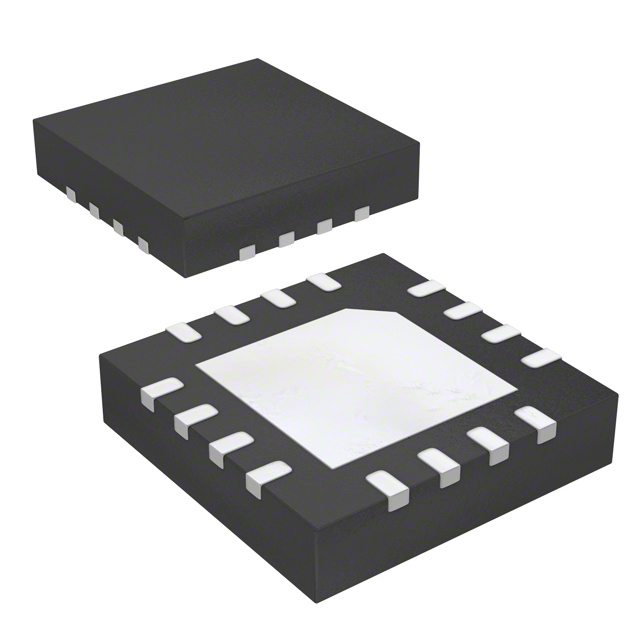
- Part No.:
- PAM8908JER
- Manufacturer:
- Diodes Incorporated
- Category:
- Audio Amplifiers
- Package:
- 16-UFQFN Exposed Pad
- Datasheet:
-
 PAM8908JER.pdf
- Description:
- IC AMP CLASS AB STER 35MW 16TQFN
- Quantity:
- Payment:

- Shipping:

Inventory:8,332
Please send an inquiry. Send us your inquiry, and we will respond immediately.
Product details
Overview
PAM8908JER from Diodes Incorporated is a true cap-free stereo headphone amplifier IC delivering 60mW per channel into 32Ω, featuring ground-referenced outputs, 0.03% THD+N at 1kHz, 80dB PSRR, and selectable gain (−6dB to +6dB) via G0/G1 pins. It operates from 2.5V–5.5V single supply and integrates a patent-pending 3-phase charge pump to eliminate DC-blocking capacitors in portable audio systems.
For engineers reviewing the PAM8908JER datasheet, PAM8908JER pinout, PAM8908JER application, or PAM8908JER equivalent, key selection criteria include cap-free output architecture, differential/single-ended input support, thermal shutdown at +150°C, and U-QFN3030-16 package compatibility with space-constrained PCB layouts.
Technical Context
The PAM8908JER implements a dual-channel Class-AB headphone driver with integrated 3-phase charge pump generating ±HV rails (HPVDD/HPVSS) from PVDD, enabling true ground-centered output swing without external coupling capacitors. Its input stage supports fully differential (INL±/INR±) or single-ended configurations with programmable gain via two logic-controlled pins.
Functional protection includes short-circuit detection on OUTL/OUTR, thermal shutdown with +20°C hysteresis, and <1µA shutdown current when EN is low. The device maintains 100dB SNR and 80dB crosstalk suppression while operating across −40°C to +85°C ambient range.
Key Specifications
| Parameter | Value and Actual Design Meaning |
|---|---|
| Output Power | 60mW per channel into 32Ω at 1kHz, THD=1% - sufficient for loud, distortion-free playback on standard headphones without external boost stages. |
| THD+N | 0.03% at 20mW, 1kHz - ensures high-fidelity audio reproduction with minimal harmonic artifacts in portable devices. |
| PSRR | 80dB at 1kHz - rejects noise from shared digital power rails, eliminating need for dedicated LDOs in battery-powered systems. |
| Supply Range | 2.5V–5.5V single supply - compatible with Li-ion, Li-poly, and USB-powered designs without level-shifting circuitry. |
| Shutdown Current | <1µA - enables ultra-low-power standby in always-on audio subsystems such as smart earbuds or voice assistants. |
| Gain Control | −6dB / 0dB / +3dB / +6dB via G0/G1 logic inputs - allows dynamic volume scaling without external resistors or DAC reconfiguration. |
| Charge Pump fOSC | 1.2–1.8MHz - high-frequency operation minimizes required flying capacitor size (1µF typical) and reduces EMI susceptibility. |
Pinout & Package
Package: U-QFN3030-16 Standard (3.0mm × 3.0mm, 0.5mm pitch, exposed thermal pad). RoHS-compliant, halogen-free, lead-free construction with NiPdAu terminal finish.
| Pin/Terminal | Circuit Role | Design Meaning |
|---|---|---|
| 1 INL− | Inverting left input | Accepts differential left-channel signal; paired with INL+ to reject common-mode noise in noisy mobile environments. |
| 2 INL+ | Non-inverting left input | Primary left-channel input node; forms 26.4kΩ–13.2kΩ gain-dependent input impedance based on G0/G1 state. |
| 3 INR+ | Inverting right input | Differential right-channel input; enables balanced drive for noise immunity in compact handheld PCB layouts. |
| 4 INR− | Non-inverting right input | Completes right-channel differential pair; supports single-ended operation when tied to SGND via AC coupling. |
| 5 OUTR | Right output | Cap-free ground-referenced output; connects directly to right headphone jack terminal without series capacitor. |
| 6 G0 | Gain select bit 0 | Logic-controlled gain configuration input; voltage thresholds: ≤0.6V (low), ≥1.4V (high). |
| 7 G1 | Gain select bit 1 | Second gain control bit; combined with G0 to set one of four closed-loop gains (−6dB to +6dB). |
| 8 HPVSS | Negative charge pump rail | Internal negative supply rail generated by charge pump; requires 1µF ceramic capacitor to PGND for stability. |
| 9 CAP− | Flying cap negative node | Charge transfer node for 3-phase pump; connects to CAP+ via 1µF low-ESR ceramic capacitor. |
| 10 PGND | Power ground | High-current return path for PVDD, HPVDD, and HPVSS decoupling caps; must be low-inductance connection. |
| 11 CAP+ | Flying cap positive node | Complementary flying capacitor terminal; works with CAP− to generate boosted HV rails for output stage. |
| 12 HPVDD | Positive charge pump rail | Internally generated positive supply for headphone amplifiers; requires 2.2µF decoupling to PGND. |
| 13 EN | Enable control | Active-high enable; drives device into <1µA shutdown when pulled ≤0.6V; 0.4ms startup time from low-to-high transition. |
| 14 PVDD | Main power input | Primary 2.5V–5.5V supply; requires 2.2µF X5R ceramic capacitor placed within 5mm for optimal PSRR and THD performance. |
| 15 SGND | Signal reference ground | Amplifier reference point; must connect to headphone jack shield to prevent turn-on pop and minimize offset voltage. |
| 16 OUTL | Left output | Cap-free ground-referenced left-channel output; connects directly to left headphone jack terminal. |
Key Features
| Feature | Design Value |
|---|---|
| True Cap Free Architecture | Outputs biased at 0V system ground - eliminates 2× 220µF electrolytic DC-blocking capacitors, saving >15mm² board area and 1.2mm height. |
| 3-Phase Charge Pump | Generates stable ±HV rails from single PVDD - achieves rail-to-rail output swing without efficiency loss or audible switching noise. |
| Dual Input Mode Support | Configurable for differential or single-ended sources - simplifies integration with codecs, DACs, or analog audio processors without redesign. |
| Programmable Gain | Four discrete gain settings via two logic pins - enables firmware-controlled volume optimization without external resistor networks. |
| Thermal & Short-Circuit Protection | Auto-shutdown at +150°C junction temp with +20°C hysteresis - prevents latch-up during sustained high-power output or PCB overheating. |
Applications
| Smartphones | Notebook Computers |
|---|---|
|
Use Scenario: Integrated stereo audio playback in slim-profile smartphones with shared PMIC rails. IC Role / Device Role / Timing Role: Final-stage headphone driver converting line-level signals to low-impedance, ground-referenced outputs. Use Value: Eliminates bulky DC-blocking caps, reducing BOM cost by $0.08/unit and enabling thinner mechanical stack-ups. |
Use Scenario: Audio subsystem in ultrabooks requiring low-noise, high-PSRR headphone output from noisy SoC supplies. IC Role / Device Role / Timing Role: Low-THD headphone amplifier with 80dB PSRR rejecting CPU/GPU switching noise on shared 3.3V rail. Use Value: Maintains 100dB SNR without LDO filtering, cutting power delivery complexity and thermal load. |
| Portable Gaming Devices | Digital Still Cameras |
|
Use Scenario: Headphone audio in handheld gaming consoles with rapid power-state transitions. IC Role / Device Role / Timing Role: Fast-starting (0.4ms) stereo driver with <1µA shutdown current for instant resume from sleep mode. Use Value: Enables zero-latency audio wake-up and extends battery life by minimizing quiescent drain during idle periods. |
Use Scenario: Playback of recorded audio clips and menu navigation tones in compact DSLR/mirrorless cameras. IC Role / Device Role / Timing Role: Low-height headphone interface supporting both mono and stereo output modes via gain-select pins. Use Value: Fits under 1.0mm camera top covers while delivering 60mW clean output for studio-monitor-grade monitoring. |
Equivalent & Alternatives
The following parts are listed as comparable options for similar stereo headphone amplifier applications.
| Alternative Part | Technical Difference | Application Difference | Selection Advice |
|---|---|---|---|
| MAX98357AETE+T | I²S input only; no analog differential inputs; requires external MCLK; fixed 12dB gain. | Designed for digital audio source integration; lacks analog input flexibility and gain configurability. | Select when system uses I²S DAC output and board space permits larger QFN20 package (4mm × 4mm). |
| TAS5707PAG | Class-D architecture; higher efficiency but requires LC filter; 1.8W output; larger HTQFP-48 package. | Targeted at powered speakers or docked audio; not optimized for cap-free headphone direct-drive. | Choose only if >100mW output and battery runtime >20% improvement outweigh added filter complexity and size. |
Compared with MAX98357AETE+T and TAS5707PAG, the PAM8908JER uniquely combines analog input flexibility, true cap-free operation, and sub-1µA shutdown in a 3mm × 3mm footprint-making it optimal for space- and power-constrained portable audio endpoints.
Availability
PAM8908JER is available at Aetrix Electronics and suitable for smartphones, notebook computers, and portable gaming devices requiring stable component supply, consistent marking (P8908 XXXYW), and full RoHS/halogen-free compliance.
Supply support for PAM8908JER includes scheduled delivery planning, volume procurement assistance, BOM continuity management, traceable sourcing, and lifecycle availability coordination for OEM customers, industrial embedded developers, connected-device designers, and electronics production programs.
Manufacturer
Diodes Incorporated is a global manufacturer of discrete semiconductors and analog ICs, specializing in high-performance, energy-efficient solutions for consumer, computing, and industrial markets.
The PAM8908JER belongs to Diodes' True Cap Free headphone amplifier product line, engineered specifically to replace legacy capacitor-coupled headphone drivers in ultra-thin portable electronics without compromising audio fidelity or power efficiency.
FAQ
What is the minimum input coupling capacitor required for 20Hz high-pass response at 6dB gain?
At +6dB gain, the PAM8908JER's input impedance is 13.2kΩ. Using the formula CIN = 1/(2π × fC × RIN), a 20Hz corner frequency requires ≥0.6µF. A 0.68µF X5R ceramic capacitor is recommended and validated in Diodes' application notes for optimal pop suppression and phase response.
How should the exposed thermal pad be connected on the U-QFN3030-16 package?
The exposed pad must be soldered to the PCB landing pad and connected to PGND (not PVDD or floating). This ensures mechanical reliability, enhances thermal dissipation (θJA = 35°C/W), and maintains signal integrity by providing low-impedance return for high-frequency charge pump currents.
Can the PAM8908JER drive 16Ω headphones effectively?
Yes: at PVDD = 5.0V and in-phase output, it delivers up to 103.5mW into 16Ω (THD = 1%, 1kHz). This exceeds typical smartphone headphone requirements (≥50mW), with measured THD+N remaining below 0.03% at 20mW, ensuring clarity at all volume levels.
What is the purpose of the SGND pin, and how does it differ from PGND?
SGND is the amplifier's internal reference ground and must connect directly to the headphone jack shield to establish 0V output bias and suppress turn-on pop. PGND is the high-current power return path for PVDD, HPVDD, and HPVSS decoupling. Mixing SGND and PGND increases offset voltage and risk of audible artifacts.
PAM8908JER Specifications
- Product attributes
- Attribute value
- Manufacturer:
- Diodes Incorporated
- Series:
- -
- Package/Case:
- 16-UFQFN Exposed Pad
- Packaging:
- Tape & Reel (TR)
- Product Status:
- Active
- Type:
- Class AB
- Output Type:
- 2-Channel (Stereo) with Stereo Headphones
- Max Output Power x Channels @ Load:
- 35mW x 2 @ 16Ohm
- Voltage - Supply:
- 2.5V ~ 5.5V
- Features:
- Short-Circuit and Thermal Protection
- Mounting Type:
- Surface Mount
- Operating Temperature:
- -40°C ~ 85°C (TA)
- Grade:
- -
- Qualification:
- -
- Supplier Device Package:
- U-QFN3030-16
PAM8908JER FAQ
1.How can I place an order for PAM8908JER through Aetrix?
Please submit a Request for Quotation (RFQ) for PAM8908JER on Aetrix. Our sales agent will provide a competitive quotation and guide you through the order confirmation once you accept the terms.
2.Are the price and stock information for PAM8908JER reliable?
The price and inventory of PAM8908JER are updated periodically and may fluctuate due to market conditions. Stock and pricing data are typically refreshed every 24 hours. Quotation validity for PAM8908JER is usually 5 days.
3.What payment methods are accepted for PAM8908JER?
We accept Wire Transfer, PayPal, Credit Card, Western Union, MoneyGram, and Escrow for PAM8908JER transactions.
Note: Certain payment methods may incur a processing fee.
4.How is shipping managed for PAM8908JER?
PAM8908JER orders can be shipped via leading logistics carriers, including DHL, UPS, FedEx, TNT, or Registered Mail.
Once your PAM8908JER order is processed, you will receive an email with the shipment details and tracking number.
Note: Tracking information may take up to 24 hours to appear. Express delivery typically takes 3–5 business days.
5.How can I obtain technical support or documentation for PAM8908JER?
For technical support, including PAM8908JER datasheets, pinout diagrams, or application guidance, please contact our engineering support team. They can provide detailed documentation and assistance for your PAM8908JER requirements.
6.How does Aetrix verify that PAM8908JER is sourced from the original manufacturer or authorized distributors?
All PAM8908JER products on Aetrix are procured from qualified distributors and authorized channels. Our dedicated quality assurance team conducts strict verification, including traceability checks and, if necessary, third-party testing. This ensures that PAM8908JER meets industry standards.
7.What is the process for return or replacement of PAM8908JER?
All PAM8908JER units undergo pre-shipment inspection (PSI). If there is an issue with PAM8908JER, returns or replacements are accepted under the following conditions:
1.Quantity discrepancies, incorrect items, or visible external defects (such as breakage or corrosion), acknowledged by Aetrix.
2.The issue is reported within 90 days of delivery.
3.The PAM8908JER part is unused and in its original packaging.
Return procedure for PAM8908JER:
1.Submit a request within 90 days.
2.Obtain a Return Material Authorization (RMA) from Aetrix.
PAM8908JER Tags
-Exposed-Pad.jpg)
-
TS34119CS RLG
Taiwan Semiconductor Corporation

-
LM386MX-1/NOPB
Texas Instruments
-
TPA711DGNR
Texas Instruments
-
LM386N-4/NOPB
Texas Instruments
-
TS4990IST
STMicroelectronics
-
PAM8302AASCR
Diodes Incorporated
-
TPA6130A2RTJR
Texas Instruments
-
TPA6111A2DGNR
Texas Instruments
-
LM4861MX/NOPB
Texas Instruments
-
LM386M-1/NOPB
Texas Instruments
-
NCS2211DR2G
onsemi
-
IS31AP2005-DLS2-TR
Lumissil Microsystems
Tech Hub

An engineering guide to LED driver operation, constant-current and constant-voltage outputs, linear and switching topologies, dimming, IC selection, calculations, replacement compatibility, and fault c…

Operational amplifier guide covering op amp basics, feedback, ideal vs real op amps, common configurations, buffer circuits, offset, bias current, gain-bandwidth, slew rate, rail-to-rail limits and sel…

Jumper cables guide covering safe connection order, red and black clamp placement, final ground connection, cable gauge, length, clamp quality, copper vs CCA cables, jump starter comparison and battery…

LDO regulator guide covering low dropout voltage, power dissipation, thermal design, PSRR, output noise, capacitor stability, adjustable LDO circuits, LDO vs buck converter and datasheet selection chec…

Conditional Access Module guide covering CAM meaning, CI/CI+ interface, smart card authorization, DVB security workflow, TV and set-top box compatibility, internal electronics, ESD protection, connecto…

Guide to electronic component obsolescence covering EOL risk, PCN/PDN notices, last-time buy planning, replacement options, form-fit-function validation, counterfeit risk and BOM lifecycle management.

18650 battery guide covering lithium-ion cell basics, 3.6V/3.7V voltage, 4.2V charging, mAh and Wh capacity, protected cells, chargers, BMS, series-parallel packs, holders, welding and sourcing checks.…

Hall effect sensor guide covering working principle, linear and digital sensors, Arduino circuits, current sensing, speed detection, automotive applications, A3144 examples, signal filtering and datash…

Product Change Notification guide for electronic components, covering PCN meaning, PCN vs PDN/EOL, common change types, risk levels, form-fit-function review, engineering validation, BOM control, LTB/L…

A practical guide to blend door actuators, covering HVAC function, symptoms, location, AC and heater issues, reset and calibration, replacement cost, electrical diagnosis, compatibility checks, and rep…


