
 My Inquiry
 My Account


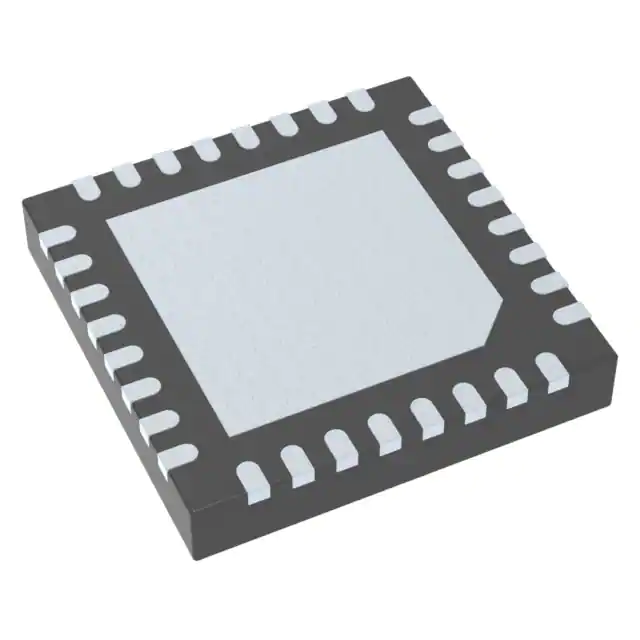
Microchip Technology PD39210R-010020
- Part No.:
- PD39210R-010020
- Manufacturer:
- Microchip Technology
- Category:
- Power Over Ethernet (PoE) Controllers
- Package:
- 32-VFQFN Exposed Pad
- Datasheet:
-
 PD39210R-010020.pdf
- Description:
- MCU FOR PD392XX FAMILY FW VER 1.
- Quantity:
- Payment:

- Shipping:

Inventory:452
Please send an inquiry. Send us your inquiry, and we will respond immediately.
Product details
Overview
PD39210R-010020 from Microchip Technology is a Generation 6 IEEE 802.3af/at Power Sourcing Equipment (PSE) controller IC designed for integration with the PD39208 PSE manager. It supports up to 48 logical ports, delivers up to 30 W per 2-pair port, operates across –40°C to +85°C, and implements per-system power management-enabling compact, high-density PoE switches for enterprise and industrial infrastructure.
For engineers reviewing the PD39210R-010020 datasheet, PD39210R-010020 pinout, PD39210R-010020 application, or PD39210R-010020 equivalent, key selection criteria include its 32-pin 5 mm × 5 mm QFN package, I²C/UART host interface with 15-byte protocol, support for Fast PoE and Perpetual PoE, and compatibility with PD39208-based system architectures.
Technical Context
The PD39210R-010020 implements a firmware-defined PSE control architecture based on the SAM D21 core, executing pre-programmed 802.3af/at classification, detection, and power delivery sequences without requiring host intervention. It communicates with the PD39208 manager via a dedicated 1 MHz SPI interface (ESPI_MISO/ESPI_SCK/ESPI_xCS/ESPI_MOSI) and supports dual-mode host connectivity via configurable I²C or UART (19.2 kbps, 8N1).
Its hardware design includes dedicated pins for system-level coordination: xDISABLE_PORTS (active-low global port shutdown), xSys_OK (active-low system validity indicator), xINT_OUT (event-triggered interrupt), and xLED_LATCH/xLED_CS/xLED_OE for direct LED stream control. Power management is implemented at the system level-not per port-distinguishing it from PD69210/PD69220.
Key Specifications
| Parameter | Value and Actual Design Meaning |
|---|---|
| IEEE Standard Support | 802.3af/at only-no 802.3bt or HDBaseT (POH) capability. |
| Max Logical Ports | 48 ports, each built from one physical port (2-pair only). |
| Max Port Power | 30 W per 2-pair port-lower than PD69210's 45 W due to reduced feature set. |
| Power Management Mode | Per-system only-no per-port Class (LLDP), Dynamic, or Static modes. |
| Host Interface Options | I²C (400 kHz, clock stretch required) or UART (19.2 kbps, 8N1); selected by analog voltage on I2C_ADDR_MEAS pin. |
| Operating Temperature | –40°C to +85°C-qualified for industrial-grade deployment. |
| Supply Voltages | VDD/VDDA = 3.0–3.63 V; VDD_CORE = 1.2 V (decoupled with 1 µF capacitor). |
Pinout & Package
The PD39210R-010020 is housed in a 32-pin, 5 mm × 5 mm QFN package with exposed thermal pad (ePAD) connected to VSSA. The package meets RoHS, MSL1, and Pb-free reflow requirements (peak 260 °C).
| Pin/Terminal | Circuit Role | Design Meaning |
|---|---|---|
| 1, 2, 11, 12, 14, 17, 19 | Reserved / NC | Not internally connected or functionally reserved-must be left open or pulled per datasheet guidance (e.g., Pin 2 pulled to 3.3 V via 10 kΩ). |
| 3 (xSys_OK) | System Status Output | Active-low digital signal indicating valid system operation; used to drive LEDs or notify host of fault-free state. |
| 4 (xDISABLE_PORTS) | Global Port Control Input | Active-low input that immediately shuts down all PoE ports-enables emergency power cutoff without host software involvement. |
| 5–8 (ESPI_MISO/SCK/xCS/MOSI) | PoE Manager SPI Interface | Dedicated 4-wire SPI bus to PD39208 manager; SCK runs at fixed 1 MHz; xCS requires external pull-up. |
| 13 (I2C_ADDR_MEAS) | Interface Selection & Address Input | Analog input determining UART vs. I²C mode and setting 7-bit I²C address (0x04 to 0x3C) via resistor divider. |
| 15–16 (UART0_TX/RX) | UART Host Interface | Full-duplex 19.2 kbps UART link using 15-byte command/reply protocol; RX requires external pull-up. |
| 21–22 (I2C0_SDA/SCL) | I²C Host Interface | Bidirectional I²C interface supporting 400 kHz clock; SCL requires host clock-stretch support and external pull-up. |
| 24 (xI2C_MESSAGE_READY) | I²C Response Ready Flag | Active-low handshake signal indicating controller has data ready for host I²C read-eliminates polling delays. |
| 25 (xINT_OUT) | Event Interrupt Output | Active-low open-drain output asserted on pre-configured events (e.g., port fault, classification failure, thermal warning). |
| 26 (xRESET) | Host Reset / Self-Reset | Active-low bidirectional reset line; host can assert reset, and controller can self-initiate 100 µs reset pulse. |
| 27, 23, 18 (xLED_LATCH/CS/OE) | LED Stream Control | Direct SPI-compatible signals driving external LED drivers-enables real-time port status visualization without host CPU load. |
| 9, 10, 28, 30 (VDDA/VSSA/VSSD/VDD) | Power & Ground | VDDA/VDD = 3.3 V analog/digital supply; VSSA/VSSD = separate analog/digital ground planes; ePAD tied to VSSA. |
| 29 (VDD_CORE) | Core Voltage Supply | 1.2 V core supply requiring local 1 µF decoupling to VSSD-critical for stable ARM Cortex-M0+ operation. |
| 31–32 (SWD_CLK/DIO) | Debug Interface | Serial Wire Debug pins for firmware development and field diagnostics; SWD_CLK requires 1 kΩ pull-up to 3.3 V. |
Key Features
| Feature | Design Value |
|---|---|
| Fast PoE | Enables immediate port power-up after cold start-bypassing host initialization delay to reduce boot time in managed switches. |
| Perpetual PoE (PPoE) | Maintains continuous PoE power delivery during host firmware updates or host processor reset-ensuring zero downtime for powered devices. |
| Legacy Detection | Supports pre-standard Powered Devices (PDs) via reduced-capacitance detection-extending compatibility to older VoIP phones and IP cameras. |
| Configurable Port Power Limit | Hardware-enforced per-port current limit; automatic disconnection occurs if exceeded-preventing overcurrent damage without host intervention. |
| LED Stream Interface | Dedicated SPI-like outputs (xLED_LATCH/xLED_CS/xLED_OE) enable direct control of multi-segment LED arrays-reducing BOM cost and host GPIO usage. |
Applications
| Enterprise Network Switches | Industrial IoT Gateways |
|---|---|
|
Use Scenario: 24- or 48-port managed Ethernet switches delivering PoE to IP phones, wireless access points, and security cameras. IC Role / Device Role / Timing Role: PSE controller managing power negotiation, classification, and fault protection for all downstream ports in coordination with PD39208 manager. Use Value: Enables compact 1U switch designs with full 802.3af/at compliance and system-level power budgeting-reducing thermal footprint versus discrete solutions. |
Use Scenario: Ruggedized gateways deployed in factory automation, rail systems, or outdoor surveillance requiring reliable PoE under wide temperature swings. IC Role / Device Role / Timing Role: Industrial-grade PSE controller ensuring uninterrupted power to sensors, HMIs, and edge AI modules despite host reboots or firmware updates. Use Value: Perpetual PoE and –40°C to +85°C operation guarantee zero-power-interruption uptime-critical for mission-critical infrastructure. |
| Smart Building Controllers | Unified Communications Terminals |
|
Use Scenario: HVAC controllers, lighting panels, and access control panels integrating PoE-powered endpoints and local intelligence. IC Role / Device Role / Timing Role: Embedded PSE controller enabling single-cable power+data delivery to distributed sensors and actuators while minimizing wiring complexity. Use Value: Reduces installation labor and cabling costs by consolidating power and Ethernet-supporting scalable building management deployments. |
Use Scenario: Video conferencing systems and desk phones requiring simultaneous high-fidelity audio/video and PoE-powered peripherals. IC Role / Device Role / Timing Role: Low-latency PSE controller delivering stable 30 W per port to support USB-C PD adapters, camera modules, and noise-canceling mics. Use Value: 30 W 2-pair capability meets IEEE 802.3at Class 4 requirements-ensuring full functionality of premium UC endpoints without external power bricks. |
Equivalent & Alternatives
The following parts are listed as comparable options for similar PSE controller applications.
| Alternative Part | Technical Difference | Application Difference | Selection Advice |
|---|---|---|---|
| PD69210 | Identical 32-pin QFN package and pinout; supports 802.3bt, HDBaseT, per-port power management, and higher 45 W port power. | Suitable for next-generation 802.3bt-compliant switches and multi-gigabit PoE systems requiring extended feature set. | Select PD69210 when 802.3bt support, per-port LLDP/Dynamic power control, or >30 W port capability is required. |
| PD39210D1VVVV2SS3 | Same silicon die and firmware platform; differs only in ordering suffix encoding firmware revision (VVVV) and parameter options (SS). | No functional difference-used interchangeably where firmware version and configuration match design requirements. | PD39210R-010020 and PD39210D1VVVV2SS3 are identical in electrical, thermal, and functional behavior; selection depends solely on firmware version traceability needs. |
Compared with PD69210, PD39210R-010020 reduces cost and complexity by omitting 802.3bt/HDBaseT support and per-port power modes-making it optimal for cost-sensitive 802.3af/at-only deployments. Compared with PD39210D1VVVV2SS3, PD39210R-010020 reflects the same device with standardized firmware labeling for production traceability.
Availability
PD39210R-010020 is available at Aetrix Electronics and suitable for enterprise network switches, industrial IoT gateways, smart building controllers, and unified communications terminals requiring stable component supply and long-term industrial lifecycle support.
Supply support for PD39210R-010020 includes scheduled delivery planning, volume procurement assistance, BOM continuity management, traceable sourcing, and lifecycle availability coordination for OEM customers, industrial embedded developers, connected-device designers, and electronics production programs.
Manufacturer
Microchip Technology Inc. is a leading provider of microcontroller, mixed-signal, analog, and Flash-IP solutions, serving automotive, industrial, consumer, and communications markets with secure, reliable semiconductor products.
The PD39210R-010020 belongs to Microchip's Generation 6 PoE PSE controller family-designed specifically for high-density, low-footprint IEEE 802.3af/at power sourcing in managed switches and infrastructure equipment.
FAQ
What IEEE standards does the PD39210R-010020 support?
The PD39210R-010020 supports IEEE 802.3af and 802.3at standards only. It does not support 802.3bt or HDBaseT (POH). This limitation is intentional and documented in the Features Matrix-making PD39210R-010020 suitable for legacy and mid-tier PoE deployments where higher-power standards are unnecessary.
How many PoE ports can the PD39210R-010020 manage?
The PD39210R-010020 supports up to 48 logical ports, each constructed from a single physical 2-pair Ethernet port. Unlike PD69210/PD69220, it does not support 2×physical-port-to-1×logical-port mapping-simplifying design but limiting maximum port density per controller in 4-pair configurations.
Does the PD39210R-010020 require an external microcontroller to operate?
No-the PD39210R-010020 contains pre-programmed firmware enabling autonomous operation for 802.3af/at detection, classification, and power delivery. It can function standalone or optionally interface with a host via I²C or UART for advanced monitoring and configuration-providing flexibility for both simple and complex system architectures.
What is the maximum power per port supported by the PD39210R-010020?
The PD39210R-010020 delivers up to 30 W per 2-pair port, compliant with IEEE 802.3at Class 4. This is lower than the 45 W capability of PD69210 due to its reduced feature set. The 30 W limit is enforced in hardware and cannot be extended via firmware update or configuration change.
Can the PD39210R-010020 be used with the PD39208 PSE manager?
Yes-the PD39210R-010020 is explicitly designed for use with the PD39208 PSE manager. They communicate via a dedicated 1 MHz SPI interface (ESPI_MISO/ESPI_SCK/ESPI_xCS/ESPI_MOSI), forming a complete, optimized chipset for high-port-count 802.3af/at PoE systems as validated in Microchip AN3615.
PD39210R-010020 Specifications
- Product attributes
- Attribute value
- Manufacturer:
- Microchip Technology
- Series:
- -
- Package/Case:
- 32-VFQFN Exposed Pad
- Packaging:
- Tray
- Product Status:
- Obsolete
- Type:
- Controller (PSE)
- Number of Channels:
- 48
- Power - Max:
- 30 W
- Internal Switch(s):
- No
- Auxiliary Sense:
- No
- Standards:
- 802.3at (PoE+), 802.3af (PoE)
- Voltage - Supply:
- 3V ~ 3.63V
- Current - Supply:
- -
- Operating Temperature:
- -40°C ~ 85°C (TA)
- Mounting Type:
- Surface Mount
- Supplier Device Package:
- 32-QFN (5x5)
PD39210R-010020 FAQ
1.How can I place an order for PD39210R-010020 through Aetrix?
Please submit a Request for Quotation (RFQ) for PD39210R-010020 on Aetrix. Our sales agent will provide a competitive quotation and guide you through the order confirmation once you accept the terms.
2.Are the price and stock information for PD39210R-010020 reliable?
The price and inventory of PD39210R-010020 are updated periodically and may fluctuate due to market conditions. Stock and pricing data are typically refreshed every 24 hours. Quotation validity for PD39210R-010020 is usually 5 days.
3.What payment methods are accepted for PD39210R-010020?
We accept Wire Transfer, PayPal, Credit Card, Western Union, MoneyGram, and Escrow for PD39210R-010020 transactions.
Note: Certain payment methods may incur a processing fee.
4.How is shipping managed for PD39210R-010020?
PD39210R-010020 orders can be shipped via leading logistics carriers, including DHL, UPS, FedEx, TNT, or Registered Mail.
Once your PD39210R-010020 order is processed, you will receive an email with the shipment details and tracking number.
Note: Tracking information may take up to 24 hours to appear. Express delivery typically takes 3–5 business days.
5.How can I obtain technical support or documentation for PD39210R-010020?
For technical support, including PD39210R-010020 datasheets, pinout diagrams, or application guidance, please contact our engineering support team. They can provide detailed documentation and assistance for your PD39210R-010020 requirements.
6.How does Aetrix verify that PD39210R-010020 is sourced from the original manufacturer or authorized distributors?
All PD39210R-010020 products on Aetrix are procured from qualified distributors and authorized channels. Our dedicated quality assurance team conducts strict verification, including traceability checks and, if necessary, third-party testing. This ensures that PD39210R-010020 meets industry standards.
7.What is the process for return or replacement of PD39210R-010020?
All PD39210R-010020 units undergo pre-shipment inspection (PSI). If there is an issue with PD39210R-010020, returns or replacements are accepted under the following conditions:
1.Quantity discrepancies, incorrect items, or visible external defects (such as breakage or corrosion), acknowledged by Aetrix.
2.The issue is reported within 90 days of delivery.
3.The PD39210R-010020 part is unused and in its original packaging.
Return procedure for PD39210R-010020:
1.Submit a request within 90 days.
2.Obtain a Return Material Authorization (RMA) from Aetrix.
PD39210R-010020 Tags

-
TPS2378DDAR
Texas Instruments
-
TPS23753APWR
Texas Instruments
-
TPS23756PWPR
Texas Instruments
-
TPS23750PWPR
Texas Instruments
-
MP8007GV-Z
Monolithic Power Systems Inc.
-
TPS23861PWR
Texas Instruments
-
TPS23753PWR
Texas Instruments
-
PD69201ILD-TR
Microchip Technology
-
SI3402-B-GM
Skyworks Solutions Inc.
-
SI3402-B-GMR
Skyworks Solutions Inc.
-
SI34071-A01-GMR
Skyworks Solutions Inc.
-
SI3404-A-GMR
Skyworks Solutions Inc.
Tech Hub

TTL and CMOS logic families differ in thresholds, loading, output drive, power and timing. This engineering guide compares 74HC and 74HCT, calculates noise margins and checks 3.3 V/5 V compatibility.

A practical engineering guide to 3.3V and 5V logic compatibility, input thresholds, resistor dividers, translator ICs, MOSFET level shifting, I2C pull-ups, timing limits and power-sequencing risks.

The 74HC595 uses push-pull logic outputs, while the TPIC6B595 uses 50 V open-drain DMOS sinks for higher-power loads. This guide compares timing, current limits, 3.3 V interfacing, load wiring, thermal…

The 74HC595 converts serial data into eight stable parallel outputs. This guide covers pin functions, shift and storage timing, OE and MR behavior, drive-current limits, cascading, voltage compatibilit…

A technical comparison of level-sensitive latches and edge-triggered flip-flops, covering timing windows, setup and hold limits, master–slave operation, time borrowing, race-through, HDL inference and…

A D latch stores one bit while Enable controls when data can pass. This reference covers gate-level operation, truth tables, transparency, setup and hold timing, LE versus OE, common ICs and practical …

An SR latch stores one bit through cross-coupled feedback. This engineering reference covers NOR and NAND implementations, truth tables, forbidden-state recovery, gated operation, switch debouncing, fa…

Latch circuits retain one bit through feedback. This technical reference covers SR and D latches, truth tables, transparency, timing limits, latch-versus-flip-flop behavior, applications and common log…

An engineering guide to LED driver operation, constant-current and constant-voltage outputs, linear and switching topologies, dimming, IC selection, calculations, replacement compatibility, and fault c…

Operational amplifier guide covering op amp basics, feedback, ideal vs real op amps, common configurations, buffer circuits, offset, bias current, gain-bandwidth, slew rate, rail-to-rail limits and sel…


