
 My Inquiry
 My Account


Microchip Technology PD69200C-016101
- Part No.:
- PD69200C-016101
- Manufacturer:
- Microchip Technology
- Category:
- Power Over Ethernet (PoE) Controllers
- Package:
- 32-VFQFN Exposed Pad
- Datasheet:
-
 PD69200C-016101.pdf
- Description:
- MCU
- Quantity:
- Payment:

- Shipping:

Inventory:4,763
Please send an inquiry. Send us your inquiry, and we will respond immediately.
Product details
Overview
PD69200C-016101 from Microchip Technology is a Power over Ethernet (PoE) Power Sourcing Equipment (PSE) controller IC designed to manage IEEE 802.3af/at/bt and HDBaseT (PoH) compliant power delivery across up to 48 logical ports via cascaded PoE managers. It integrates NXP MKL15Z128VFM4-based firmware, supports 45 W two-pair and 90 W four-pair per port, and operates in Class, Dynamic, or Static power management modes. It serves as the system-level control unit in enterprise switches, IP phone infrastructure, and smart building PoE hubs.
For engineers reviewing the PD69200C-016101 datasheet, PD69200C-016101 pinout, PD69200C-016101 application, or PD69200C-016101 equivalent, key selection criteria include IEEE 802.3bt compliance, 32-pin QFN thermal performance, I²C/UART programmability, interrupt-driven port event handling, and compatibility with PD69208T4/PD69204T4/PD69208M manager ICs.
Technical Context
The PD69200C-016101 implements a hierarchical PoE control architecture: it communicates with up to 12 PoE manager ICs (e.g., PD69208T4) via SPI at 1 MHz, while interfacing with host microprocessors via configurable I²C (7-bit address, 400 kHz, clock-stretch supported) or UART (19.2 kbps, 8N1). Its firmware-pre-programmed and field-upgradeable-supports dual-mode operation: standalone or host-coordinated.
Firmware versions are encoded in the part number (e.g., "C-016101" indicates detection mode C, firmware revision 016, parameter set 101); it enables legacy detection, fast/perpetual PoE, LED stream control, and 16 independent power banks derived from four input supplies. All port measurements, status reporting, and system OK signaling are handled internally without external ADCs or timers.
Key Specifications
| Parameter | Value and Actual Design Meaning |
|---|---|
| Standards Compliance | IEEE 802.3af, 802.3at, 802.3bt, and HDBaseT PoH - enables interoperable 90 W four-pair PSE operation with certified PDs. |
| Port Capacity | Up to 48 logical ports via cascade of 12 PoE managers - eliminates need for multiple controllers in high-density switches. |
| Power per Port | 45 W (two-pair), 90 W (four-pair) - meets full Type 4 (802.3bt) power budget requirements per port. |
| Supply Voltage | 3.0–3.63 V (VDD/VDDA) - compatible with standard 3.3 V LDO rails; absolute max 3.8 V prevents damage during transient overvoltage. |
| Operating Temp | −40 °C to +85 °C - qualified for industrial-grade deployment in uncontrolled environments like telecom cabinets. |
| Package | 32-pin QFN, 5 mm × 5 mm, 0.5 mm pitch - provides low thermal resistance (θJA = 33 °C/W) and compact board footprint. |
| ESD Rating | HBM ±2000 V, CDM ±500 V - exceeds IEC 61000-4-2 Level 4 immunity for robustness in manufacturing and field handling. |
Pinout & Package
PD69200C-016101 is housed in a 32-pin, 5 mm × 5 mm QFN package with exposed thermal pad (ePAD) requiring connection to VSSA ground plane for thermal dissipation. The package complies with MSL3, RoHS, and Pb-free reflow profiles (peak 260 °C).
| Pin/Terminal | Circuit Role | Design Meaning |
|---|---|---|
| 1–2, 9, 14, 17–18, 23, 29 | Reserved / Analog_IN / Oscillator | Unused or factory-configured functions; pins 9/14/29 require tie to 3.3 V or GND via 10 kΩ; oscillator pins must be left open. |
| 3–6 (ESPI_xCS, ESPI_SCK, ESPI_MOSI, ESPI_MISO) | SPI Interface to PoE Managers | Drives up to 12 PD6920x managers at 1 MHz; chip select (active-low), clock, data-out, data-in - forms primary PSE subsystem bus. |
| 11–12 (UART0_RX, UART0_TX) | Host UART Interface | 15-byte protocol at 19.2 kbps (8N1); pull-up required on RX; enables direct host telemetry and command without I²C hardware. |
| 20–21 (I2C0_SCL, I2C0_SDA) | I²C Host Interface | 400 kHz bidirectional bus with clock stretch support; address selected via analog voltage on pin 22 (I2C_ADDR_MEAS). |
| 22 (I2C_ADDR_MEAS) | I²C Address / UART Mode Select | Analog input setting I²C address (0x04–0x3C) or selecting UART mode - eliminates external jumpers or configuration EEPROM. |
| 24–25 (xI2C_MESSAGE_READY, xINT_OUT) | Interrupt & Status Signaling | Active-low handshake for I²C reads; active-low interrupt output for port/system events - enables efficient polling-free host integration. |
| 26–28 (xLED_CS, xLED_LATCH, xLED_OE) | LED Stream Control | Three-signal interface driving multiplexed LED indicators per port - supports real-time PoE status visualization without MCU overhead. |
| 30 (FAN_CONTROL) | Fan Driver Output | Active-high logic signal controlling external fan driver - provides thermal management coordination with PoE power state. |
| 31 (xDISABLE_PORTS) | Global Port Shutdown | Active-low input disabling all PoE ports instantly - used for emergency shutdown or maintenance mode without firmware intervention. |
| 32 (xSys_OK/LED System OK) | System Validity Indicator | Active-low output reflecting firmware health and power readiness - software-maskable for custom system-level fault reporting. |
Key Features
| Feature | Design Value |
|---|---|
| IEEE 802.3bt & PoH Support | Enables full 90 W four-pair power delivery and HDBaseT compatibility - critical for powering PTZ cameras, thin clients, and wireless APs. |
| 16 Independent Power Banks | Allows granular allocation of four input supplies across up to 16 groups - simplifies thermal and current-limiting design in multi-rail systems. |
| Three Power Management Modes | Class (LLDP), Dynamic (real-time load tracking), and Static (fixed limit) - gives designers flexibility to optimize efficiency vs. responsiveness. |
| Field-Upgradeable Firmware | Firmware updated via I²C or UART without reflashing hardware - supports feature updates, bug fixes, and new standard compliance post-deployment. |
| Legacy Detection Support | Identifies non-standard PoE devices using pre-IEEE methods - ensures backward compatibility with older VoIP phones and sensors. |
| LED Stream Interface | Dedicated CS/LATCH/OE signals drive multi-port LED arrays - eliminates GPIO expansion ICs and reduces BOM cost in high-port-count systems. |
Applications
| Enterprise Switches | IP Phone Infrastructure |
|---|---|
|
Use Scenario: 24- or 48-port managed Ethernet switches delivering PoE to connected endpoints. IC Role / Device Role / Timing Role: Central PSE controller coordinating up to 12 PD69208T4 managers to allocate power, detect faults, and report status per port. Use Value: Enables full IEEE 802.3bt Type 4 power (90 W) across all ports while maintaining thermal safety and firmware-defined priority policies. |
Use Scenario: Unified communications platforms powering VoIP desk phones, conference units, and wall-mounted displays. IC Role / Device Role / Timing Role: PSE supervisor managing power classification, inrush limiting, and disconnect sequencing for voice-grade reliability. Use Value: Supports legacy detection and fast PoE for rapid phone boot, plus dynamic power adjustment during call handover or video streaming. |
| Smart Building Controllers | Industrial IoT Gateways |
|
Use Scenario: Building automation gateways supplying PoE to occupancy sensors, smart lighting nodes, and HVAC controllers. IC Role / Device Role / Timing Role: Power orchestration engine enforcing power bank limits, port disable on alarm, and system OK signaling to building management systems. Use Value: Provides deterministic power capping per zone (via 16 banks) and failsafe shutdown during fire/smoke events via xDISABLE_PORTS. |
Use Scenario: Ruggedized edge gateways in factories or substations powering wireless mesh nodes, vibration monitors, and PLC interfaces. IC Role / Device Role / Timing Role: Industrial-grade PSE controller operating across −40 °C to +85 °C with ESD-hardened I/O and thermal-aware fan control. Use Value: Delivers uninterrupted 45 W two-pair power under wide temperature swings and electromagnetic noise, verified to HBM ±2000 V. |
Equivalent & Alternatives
The following parts are listed as comparable options for similar PoE PSE controller applications.
| Alternative Part | Technical Difference | Application Difference | Selection Advice |
|---|---|---|---|
| PD69220 | Pin-compatible with identical feature set; based on Microchip SAM D21 instead of NXP Kinetis; newer firmware architecture. | Recommended for new designs due to ongoing SAM D21 support; PD69200 remains valid for legacy design continuity. | Select PD69220 for new projects requiring long-term roadmap alignment; PD69200 retains identical functionality where existing firmware and layout reuse is prioritized. |
| PD69210 | Also SAM D21-based but lacks 48-port cascade capability; supports only up to 24 logical ports and no PoH/HDBaseT. | Suitable for cost-sensitive, lower-port-count applications where 802.3bt Type 3 (60 W) suffices and PoH is not required. | Choose PD69210 only when port count ≤24 and PoH/90 W support is unnecessary; PD69200C-016101 remains mandatory for full 48-port, 90 W, PoH-compliant systems. |
Compared with PD69220, PD69200C-016101 offers identical pinout and feature parity but uses an NXP-based platform with mature firmware tooling; versus PD69210, it delivers double the port scalability and full PoH support - making it the sole choice for high-density, future-proof PoE infrastructure.
Availability
PD69200C-016101 is available at Aetrix Electronics and suitable for enterprise switching, IP telephony, smart building control, and industrial IoT gateway applications requiring stable component supply, long-lifecycle assurance, and full IEEE 802.3bt compliance.
Supply support for PD69200C-016101 includes scheduled delivery planning, volume procurement assistance, BOM continuity management, traceable sourcing, and lifecycle availability coordination for OEM customers, industrial embedded developers, connected-device designers, and electronics production programs.
Manufacturer
Microchip Technology Inc. is a global semiconductor company specializing in microcontrollers, analog, FPGA, and connectivity solutions, with a strong focus on embedded control and power management.
The PD69200C-016101 belongs to Microchip's PoE PSE Controller product line, engineered specifically for scalable, standards-compliant Power over Ethernet infrastructure in enterprise, industrial, and smart infrastructure applications.
FAQ
What IEEE PoE standards does the PD69200C-016101 support?
The PD69200C-016101 supports IEEE 802.3af (Type 1), 802.3at (Type 2), 802.3bt (Types 3 and 4), and HDBaseT Power over HDBaseT (PoH). It delivers up to 45 W on two pairs and 90 W on four pairs per port, meeting full Type 4 compliance. This multi-standard capability is implemented in firmware and verified per DS00003460B.
Is the PD69200C-016101 pin-compatible with other Microchip PSE controllers?
Yes, the PD69200C-016101 is pin-compatible with the PD69220, sharing identical pinout, package, and feature set. It is not pin-compatible with PD69210, which has different pin assignments and reduced functionality. Pin compatibility enables drop-in replacement in existing layouts designed for PD69220 or PD69200 variants.
How is firmware updated on the PD69200C-016101?
Firmware on the PD69200C-016101 is field-upgradeable via its I²C or UART interface using the 15-byte protocol. Updates are performed using Microchip's provided API and configuration tools, with no requirement for JTAG or external programmers. The firmware version is encoded in the part number (e.g., "C-016101").
What is the role of the I2C_ADDR_MEAS pin (Pin 22) on the PD69200C-016101?
Pin 22 (I2C_ADDR_MEAS) on the PD69200C-016101 serves a dual function: it selects between UART and I²C communication modes and sets the 7-bit I²C slave address (0x04 to 0x3C) via an external resistor divider. Voltage thresholds from 0 V to 3.3 V determine both interface selection and address value, eliminating the need for address pins or configuration registers.
Does the PD69200C-016101 support legacy PoE device detection?
Yes, the PD69200C-016101 supports legacy detection per IEEE 802.3af Annex 33A, identifying non-standard powered devices using pre-standard resistive and current-based methods. This ensures interoperability with older VoIP phones, surveillance cameras, and other pre-2003 PoE equipment without requiring firmware modification.
PD69200C-016101 Specifications
- Product attributes
- Attribute value
- Manufacturer:
- Microchip Technology
- Series:
- -
- Package/Case:
- 32-VFQFN Exposed Pad
- Packaging:
- Bulk
- Product Status:
- Obsolete
- Type:
- Controller (PSE)
- Number of Channels:
- 48
- Power - Max:
- 90 W
- Internal Switch(s):
- No
- Auxiliary Sense:
- Yes
- Standards:
- 802.3at (PoE+), 802.3af (PoE), 802.3bt
- Voltage - Supply:
- 3V ~ 3.63V
- Current - Supply:
- -
- Operating Temperature:
- -40°C ~ 85°C (TA)
- Mounting Type:
- Surface Mount
- Supplier Device Package:
- 32-QFN (5x5)
PD69200C-016101 FAQ
1.How can I place an order for PD69200C-016101 through Aetrix?
Please submit a Request for Quotation (RFQ) for PD69200C-016101 on Aetrix. Our sales agent will provide a competitive quotation and guide you through the order confirmation once you accept the terms.
2.Are the price and stock information for PD69200C-016101 reliable?
The price and inventory of PD69200C-016101 are updated periodically and may fluctuate due to market conditions. Stock and pricing data are typically refreshed every 24 hours. Quotation validity for PD69200C-016101 is usually 5 days.
3.What payment methods are accepted for PD69200C-016101?
We accept Wire Transfer, PayPal, Credit Card, Western Union, MoneyGram, and Escrow for PD69200C-016101 transactions.
Note: Certain payment methods may incur a processing fee.
4.How is shipping managed for PD69200C-016101?
PD69200C-016101 orders can be shipped via leading logistics carriers, including DHL, UPS, FedEx, TNT, or Registered Mail.
Once your PD69200C-016101 order is processed, you will receive an email with the shipment details and tracking number.
Note: Tracking information may take up to 24 hours to appear. Express delivery typically takes 3–5 business days.
5.How can I obtain technical support or documentation for PD69200C-016101?
For technical support, including PD69200C-016101 datasheets, pinout diagrams, or application guidance, please contact our engineering support team. They can provide detailed documentation and assistance for your PD69200C-016101 requirements.
6.How does Aetrix verify that PD69200C-016101 is sourced from the original manufacturer or authorized distributors?
All PD69200C-016101 products on Aetrix are procured from qualified distributors and authorized channels. Our dedicated quality assurance team conducts strict verification, including traceability checks and, if necessary, third-party testing. This ensures that PD69200C-016101 meets industry standards.
7.What is the process for return or replacement of PD69200C-016101?
All PD69200C-016101 units undergo pre-shipment inspection (PSI). If there is an issue with PD69200C-016101, returns or replacements are accepted under the following conditions:
1.Quantity discrepancies, incorrect items, or visible external defects (such as breakage or corrosion), acknowledged by Aetrix.
2.The issue is reported within 90 days of delivery.
3.The PD69200C-016101 part is unused and in its original packaging.
Return procedure for PD69200C-016101:
1.Submit a request within 90 days.
2.Obtain a Return Material Authorization (RMA) from Aetrix.
PD69200C-016101 Tags

-
TPS2378DDAR
Texas Instruments
-
TPS23753APWR
Texas Instruments
-
TPS23756PWPR
Texas Instruments
-
TPS23750PWPR
Texas Instruments
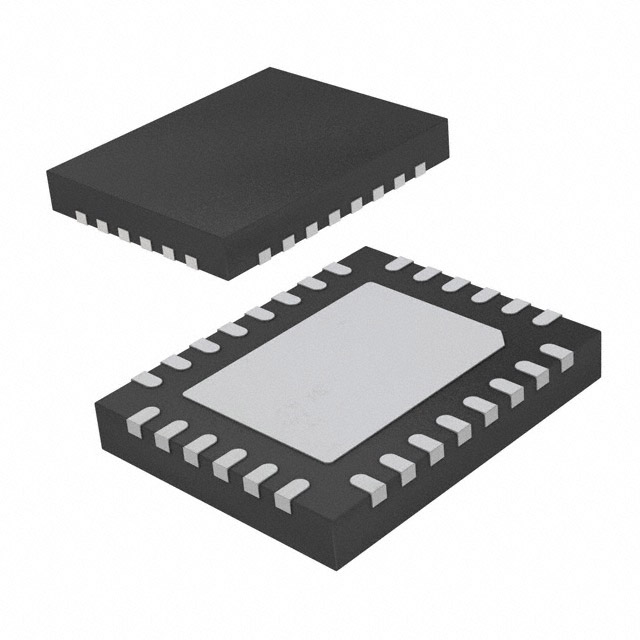
-
MP8007GV-Z
Monolithic Power Systems Inc.
-
TPS23861PWR
Texas Instruments
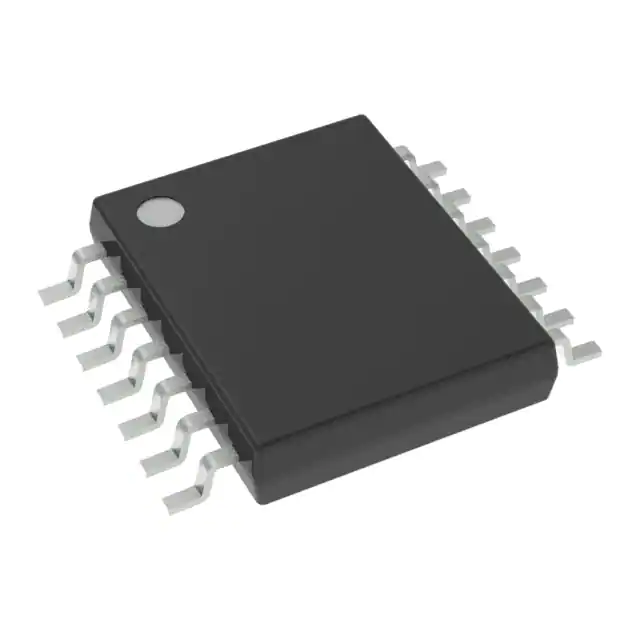
-
TPS23753PWR
Texas Instruments
-
PD69201ILD-TR
Microchip Technology
-
SI3402-B-GM
Skyworks Solutions Inc.
-
SI3402-B-GMR
Skyworks Solutions Inc.
-
SI34071-A01-GMR
Skyworks Solutions Inc.
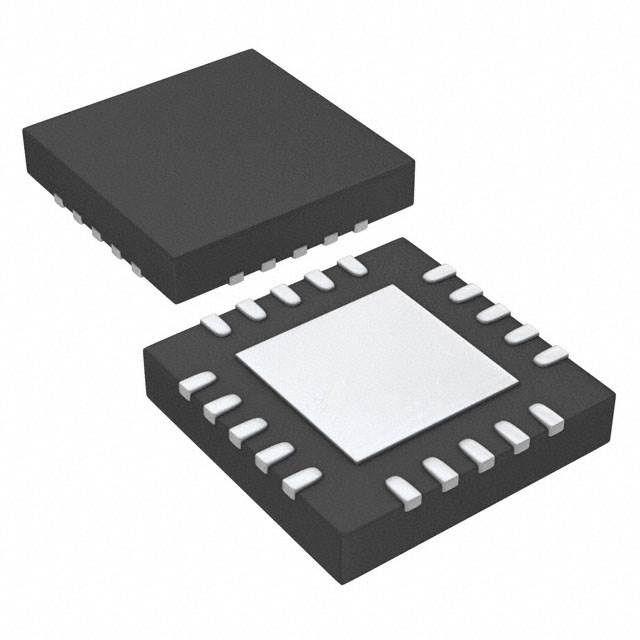
-
SI3404-A-GMR
Skyworks Solutions Inc.
Tech Hub

TTL and CMOS logic families differ in thresholds, loading, output drive, power and timing. This engineering guide compares 74HC and 74HCT, calculates noise margins and checks 3.3 V/5 V compatibility.

A practical engineering guide to 3.3V and 5V logic compatibility, input thresholds, resistor dividers, translator ICs, MOSFET level shifting, I2C pull-ups, timing limits and power-sequencing risks.

The 74HC595 uses push-pull logic outputs, while the TPIC6B595 uses 50 V open-drain DMOS sinks for higher-power loads. This guide compares timing, current limits, 3.3 V interfacing, load wiring, thermal…

The 74HC595 converts serial data into eight stable parallel outputs. This guide covers pin functions, shift and storage timing, OE and MR behavior, drive-current limits, cascading, voltage compatibilit…

A technical comparison of level-sensitive latches and edge-triggered flip-flops, covering timing windows, setup and hold limits, master–slave operation, time borrowing, race-through, HDL inference and…

A D latch stores one bit while Enable controls when data can pass. This reference covers gate-level operation, truth tables, transparency, setup and hold timing, LE versus OE, common ICs and practical …

An SR latch stores one bit through cross-coupled feedback. This engineering reference covers NOR and NAND implementations, truth tables, forbidden-state recovery, gated operation, switch debouncing, fa…

Latch circuits retain one bit through feedback. This technical reference covers SR and D latches, truth tables, transparency, timing limits, latch-versus-flip-flop behavior, applications and common log…

An engineering guide to LED driver operation, constant-current and constant-voltage outputs, linear and switching topologies, dimming, IC selection, calculations, replacement compatibility, and fault c…

Operational amplifier guide covering op amp basics, feedback, ideal vs real op amps, common configurations, buffer circuits, offset, bias current, gain-bandwidth, slew rate, rail-to-rail limits and sel…


