
 My Inquiry
 My Account


Microchip Technology PD69200C-016721
- Part No.:
- PD69200C-016721
- Manufacturer:
- Microchip Technology
- Category:
- Power Over Ethernet (PoE) Controllers
- Package:
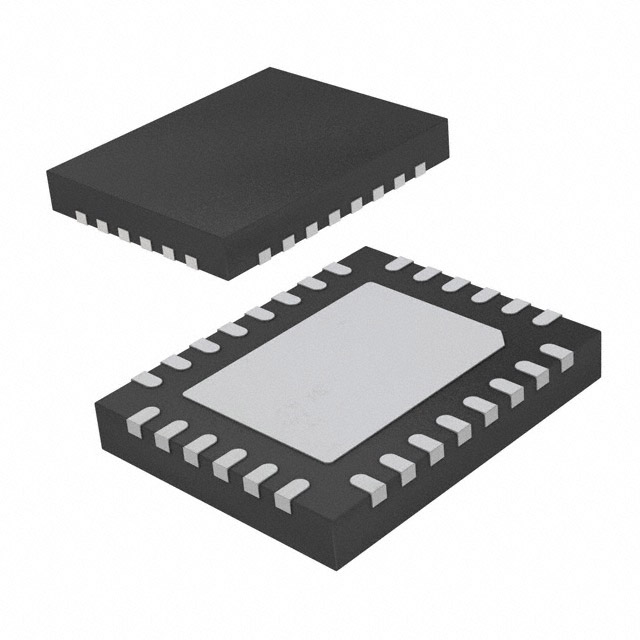
- 32-VFQFN Exposed Pad
- Datasheet:
-
 PD69200C-016721.pdf
- Description:
- MCU
- Quantity:
- Payment:

- Shipping:

Inventory:3,113
Please send an inquiry. Send us your inquiry, and we will respond immediately.
Product details
Overview
PD69200C-016721 from Microchip Technology is a Power over Ethernet (PoE) Power Sourcing Equipment (PSE) controller IC designed for IEEE 802.3af/at/bt and HDBaseT (PoH) compliant systems. It integrates with PD69208T4/PD69204T4/PD69208M PoE managers, supports up to 48 logical ports via cascading, delivers up to 90 W per four-pair port, and operates in a 32-pin 5 mm × 5 mm QFN package rated for –40 °C to +85 °C ambient.
For engineers reviewing the PD69200C-016721 datasheet, PD69200C-016721 pinout, PD69200C-016721 application, or PD69200C-016721 equivalent, key selection criteria include IEEE 802.3bt compliance, SPI/I2C/UART host interface flexibility, 16-power-bank architecture, fast/perpetual PoE support, and firmware-upgradability via serial interfaces.
Technical Context
The PD69200C-016721 implements a hierarchical PSE control architecture: it communicates with PoE manager ICs (e.g., PD69208T4) via 1 MHz SPI slave interface while supporting independent host control via UART (19.2 kbps) or I2C (400 kHz with clock stretch). Its firmware-pre-programmed and field-upgradable-enables three power management modes (Class, Dynamic, Static) and full port-level status monitoring including legacy detection and LED stream control.
Based on the NXP MKL15Z128VFM4 microcontroller core, the PD69200C-016721 provides integrated analog sensing (VDDA, VAIO), digital I/O (xINT_OUT, xDISABLE_PORTS, xSys_OK), and configurable communication interface selection (via I2C_ADDR_MEAS pin voltage), enabling flexible integration into enterprise switches, IP phone infrastructure, and smart building PoE systems without requiring external microcontrollers.
Key Specifications
| Parameter | Value and Actual Design Meaning |
|---|---|
| IEEE Standards | Complies with 802.3af, 802.3at, 802.3bt, and HDBaseT (PoH) - enables interoperable multi-class, high-power PoE delivery |
| Max Port Power | 90 W per four-pair port (802.3bt Type 6) - supports high-power devices like PTZ cameras and thin clients |
| Port Scalability | Cascades up to 12 PoE devices for 48 logical ports - eliminates need for multiple standalone controllers in large switches |
| Power Banks | 16 independent power banks across four supplies - enables granular power budgeting and fault isolation |
| Supply Voltage | 3.0 V to 3.63 V (VDD/VDDA) - compatible with standard 3.3 V system rails and low-noise LDOs |
| Operating Temp | –40 °C to +85 °C - qualified for industrial and telecom equipment environments |
| Package | 32-pin QFN, 5 mm × 5 mm - surface-mount compatible with automated assembly and thermal vias for θJA = 33 °C/W |
Pinout & Package
The PD69200C-016721 is housed in a RoHS-compliant, MSL3-rated 32-pin QFN package (5 mm × 5 mm) with exposed thermal pad (ePAD) requiring connection to VSSA for thermal performance. Pin layout supports SPI master-to-manager communication, dual-host interfaces (UART/I2C), interrupt signaling, LED stream control, and system-level functions including port disable and system OK indication.
| Pin/Terminal | Circuit Role | Design Meaning |
|---|---|---|
| ESPI_xCS (Pin 3) | SPI Chip Select Output | Active-low enable for SPI communication with PoE manager ICs; requires external pull-up |
| UART0_RX / UART0_TX (Pins 11–12) | Full-duplex UART Interface | 19.2 kbps host command/reply channel using 15-byte protocol; RX requires pull-up resistor |
| I2C0_SCL / I2C0_SDA (Pins 20–21) | I2C Bidirectional Bus | 400 kHz interface with mandatory clock stretch support; both lines require pull-ups |
| I2C_ADDR_MEAS (Pin 22) | Analog Address Selection Input | Voltage level sets UART/I2C mode and 7-bit I2C address (0x04 to 0x3C); resistor-based configuration |
| xINT_OUT (Pin 25) | Interrupt Output | Active-low signal indicating pre-configured events (e.g., port fault, power limit exceeded) |
| xDISABLE_PORTS (Pin 31) | Global Port Disable Input | Active-low hardware kill switch shutting down all PoE ports immediately upon assertion |
| xSys_OK/LED (Pin 32) | System Validity Indicator | Active-low output reflecting firmware health and system readiness; software-maskable behavior |
Key Features
| Feature | Design Value |
|---|---|
| Firmware Upgradability | Field updates via UART or I2C without reprogramming hardware - enables feature enhancements and bug fixes post-deployment |
| Multi-Interface Host Control | Simultaneous support for SPI (to managers), plus UART or I2C (to host MCU) - decouples PSE control from host processor timing constraints |
| Fast & Perpetual PoE | Accelerated classification and continuous power maintenance - reduces detection latency and prevents unintended disconnects during transient load changes |
| LED Stream Support | Dedicated xLED_CS/xLED_LATCH/xLED_OE outputs - drives multi-color status LEDs per port without host CPU overhead |
| Legacy Device Detection | Backward compatibility with non-standard PoE devices - ensures interoperability with older powered equipment |
Applications
| Enterprise Network Switch | IP Phone Infrastructure |
|---|---|
Use Scenario: 24- or 48-port managed Ethernet switch delivering PoE to VoIP phones, wireless APs, and security cameras. IC Role / Device Role / Timing Role: Central PSE controller coordinating up to 48 ports across cascaded PD69208T4 managers; manages power allocation, fault recovery, and telemetry reporting. Use Value: Enables IEEE 802.3bt Type 6 (90 W) delivery to high-end endpoints while maintaining strict Class-based power budgets and real-time port status visibility. | Use Scenario: Midspan or endpoint PoE injector powering multiple VoIP desk phones with auxiliary USB or Bluetooth modules. IC Role / Device Role / Timing Role: Standalone PSE controller interfacing directly with host MCU via UART/I2C; handles classification, power ramp, and disconnect sequencing per port. Use Value: Supports fast PoE negotiation and perpetual power hold to prevent call drops during handset firmware updates or Bluetooth pairing cycles. |
| Smart Building Controller | Industrial IoT Gateway |
Use Scenario: DIN-rail mounted gateway supplying PoE to occupancy sensors, lighting controllers, and HVAC actuators in commercial buildings. IC Role / Device Role / Timing Role: PSE controller operating in static power mode with fixed per-port limits; integrates with building management system via UART telemetry. Use Value: Provides deterministic power delivery and fault logging for safety-critical building automation systems, meeting EN 62368-1 requirements. | Use Scenario: Ruggedized edge gateway powering PoE-enabled industrial cameras, PLC I/O modules, and wireless sensor nodes in factory settings. IC Role / Device Role / Timing Role: PSE controller leveraging cascade topology to scale from 8 to 48 ports; uses interrupt-driven event handling for rapid fault response. Use Value: Delivers 45 W two-pair or 90 W four-pair power with robust ESD immunity (±2 kV HBM) suitable for electrically noisy industrial environments. |
Equivalent & Alternatives
The following parts are listed as comparable options for similar PoE PSE controller applications.
| Alternative Part | Technical Difference | Application Difference | Selection Advice |
|---|---|---|---|
| PD69220 | Pin-compatible with identical feature set; newer SAM D21-based design; recommended for new designs | Same IEEE 802.3af/at/bt compliance and 48-port scalability; differs in underlying MCU architecture and firmware versioning | Select PD69220 when starting new designs requiring long-term roadmap support and latest Microchip PSE firmware features |
| PD69210 | Also SAM D21-based; supports same standards but lacks pin compatibility with PD69200C-016721 | Targeted at cost-optimized mid-port-count systems; does not support identical PCB layout reuse | Choose PD69210 for greenfield designs prioritizing BOM cost over legacy board compatibility |
Compared with PD69220 and PD69210, the PD69200C-016721 offers verified drop-in replacement capability in existing NXP-based designs, retains full firmware backward compatibility, and simplifies migration paths where board redesign is constrained - making it the only option for sustaining production of legacy PoE systems.
Availability
PD69200C-016721 is available at Aetrix Electronics and suitable for enterprise network switches, IP phone infrastructure, and smart building controllers requiring stable component supply, long-lifecycle support, and guaranteed RoHS-compliant sourcing.
Supply support for PD69200C-016721 includes scheduled delivery planning, volume procurement assistance, BOM continuity management, traceable sourcing, and lifecycle availability coordination for OEM customers, industrial embedded developers, connected-device designers, and electronics production programs.
Manufacturer
Microchip Technology Inc. is a leading provider of microcontroller, mixed-signal, analog, and Flash-IP solutions, serving automotive, industrial, consumer, and communications markets with secure, reliable semiconductor products.
The PD69200C-016721 belongs to Microchip's PoE PSE Controller product line, engineered specifically to simplify IEEE 802.3bt-compliant high-power PoE system design while enabling scalable, software-defined power management for next-generation networking infrastructure.
FAQ
What IEEE PoE standards does the PD69200C-016721 support?
The PD69200C-016721 supports IEEE 802.3af (Type 1), 802.3at (Type 2), 802.3bt (Types 3 and 4), and HDBaseT (PoH) standards. It performs full signature detection, classification, and power delivery per port, including legacy device detection. This enables interoperability with a broad range of powered devices from VoIP phones to 90 W PTZ cameras. The PD69200C-016721 firmware implements all required physical layer timing and safety checks defined in Clause 33 and Clause 145 of IEEE Std 802.3-2018.
How is host communication configured on the PD69200C-016721?
Host communication on the PD69200C-016721 is selected via the I2C_ADDR_MEAS pin (Pin 22): applying specific voltage levels sets either UART or I2C mode and determines the 7-bit I2C address (0x04 to 0x3C). UART operates at 19.2 kbps (8N1), while I2C runs at up to 400 kHz with mandatory clock stretch support. Both interfaces use a standardized 15-byte protocol for commands and telemetry. The PD69200C-016721 can operate stand-alone or under host control - no external microcontroller is required for basic operation.
Can the PD69200C-016721 be used in a cascaded PoE system?
Yes, the PD69200C-016721 supports cascading up to 12 PoE controller ICs to manage 48 logical ports. It communicates with PD69208T4, PD69204T4, or PD69208M PoE managers via a dedicated 1 MHz SPI bus (ESPI_xCS, ESPI_SCK, ESPI_MOSI, ESPI_MISO). Each manager handles up to four ports, and the PD69200C-016721 coordinates power allocation, priority, and fault reporting across the entire chain. This architecture eliminates the need for multiple independent controllers in high-port-count switches.
What are the thermal requirements for the PD69200C-016721?
The PD69200C-016721 has a junction-to-ambient thermal resistance (θJA) of 33 °C/W and junction-to-case (θJC) of 1.8 °C/W. Its 5 mm × 5 mm QFN package includes an exposed thermal pad (ePAD) that must be soldered to a VSSA-connected copper plane with thermal vias. Recommended reflow peak temperature is 260 °C (40 s max), and the device is MSL3 rated. For sustained 90 W operation across multiple ports, PCB layout must provide ≥4 cm² of 2-oz copper connected to the ePAD with ≥6 thermal vias (0.3 mm diameter).
Is firmware upgrade supported on the PD69200C-016721 after deployment?
Yes, the PD69200C-016721 supports field firmware upgrades via its UART or I2C interface using the same 15-byte protocol used for runtime commands. Firmware images are delivered as binary payloads and validated before execution. Upgrade capability allows end users to add new features (e.g., enhanced diagnostics), fix bugs, or adapt to evolving PoE standards without hardware modification. The PD69200C-016721 ships with pre-programmed firmware; revision details are encoded in the part number suffix (e.g., "C-016721" indicates firmware version C and parameter set 016721).
PD69200C-016721 Specifications
- Product attributes
- Attribute value
- Manufacturer:
- Microchip Technology
- Series:
- -
- Package/Case:
- 32-VFQFN Exposed Pad
- Packaging:
- Bulk
- Product Status:
- Obsolete
- Type:
- Controller (PSE)
- Number of Channels:
- 48
- Power - Max:
- 90 W
- Internal Switch(s):
- No
- Auxiliary Sense:
- Yes
- Standards:
- 802.3at (PoE+), 802.3af (PoE), 802.3bt
- Voltage - Supply:
- 3V ~ 3.63V
- Current - Supply:
- -
- Operating Temperature:
- -40°C ~ 85°C (TA)
- Mounting Type:
- Surface Mount
- Supplier Device Package:
- 32-QFN (5x5)
PD69200C-016721 FAQ
1.How can I place an order for PD69200C-016721 through Aetrix?
Please submit a Request for Quotation (RFQ) for PD69200C-016721 on Aetrix. Our sales agent will provide a competitive quotation and guide you through the order confirmation once you accept the terms.
2.Are the price and stock information for PD69200C-016721 reliable?
The price and inventory of PD69200C-016721 are updated periodically and may fluctuate due to market conditions. Stock and pricing data are typically refreshed every 24 hours. Quotation validity for PD69200C-016721 is usually 5 days.
3.What payment methods are accepted for PD69200C-016721?
We accept Wire Transfer, PayPal, Credit Card, Western Union, MoneyGram, and Escrow for PD69200C-016721 transactions.
Note: Certain payment methods may incur a processing fee.
4.How is shipping managed for PD69200C-016721?
PD69200C-016721 orders can be shipped via leading logistics carriers, including DHL, UPS, FedEx, TNT, or Registered Mail.
Once your PD69200C-016721 order is processed, you will receive an email with the shipment details and tracking number.
Note: Tracking information may take up to 24 hours to appear. Express delivery typically takes 3–5 business days.
5.How can I obtain technical support or documentation for PD69200C-016721?
For technical support, including PD69200C-016721 datasheets, pinout diagrams, or application guidance, please contact our engineering support team. They can provide detailed documentation and assistance for your PD69200C-016721 requirements.
6.How does Aetrix verify that PD69200C-016721 is sourced from the original manufacturer or authorized distributors?
All PD69200C-016721 products on Aetrix are procured from qualified distributors and authorized channels. Our dedicated quality assurance team conducts strict verification, including traceability checks and, if necessary, third-party testing. This ensures that PD69200C-016721 meets industry standards.
7.What is the process for return or replacement of PD69200C-016721?
All PD69200C-016721 units undergo pre-shipment inspection (PSI). If there is an issue with PD69200C-016721, returns or replacements are accepted under the following conditions:
1.Quantity discrepancies, incorrect items, or visible external defects (such as breakage or corrosion), acknowledged by Aetrix.
2.The issue is reported within 90 days of delivery.
3.The PD69200C-016721 part is unused and in its original packaging.
Return procedure for PD69200C-016721:
1.Submit a request within 90 days.
2.Obtain a Return Material Authorization (RMA) from Aetrix.
PD69200C-016721 Tags

-
TPS2378DDAR
Texas Instruments
-
TPS23753APWR
Texas Instruments
-
TPS23756PWPR
Texas Instruments
-
TPS23750PWPR
Texas Instruments
-
MP8007GV-Z
Monolithic Power Systems Inc.
-
TPS23861PWR
Texas Instruments
-
TPS23753PWR
Texas Instruments
-
PD69201ILD-TR
Microchip Technology
-
SI3402-B-GM
Skyworks Solutions Inc.
-
SI3402-B-GMR
Skyworks Solutions Inc.
-
SI34071-A01-GMR
Skyworks Solutions Inc.
-
SI3404-A-GMR
Skyworks Solutions Inc.
Tech Hub

TTL and CMOS logic families differ in thresholds, loading, output drive, power and timing. This engineering guide compares 74HC and 74HCT, calculates noise margins and checks 3.3 V/5 V compatibility.

A practical engineering guide to 3.3V and 5V logic compatibility, input thresholds, resistor dividers, translator ICs, MOSFET level shifting, I2C pull-ups, timing limits and power-sequencing risks.

The 74HC595 uses push-pull logic outputs, while the TPIC6B595 uses 50 V open-drain DMOS sinks for higher-power loads. This guide compares timing, current limits, 3.3 V interfacing, load wiring, thermal…

The 74HC595 converts serial data into eight stable parallel outputs. This guide covers pin functions, shift and storage timing, OE and MR behavior, drive-current limits, cascading, voltage compatibilit…

A technical comparison of level-sensitive latches and edge-triggered flip-flops, covering timing windows, setup and hold limits, master–slave operation, time borrowing, race-through, HDL inference and…

A D latch stores one bit while Enable controls when data can pass. This reference covers gate-level operation, truth tables, transparency, setup and hold timing, LE versus OE, common ICs and practical …

An SR latch stores one bit through cross-coupled feedback. This engineering reference covers NOR and NAND implementations, truth tables, forbidden-state recovery, gated operation, switch debouncing, fa…

Latch circuits retain one bit through feedback. This technical reference covers SR and D latches, truth tables, transparency, timing limits, latch-versus-flip-flop behavior, applications and common log…

An engineering guide to LED driver operation, constant-current and constant-voltage outputs, linear and switching topologies, dimming, IC selection, calculations, replacement compatibility, and fault c…

Operational amplifier guide covering op amp basics, feedback, ideal vs real op amps, common configurations, buffer circuits, offset, bias current, gain-bandwidth, slew rate, rail-to-rail limits and sel…


