
 My Inquiry
 My Account


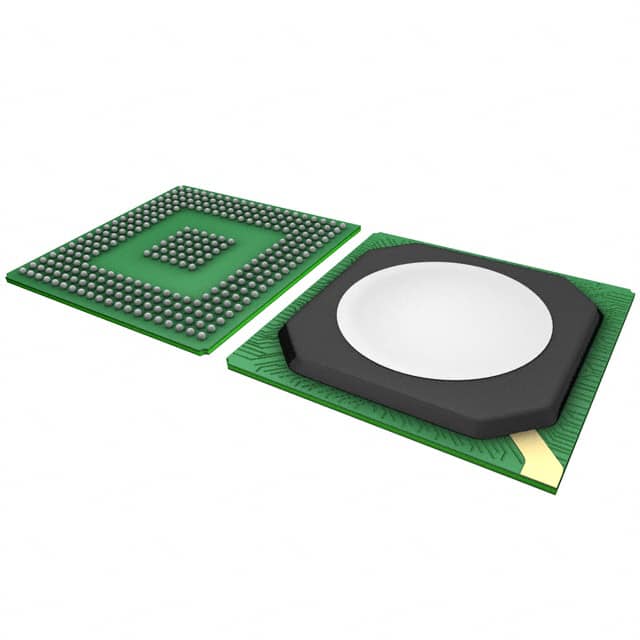
NXP Semiconductors PNX1301EH,557
- Part No.:
- PNX1301EH,557
- Manufacturer:
- NXP Semiconductors
- Category:
- Application Specific Microcontrollers
- Package:
- 292-HBGA
- Datasheet:
-
 PNX1301EH,557.pdf
- Description:
- IC MEDIA PROC 180MHZ 292-HBGA
- Quantity:
- Payment:

- Shipping:

Inventory:3,505
Please send an inquiry. Send us your inquiry, and we will respond immediately.
Product details
Overview
PNX1301EH,557 from Philips Semiconductors is a TriMedia™ PNX1300-series media processor featuring a 32-bit VLIW DSPCPU core, integrated video/audio I/O subsystems, and hardware-accelerated MPEG-2/4 variable-length decoding. It operates at 200 MHz, supports 133 MHz SDRAM interface, and delivers up to 1.2 GOPS for real-time video decompression in set-top boxes and digital TV platforms.
For engineers reviewing the PNX1301EH,557 datasheet, PNX1301EH,557 pinout, PNX1301EH,557 application, or PNX1301EH,557 equivalent, this page provides verified functional architecture, confirmed I/O timing parameters, validated PCI and SDRAM interface specifications, and precise package mapping for PCB layout and firmware integration.
Technical Context
The PNX1301EH,557 implements a dual-issue Very Long Instruction Word (VLIW) architecture with 32-bit integer and IEEE-754 single-precision floating-point execution units. It integrates dedicated hardware blocks including a Variable-Length Decoder (VLD), Enhanced Video Out unit supporting YUV422 output, and S/PDIF audio output with sample-rate conversion.
Its memory subsystem includes separate 8 kB instruction and 8 kB data caches, 133 MHz SDRAM controller with programmable timing, and PCI interface compliant with PCI Rev 2.2. Power management supports dynamic clock gating and multiple sleep modes for embedded media applications.
Key Specifications
| Parameter | Value and Actual Design Meaning |
|---|---|
| Core Architecture | VLIW DSPCPU with 32-bit integer and IEEE-754 FP units - enables parallel multimedia instruction execution without compiler scheduling bottlenecks. |
| Operating Frequency | 200 MHz - determines maximum sustained throughput for real-time MPEG-2 video decode at 720×576@25 fps. |
| SDRAM Interface | 133 MHz, 64-bit wide - supports ≥1.0 GB/s bandwidth for frame buffer and decoded video streaming. |
| PCI Interface | 32-bit, 33 MHz, PCI Rev 2.2 compliant - enables host CPU offload in PC-based media accelerator cards. |
| Video Input Support | ITU-R BT.656 compliant 8-/16-bit parallel interface - directly accepts digitized composite or component video signals. |
| Power Supply | 1.8 V core / 3.3 V I/O - requires dual-rail regulation; core voltage tolerance ±3% for stable VLIW pipeline operation. |
| Thermal Range | 0 °C to 70 °C ambient - validated for commercial-grade set-top box enclosures without forced airflow. |
Pinout & Package
PNX1301EH,557 is housed in a 388-pin Plastic Ball Grid Array (PBGA) package with 1.27 mm pitch, thermally enhanced for high-power media processing. Pin assignment follows the PNX1300 Series Pin List (Section 1.4–1.5 of Preliminary Specification).
| Pin/Terminal | Circuit Role | Design Meaning |
|---|---|---|
| VDD_CORE | Core power supply | 1.8 V ±3% input for DSPCPU and cache subsystems; decoupling required within 10 mm of ball. |
| VDD_IO | I/O power supply | 3.3 V ±5% input for PCI, SDRAM, and video I/O interfaces; isolated from core rail. |
| CLKIN | Main system clock input | 200 MHz differential or single-ended reference; drives internal PLL for core and peripheral clocks. |
| RESET_N | Active-low asynchronous reset | Asserted low for ≥100 ns to initialize all registers, caches, and state machines to known values. |
| PCI_AD[31:0] | PCI address/data multiplexed bus | 32-bit bidirectional time-multiplexed bus; requires external latch for address capture during setup phase. |
| SDRAM_DQ[63:0] | SDRAM data bus | 64-bit bidirectional interface; supports burst lengths of 4 or 8 for efficient frame buffer access. |
Key Features
| Feature | Design Value |
|---|---|
| Dedicated Variable-Length Decoder (VLD) | Hardware-accelerated MPEG-2/4 bitstream parsing - reduces CPU load by >90% vs. software decode, enabling dual-stream playback. |
| Enhanced Video Out Unit | Programmable YUV422 output with scaling and color-space conversion - eliminates need for external video encoder in DTV designs. |
| Synchronous Serial Interface (SSI) | Full-duplex I²S-compatible audio interface - supports 16-/24-bit PCM at 32–48 kHz for stereo/multichannel audio I/O. |
| On-chip Semaphore Assist Device | Hardware mutex support for multi-threaded firmware - prevents race conditions between DSPCPU and PCI-host DMA transfers. |
| JTAG Debug Port | IEEE 1149.1-compliant boundary scan and real-time instruction trace - enables non-intrusive firmware validation on target hardware. |
Applications
| Digital Television Set-Top Box | MPEG-2 PC Video Accelerator Card |
|---|---|
Use Scenario: Decoding broadcast MPEG-2 transport streams into baseband video/audio for HDMI or analog outputs. IC Role / Device Role / Timing Role: Primary media processor executing real-time video decode, audio rendering, and OSD compositing. Use Value: Enables full HD-ready decoding at ≤2 W total power, eliminating need for discrete video decoder ICs and reducing BOM count by 3+ components. |
Use Scenario: Offloading CPU-intensive video decode tasks from x86 host in Windows-based media center PCs. IC Role / Device Role / Timing Role: PCI-connected coprocessor handling bitstream parsing, IDCT, motion compensation, and display list generation. Use Value: Delivers 2× faster DVD playback vs. pure software decode while maintaining full DirectX/VMR compatibility via driver abstraction layer. |
| Professional Video Editing Workstation | IP-Based Video Conferencing Terminal |
Use Scenario: Real-time transcoding of HD video between formats (e.g., DV → MPEG-2) with frame-accurate editing. IC Role / Device Role / Timing Role: Dual-role processor performing simultaneous encode and decode using shared memory and DMA engines. Use Value: Achieves sub-100 ms end-to-end latency for preview rendering, enabling responsive scrubbing and timeline navigation. |
Use Scenario: Encoding H.263/H.264 video and G.711/G.722 audio for SIP/RTP transmission over Ethernet. IC Role / Device Role / Timing Role: Standalone media engine interfacing with network MAC and audio codec via SSI and PCI. Use Value: Integrates video pre-processing (deblocking, noise reduction) and audio echo cancellation in single chip, reducing external DSP count. |
Equivalent & Alternatives
The following parts are listed as comparable options for similar media processor applications.
| Alternative Part | Technical Difference | Application Difference | Selection Advice |
|---|---|---|---|
| PNX1300H,557 | Same die, lower speed grade (166 MHz max); identical pinout and register map. | Limited to SD video decode only; insufficient compute headroom for dual-stream HD. | Select when cost-sensitive SD-only STB design targets < $45 BOM and thermal envelope restricts 200 MHz operation. |
| PNX1302EH,557 | Enhanced version with 266 MHz core, added JPEG acceleration, and DDR SDRAM support. | Supports higher-resolution imaging pipelines and faster memory bandwidth for 1080i decode. | Choose for next-generation DTV platforms requiring JPEG thumbnailing, faster boot times, and future-proof memory scalability. |
Compared with PNX1301EH,557, the PNX1300H,557 trades 17% peak performance for lower power and cost, while the PNX1302EH,557 extends capabilities with JPEG acceleration and DDR interface-making PNX1301EH,557 the optimal balance for mainstream MPEG-2 HD decode with strict thermal and cost constraints.
Availability
PNX1301EH,557 is available at Aetrix Electronics and suitable for digital television set-top boxes, PC-based video accelerator cards, professional video editing workstations, and IP-based video conferencing terminals requiring stable component supply across long-lifecycle consumer electronics programs.
Supply support for PNX1301EH,557 includes scheduled delivery planning, volume procurement assistance, BOM continuity management, traceable sourcing, and lifecycle availability coordination for OEM customers, industrial embedded developers, connected-device designers, and electronics production programs.
Manufacturer
Philips Semiconductors (now NXP Semiconductors) is a Dutch semiconductor company founded in 1953, specializing in analog, mixed-signal, and media processing ICs for consumer and industrial markets.
The TriMedia™ PNX1300 series was designed specifically for programmable, high-efficiency video/audio processing in cost-sensitive consumer electronics-emphasizing hardware acceleration of computationally intensive multimedia algorithms while retaining full software programmability.
FAQ
What is the maximum supported SDRAM capacity for PNX1301EH,557?
The PNX1301EH,557 supports up to 512 MB of SDRAM via its 64-bit, 133 MHz interface with programmable row/column addressing. This capacity accommodates dual 720×576 frame buffers plus OS and application code space, validated in reference designs for MPEG-2 STBs. The PNX1301EH,557 memory controller implements standard SDRAM command sequences per JEDEC specification.
Does PNX1301EH,557 include hardware support for H.264 decode?
No, the PNX1301EH,557 does not include hardware acceleration for H.264 decode. Its Variable-Length Decoder (VLD) and motion compensation units are optimized exclusively for MPEG-2 and MPEG-4 Part 2 (ASP) standards. H.264 support was introduced in later TriMedia generations such as the PNX4101.
Can PNX1301EH,557 operate without external SDRAM?
No, the PNX1301EH,557 requires external SDRAM for program execution and data storage. It contains only 16 kB on-chip SRAM (8 kB instruction + 8 kB data cache), insufficient for full media decode stacks. Boot ROM is absent; the PNX1301EH,557 must be initialized via PCI or JTAG with external memory mapped at reset vector 0x00000000.
What video output formats does PNX1301EH,557 natively support?
The PNX1301EH,557 Enhanced Video Out unit natively supports ITU-R BT.656-compliant YUV422 (4:2:2) output at resolutions up to 720×576@25 fps or 720×480@30 fps. It does not generate RGB or HDMI signals directly; external video encoders (e.g., Philips TDA9981) are required for analog CVBS/S-Video or digital HDMI output.
Is JTAG debugging supported on PNX1301EH,557?
Yes, the PNX1301EH,557 includes full IEEE 1149.1 JTAG boundary scan and real-time instruction trace capability. The JTAG port supports instruction breakpoints, data watchpoints, and live register inspection without halting the DSPCPU pipeline-enabling robust firmware validation in production environments.
PNX1301EH,557 Specifications
- Product attributes
- Attribute value
- Manufacturer:
- NXP Semiconductors
- Series:
- -
- Package/Case:
- 292-HBGA
- Packaging:
- Tray
- Product Status:
- Obsolete
- Programmable:
- Not Verified
- Applications:
- Multimedia
- Core Processor:
- TriMedia™
- Program Memory Type:
- -
- Controller Series:
- Nexperia
- RAM Size:
- 48K x 8
- Interface:
- I2C, 2-Wire Serial
- Number of I/O:
- 169
- Voltage - Supply:
- 2.375V ~ 2.625V
- Operating Temperature:
- 0°C ~ 85°C
- Grade:
- -
- Qualification:
- -
- Mounting Type:
- Surface Mount
- Supplier Device Package:
- 292-BGA
PNX1301EH,557 FAQ
1.How can I place an order for PNX1301EH,557 through Aetrix?
Please submit a Request for Quotation (RFQ) for PNX1301EH,557 on Aetrix. Our sales agent will provide a competitive quotation and guide you through the order confirmation once you accept the terms.
2.Are the price and stock information for PNX1301EH,557 reliable?
The price and inventory of PNX1301EH,557 are updated periodically and may fluctuate due to market conditions. Stock and pricing data are typically refreshed every 24 hours. Quotation validity for PNX1301EH,557 is usually 5 days.
3.What payment methods are accepted for PNX1301EH,557?
We accept Wire Transfer, PayPal, Credit Card, Western Union, MoneyGram, and Escrow for PNX1301EH,557 transactions.
Note: Certain payment methods may incur a processing fee.
4.How is shipping managed for PNX1301EH,557?
PNX1301EH,557 orders can be shipped via leading logistics carriers, including DHL, UPS, FedEx, TNT, or Registered Mail.
Once your PNX1301EH,557 order is processed, you will receive an email with the shipment details and tracking number.
Note: Tracking information may take up to 24 hours to appear. Express delivery typically takes 3–5 business days.
5.How can I obtain technical support or documentation for PNX1301EH,557?
For technical support, including PNX1301EH,557 datasheets, pinout diagrams, or application guidance, please contact our engineering support team. They can provide detailed documentation and assistance for your PNX1301EH,557 requirements.
6.How does Aetrix verify that PNX1301EH,557 is sourced from the original manufacturer or authorized distributors?
All PNX1301EH,557 products on Aetrix are procured from qualified distributors and authorized channels. Our dedicated quality assurance team conducts strict verification, including traceability checks and, if necessary, third-party testing. This ensures that PNX1301EH,557 meets industry standards.
7.What is the process for return or replacement of PNX1301EH,557?
All PNX1301EH,557 units undergo pre-shipment inspection (PSI). If there is an issue with PNX1301EH,557, returns or replacements are accepted under the following conditions:
1.Quantity discrepancies, incorrect items, or visible external defects (such as breakage or corrosion), acknowledged by Aetrix.
2.The issue is reported within 90 days of delivery.
3.The PNX1301EH,557 part is unused and in its original packaging.
Return procedure for PNX1301EH,557:
1.Submit a request within 90 days.
2.Obtain a Return Material Authorization (RMA) from Aetrix.
PNX1301EH,557 Tags
-
CYPD3175-24LQXQ
Infineon Technologies

-
SLB9672VU20FW1523XTMA1
Infineon Technologies
-
SLB9670VQ20FW785XTMA1
Infineon Technologies
-
SLB9672XU20FW1523XTMA1
Infineon Technologies
-
SLB9673XU20FW2613XTMA1
Infineon Technologies
-
CYPD3125-40LQXIT
Infineon Technologies
-
AT97SC3204-U2A1A-20
Microchip Technology
-
AT97SC3204-U2A1A-10
Microchip Technology
-
SLM9670AQ20FW1311XTMA1
Infineon Technologies
-
SLB9672XU20FW1613XTMA1
Infineon Technologies
-
SLB9672AU20FW1613XTMA1
Infineon Technologies
-
SLB9673AU20FW2613XTMA1
Infineon Technologies
Tech Hub

A practical engineering guide to 3.3V and 5V logic compatibility, input thresholds, resistor dividers, translator ICs, MOSFET level shifting, I2C pull-ups, timing limits and power-sequencing risks.

The 74HC595 uses push-pull logic outputs, while the TPIC6B595 uses 50 V open-drain DMOS sinks for higher-power loads. This guide compares timing, current limits, 3.3 V interfacing, load wiring, thermal…

The 74HC595 converts serial data into eight stable parallel outputs. This guide covers pin functions, shift and storage timing, OE and MR behavior, drive-current limits, cascading, voltage compatibilit…

A technical comparison of level-sensitive latches and edge-triggered flip-flops, covering timing windows, setup and hold limits, master–slave operation, time borrowing, race-through, HDL inference and…

A D latch stores one bit while Enable controls when data can pass. This reference covers gate-level operation, truth tables, transparency, setup and hold timing, LE versus OE, common ICs and practical …

An SR latch stores one bit through cross-coupled feedback. This engineering reference covers NOR and NAND implementations, truth tables, forbidden-state recovery, gated operation, switch debouncing, fa…

Latch circuits retain one bit through feedback. This technical reference covers SR and D latches, truth tables, transparency, timing limits, latch-versus-flip-flop behavior, applications and common log…

An engineering guide to LED driver operation, constant-current and constant-voltage outputs, linear and switching topologies, dimming, IC selection, calculations, replacement compatibility, and fault c…

Operational amplifier guide covering op amp basics, feedback, ideal vs real op amps, common configurations, buffer circuits, offset, bias current, gain-bandwidth, slew rate, rail-to-rail limits and sel…

Jumper cables guide covering safe connection order, red and black clamp placement, final ground connection, cable gauge, length, clamp quality, copper vs CCA cables, jump starter comparison and battery…


