
 My Inquiry
 My Account


Diodes Incorporated PT8A3242WE
- Part No.:
- PT8A3242WE
- Manufacturer:
- Diodes Incorporated
- Category:
- Power Management - Specialized
- Package:
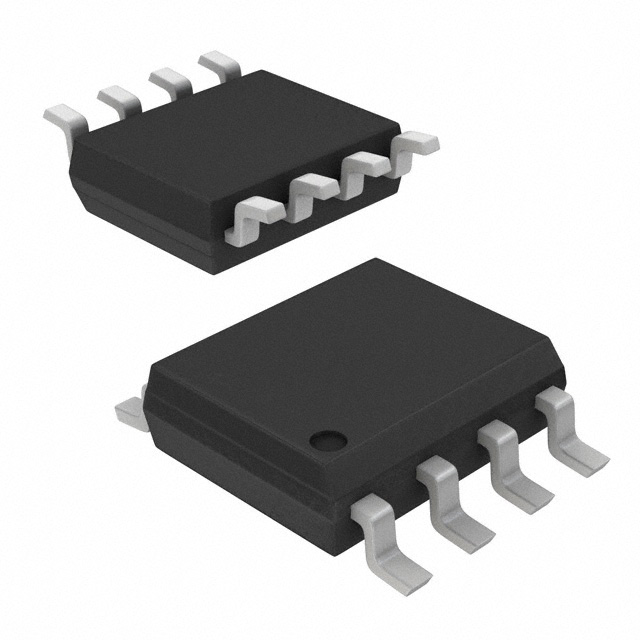
- 8-SOIC (0.154", 3.90mm Width)
- Datasheet:
-
 PT8A3242WE.pdf
- Description:
- HEATER CONTROLLER SO-8
- Quantity:
- Payment:

- Shipping:

Inventory:2,763
Please send an inquiry. Send us your inquiry, and we will respond immediately.
Product details
Overview
PT8A3242WE from Pericom Semiconductor is a mixed-signal CMOS LSI heating controller IC designed for automatic temperature regulation in 120V/240V hair curlers using external NTC sensors. It features dual-voltage operation, NTC open-circuit protection, auto-heating-off after 1-hour timer timeout (at 60 Hz), direct SCR gate drive, and two-key control interface. The device operates from 3.5–5.5 V, consumes ≤250 µA, and supports −20°C to +85°C ambient range.
For engineers reviewing the PT8A3242WE datasheet, PT8A3242WE pinout, PT8A3242WE application, or PT8A3242WE equivalent, key selection considerations include its dedicated NTC-based thermal feedback loop, fixed 1-hour auto-shutoff timing at 60 Hz, flash-mode LED indication (Pin 5), dual-voltage line sensing, and SOIC-8 package compatibility with reflow assembly.
Technical Context
The PT8A3242WE integrates a 2-bit ADC for NTC voltage sampling, internal clock synchronization to AC line frequency (50/60 Hz), and state-machine logic that transitions between reset, heating-on, and heating-off states. Its GATE output delivers active-high SCR trigger pulses modulated by NTC voltage thresholds (VNTC0–VNTC2) and line voltage level.
Unlike general-purpose MCUs, it implements fixed-function thermal control: NTC1 input detects resistance changes, NTC2 provides open-circuit flag output, CLK synchronizes timing to mains, and ON/OFF pins support two-key toggle control without external debouncing or firmware. Timer resolution is fixed at 216,000 clock cycles (≈1 h @ 60 Hz).
Key Specifications
| Parameter | Value and Actual Design Meaning |
|---|---|
| Supply Voltage | 3.5–5.5 V - Enables direct connection to 5 V rail without LDO; tolerates brown-out down to 3.5 V. |
| Operating Temp | −20°C to +85°C - Validated for consumer appliance environments including hair tool enclosures. |
| Auto-Off Timer | 1.2 h @ 50 Hz / 1.0 h @ 60 Hz - Fixed-count (216k CLK) safety timeout prevents overheating without software. |
| GATE Output Drive | 2.5 mA sink @ 0.5 V - Sufficient to directly trigger common low-power SCRs (e.g., MAC12D, BT134). |
| NTC Input Range | VNTC0 = 0.385×VCC, VNTC1 = 0.385×VCC, VNTC2 = 0.40×VCC - Three-level threshold detection enables coarse but robust temperature staging. |
| LED Indication Mode | Flash-only (Pin 5), non-constant - Indicates active heating state via 1/32 CLK frequency blink; Pin 7 inverted. |
| Power Dissipation | 500 mW max - Supports SOIC-8 package in thermally constrained PCB layouts with no heatsink required. |
Pinout & Package
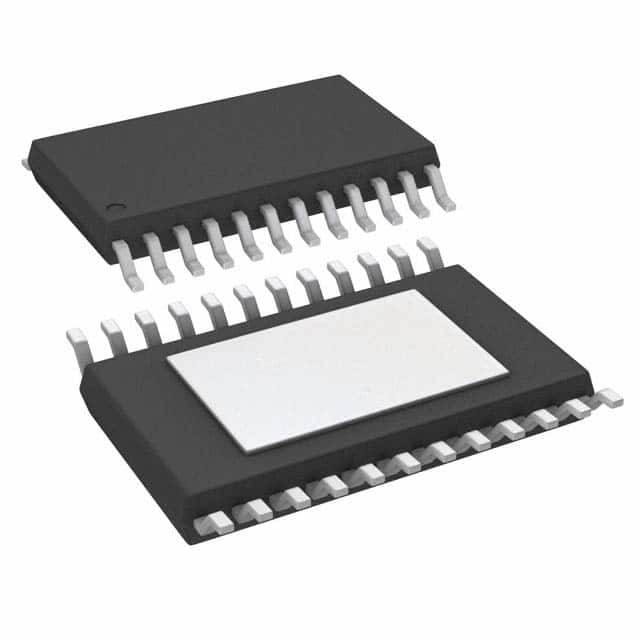
PT8A3242WE is supplied in a lead-free, RoHS-compliant SOIC-8 package (JEDEC MS-012E/AA), measuring 4.7–5.1 mm × 3.8–4.0 mm × 1.35–1.75 mm, optimized for automated surface-mount assembly and thermal reliability in compact appliances.
| Pin/Terminal | Circuit Role | Design Meaning |
|---|---|---|
| 1 (NTC1) | NTC voltage input | Analog input for NTC divider node; used for both temperature sensing and open-circuit detection. |
| 2 (NTC2) | NTC status output | Open-drain output pulled low when NTC is disconnected; high-impedance otherwise. |
| 3 (CLK) | AC line frequency input | Accepts zero-crossing signal from bridge rectifier; determines timer base and voltage detection mode. |
| 4 (GND) | Ground reference | Common return for analog and digital sections; must be low-impedance to avoid noise coupling into NTC path. |
| 5 (ON) | Heating-on button input / LED1 driver | Active-low momentary switch input; also drives LED1 in flash mode during heating state. |
| 6 (GATE) | SCR gate trigger output | Active-high output synchronized to CLK phase; pulse width and duty cycle vary per NTC voltage band. |
| 7 (OFF) | Heating-off button input / LED2 driver | Active-low switch input on PT8A3240–3; LED2 driver only on PT8A3244–7; inverted relative to Pin 5. |
| 8 (VDD) | Power supply input | 3.5–5.5 V DC supply; bypass capacitor (0.1 µF) required near pin for stable ADC and timing operation. |
Key Features
| Feature | Design Value |
|---|---|
| Dual-voltage line sensing | Automatically detects 120 V or 240 V AC input via CLK amplitude analysis-no external voltage divider or configuration needed. |
| NTC open-circuit protection | Halts GATE output and flashes LED2 at 1/8 CLK rate when NTC1–NTC2 loop opens-prevents uncontrolled heating due to sensor failure. |
| Fixed-function thermal control | Hardwired state machine eliminates need for firmware development, calibration, or external microcontroller in basic curler designs. |
| Direct SCR drive capability | GATE output sources ≥2.5 mA at 4.5 V-drives common triac/SCR gates without external transistor buffer stage. |
| Two-key user interface support | Separate ON and OFF inputs enable intuitive push-button control; internal debouncing and state retention simplify mechanical design. |
Applications
| Hair Curler Thermal Control | Flat Iron Temperature Regulation |
|---|---|
Use Scenario: Compact handheld curling iron requiring automatic shut-off, NTC-based temperature limiting, and dual-voltage compatibility for global markets. IC Role / Device Role / Timing Role: Primary thermal controller managing SCR power delivery, NTC feedback interpretation, and 1-hour safety timer based on AC line frequency. Use Value: Eliminates MCU and associated BOM cost while delivering certified thermal safety compliance (IEC 60335) through hardware-enforced timeout and open-NTC shutdown. | Use Scenario: Dual-plate flat iron with independent heating zones, where one PT8A3242WE controls each plate's SCR-driven heater. IC Role / Device Role / Timing Role: Standalone heating sequencer that activates SCR gate only when NTC voltage falls within safe operating bands and line voltage is confirmed. Use Value: Reduces PCB area and firmware complexity versus dual-channel MCU solutions; maintains consistent 1-hour auto-off across both zones without inter-processor sync. |
| Travel-Sized Hair Dryer Heater | Beauty Device Safety Module |
Use Scenario: Low-power travel dryer with single heating element, requiring fast thermal response and fail-safe shutdown under variable input voltage. IC Role / Device Role / Timing Role: Line-synchronized thermal manager interpreting NTC voltage to adjust SCR conduction angle and enforce hard timer limit. Use Value: Enables compact transformerless power supply design by accepting 120/240 V directly; avoids thermal runaway during NTC disconnection. | Use Scenario: Add-on safety module for third-party beauty tools lacking built-in thermal protection, retrofitted between heater and power source. IC Role / Device Role / Timing Role: Independent safety co-processor monitoring NTC integrity and enforcing maximum-on-time regardless of host controller behavior. Use Value: Provides UL/CE-certifiable thermal cut-off function without modifying original product firmware or layout-plug-and-play replacement for legacy controllers. |
Equivalent & Alternatives
The following parts are listed as comparable options for similar heating controller applications.
| Alternative Part | Technical Difference | Application Difference | Selection Advice |
|---|---|---|---|
| PT8A3240WE | Same SOIC-8 package and pinout; differs only in LED behavior (flash-on heating) and auto-off timer enabled. | Requires flash-mode LED feedback; identical thermal control logic and safety features. | Select when visual heating confirmation via blinking LED is preferred over constant illumination. |
| PT8A3246WE | Same SOIC-8 package and pinout; single-key operation (ON/OFF on Pin 5), flash-mode LED, no auto-off timer. | Eliminates OFF button requirement; removes fixed 1-hour timeout-requires external timer or host control. | Select when system-level timer management is handled elsewhere and simplified UI (one button) is prioritized. |
Compared with PT8A3240WE, PT8A3242WE removes constant LED mode but retains auto-off; compared with PT8A3246WE, it adds mandatory two-key control and restores the safety timer-making it optimal for standalone, self-contained curler designs needing both user clarity and regulatory compliance.
Availability
PT8A3242WE is available at Aetrix Electronics and suitable for hair curlers, flat irons, travel dryers, and beauty device safety modules requiring stable component supply, lead-free compliance, and SOIC-8 thermal reliability.
Supply support for PT8A3242WE includes scheduled delivery planning, volume procurement assistance, BOM continuity management, traceable sourcing, and lifecycle availability coordination for OEM customers, industrial embedded developers, connected-device designers, and electronics production programs.
Manufacturer
Pericom Semiconductor Corporation was a fabless analog/mixed-signal IC designer specializing in timing, interface, and power management solutions before its acquisition by Diodes Incorporated in 2016.
The PT8A324x series belongs to Pericom's dedicated appliance controller product line, engineered specifically for cost-sensitive, safety-critical thermal management in small domestic appliances without firmware overhead.
FAQ
What is the function of Pin 2 (NTC2) on the PT8A3242WE?
Pin 2 (NTC2) is an open-drain output that pulls low when the NTC sensor circuit is open (disconnected). During normal operation, it remains high-impedance. This signal enables external circuitry-or the internal logic-to detect NTC failure and disable GATE output immediately, preventing uncontrolled heating. Its behavior is defined in the functional description section of the datasheet and verified in the "Effect of NTC and CLK input voltage" table.
Does PT8A3242WE support 50 Hz and 60 Hz line frequencies equally?
Yes. The internal timer counts 216,000 CLK cycles, resulting in ≈1.2 hours at 50 Hz and ≈1.0 hour at 60 Hz. Both frequencies are explicitly listed in the Recommended Operating Conditions table (fCLK = 50/60 Hz), and the block diagram confirms CLK input synchronization. The device automatically adapts timing without configuration-no external components or register settings are required.
Can PT8A3242WE drive a standard 8 A triac directly?
No. PT8A3242WE's GATE output delivers 2.5 mA sink current at 0.5 V, sufficient for triggering low-gate-charge SCRs (e.g., BT134-600, MAC12D) but not standard 8 A triacs requiring ≥50 mA gate current. A discrete buffer transistor (e.g., MMBT3904) is required between GATE and triac gate for higher-current loads, as shown in the Typical Application Circuit on page 5 of the datasheet.
How does PT8A3242WE distinguish between 120 V and 240 V line voltages?
It analyzes the amplitude of the CLK input signal derived from the AC line zero-crossing detector. At 240 V, CLK amplitude exceeds the internal threshold, causing the controller to reduce SCR conduction time per half-cycle to maintain safe heater power. At 120 V, full conduction is permitted. This dual-voltage adaptation is implemented in analog front-end circuitry-not software-and requires no external resistors or configuration pins.
PT8A3242WE Specifications
- Product attributes
- Attribute value
- Manufacturer:
- Diodes Incorporated
- Series:
- -
- Package/Case:
- 8-SOIC (0.154", 3.90mm Width)
- Packaging:
- Tube
- Product Status:
- Obsolete
- Applications:
- Heating Controller
- Current - Supply:
- -
- Voltage - Supply:
- 3.5V ~ 5.5V
- Operating Temperature:
- -20°C ~ 85°C (TA)
- Grade:
- -
- Qualification:
- -
- Mounting Type:
- Surface Mount
- Supplier Device Package:
- 8-SOIC
PT8A3242WE FAQ
1.How can I place an order for PT8A3242WE through Aetrix?
Please submit a Request for Quotation (RFQ) for PT8A3242WE on Aetrix. Our sales agent will provide a competitive quotation and guide you through the order confirmation once you accept the terms.
2.Are the price and stock information for PT8A3242WE reliable?
The price and inventory of PT8A3242WE are updated periodically and may fluctuate due to market conditions. Stock and pricing data are typically refreshed every 24 hours. Quotation validity for PT8A3242WE is usually 5 days.
3.What payment methods are accepted for PT8A3242WE?
We accept Wire Transfer, PayPal, Credit Card, Western Union, MoneyGram, and Escrow for PT8A3242WE transactions.
Note: Certain payment methods may incur a processing fee.
4.How is shipping managed for PT8A3242WE?
PT8A3242WE orders can be shipped via leading logistics carriers, including DHL, UPS, FedEx, TNT, or Registered Mail.
Once your PT8A3242WE order is processed, you will receive an email with the shipment details and tracking number.
Note: Tracking information may take up to 24 hours to appear. Express delivery typically takes 3–5 business days.
5.How can I obtain technical support or documentation for PT8A3242WE?
For technical support, including PT8A3242WE datasheets, pinout diagrams, or application guidance, please contact our engineering support team. They can provide detailed documentation and assistance for your PT8A3242WE requirements.
6.How does Aetrix verify that PT8A3242WE is sourced from the original manufacturer or authorized distributors?
All PT8A3242WE products on Aetrix are procured from qualified distributors and authorized channels. Our dedicated quality assurance team conducts strict verification, including traceability checks and, if necessary, third-party testing. This ensures that PT8A3242WE meets industry standards.
7.What is the process for return or replacement of PT8A3242WE?
All PT8A3242WE units undergo pre-shipment inspection (PSI). If there is an issue with PT8A3242WE, returns or replacements are accepted under the following conditions:
1.Quantity discrepancies, incorrect items, or visible external defects (such as breakage or corrosion), acknowledged by Aetrix.
2.The issue is reported within 90 days of delivery.
3.The PT8A3242WE part is unused and in its original packaging.
Return procedure for PT8A3242WE:
1.Submit a request within 90 days.
2.Obtain a Return Material Authorization (RMA) from Aetrix.
PT8A3242WE Tags
-
TPS2511DGNR
Texas Instruments
-
UTC2000/MG
Microchip Technology
-
TUSB320HAIRWBR
Texas Instruments
-
TPS61252DSGR
Texas Instruments
-
PI5USB30216CXUAEX
Diodes Incorporated

-
SN6501DBVR
Texas Instruments
-
CYPD3177-24LQXQT
Infineon Technologies
-
SN6501QDBVRQ1
Texas Instruments
-
STUSB1600AQTR
STMicroelectronics

-
SN6505BDBVR
Texas Instruments
-
SN6501DBVT
Texas Instruments
-
TPS65150PWPR
Texas Instruments
Tech Hub

An engineering guide to LED driver operation, constant-current and constant-voltage outputs, linear and switching topologies, dimming, IC selection, calculations, replacement compatibility, and fault c…

Operational amplifier guide covering op amp basics, feedback, ideal vs real op amps, common configurations, buffer circuits, offset, bias current, gain-bandwidth, slew rate, rail-to-rail limits and sel…

Jumper cables guide covering safe connection order, red and black clamp placement, final ground connection, cable gauge, length, clamp quality, copper vs CCA cables, jump starter comparison and battery…

LDO regulator guide covering low dropout voltage, power dissipation, thermal design, PSRR, output noise, capacitor stability, adjustable LDO circuits, LDO vs buck converter and datasheet selection chec…

Conditional Access Module guide covering CAM meaning, CI/CI+ interface, smart card authorization, DVB security workflow, TV and set-top box compatibility, internal electronics, ESD protection, connecto…

Guide to electronic component obsolescence covering EOL risk, PCN/PDN notices, last-time buy planning, replacement options, form-fit-function validation, counterfeit risk and BOM lifecycle management.

18650 battery guide covering lithium-ion cell basics, 3.6V/3.7V voltage, 4.2V charging, mAh and Wh capacity, protected cells, chargers, BMS, series-parallel packs, holders, welding and sourcing checks.…

Hall effect sensor guide covering working principle, linear and digital sensors, Arduino circuits, current sensing, speed detection, automotive applications, A3144 examples, signal filtering and datash…

Product Change Notification guide for electronic components, covering PCN meaning, PCN vs PDN/EOL, common change types, risk levels, form-fit-function review, engineering validation, BOM control, LTB/L…

A practical guide to blend door actuators, covering HVAC function, symptoms, location, AC and heater issues, reset and calibration, replacement cost, electrical diagnosis, compatibility checks, and rep…


