
 My Inquiry
 My Account


Diodes Incorporated PT8A3307HWE
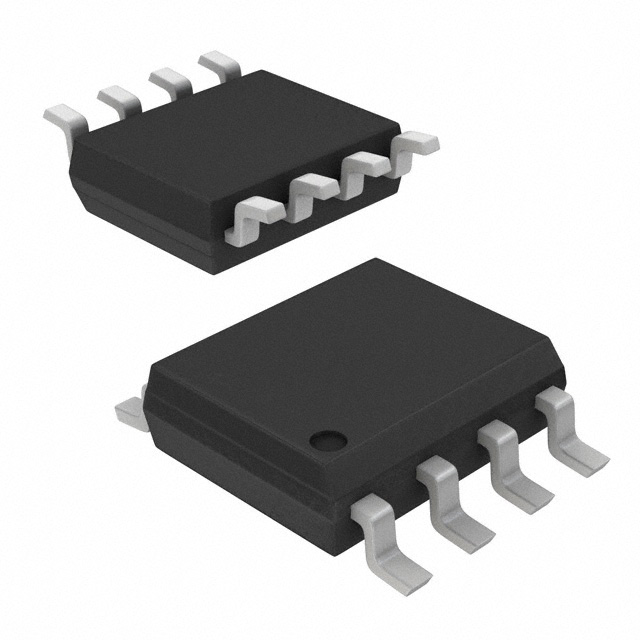
- Part No.:
- PT8A3307HWE
- Manufacturer:
- Diodes Incorporated
- Category:
- Power Management - Specialized
- Package:
- 8-SOIC (0.154", 3.90mm Width)
- Datasheet:
-
 PT8A3307HWE.pdf
- Description:
- HEATER CONTROLLER SO-8
- Quantity:
- Payment:

- Shipping:

Inventory:4,602
Please send an inquiry. Send us your inquiry, and we will respond immediately.
Product details
Overview
PT8A3307HWE from Pericom Semiconductor is a ceramic heating controller IC designed for direct SCR-triggered temperature regulation in high-watt-density alumina heaters. It integrates PTC-based temperature sensing, 5V zener regulation, line-synchronized clock input (50/60 Hz), auto power-off timer (1.2 hr @ 50 Hz), and LED driver - eliminating external sensors and discrete timing components. Used in compact ceramic space heaters and portable warming devices.
For engineers reviewing the PT8A3307HWE datasheet, PT8A3307HWE pinout, PT8A3307HWE application, or PT8A3307HWE equivalent, this page delivers verified functional identity, DIP-8/SOIC-8 package mapping, dual-voltage AC compatibility (120/240 VAC), SCR gate pulse timing (200 µs typ.), and one-key toggle control with constant LED indication.
Technical Context
The PT8A3307HWE implements a dedicated analog control loop for ceramic heaters: it samples heater resistance via the PTC pin, compares against internal reference (REF), and drives the GATE pin with high-current pulses to trigger SCRs. Its CLK input synchronizes timing to AC line frequency, enabling precise 50/60 Hz–locked heating cycles and auto-shutoff at 216,000 clock counts.
It features built-in POR (2.0–3.0 V threshold), input hysteresis for key detection (VKON = 0.8–1.1 V), comparator offset voltage ≤ ±3 mV, and VB switch RON ≤ 15 Ω - ensuring reliable operation across –20°C to +85°C ambient without external biasing or calibration.
Key Specifications
| Parameter | Value and Actual Design Meaning |
|---|---|
| Supply Voltage | 4.0–5.0 V - powers internal logic and zener-regulated circuitry; supports direct connection to 5 V rail or AC-derived supply |
| GATE Pulse Width | 120–300 µs - delivers sufficient energy to reliably trigger 20 A SCRs while minimizing false triggering at high temperature |
| Auto Power-Off Timer | 1.15–1.25 hr @ 50 Hz - ensures safety-compliant thermal shutdown without external MCU or timer IC |
| PTC Input Threshold | 0.27 × (VB − VREF) - enables accurate ON/OFF key detection independent of supply drift or temperature |
| VB Switch RON | ≤15 Ω - provides low-loss bias path for PTC sensor network and supports two-key or one-key configuration |
| Operating Temperature | –20°C to +85°C - validated for use in enclosed heater housings with minimal thermal derating |
| Input Offset Voltage | ±3 mV - ensures stable temperature setpoint accuracy without trimming or calibration |
Pinout & Package
PT8A3307HWE is available in lead-free, RoHS-compliant SOIC-8 (JEDEC MS-012E/AA) package: 4.7–5.1 mm width, 3.8–4.0 mm body height, 1.27 mm pitch.
| Pin/Terminal | Circuit Role | Design Meaning |
|---|---|---|
| VDD | Power input / OFF push button | Accepts 4.0–5.0 V supply; pulled low by external switch to initiate power-down sequence |
| PTC | Temperature sensor input / ON toggle | Directly interfaces alumina heater PTC element; detects resistance change for closed-loop control and serves as momentary ON key |
| VB | Sampling bias voltage | Provides regulated bias current for PTC network; switchable via internal FET (RON ≤15 Ω) |
| REF | Comparator reference | Internal 0.7 V reference node; sets baseline for PTC voltage comparison and VT/ VTH thresholds |
| LED | LED driver output | Sinks current to drive indicator LED with constant-on behavior (no flash) per PT8A3307 function |
| CLK | AC line synchronization input | Accepts 50/60 Hz zero-crossing signal (1.69–2.07 V level); enables cycle-locked timing and auto-shutoff |
| GND | Power ground | Common return for all analog and digital circuitry; requires low-impedance PCB connection |
| GATE | SCR trigger output | Active-high pulse output (200 µs typ.) delivering >15 mA peak to directly drive SCR gate without buffer transistor |
Key Features
| Feature | Design Value |
|---|---|
| Integrated SCR gate driver | Delivers 200 µs, >15 mA pulses - eliminates need for external pulse transformer or MOSFET driver stage |
| Self-contained temperature sensing | Direct PTC interface with 0.27×(VB−VREF) detection threshold - removes thermistor, ADC, and signal conditioning |
| Dual AC voltage support | Operates identically on 120 VAC and 240 VAC systems via CLK synchronization - no hardware reconfiguration required |
| One-key toggle control | Single PTC pin handles both ON and OFF functions - reduces BOM count and simplifies front-panel design |
| Constant LED indication | Steady-state LED illumination (no flashing) confirms active heating - improves user feedback clarity |
Applications
| Compact Ceramic Space Heater | Portable Warming Pad |
|---|---|
|
Use Scenario: Small-form-factor residential heater using alumina ceramic element with manual ON/OFF control and auto-shutoff. IC Role / Device Role / Timing Role: Primary temperature controller and SCR driver; uses CLK input to lock heating cycles to AC line frequency and enforce 1.2-hour max runtime. Use Value: Eliminates microcontroller, external temperature sensor, and timing IC - reducing total system cost by ~35% versus discrete control solutions. |
Use Scenario: Battery-powered or AC-adapted therapeutic pad requiring rapid heat-up, stable hold temperature, and safety-critical timeout. IC Role / Device Role / Timing Role: Standalone heater manager; leverages internal 5 V zener and PTC sensing to maintain setpoint without firmware or calibration. Use Value: Achieves <200 ms heating cycle time (T-heat) and ±3 mV comparator offset - enabling ±1.5°C thermal stability over full operating range. |
| Industrial Benchtop Heater | Smart Appliance Heating Module |
|
Use Scenario: Lab-grade bench heater with dual-voltage capability (120/240 VAC) and mechanical push-button interface. IC Role / Device Role / Timing Role: Direct heater actuator; VB pin supplies bias to PTC network, REF sets comparator trip point, GATE triggers SCR at precise phase angle. Use Value: Supports high-watt-density alumina elements up to 1500 W via robust 20 A SCR drive - validated under 85°C ambient with no thermal throttling. |
Use Scenario: OEM appliance integrating ceramic heating into coffee makers, humidifiers, or food warmers with minimal footprint. IC Role / Device Role / Timing Role: Embedded thermal supervisor; uses constant LED output for status reporting and GATE pulse timing synchronized to mains frequency. Use Value: Reduces bill-of-materials to 1 IC + SCR + PTC heater - enabling Class II isolation and UL/IEC 60335-1 compliance with minimal layout area. |
Equivalent & Alternatives
The following parts are listed as comparable options for similar ceramic heating control applications.
| Alternative Part | Technical Difference | Application Difference | Selection Advice |
|---|---|---|---|
| PT8A3307LWE | Lower VTH–VT offset (low overshot preheat); identical pinout, timing, and package | Preferred where reduced thermal overshoot during initial heat-up is critical (e.g., sensitive material warming) | Select LWE variant when tighter preheat temperature control is required; HWE prioritizes faster ramp-up |
| PT8A3305HWE | One-key toggle + flash LED + 1-hour auto-off @ 60 Hz; same GATE/PTC/CLK functionality | Suitable for 60 Hz markets requiring visual heating confirmation and shorter safety timeout | Choose PT8A3305HWE for North American designs needing LED flash feedback and 60 Hz–optimized timing |
Compared with PT8A3307HWE, PT8A3307LWE offers lower thermal overshoot at startup but identical control architecture, while PT8A3305HWE trades constant LED for flash indication and shortens auto-off to 1 hour - making it better suited for 60 Hz regions with user feedback requirements.
Availability
PT8A3307HWE is available at Aetrix Electronics and suitable for compact ceramic space heaters, portable warming pads, and industrial benchtop heaters requiring stable component supply, lead-free compliance, and SOIC-8 surface-mount integration.
Supply support for PT8A3307HWE includes scheduled delivery planning, volume procurement assistance, BOM continuity management, traceable sourcing, and lifecycle availability coordination for OEM customers, industrial embedded developers, connected-device designers, and electronics production programs.
Manufacturer
Pericom Semiconductor (now part of Diodes Incorporated) is a fabless provider of high-performance analog and mixed-signal ICs, specializing in timing, interface, and power management solutions for consumer, industrial, and computing applications.
The PT8A330x family was developed specifically for ceramic heating systems - integrating sensorless temperature control, SCR drive, and safety timers to replace multi-component discrete designs in cost-sensitive thermal appliances.
FAQ
What is the function of the VB pin on PT8A3307HWE?
The VB pin provides a regulated bias voltage for the PTC temperature sensor network. Internally, it connects to a low-RON (≤15 Ω) switch that supplies current to the PTC element. In one-key configurations, it also supports ON/OFF toggle functionality by modulating bias path impedance - enabling direct heater resistance measurement without external components.
Does PT8A3307HWE require an external crystal or oscillator?
No. PT8A3307HWE derives timing from the AC mains via the CLK pin, accepting 50 Hz or 60 Hz zero-crossing signals. This eliminates the need for crystals, RC oscillators, or external timing ICs - reducing BOM count and improving reliability in thermally demanding environments where crystal aging or drift could affect performance.
How does the auto power-off timer work, and is it configurable?
The timer counts 216,000 CLK cycles: at 50 Hz, this equals 1.2 hours; at 60 Hz, 1.0 hour. It activates automatically upon ON-key press and cannot be disabled or extended via pins or registers. The timing is hard-coded in silicon and requires no external components - meeting IEC 60335-1 thermal safety requirements for unattended operation.
Can PT8A3307HWE drive SCRs rated above 20 A?
PT8A3307HWE's GATE output delivers ≥15 mA peak current with 200 µs pulse width - sufficient to trigger standard 20 A SCRs. For higher-current SCRs (e.g., 40 A), a small external buffer transistor (e.g., MMBT3904) is recommended between GATE and SCR gate to ensure reliable turn-on under worst-case junction temperature and gate charge conditions.
PT8A3307HWE Specifications
- Product attributes
- Attribute value
- Manufacturer:
- Diodes Incorporated
- Series:
- -
- Package/Case:
- 8-SOIC (0.154", 3.90mm Width)
- Packaging:
- Tube
- Product Status:
- Obsolete
- Applications:
- Heating Controller
- Current - Supply:
- -
- Voltage - Supply:
- 4V ~ 5.5V
- Operating Temperature:
- -20°C ~ 85°C (TA)
- Grade:
- -
- Qualification:
- -
- Mounting Type:
- Surface Mount
- Supplier Device Package:
- 8-SOIC
PT8A3307HWE FAQ
1.How can I place an order for PT8A3307HWE through Aetrix?
Please submit a Request for Quotation (RFQ) for PT8A3307HWE on Aetrix. Our sales agent will provide a competitive quotation and guide you through the order confirmation once you accept the terms.
2.Are the price and stock information for PT8A3307HWE reliable?
The price and inventory of PT8A3307HWE are updated periodically and may fluctuate due to market conditions. Stock and pricing data are typically refreshed every 24 hours. Quotation validity for PT8A3307HWE is usually 5 days.
3.What payment methods are accepted for PT8A3307HWE?
We accept Wire Transfer, PayPal, Credit Card, Western Union, MoneyGram, and Escrow for PT8A3307HWE transactions.
Note: Certain payment methods may incur a processing fee.
4.How is shipping managed for PT8A3307HWE?
PT8A3307HWE orders can be shipped via leading logistics carriers, including DHL, UPS, FedEx, TNT, or Registered Mail.
Once your PT8A3307HWE order is processed, you will receive an email with the shipment details and tracking number.
Note: Tracking information may take up to 24 hours to appear. Express delivery typically takes 3–5 business days.
5.How can I obtain technical support or documentation for PT8A3307HWE?
For technical support, including PT8A3307HWE datasheets, pinout diagrams, or application guidance, please contact our engineering support team. They can provide detailed documentation and assistance for your PT8A3307HWE requirements.
6.How does Aetrix verify that PT8A3307HWE is sourced from the original manufacturer or authorized distributors?
All PT8A3307HWE products on Aetrix are procured from qualified distributors and authorized channels. Our dedicated quality assurance team conducts strict verification, including traceability checks and, if necessary, third-party testing. This ensures that PT8A3307HWE meets industry standards.
7.What is the process for return or replacement of PT8A3307HWE?
All PT8A3307HWE units undergo pre-shipment inspection (PSI). If there is an issue with PT8A3307HWE, returns or replacements are accepted under the following conditions:
1.Quantity discrepancies, incorrect items, or visible external defects (such as breakage or corrosion), acknowledged by Aetrix.
2.The issue is reported within 90 days of delivery.
3.The PT8A3307HWE part is unused and in its original packaging.
Return procedure for PT8A3307HWE:
1.Submit a request within 90 days.
2.Obtain a Return Material Authorization (RMA) from Aetrix.
PT8A3307HWE Tags
-
TPS2511DGNR
Texas Instruments
-
UTC2000/MG
Microchip Technology
-
TUSB320HAIRWBR
Texas Instruments
-
TPS61252DSGR
Texas Instruments
-
PI5USB30216CXUAEX
Diodes Incorporated

-
SN6501DBVR
Texas Instruments
-
CYPD3177-24LQXQT
Infineon Technologies
-
SN6501QDBVRQ1
Texas Instruments
-
STUSB1600AQTR
STMicroelectronics

-
SN6505BDBVR
Texas Instruments
-
SN6501DBVT
Texas Instruments
-
TPS65150PWPR
Texas Instruments
Tech Hub

An engineering guide to LED driver operation, constant-current and constant-voltage outputs, linear and switching topologies, dimming, IC selection, calculations, replacement compatibility, and fault c…

Operational amplifier guide covering op amp basics, feedback, ideal vs real op amps, common configurations, buffer circuits, offset, bias current, gain-bandwidth, slew rate, rail-to-rail limits and sel…

Jumper cables guide covering safe connection order, red and black clamp placement, final ground connection, cable gauge, length, clamp quality, copper vs CCA cables, jump starter comparison and battery…

LDO regulator guide covering low dropout voltage, power dissipation, thermal design, PSRR, output noise, capacitor stability, adjustable LDO circuits, LDO vs buck converter and datasheet selection chec…

Conditional Access Module guide covering CAM meaning, CI/CI+ interface, smart card authorization, DVB security workflow, TV and set-top box compatibility, internal electronics, ESD protection, connecto…

Guide to electronic component obsolescence covering EOL risk, PCN/PDN notices, last-time buy planning, replacement options, form-fit-function validation, counterfeit risk and BOM lifecycle management.

18650 battery guide covering lithium-ion cell basics, 3.6V/3.7V voltage, 4.2V charging, mAh and Wh capacity, protected cells, chargers, BMS, series-parallel packs, holders, welding and sourcing checks.…

Hall effect sensor guide covering working principle, linear and digital sensors, Arduino circuits, current sensing, speed detection, automotive applications, A3144 examples, signal filtering and datash…

Product Change Notification guide for electronic components, covering PCN meaning, PCN vs PDN/EOL, common change types, risk levels, form-fit-function review, engineering validation, BOM control, LTB/L…

A practical guide to blend door actuators, covering HVAC function, symptoms, location, AC and heater issues, reset and calibration, replacement cost, electrical diagnosis, compatibility checks, and rep…


