
 My Inquiry
 My Account


Microchip Technology RFPIC12F675F-I/SS
- Part No.:
- RFPIC12F675F-I/SS
- Manufacturer:
- Microchip Technology
- Category:
- Application Specific Microcontrollers
- Package:
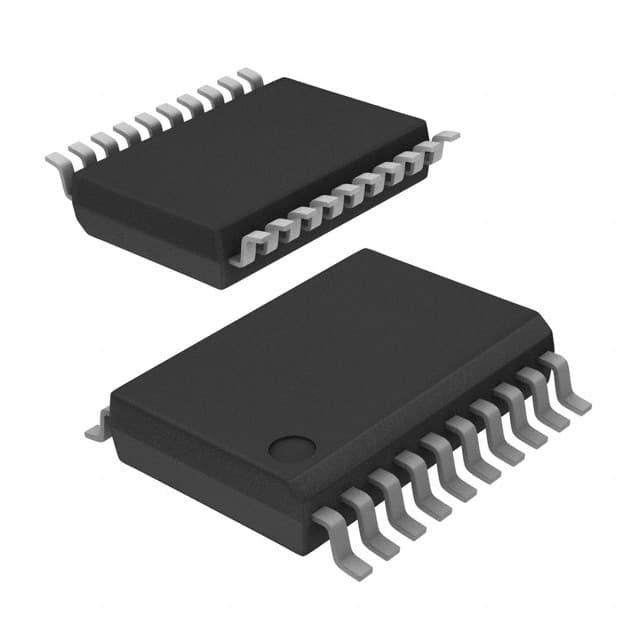
- 20-SSOP (0.209", 5.30mm Width)
- Datasheet:
-
 RFPIC12F675F-I/SS.pdf
- Description:
- IC MCU 1KX14 RF FSK/ASK 20SSOP
- Quantity:
- Payment:

- Shipping:

Inventory:3,181
Please send an inquiry. Send us your inquiry, and we will respond immediately.
Product details
Overview
RFPIC12F675F-I/SS from Microchip Technology is a FLASH-based 8-bit RISC microcontroller with integrated UHF ASK/FSK transmitter, operating in the 380–450 MHz band. It features 1024 × 14 words of FLASH program memory, 128 bytes of EEPROM, 10-bit ADC with 4 channels, and on-chip 4 MHz precision oscillator calibrated to ±1%. It is used in automotive remote keyless entry (RKE) systems requiring compact, low-power wireless control.
For engineers reviewing the RFPIC12F675F-I/SS datasheet, RFPIC12F675F-I/SS pinout, RFPIC12F675F-I/SS application, or RFPIC12F675F-I/SS equivalent, key selection considerations include its integrated RF transmitter architecture, 20-pin SSOP package, 380–450 MHz frequency band compliance with FCC Part 15.231 and EN 300 220, and dual modulation support (ASK/FSK up to 40 kbps).
Technical Context
The RFPIC12F675F-I/SS integrates a PICmicro Mid-Range core with dedicated RF front-end circuitry including VCO, loop filter, power amplifier, and crystal oscillator multiplier (×32). Its RFEN pin enables hardware-controlled transmit activation, while REFCLK provides divided crystal reference output for external synchronization.
It supports three oscillator modes: internal 4 MHz INTOSC, external crystal (DC–20 MHz), and RC (DC–4 MHz). The RF section uses RFXTAL input at fundamental frequency (e.g., 13.56 MHz for 434 MHz output), with phase-locked VCO ensuring narrow-band transmission suitable for interference-immune receivers.
Key Specifications
| Parameter | Value and Actual Design Meaning |
|---|---|
| Operating Frequency Band | 380–450 MHz - Directly sets usable ISM band for regional regulatory compliance (e.g., 433.92 MHz in EU) |
| Modulation Support | ASK and FSK - Enables flexible data encoding; FSK uses crystal pulling for frequency shift without external modulator |
| Transmit Data Rate | 0–40 kbps - Supports typical RKE and sensor telemetry payloads without external baseband processing |
| Output Power Range | +10 dBm to –12 dBm in 4 steps - Allows range/power trade-off tuning via software register control |
| FLASH Memory | 1024 × 14 words - Sufficient for compact firmware implementing protocol stacks (e.g., KeeLoq-compatible RKE) |
| ADC Resolution | 10-bit, 4-channel - Enables direct analog sensing (e.g., battery voltage, temperature, pressure) in wireless nodes |
| Supply Voltage Range | 2.0–5.5 V - Compatible with coin-cell (3 V) and alkaline (4.5–5.5 V) power sources in portable transmitters |
Pinout & Package
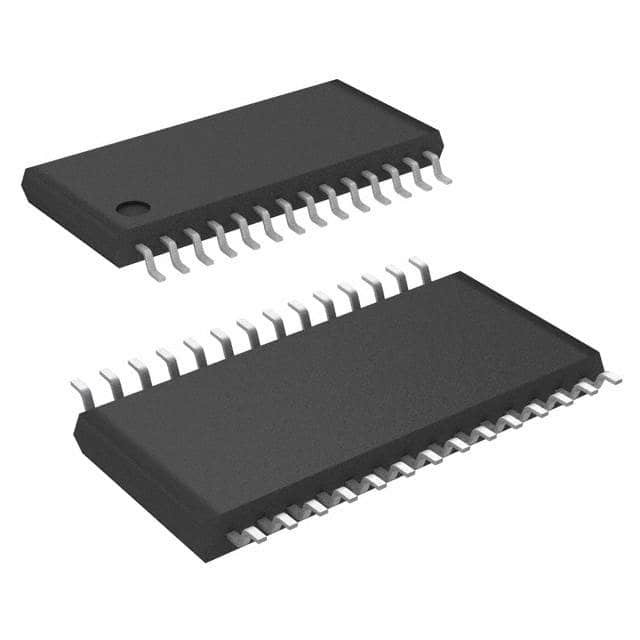
Package: 20-pin SSOP (Small Outline Package), 0.65 mm pitch, body width 5.3 mm - suited for space-constrained PCB layouts in key fobs and sensors.
| Pin/Terminal | Circuit Role | Design Meaning |
|---|---|---|
| VDD / VSS | Power supply and ground reference | Dual-domain supply: VDD powers digital core; VDDRF/VSSRF isolate RF section to minimize noise coupling |
| GP0–GP5 | Configurable I/O pins with weak pull-ups | 6 general-purpose pins support interrupt-on-change, analog inputs (AN0–AN3), comparator inputs (CIN+/CIN−), and ICSP programming (ICSPDAT/ICSPCLK) |
| RFXTAL | RF crystal input | Connects fundamental-frequency crystal (e.g., 13.56 MHz); multiplied by 32 internally to generate 434 MHz carrier |
| RFEN | RF enable control | Active-high digital input enabling transmitter power amp; allows fast on/off cycling to minimize average current |
| DATAASK / DATAFSK | Baseband modulation inputs | Direct TTL-level data injection; no external encoder required - simplifies BOM and layout for ASK/FSK protocols |
| ANT | RF power amplifier output | 50 Ω matched output driving antenna directly; requires external matching network per frequency band |
| REFCLK | Crystal reference clock output | Provides CLK/4 signal (e.g., 3.39 MHz from 13.56 MHz crystal) for synchronizing external logic or receivers |
Key Features
| Feature | Design Value |
|---|---|
| Integrated UHF Transmitter | Eliminates discrete RF components (VCO, PA, loop filter), reducing bill-of-materials and layout complexity for sub-GHz wireless nodes |
| In-Circuit Serial Programming (ICSP) | Enables field firmware updates via GP0/GP1 pins without removing device from PCB - critical for production calibration and post-deployment fixes |
| Low-Power Sleep Mode | 0.1 µA standby current allows >10-year battery life in coin-cell-powered RKE fobs with periodic wake-up and transmission |
| Analog Comparator with 16 Reference Levels | Supports threshold-based sensor monitoring (e.g., tamper detection, low-battery alert) without ADC conversion overhead |
| Factory-Calibrated 4 MHz Oscillator | ±1% accuracy eliminates need for external crystal in digital-only applications, saving cost and board space |
Applications
| Automotive Remote Keyless Entry (RKE) | Wireless Tire Pressure Monitoring |
|---|---|
Use Scenario: Handheld key fob transmitting encrypted door unlock command to vehicle receiver. IC Role / Device Role / Timing Role: System-on-chip controller and RF transmitter - executes protocol stack, conditions sensor inputs, and drives ASK-modulated 433.92 MHz carrier. Use Value: Single-chip integration reduces fob size and cost; 0.1 µA sleep current enables multi-year operation on CR2032 battery. |
Use Scenario: Battery-powered sensor module mounted inside tire, measuring pressure and temperature. IC Role / Device Role / Timing Role: Sensor interface, data processing, and FSK transmitter - reads analog pressure sensor via 10-bit ADC, formats packet, and transmits at 40 kbps. Use Value: Integrated RF eliminates external transceiver IC; REFCLK output synchronizes with vehicle receiver for improved demodulation margin. |
| Garage Door Opener Transmitter | Burglar Alarm Wireless Sensor Node |
Use Scenario: Wall-mounted or handheld transmitter sending open/close command to garage motor controller. IC Role / Device Role / Timing Role: Low-power MCU and ASK transmitter - wakes on button press, loads pre-stored rolling code, and transmits burst at +10 dBm. Use Value: Programmable output power allows optimization for short-range (<30 m) indoor use while meeting FCC radiated emission limits. |
Use Scenario: Door/window contact sensor reporting intrusion event to central alarm panel via wireless link. IC Role / Device Role / Timing Role: Event-triggered transmitter - detects mechanical switch closure via GP interrupt, initiates 433 MHz ASK transmission with CRC-protected payload. Use Value: Interrupt-on-change I/O and 5 µs wake-up time ensure sub-100 ms response latency from event to air transmission. |
Equivalent & Alternatives
The following parts are listed as comparable options for similar RF microcontroller applications.
| Alternative Part | Technical Difference | Application Difference | Selection Advice |
|---|---|---|---|
| PIC16F631-I/SS | No integrated RF transmitter; lacks RFEN, RFXTAL, ANT, DATAASK/FSK pins and VCO/PA circuitry | Suitable only for wired or externally interfaced RF designs; requires separate transceiver IC (e.g., MICRF505) | Select when RF functionality is implemented off-chip or when higher GPIO count (12 pins) and enhanced peripherals (e.g., enhanced comparator) are prioritized over integration. |
| CC1110F32RHHR | 8051 core, 2.4 GHz ISM band, integrated 250 kbps GFSK; different architecture, flash size (32 kB), and RF characteristics | Targets higher-data-rate, mesh-capable 2.4 GHz applications (e.g., Zigbee-like networks), not sub-GHz regulatory-compliant RKE | Select for 2.4 GHz systems requiring larger memory and standardized PHY/MAC; not a drop-in replacement due to frequency, protocol, and pinout incompatibility. |
Compared with PIC16F631-I/SS, RFPIC12F675F-I/SS delivers full RF system integration in one die, eliminating external RF components and reducing PCB area by >40%. Compared with CC1110F32RHHR, it targets lower-cost, lower-power 380–450 MHz applications compliant with legacy RKE standards rather than 2.4 GHz protocols.
Availability
RFPIC12F675F-I/SS is available at Aetrix Electronics and suitable for automotive RKE systems, wireless sensor nodes, and garage door opener transmitters requiring stable component supply across long-lifecycle industrial programs.
Supply support for RFPIC12F675F-I/SS includes scheduled delivery planning, volume procurement assistance, BOM continuity management, traceable sourcing, and lifecycle availability coordination for OEM customers, industrial embedded developers, connected-device designers, and electronics production programs.
Manufacturer
Microchip Technology Inc. is a leading provider of microcontroller, mixed-signal, analog, and Flash-IP solutions, headquartered in Chandler, Arizona.
The rfPIC12F675 product line was designed specifically for ultra-compact, battery-operated wireless transmitter applications in the sub-GHz ISM bands, emphasizing integration, low quiescent current, and regulatory compliance.
FAQ
What is the operating frequency range supported by the RFPIC12F675F-I/SS?
The RFPIC12F675F-I/SS operates in the 380–450 MHz frequency band, optimized for regional ISM allocations such as 433.92 MHz in Europe and 433.5–434.5 MHz in other jurisdictions. Its internal ×32 frequency multiplier locks the VCO to the fundamental crystal input (e.g., 13.56 MHz), ensuring stable, narrow-band transmission compliant with FCC Part 15.231 and EN 300 220.
Does the RFPIC12F675F-I/SS require an external crystal for RF operation?
Yes, the RFPIC12F675F-I/SS requires an external fundamental-mode crystal connected to the RFXTAL pin. For 434 MHz operation, a 13.56 MHz crystal is used; the internal PLL multiplies this by 32. The crystal must meet load capacitance and stability specifications outlined in Section 15.0 of the DS70091B datasheet to maintain frequency accuracy and regulatory compliance.
How many analog input channels does the RFPIC12F675F-I/SS support?
The RFPIC12F675F-I/SS supports four analog input channels (AN0–AN3) mapped to GP0, GP1, GP2, and GP4. These feed a 10-bit successive-approximation ADC with internal voltage reference options, enabling direct measurement of sensor signals such as battery voltage, thermistor resistance, or pressure transducer outputs in wireless endpoint applications.
What is the purpose of the REFCLK pin on the RFPIC12F675F-I/SS?
The REFCLK pin on the RFPIC12F675F-I/SS outputs a divided version of the RF crystal frequency - specifically CLK/4 for the RFPIC12F675F variant. This signal provides a stable, low-jitter timing reference for synchronizing external circuitry, such as a companion receiver IC or baseband logic, improving demodulation reliability and reducing system-level timing drift in bidirectional or time-critical wireless links.
Can the RFPIC12F675F-I/SS be programmed in-circuit after soldering to the PCB?
Yes, the RFPIC12F675F-I/SS supports In-Circuit Serial Programming (ICSP) using GP0 (ICSPDAT) and GP1 (ICSPCLK) pins. This allows firmware updates, calibration data writing, or security key provisioning without removing the device from the assembled board - essential for high-volume manufacturing test and field maintenance of RFPIC12F675F-I/SS-based products.
RFPIC12F675F-I/SS Specifications
- Product attributes
- Attribute value
- Manufacturer:
- Microchip Technology
- Series:
- PIC®
- Package/Case:
- 20-SSOP (0.209", 5.30mm Width)
- Packaging:
- Tube
- Product Status:
- Obsolete
- Programmable:
- Verified
- Applications:
- RKE, Security Systems
- Core Processor:
- PIC
- Program Memory Type:
- FLASH (1.75kB)
- Controller Series:
- rfPIC™
- RAM Size:
- 64 x 8
- Interface:
- -
- Number of I/O:
- 6
- Voltage - Supply:
- 2V ~ 5.5V
- Operating Temperature:
- -40°C ~ 85°C
- Grade:
- -
- Qualification:
- -
- Mounting Type:
- Surface Mount
- Supplier Device Package:
- 20-SSOP
RFPIC12F675F-I/SS FAQ
1.How can I place an order for RFPIC12F675F-I/SS through Aetrix?
Please submit a Request for Quotation (RFQ) for RFPIC12F675F-I/SS on Aetrix. Our sales agent will provide a competitive quotation and guide you through the order confirmation once you accept the terms.
2.Are the price and stock information for RFPIC12F675F-I/SS reliable?
The price and inventory of RFPIC12F675F-I/SS are updated periodically and may fluctuate due to market conditions. Stock and pricing data are typically refreshed every 24 hours. Quotation validity for RFPIC12F675F-I/SS is usually 5 days.
3.What payment methods are accepted for RFPIC12F675F-I/SS?
We accept Wire Transfer, PayPal, Credit Card, Western Union, MoneyGram, and Escrow for RFPIC12F675F-I/SS transactions.
Note: Certain payment methods may incur a processing fee.
4.How is shipping managed for RFPIC12F675F-I/SS?
RFPIC12F675F-I/SS orders can be shipped via leading logistics carriers, including DHL, UPS, FedEx, TNT, or Registered Mail.
Once your RFPIC12F675F-I/SS order is processed, you will receive an email with the shipment details and tracking number.
Note: Tracking information may take up to 24 hours to appear. Express delivery typically takes 3–5 business days.
5.How can I obtain technical support or documentation for RFPIC12F675F-I/SS?
For technical support, including RFPIC12F675F-I/SS datasheets, pinout diagrams, or application guidance, please contact our engineering support team. They can provide detailed documentation and assistance for your RFPIC12F675F-I/SS requirements.
6.How does Aetrix verify that RFPIC12F675F-I/SS is sourced from the original manufacturer or authorized distributors?
All RFPIC12F675F-I/SS products on Aetrix are procured from qualified distributors and authorized channels. Our dedicated quality assurance team conducts strict verification, including traceability checks and, if necessary, third-party testing. This ensures that RFPIC12F675F-I/SS meets industry standards.
7.What is the process for return or replacement of RFPIC12F675F-I/SS?
All RFPIC12F675F-I/SS units undergo pre-shipment inspection (PSI). If there is an issue with RFPIC12F675F-I/SS, returns or replacements are accepted under the following conditions:
1.Quantity discrepancies, incorrect items, or visible external defects (such as breakage or corrosion), acknowledged by Aetrix.
2.The issue is reported within 90 days of delivery.
3.The RFPIC12F675F-I/SS part is unused and in its original packaging.
Return procedure for RFPIC12F675F-I/SS:
1.Submit a request within 90 days.
2.Obtain a Return Material Authorization (RMA) from Aetrix.
RFPIC12F675F-I/SS Tags
-
CYPD3175-24LQXQ
Infineon Technologies

-
SLB9672VU20FW1523XTMA1
Infineon Technologies
-
SLB9670VQ20FW785XTMA1
Infineon Technologies
-
SLB9672XU20FW1523XTMA1
Infineon Technologies
-
SLB9673XU20FW2613XTMA1
Infineon Technologies
-
CYPD3125-40LQXIT
Infineon Technologies
-
AT97SC3204-U2A1A-20
Microchip Technology
-
AT97SC3204-U2A1A-10
Microchip Technology
-
SLM9670AQ20FW1311XTMA1
Infineon Technologies
-
SLB9672XU20FW1613XTMA1
Infineon Technologies
-
SLB9672AU20FW1613XTMA1
Infineon Technologies
-
SLB9673AU20FW2613XTMA1
Infineon Technologies
Tech Hub

TTL and CMOS logic families differ in thresholds, loading, output drive, power and timing. This engineering guide compares 74HC and 74HCT, calculates noise margins and checks 3.3 V/5 V compatibility.

A practical engineering guide to 3.3V and 5V logic compatibility, input thresholds, resistor dividers, translator ICs, MOSFET level shifting, I2C pull-ups, timing limits and power-sequencing risks.

The 74HC595 uses push-pull logic outputs, while the TPIC6B595 uses 50 V open-drain DMOS sinks for higher-power loads. This guide compares timing, current limits, 3.3 V interfacing, load wiring, thermal…

The 74HC595 converts serial data into eight stable parallel outputs. This guide covers pin functions, shift and storage timing, OE and MR behavior, drive-current limits, cascading, voltage compatibilit…

A technical comparison of level-sensitive latches and edge-triggered flip-flops, covering timing windows, setup and hold limits, master–slave operation, time borrowing, race-through, HDL inference and…

A D latch stores one bit while Enable controls when data can pass. This reference covers gate-level operation, truth tables, transparency, setup and hold timing, LE versus OE, common ICs and practical …

An SR latch stores one bit through cross-coupled feedback. This engineering reference covers NOR and NAND implementations, truth tables, forbidden-state recovery, gated operation, switch debouncing, fa…

Latch circuits retain one bit through feedback. This technical reference covers SR and D latches, truth tables, transparency, timing limits, latch-versus-flip-flop behavior, applications and common log…

An engineering guide to LED driver operation, constant-current and constant-voltage outputs, linear and switching topologies, dimming, IC selection, calculations, replacement compatibility, and fault c…

Operational amplifier guide covering op amp basics, feedback, ideal vs real op amps, common configurations, buffer circuits, offset, bias current, gain-bandwidth, slew rate, rail-to-rail limits and sel…


