
 My Inquiry
 My Account


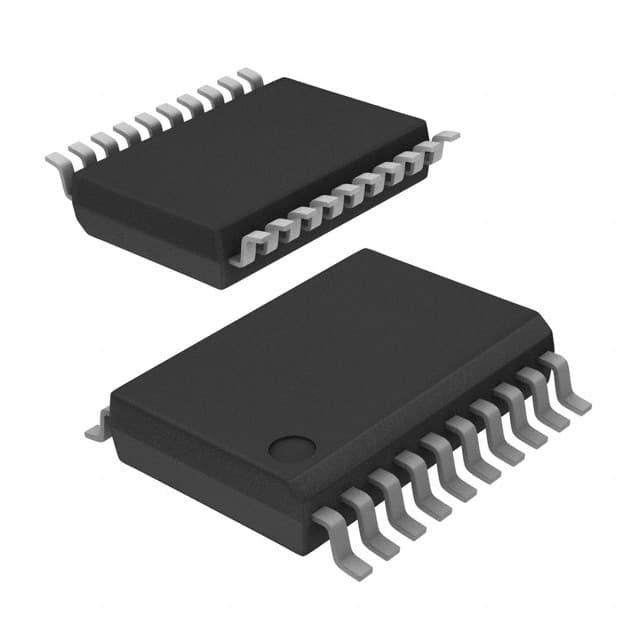
Microchip Technology RFPIC12F675HT-I/SS
- Part No.:
- RFPIC12F675HT-I/SS
- Manufacturer:
- Microchip Technology
- Category:
- Application Specific Microcontrollers
- Package:
- 20-SSOP (0.209", 5.30mm Width)
- Datasheet:
-
 RFPIC12F675HT-I/SS.pdf
- Description:
- IC MCU 1KX14 RF FSK/ASK 20SSOP
- Quantity:
- Payment:

- Shipping:

Inventory:1,563
Please send an inquiry. Send us your inquiry, and we will respond immediately.
Product details
Overview
rfPIC12F675HT-I/SS from Microchip Technology is a FLASH-based 8-bit RISC microcontroller with integrated UHF ASK/FSK transmitter, operating at 434 MHz (H-band variant), featuring 1024 × 14-bit FLASH, 128-byte EEPROM, 10-bit ADC with 4 channels, and 6 GPIO pins with interrupt-on-change. It delivers +10 dBm to –12 dBm RF output power in 4 steps for automotive RKE and wireless sensor applications.
For engineers reviewing the rfPIC12F675HT-I/SS datasheet, rfPIC12F675HT-I/SS pinout, rfPIC12F675HT-I/SS application, or rfPIC12F675HT-I/SS equivalent, key selection considerations include its SSOP-20 package, factory-calibrated 4 MHz internal oscillator (±1%), integrated VCO/loop filter/power amp, FCC Part 15.231 and EN 300 220 compliance, and low-power sleep current of 0.1 µA.
Technical Context
The rfPIC12F675HT-I/SS integrates a PICmicro Mid-Range core with 35 single-cycle instructions and an 8-level hardware stack, paired with a fully integrated UHF transmitter subsystem including crystal oscillator (RFXTAL), phase/frequency detector, charge pump, VCO, loop filter (LF), and RF power amplifier driving ANT via VDDRF/VSSRF rails. Its RFEN pin enables/disables transmission, while DATAASK and DATAFSK accept baseband modulation inputs.
It supports dual-domain operation: digital core runs from VDD (2.0–5.5V) with 500 µA typical active current at 4 MHz INTOSC, while RF section operates from dedicated VDDRF with independent VSSRF ground references and REFCLK output (divided-by-4 on K/F variants, divided-by-8 on H variants). The device uses GP0–GP5 for mixed-signal I/O, including analog comparator (16 reference levels), Timer0/Timer1, and ICSP programming via GP0/GP1.
Key Specifications
| Parameter | Value and Actual Design Meaning |
|---|---|
| Core Architecture | 8-bit RISC CPU with 35 instructions; all single-cycle except branches - enables deterministic real-time control in compact firmware. |
| FLASH Memory | 1024 × 14 words - sufficient for embedded transceiver firmware with protocol stack and sensor interface logic. |
| ADC Resolution | 10-bit, 4-channel - supports precise analog sensing (e.g., battery voltage, temperature, pressure) before RF transmission. |
| RF Frequency Band | 850–930 MHz (H-band); crystal multiplied by 32 - targets ISM band applications compliant with EN 300 220. |
| Transmit Output Power | +10 dBm to –12 dBm in 4 discrete steps - allows range/power trade-off tuning without external PA bias adjustment. |
| Sleep Current | 0.1 µA standby - enables multi-year battery life in tire pressure sensors and wireless alarms. |
| Oscillator Accuracy | Internal 4 MHz ±1% factory calibration - eliminates need for external crystal in cost-sensitive remote controls. |
Pinout & Package
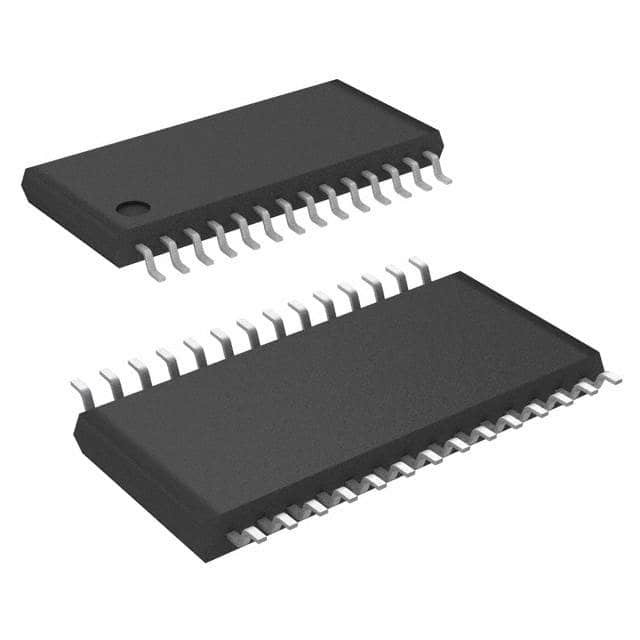
rfPIC12F675HT-I/SS is housed in a 20-pin SSOP (Shrink Small Outline Package) with 0.65 mm pitch, optimized for compact RF PCB layouts requiring separate analog/digital/RF ground domains.
| Pin/Terminal | Circuit Role | Design Meaning |
|---|---|---|
| VDD / VSS | Digital power supply / ground | Core logic domain (2.0–5.5V); decoupling required near VDD pin for stable MCU operation. |
| GP0–GP5 | Configurable I/O ports | Support analog input (AN0–AN3), comparator (CIN+/CIN−), timer clocks (T0CKI/T1CKI), and ICSP (ICSPDAT/ICSPCLK). |
| RFXTAL | RF crystal connection | Drives integrated crystal oscillator; frequency determines final transmit frequency (×32 multiplication). |
| RFEN | RF enable control | Active-high digital input enabling VCO, power amp, and bias circuits - critical for duty-cycled transmission. |
| DATAASK / DATAFSK | Baseband modulation inputs | TTL-level digital inputs accepting ASK or FSK data streams; internally routed to modulate VCO or crystal pulling. |
| ANT | RF power amplifier output | Direct connection to antenna matching network; requires 50 Ω impedance control and RF layout best practices. |
| VDDRF / VSSRF | RF power supply / ground | Dedicated 2.0–3.6V supply and isolated ground plane - prevents digital noise from degrading RF spectral purity. |
| REFCLK | Reference clock output | Divided-by-8 output (H-band) used for synchronization or external receiver timing; buffered CMOS drive. |
Key Features
| Feature | Design Value |
|---|---|
| Integrated UHF Transmitter | Eliminates >15 external RF components (VCO, loop filter, PA, matching) - reduces BOM cost and layout complexity for 434/868/915 MHz systems. |
| Low-Power Sleep Mode | 0.1 µA standby current with watchdog enabled - enables decade-scale battery operation in infrequently transmitting sensors. |
| On-Chip Analog Peripherals | 10-bit ADC (4 ch), analog comparator (16 ref levels), and programmable weak pull-ups - supports autonomous sensor decision-making without external signal conditioning. |
| In-Circuit Serial Programming | ICSP via GP0/GP1 allows field firmware updates without removing device - essential for post-deployment calibration and security patching. |
| FCC/EN Regulatory Compliance | Pre-verified architecture for US FCC Part 15.231 and European EN 300 220 - accelerates certification for automotive RKE and alarm products. |
Applications
| Automotive Remote Keyless Entry (RKE) | Wireless Tire Pressure Monitoring |
|---|---|
Use Scenario: Compact key fob transmitting encrypted door unlock commands within 10 m range. IC Role / Device Role / Timing Role: MCU executes rolling code algorithm and drives ASK transmitter at 434 MHz with <40 kbps data rate. Use Value: Integrated RF front-end ensures regulatory-compliant spectral mask and +6 dBm typical output for reliable link margin. |
Use Scenario: Battery-powered sensor module mounted inside vehicle tire, reporting pressure/temperature every 60 seconds. IC Role / Device Role / Timing Role: Measures analog pressure sensor, processes data, and transmits FSK packet using low-duty-cycle sleep/wake cycles. Use Value: 0.1 µA standby current extends CR2032 battery life beyond 7 years; internal 4 MHz oscillator avoids crystal cost and board space. |
| Community Gate Opener | Burglar Alarm Sensor Node |
Use Scenario: Solar-charged outdoor gate controller receiving ASK commands from handheld remotes. IC Role / Device Role / Timing Role: GPIO monitors gate position switch; rfPIC12F675HT-I/SS modulates RF carrier and manages secure command validation. Use Value: High-current GPIO sinks LED indicators directly; 128-byte EEPROM stores pairing IDs and event logs without external memory. |
Use Scenario: Window/door contact sensor sending tamper alerts to central alarm panel via sub-GHz link. IC Role / Device Role / Timing Role: Detects mechanical switch closure via interrupt-on-change GPIO and initiates FSK burst transmission. Use Value: 5 µs wake-up from SLEEP at 3V enables sub-100 ms response latency; RFEN pin provides precise transmit window control. |
Equivalent & Alternatives
The following parts are listed as comparable options for similar RF microcontroller applications.
| Alternative Part | Technical Difference | Application Difference | Selection Advice |
|---|---|---|---|
| rfPIC12F675F-I/SS | 380–450 MHz band (F-band); REFCLK = ÷4; same core/peripherals/package | Targets 433 MHz ISM band in EU/Asia; not suitable for 868/915 MHz systems | Select when designing for 433.92 MHz RKE with legacy EN 300 220 alignment. |
| rfPIC12F675K-I/SS | 290–350 MHz band (K-band); REFCLK = ÷4; identical digital specs | Used in legacy North American RKE at 315 MHz; incompatible with H-band crystal requirements | Choose only for backward compatibility with existing 315 MHz antenna/matching networks. |
Compared with rfPIC12F675F-I/SS and rfPIC12F675K-I/SS, the rfPIC12F675HT-I/SS provides higher-frequency operation (850–930 MHz), enabling smaller antennas and better immunity to narrowband interference in dense urban deployments - critical for next-generation smart building access systems.
Availability
rfPIC12F675HT-I/SS is available at Aetrix Electronics and suitable for automotive RKE systems, wireless sensor nodes, and industrial telemetry applications requiring stable component supply, long-lifecycle support, and regulatory-ready RF integration.
Supply support for rfPIC12F675HT-I/SS includes scheduled delivery planning, volume procurement assistance, BOM continuity management, traceable sourcing, and lifecycle availability coordination for OEM customers, industrial embedded developers, connected-device designers, and electronics production programs.
Manufacturer
Microchip Technology Inc. is a leading provider of microcontroller, mixed-signal, analog, and Flash-IP solutions, headquartered in Chandler, Arizona, with global design and manufacturing operations.
The rfPIC12F675 product line was designed to integrate RF transmission capability directly into cost-sensitive 8-bit microcontrollers for short-range wireless control - targeting automotive, security, and metering applications where minimal external components and regulatory compliance are mandatory.
FAQ
What is the RF frequency band supported by the rfPIC12F675HT-I/SS?
The rfPIC12F675HT-I/SS operates in the 850–930 MHz band (H-band), with transmit frequency determined by the external crystal connected to RFXTAL and multiplied by 32. This makes it suitable for EN 300 220-compliant applications in the 868/915 MHz ISM bands. The rfPIC12F675HT-I/SS does not support 315 MHz or 433 MHz bands - those require the K- or F-band variants respectively.
Does the rfPIC12F675HT-I/SS require an external crystal for RF operation?
Yes, the rfPIC12F675HT-I/SS requires an external fundamental-mode quartz crystal connected to RFXTAL to generate its RF carrier. The internal circuitry multiplies this crystal frequency by 32 to achieve the final UHF output. However, the digital core can run from its factory-calibrated 4 MHz internal oscillator, eliminating the need for a second crystal.
How many analog input channels does the rfPIC12F675HT-I/SS ADC support?
The rfPIC12F675HT-I/SS features a 10-bit analog-to-digital converter with four configurable input channels (AN0–AN3), mapped to GP0, GP1, GP2, and GP4 respectively. These channels support single-ended measurements with software-selectable voltage reference options, enabling direct interfacing with resistive sensors, thermistors, or battery monitoring circuits in the rfPIC12F675HT-I/SS system.
What is the purpose of the VDDRF and VSSRF pins on the rfPIC12F675HT-I/SS?
VDDRF and VSSRF provide a dedicated power and ground domain for the RF transmitter section - isolating sensitive analog RF circuitry from digital switching noise. VDDRF accepts 2.0–3.6V, while dual VSSRF pins (pins 10 and 12) must be connected to a clean, low-inductance RF ground plane. This separation is essential to meet spectral emission limits and maintain rfPIC12F675HT-I/SS transmit stability.
Can the rfPIC12F675HT-I/SS be programmed in-circuit after soldering?
Yes, the rfPIC12F675HT-I/SS supports In-Circuit Serial Programming (ICSP™) via GP0 (ICSPDAT) and GP1 (ICSPCLK), allowing full firmware programming and debugging without removing the device from the PCB. This capability is retained even when other GPIO functions are enabled, making the rfPIC12F675HT-I/SS ideal for field-upgradable wireless endpoints.
RFPIC12F675HT-I/SS Specifications
- Product attributes
- Attribute value
- Manufacturer:
- Microchip Technology
- Series:
- PIC®
- Package/Case:
- 20-SSOP (0.209", 5.30mm Width)
- Packaging:
- Tape & Reel (TR)
- Product Status:
- Active
- Programmable:
- Verified
- Applications:
- RKE, Security Systems
- Core Processor:
- PIC
- Program Memory Type:
- FLASH (1.75kB)
- Controller Series:
- rfPIC™
- RAM Size:
- 64 x 8
- Interface:
- -
- Number of I/O:
- 6
- Voltage - Supply:
- 2V ~ 5.5V
- Operating Temperature:
- -40°C ~ 85°C
- Grade:
- -
- Qualification:
- -
- Mounting Type:
- Surface Mount
- Supplier Device Package:
- 20-SSOP
RFPIC12F675HT-I/SS FAQ
1.How can I place an order for RFPIC12F675HT-I/SS through Aetrix?
Please submit a Request for Quotation (RFQ) for RFPIC12F675HT-I/SS on Aetrix. Our sales agent will provide a competitive quotation and guide you through the order confirmation once you accept the terms.
2.Are the price and stock information for RFPIC12F675HT-I/SS reliable?
The price and inventory of RFPIC12F675HT-I/SS are updated periodically and may fluctuate due to market conditions. Stock and pricing data are typically refreshed every 24 hours. Quotation validity for RFPIC12F675HT-I/SS is usually 5 days.
3.What payment methods are accepted for RFPIC12F675HT-I/SS?
We accept Wire Transfer, PayPal, Credit Card, Western Union, MoneyGram, and Escrow for RFPIC12F675HT-I/SS transactions.
Note: Certain payment methods may incur a processing fee.
4.How is shipping managed for RFPIC12F675HT-I/SS?
RFPIC12F675HT-I/SS orders can be shipped via leading logistics carriers, including DHL, UPS, FedEx, TNT, or Registered Mail.
Once your RFPIC12F675HT-I/SS order is processed, you will receive an email with the shipment details and tracking number.
Note: Tracking information may take up to 24 hours to appear. Express delivery typically takes 3–5 business days.
5.How can I obtain technical support or documentation for RFPIC12F675HT-I/SS?
For technical support, including RFPIC12F675HT-I/SS datasheets, pinout diagrams, or application guidance, please contact our engineering support team. They can provide detailed documentation and assistance for your RFPIC12F675HT-I/SS requirements.
6.How does Aetrix verify that RFPIC12F675HT-I/SS is sourced from the original manufacturer or authorized distributors?
All RFPIC12F675HT-I/SS products on Aetrix are procured from qualified distributors and authorized channels. Our dedicated quality assurance team conducts strict verification, including traceability checks and, if necessary, third-party testing. This ensures that RFPIC12F675HT-I/SS meets industry standards.
7.What is the process for return or replacement of RFPIC12F675HT-I/SS?
All RFPIC12F675HT-I/SS units undergo pre-shipment inspection (PSI). If there is an issue with RFPIC12F675HT-I/SS, returns or replacements are accepted under the following conditions:
1.Quantity discrepancies, incorrect items, or visible external defects (such as breakage or corrosion), acknowledged by Aetrix.
2.The issue is reported within 90 days of delivery.
3.The RFPIC12F675HT-I/SS part is unused and in its original packaging.
Return procedure for RFPIC12F675HT-I/SS:
1.Submit a request within 90 days.
2.Obtain a Return Material Authorization (RMA) from Aetrix.
RFPIC12F675HT-I/SS Tags
-
CYPD3175-24LQXQ
Infineon Technologies

-
SLB9672VU20FW1523XTMA1
Infineon Technologies
-
SLB9670VQ20FW785XTMA1
Infineon Technologies
-
SLB9672XU20FW1523XTMA1
Infineon Technologies
-
SLB9673XU20FW2613XTMA1
Infineon Technologies
-
CYPD3125-40LQXIT
Infineon Technologies
-
AT97SC3204-U2A1A-20
Microchip Technology
-
AT97SC3204-U2A1A-10
Microchip Technology
-
SLM9670AQ20FW1311XTMA1
Infineon Technologies
-
SLB9672XU20FW1613XTMA1
Infineon Technologies
-
SLB9672AU20FW1613XTMA1
Infineon Technologies
-
SLB9673AU20FW2613XTMA1
Infineon Technologies
Tech Hub

TTL and CMOS logic families differ in thresholds, loading, output drive, power and timing. This engineering guide compares 74HC and 74HCT, calculates noise margins and checks 3.3 V/5 V compatibility.

A practical engineering guide to 3.3V and 5V logic compatibility, input thresholds, resistor dividers, translator ICs, MOSFET level shifting, I2C pull-ups, timing limits and power-sequencing risks.

The 74HC595 uses push-pull logic outputs, while the TPIC6B595 uses 50 V open-drain DMOS sinks for higher-power loads. This guide compares timing, current limits, 3.3 V interfacing, load wiring, thermal…

The 74HC595 converts serial data into eight stable parallel outputs. This guide covers pin functions, shift and storage timing, OE and MR behavior, drive-current limits, cascading, voltage compatibilit…

A technical comparison of level-sensitive latches and edge-triggered flip-flops, covering timing windows, setup and hold limits, master–slave operation, time borrowing, race-through, HDL inference and…

A D latch stores one bit while Enable controls when data can pass. This reference covers gate-level operation, truth tables, transparency, setup and hold timing, LE versus OE, common ICs and practical …

An SR latch stores one bit through cross-coupled feedback. This engineering reference covers NOR and NAND implementations, truth tables, forbidden-state recovery, gated operation, switch debouncing, fa…

Latch circuits retain one bit through feedback. This technical reference covers SR and D latches, truth tables, transparency, timing limits, latch-versus-flip-flop behavior, applications and common log…

An engineering guide to LED driver operation, constant-current and constant-voltage outputs, linear and switching topologies, dimming, IC selection, calculations, replacement compatibility, and fault c…

Operational amplifier guide covering op amp basics, feedback, ideal vs real op amps, common configurations, buffer circuits, offset, bias current, gain-bandwidth, slew rate, rail-to-rail limits and sel…


