
 My Inquiry
 My Account


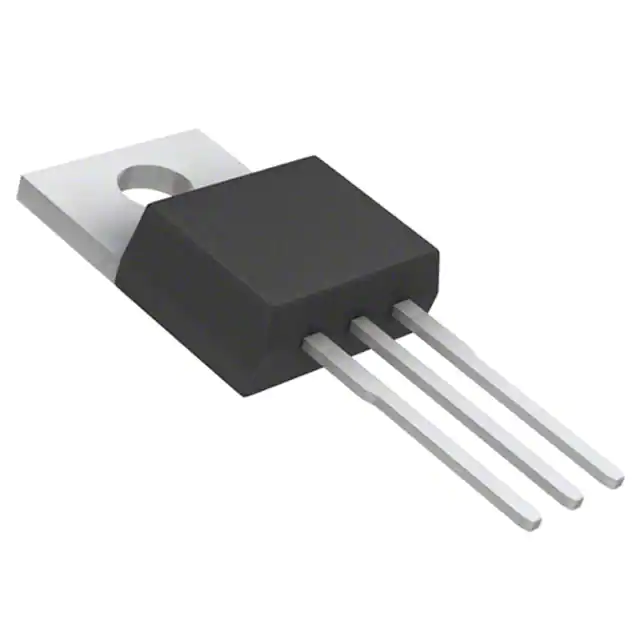
Diodes Incorporated SBR30120CT
- Part No.:
- SBR30120CT
- Manufacturer:
- Diodes Incorporated
- Category:
- Diode Arrays
- Package:
- TO-220-3
- Datasheet:
-
 SBR30120CT.pdf
- Description:
- DIODE ARRAY SBR 120V 15A TO220-3
- Quantity:
- Payment:

- Shipping:

Inventory:5,894
Please send an inquiry. Send us your inquiry, and we will respond immediately.
Product details
Overview
SBR30120CT from Diodes Incorporated is a 30A dual common-cathode super barrier rectifier in TO-220AB package, rated for 120V peak repetitive reverse voltage, with typical forward voltage of 0.80V at 15A and 25°C, and thermal resistance of 3°C/W per leg-used in high-efficiency AC/DC front-end rectification for industrial power supplies.
For engineers reviewing the SBR30120CT datasheet, SBR30120CT pinout, SBR30120CT application, or SBR30120CT equivalent, key selection criteria include forward voltage drop at elevated temperature (0.73–0.89V across 25–125°C), leakage current stability (≤100µA at 125°C), surge capability (180A IFSM), and thermal performance under forced-air or heatsink-cooled operation.
Technical Context
This dual-leg rectifier integrates two independent super barrier diodes sharing a common cathode terminal, enabling full-wave center-tapped or dual-output configurations. Its patented SBR technology delivers lower VF than standard Schottky diodes while maintaining superior high-temperature leakage performance compared to conventional fast recovery diodes.
The device operates across –65°C to +175°C junction temperature range and is optimized for switching frequencies up to 100 kHz in offline SMPS, PFC stages, and DC-DC secondary-side rectification where soft recovery minimizes EMI and reduces snubber losses.
Key Specifications
| Parameter | Value and Actual Design Meaning |
|---|---|
| VRRM | 120 V - Maximum non-repetitive reverse voltage each anode can withstand without breakdown |
| IO (per leg) | 15 A - Continuous average forward current per diode leg at TA = 40°C with heatsink (Note 7) |
| VF @ 15A, 25°C | 0.80 V - Directly reduces conduction loss by ~12W vs. 1.0V diode at same current |
| IFSM | 180 A - Withstands single half-sine surge (8.3ms), supporting inrush current in power-up sequences |
| RθJC | 3 °C/W - Enables thermal design with compact heatsinks; 45°C rise at 15A per leg |
| IR @ 120V, 125°C | 100 µA - Low leakage preserves efficiency in high-temp environments like enclosed industrial enclosures |
Pinout & Package
TO-220AB package: 3-terminal molded plastic case with isolated mounting tab (cathode-connected), UL 94V-0 rated, matte tin-plated copper leadframe, 1.85g weight. Mounting tab is electrically connected to cathode (Pin 2).
| Pin/Terminal | Circuit Role | Design Meaning |
|---|---|---|
| Pin 1 (Anode A) | Anode of first diode leg | Accepts AC input or transformer secondary winding for one half-cycle path |
| Pin 2 (Cathode) | Common cathode node | Electrically tied to metal tab; must be isolated from chassis unless referenced to system ground |
| Pin 3 (Anode B) | Anode of second diode leg | Accepts complementary AC input or second transformer winding for full-wave rectification |
Key Features
| Feature | Design Value |
|---|---|
| Soft, fast switching | Minimizes reverse recovery ringing and EMI in high-frequency SMPS (>50 kHz) |
| Low VF at high temperature | 0.73V typ. at 15A/125°C enables stable efficiency in thermally constrained enclosures |
| High-temperature stability | Leakage remains ≤100µA at 125°C-critical for unventilated industrial power modules |
| RoHS-compliant & Green | Halogen- and antimony-free molding compound (<900ppm Br/Cl, <1000ppm Sb) meets IPC-1752A Class 3 |
Applications
| Server Power Supply | Industrial Motor Drive |
|---|---|
Use Scenario: Primary rectification stage in 80 PLUS Titanium-certified 1U server PSUs with active PFC and LLC resonant topology. IC Role / Device Role / Timing Role: Dual-leg common-cathode rectifier converting 380VDC PFC output to intermediate bus, operating continuously at 12–15A/leg. Use Value: 0.80V VF at 25°C and low 3°C/W RθJC enable >96% conversion efficiency while limiting heatsink size to <50 cm². | Use Scenario: DC link rectification in 3-phase inverter drives powering HVAC compressors and conveyor systems. IC Role / Device Role / Timing Role: Secondary-side rectifier feeding 24V/48V control rails from auxiliary flyback converter, handling 10–13A load steps. Use Value: Soft recovery eliminates need for RC snubbers, reducing BOM count and board area by 12% vs. fast recovery diodes. |
| Solar Microinverter | Medical Diagnostic PSU |
Use Scenario: Isolated DC-DC stage in string-level microinverters converting 30–60V PV input to 400V DC bus. IC Role / Device Role / Timing Role: Output rectifier in high-frequency (100–250 kHz) resonant LLC converter, operating at 15A peak. Use Value: 180A IFSM rating supports cold-start surges; 120V VRRM provides 2× margin over 60V max input. | Use Scenario: Auxiliary power supply for MRI gradient amplifier control boards requiring ultra-low EMI and long-term reliability. IC Role / Device Role / Timing Role: Input rectifier in medical-grade 24V/5A isolated flyback supplying FPGA, ADC, and gate drivers. Use Value: ≤100µA IR at 125°C prevents thermal runaway in sealed, fanless enclosures; RoHS/Green compliance satisfies IEC 60601-1 Annex A. |
Equivalent & Alternatives
The following parts are listed as comparable options for similar high-current, medium-voltage super barrier rectifier applications.
| Alternative Part | Technical Difference | Application Difference | Selection Advice |
|---|---|---|---|
| Vishay VS-30CPH12 | Same 120V VRRM, 30A total IO, but TO-247 package; VF = 0.82V @ 15A/25°C; RθJC = 2.5°C/W | Higher thermal performance but larger footprint; requires different mounting hardware | Preferred when board space allows and thermal budget is tighter than 3°C/W |
| ON Semiconductor MUR30120CT | Fast recovery diode (not SBR); VF = 1.1V @ 15A/25°C; IR = 500µA @ 125°C; softer recovery than standard FRD but slower than SBR | Higher conduction loss (+4.5W/leg), higher leakage limits use in sealed high-temp environments | Only suitable where cost is primary constraint and efficiency/thermal headroom are secondary |
Compared with VS-30CPH12, SBR30120CT offers smaller TO-220AB footprint and RoHS/Green compliance but trades 0.5°C/W higher thermal resistance; versus MUR30120CT, it delivers 38% lower conduction loss and 5× lower high-temp leakage-making it superior for efficiency-critical, thermally constrained designs.
Availability
SBR30120CT is available at Aetrix Electronics and suitable for industrial motor drives, solar microinverters, medical diagnostic power supplies, and server PSUs requiring stable component supply with full traceability and long-lifecycle support.
Supply support for SBR30120CT includes scheduled delivery planning, volume procurement assistance, BOM continuity management, traceable sourcing, and lifecycle availability coordination for OEM customers, industrial embedded developers, connected-device designers, and electronics production programs.
Manufacturer
Diodes Incorporated is a global manufacturer of discrete semiconductors and analog ICs, headquartered in Plano, Texas, serving industrial, computing, communications, and consumer markets with high-reliability components.
The SBR® product line was developed to replace Schottky and fast recovery diodes in high-current, medium-voltage rectification-delivering lower VF than FRDs and better high-temperature leakage than Schottkys for 48–200V applications.
FAQ
Is the metal tab on SBR30120CT electrically isolated?
No-the metal tab is internally connected to Pin 2 (common cathode). When mounted to a heatsink, ensure electrical isolation via mica washer or silicone pad unless the heatsink is referenced to cathode potential. This connection is confirmed in the TO-220AB mechanical drawing and pinout diagram in DS31868 Rev. 2–2.
What is the maximum recommended ambient temperature for continuous 30A operation?
Continuous 30A total (15A per leg) is only rated with adequate heatsinking-specifically a black aluminum heatsink (37mm × 50mm × 15mm) per Note 7. Under those conditions, Fig. 4 shows derating begins above 40°C ambient; full 15A/leg is supported up to 60°C ambient with that heatsink.
Can SBR30120CT replace a standard 30A bridge rectifier?
No-it is a dual common-cathode diode, not a full bridge. It replaces two separate diodes in center-tapped transformer or dual-output configurations. To substitute for a 4-pin bridge, external wiring would be required, compromising layout integrity and thermal performance; dedicated bridge alternatives like GBU3012 should be used instead.
Does SBR30120CT require a snubber circuit in 100 kHz LLC applications?
Typically no-its soft, fast switching characteristic (documented in Fig. 2 and application notes DS31868) suppresses reverse recovery spikes and ringing. Measured waveforms in Diodes' reference designs show <5V overshoot at 100 kHz with no snubber; however, layout-dependent parasitics may necessitate minimal RC damping in edge-case layouts.
SBR30120CT Specifications
- Product attributes
- Attribute value
- Manufacturer:
- Diodes Incorporated
- Series:
- SBR®
- Package/Case:
- TO-220-3
- Packaging:
- Tube
- Product Status:
- Active
- Diode Configuration:
- 1 Pair Common Cathode
- Technology:
- Super Barrier
- Voltage - DC Reverse (Vr) (Max):
- 120 V
- Current - Average Rectified (Io) (per Diode):
- 15A
- Voltage - Forward (Vf) (Max) @ If:
- 890 mV @ 15 A
- Speed:
- Standard Recovery >500ns, > 200mA (Io)
- Reverse Recovery Time (trr):
- -
- Current - Reverse Leakage @ Vr:
- 500 µA @ 120 V
- Operating Temperature - Junction:
- -65°C ~ 175°C
- Grade:
- -
- Qualification:
- -
- Mounting Type:
- Through Hole
- Supplier Device Package:
- TO-220-3
SBR30120CT FAQ
1.How can I place an order for SBR30120CT through Aetrix?
Please submit a Request for Quotation (RFQ) for SBR30120CT on Aetrix. Our sales agent will provide a competitive quotation and guide you through the order confirmation once you accept the terms.
2.Are the price and stock information for SBR30120CT reliable?
The price and inventory of SBR30120CT are updated periodically and may fluctuate due to market conditions. Stock and pricing data are typically refreshed every 24 hours. Quotation validity for SBR30120CT is usually 5 days.
3.What payment methods are accepted for SBR30120CT?
We accept Wire Transfer, PayPal, Credit Card, Western Union, MoneyGram, and Escrow for SBR30120CT transactions.
Note: Certain payment methods may incur a processing fee.
4.How is shipping managed for SBR30120CT?
SBR30120CT orders can be shipped via leading logistics carriers, including DHL, UPS, FedEx, TNT, or Registered Mail.
Once your SBR30120CT order is processed, you will receive an email with the shipment details and tracking number.
Note: Tracking information may take up to 24 hours to appear. Express delivery typically takes 3–5 business days.
5.How can I obtain technical support or documentation for SBR30120CT?
For technical support, including SBR30120CT datasheets, pinout diagrams, or application guidance, please contact our engineering support team. They can provide detailed documentation and assistance for your SBR30120CT requirements.
6.How does Aetrix verify that SBR30120CT is sourced from the original manufacturer or authorized distributors?
All SBR30120CT products on Aetrix are procured from qualified distributors and authorized channels. Our dedicated quality assurance team conducts strict verification, including traceability checks and, if necessary, third-party testing. This ensures that SBR30120CT meets industry standards.
7.What is the process for return or replacement of SBR30120CT?
All SBR30120CT units undergo pre-shipment inspection (PSI). If there is an issue with SBR30120CT, returns or replacements are accepted under the following conditions:
1.Quantity discrepancies, incorrect items, or visible external defects (such as breakage or corrosion), acknowledged by Aetrix.
2.The issue is reported within 90 days of delivery.
3.The SBR30120CT part is unused and in its original packaging.
Return procedure for SBR30120CT:
1.Submit a request within 90 days.
2.Obtain a Return Material Authorization (RMA) from Aetrix.
SBR30120CT Tags
-
BAV99-7-F
Diodes Incorporated
-
BAT54C-7-F
Diodes Incorporated
-
BAV99,215
Nexperia USA Inc.
-
BAT54SLT1G
onsemi
-
BAV70LT1G
onsemi
-
BAT54CLT1G
onsemi
-
BAT54S-7-F
Diodes Incorporated
-
BAV99LT1G
onsemi
-
BAT54S,215
Nexperia USA Inc.
-
BAS40-04LT1G
onsemi
-
MMBD1503-TP
Micro Commercial Co
-
BAV99WT1G
onsemi
Tech Hub

An engineering guide to LED driver operation, constant-current and constant-voltage outputs, linear and switching topologies, dimming, IC selection, calculations, replacement compatibility, and fault c…

Operational amplifier guide covering op amp basics, feedback, ideal vs real op amps, common configurations, buffer circuits, offset, bias current, gain-bandwidth, slew rate, rail-to-rail limits and sel…

Jumper cables guide covering safe connection order, red and black clamp placement, final ground connection, cable gauge, length, clamp quality, copper vs CCA cables, jump starter comparison and battery…

LDO regulator guide covering low dropout voltage, power dissipation, thermal design, PSRR, output noise, capacitor stability, adjustable LDO circuits, LDO vs buck converter and datasheet selection chec…

Conditional Access Module guide covering CAM meaning, CI/CI+ interface, smart card authorization, DVB security workflow, TV and set-top box compatibility, internal electronics, ESD protection, connecto…

Guide to electronic component obsolescence covering EOL risk, PCN/PDN notices, last-time buy planning, replacement options, form-fit-function validation, counterfeit risk and BOM lifecycle management.

18650 battery guide covering lithium-ion cell basics, 3.6V/3.7V voltage, 4.2V charging, mAh and Wh capacity, protected cells, chargers, BMS, series-parallel packs, holders, welding and sourcing checks.…

Hall effect sensor guide covering working principle, linear and digital sensors, Arduino circuits, current sensing, speed detection, automotive applications, A3144 examples, signal filtering and datash…

Product Change Notification guide for electronic components, covering PCN meaning, PCN vs PDN/EOL, common change types, risk levels, form-fit-function review, engineering validation, BOM control, LTB/L…

A practical guide to blend door actuators, covering HVAC function, symptoms, location, AC and heater issues, reset and calibration, replacement cost, electrical diagnosis, compatibility checks, and rep…


