
 My Inquiry
 My Account


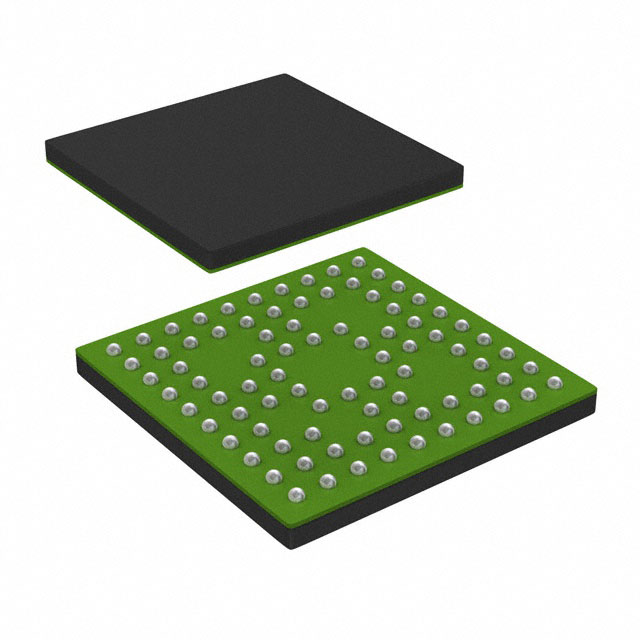
Microchip Technology SCH3222-SX
- Part No.:
- SCH3222-SX
- Manufacturer:
- Microchip Technology
- Category:
- Application Specific Microcontrollers
- Package:
- 84-WFBGA
- Datasheet:
-
 SCH3222-SX.pdf
- Description:
- IC CTLR IO LPC MULT PORT 84WFBGA
- Quantity:
- Payment:

- Shipping:

Inventory:3,874
Please send an inquiry. Send us your inquiry, and we will respond immediately.
Product details
Overview
SCH3222-SX from Microchip Technology is a 3.3V Low Pin Count (LPC) Super I/O controller with 8042 keyboard/mouse controller, four full-function UARTs, two fixed 4-pin serial ports, IrDA 1.0 infrared interface, and 23 GPIOs - all in an 84-ball WFBGA package rated for industrial temperature (-40°C to +85°C). It serves as motherboard glue logic for legacy PC-compatible embedded systems requiring serial expansion, power management, and system monitoring without hardware monitor capability.
For engineers reviewing the SCH3222-SX datasheet, SCH3222-SX pinout, SCH3222-SX application, or SCH3222-SX equivalent, this device is selected for cost-optimized LPC-based designs needing serial port consolidation, PS/2 keyboard/mouse support, ACPI-compliant wake-up events, and programmable clock output at 16 Hz - especially where hardware monitoring (voltage/temp/fan) is not required.
Technical Context
The SCH3222-SX implements a dedicated 8-bit 8042-compatible microcontroller with 2 KB ROM and 256 bytes RAM, supporting asynchronous access to dual data registers and status register. Its LPC interface operates at 19–33 MHz and complies with Intel LPC Specification Rev 1.0, enabling direct connection to modern chipsets while maintaining ISA Plug-and-Play register compatibility.
It integrates four NS16C550A-compatible UARTs with 16-byte FIFOs, supporting baud rates up to 1.5 Mbps and RS485 auto-direction control. Unlike SCH3227/SCH3226/SCH3224, the SCH3222-SX excludes hardware monitoring, parallel port, IDE/PCI reset outputs, and power button/AC fail recovery - confirmed by Table 1-1 and Section 1.3 of DS00002121B.
Key Specifications
| Parameter | Value and Actual Design Meaning |
|---|---|
| LPC Bus Frequency | 19–33 MHz - enables direct integration with Intel/Centaur/PicoChip LPC host controllers without external clock dividers. |
| UART Count & Type | 4 × NS16C550A-compatible UARTs with 16-byte FIFOs - supports high-throughput serial communication with minimal CPU overhead. |
| Serial Port Config | 4 full-function 8-pin ports + 2 fixed 4-pin ports - reduces connector count and PCB footprint in space-constrained embedded motherboards. |
| Infrared Interface | IrDA 1.0 compliant with SHARP ASK support - enables bidirectional IR communication for remote control or diagnostics. |
| GPIO Count | 23 general-purpose I/O pins - provides flexible signal routing for LED control, board-level status indication, or strap configuration. |
| Package & Temp Range | 84-ball WFBGA, industrial grade (-40°C to +85°C) - suitable for fanless industrial PCs, thin clients, and network appliance control planes. |
| Power Supply | 3.3V core (5V-tolerant SIO block) - simplifies power design by eliminating need for separate 5V rail for legacy I/O functions. |
Pinout & Package
Package: 84-ball WFBGA (10 mm × 10 mm, 0.8 mm pitch), RoHS-compliant, industrial temperature range (-40°C to +85°C).
| Pin/Terminal | Circuit Role | Design Meaning |
|---|---|---|
| B1 | +5V_IN | 5V-tolerant input for Super I/O block - powers legacy keyboard/mouse and serial port transceivers without level shifters. |
| A1 | GP40 | General-purpose I/O - configurable as input/output with weak pull-up; usable for board ID strapping or firmware debug signaling. |
| E1 | CLOCKI | External clock input (up to 48 MHz) - feeds internal PLL for generating LPC bus clock and programmable 16 Hz output. |
| B2–D2 | LAD0–LAD3 | LPC address/data multiplexed bus lines - carry configuration, runtime, and I/O data between host and Super I/O over shared 4-bit bus. |
| F1 | LFRAME# | LPC frame start signal - indicates beginning of LPC transaction cycle; synchronized to LCLK for timing-critical register access. |
| F2 | PCI_RESET# | Open-drain PCI reset output - asserts active-low reset to PCI peripherals during system power-on or watchdog timeout. |
| E3 | SER_IRQ | Serialized IRQ output - delivers shared interrupt vector to LPC host for UART, IR, and GPIO event aggregation. |
| H1–K1 | TXD1/RXD1 to TXD4/RXD4 | Full-duplex UART channel I/O - supports RS232/RS422/RS485 with external transceivers; each pair maps to independent NS16C550A instance. |
Key Features
| Feature | Design Value |
|---|---|
| 8042 Keyboard Controller | Hardware-compatible with Phoenix BIOS; includes Fast Gate A20, KRESET, Port 92, and PS/2 keyboard/mouse support - eliminates need for discrete 8042 IC. |
| Programmable Clock Output | 16 Hz square wave output on GP61 - directly drives real-time clock circuits or low-speed timing references without external oscillator. |
| Wake-up Event Support | PME and SMI generation via GPIO, serial, IR, or keyboard activity - enables deep-sleep power states while retaining responsive wake capability. |
| Serial IRQ Interface | Single-wire serialized interrupt sharing across all UARTs and IR port - reduces LPC host IRQ resource usage and simplifies interrupt routing. |
| GPIO Flexibility | 23 pins with VID-compatible inputs (0–6), nIO_PME, nIO_SMI, and LED drive capability - supports board-specific configuration, status feedback, and system control. |
Applications
| Industrial Thin Client | Legacy-Interface Network Appliance |
|---|---|
|
Use Scenario: Fanless x86-based thin client deployed in factory automation with RS232-connected PLCs and barcode scanners. IC Role / Device Role / Timing Role: Central Super I/O managing four serial ports, PS/2 keyboard/mouse, and system power sequencing via LPC interface. Use Value: Consolidates UART, keyboard, and interrupt logic into single 84-ball WFBGA - reduces BOM count and PCB layer count versus discrete solutions. |
Use Scenario: Secure firewall appliance requiring multiple console ports, IR-based firmware update, and watchdog-triggered failover. IC Role / Device Role / Timing Role: LPC-attached system I/O hub providing four UARTs, IrDA 1.0 interface, and programmable 16 Hz clock for RTC sync. Use Value: Enables simultaneous debugging (2x UART), remote provisioning (IR), and timekeeping (CLKO) without external timing components. |
| Embedded Control Panel | Low-Cost POS Terminal |
|
Use Scenario: Touchscreen HMI panel with serial-connected weight scale, receipt printer, and magnetic stripe reader. IC Role / Device Role / Timing Role: Serial port aggregator and keyboard controller interfacing peripherals to x86 SoC via LPC bus. Use Value: Delivers four full UARTs + two 4-pin ports - supports concurrent high-speed printing and low-speed sensor polling without CPU polling overhead. |
Use Scenario: Entry-level point-of-sale terminal using PS/2 keyboard, serial thermal printer, and RS485-connected cash drawer. IC Role / Device Role / Timing Role: Cost-optimized Super I/O handling keyboard scan, serial print commands, and RS485 direction control. Use Value: Integrates RS485 auto-direction (via UART RTS control) and 8042 keyboard logic - eliminates two discrete ICs and associated passives. |
Equivalent & Alternatives
The following parts are listed as comparable options for similar Super I/O applications.
| Alternative Part | Technical Difference | Application Difference | Selection Advice |
|---|---|---|---|
| SCH3224-SX | 100-ball WFBGA; adds hardware monitoring (voltage/temp/fan), but no parallel port or IDE reset outputs. | Required when system-level thermal/voltage supervision is needed - e.g., fan-cooled network switches or servers. | Select SCH3224-SX if voltage margining, ambient temperature tracking, or automatic fan speed control is mandatory. |
| IT8786E-S | 128-pin QFP; includes hardware monitor, parallel port, and more GPIOs (128 vs 23), but lacks IrDA and uses legacy ISA-style configuration. | Suitable for ATX desktop motherboards or industrial PCs needing ECP/EPP parallel printing and comprehensive system health reporting. | Choose IT8786E-S only when parallel port support, larger GPIO count, or legacy ISA PnP compatibility is required. |
Compared with SCH3222-SX, SCH3224-SX adds hardware monitoring at higher pin count and cost, while IT8786E-S offers broader legacy I/O but requires larger PCB area and lacks IrDA - making SCH3222-SX optimal for compact, serial-centric embedded designs without thermal supervision.
Availability
SCH3222-SX is available at Aetrix Electronics and suitable for industrial thin clients, network appliances, embedded control panels, and low-cost POS terminals requiring stable component supply and long-term lifecycle support.
Supply support for SCH3222-SX includes scheduled delivery planning, volume procurement assistance, BOM continuity management, traceable sourcing, and lifecycle availability coordination for OEM customers, industrial embedded developers, connected-device designers, and electronics production programs.
Manufacturer
Microchip Technology is a global semiconductor company specializing in microcontrollers, analog devices, and connectivity solutions for industrial, automotive, and consumer markets.
The SCH322x family was designed as a next-generation LPC Super I/O controller targeting cost-sensitive, space-constrained embedded platforms requiring serial expansion, keyboard/mouse support, and ACPI-compliant power management - with variant differentiation based on integrated features like hardware monitoring and parallel port.
FAQ
What is the primary function of the SCH3222-SX in a system architecture?
The SCH3222-SX serves as a Super I/O controller that consolidates legacy PC interfaces - including four NS16C550A-compatible UARTs, an 8042 keyboard/mouse controller, IrDA 1.0 infrared port, and 23 GPIOs - onto a single 84-ball WFBGA package. It connects to the host processor via the LPC bus and handles low-level I/O tasks, reducing chipset complexity and BOM count in embedded x86 designs. The SCH3222-SX does not include hardware monitoring, distinguishing it from higher-tier variants like SCH3224-SX.
Does the SCH3222-SX support hardware monitoring features such as voltage or temperature sensing?
No, the SCH3222-SX explicitly omits hardware monitoring functionality. According to Table 1-1 in DS00002121B, Hardware Monitor is marked "NO" for SCH3222, unlike SCH3227, SCH3226, and SCH3224. It lacks analog inputs for +2.5V/+5V/+12V/Vccp monitoring, thermal diode interfaces, fan tachometer inputs, PWM outputs, and the nHWM_INT signal. Designers requiring voltage or temperature supervision must select SCH3224-SX or another variant with HWM capability.
What UART capabilities does the SCH3222-SX provide, and how are they implemented?
The SCH3222-SX integrates four fully independent NS16C550A-compatible UARTs, each with 16-byte send/receive FIFOs, programmable baud rate generators, and support for 230 kbps, 460 kbps, 921 kbps, and 1.5 Mbps operation. Two additional 4-pin serial ports are permanently enabled (not strap-dependent), offering reduced-pin-count interfaces for simple peripheral connections. RS485 auto-direction control is supported via automatic nRTS assertion, eliminating need for external direction logic in half-duplex applications. All UARTs are accessible through standard LPC-configured I/O address ranges.
How does the SCH3222-SX handle power management and wake-up events?
The SCH3222-SX supports ACPI 2.0 and PC99/PC2001 compliance, enabling multiple low-power sleep states. It generates System Management Interrupts (SMI) and Programmable Wake-up Events (PME) triggered by keyboard activity, serial port data, infrared reception, GPIO state changes, or timer expiration. The SER_IRQ pin aggregates interrupts from UARTs and IR, while nIO_PME provides dedicated wake signaling. Power sequencing is managed via PWRGD_OUT and PWRGD_PS outputs, and the watchdog timer can assert PCI_RESET# on timeout - all coordinated through LPC-accessible configuration registers.
What is the package type and pin count of the SCH3222-SX, and how does it compare to other SCH322x variants?
The SCH3222-SX uses an 84-ball WFBGA package (10 mm × 10 mm, 0.8 mm pitch), the smallest in the SCH322x family. This contrasts with the 100-ball WFBGA used by SCH3224-SX and SCH3226-SX, and the 144-ball WFBGA of SCH3227-SX. The reduced ball count reflects its feature set: no hardware monitor, no parallel port, and no IDE/PCI reset buffers. Pin functions are documented in Table 2-4 of DS00002121B, confirming 23 GPIOs, four full UARTs, and fixed 4-pin serial ports - all mapped to the 84-ball layout without strapping options.
SCH3222-SX Specifications
- Product attributes
- Attribute value
- Manufacturer:
- Microchip Technology
- Series:
- -
- Package/Case:
- 84-WFBGA
- Packaging:
- Tray
- Product Status:
- Active
- Programmable:
- Not Verified
- Applications:
- I/O Controller
- Core Processor:
- 8042 Keyboard Controller
- Program Memory Type:
- ROM (2kB)
- Controller Series:
- -
- RAM Size:
- 256 x 8
- Interface:
- IrDA, LPC, Parallel, Serial, UART
- Number of I/O:
- 23
- Voltage - Supply:
- -
- Operating Temperature:
- 0°C ~ 70°C (TA)
- Grade:
- -
- Qualification:
- -
- Mounting Type:
- Surface Mount
- Supplier Device Package:
- 84-WFBGA (7x7)
SCH3222-SX FAQ
1.How can I place an order for SCH3222-SX through Aetrix?
Please submit a Request for Quotation (RFQ) for SCH3222-SX on Aetrix. Our sales agent will provide a competitive quotation and guide you through the order confirmation once you accept the terms.
2.Are the price and stock information for SCH3222-SX reliable?
The price and inventory of SCH3222-SX are updated periodically and may fluctuate due to market conditions. Stock and pricing data are typically refreshed every 24 hours. Quotation validity for SCH3222-SX is usually 5 days.
3.What payment methods are accepted for SCH3222-SX?
We accept Wire Transfer, PayPal, Credit Card, Western Union, MoneyGram, and Escrow for SCH3222-SX transactions.
Note: Certain payment methods may incur a processing fee.
4.How is shipping managed for SCH3222-SX?
SCH3222-SX orders can be shipped via leading logistics carriers, including DHL, UPS, FedEx, TNT, or Registered Mail.
Once your SCH3222-SX order is processed, you will receive an email with the shipment details and tracking number.
Note: Tracking information may take up to 24 hours to appear. Express delivery typically takes 3–5 business days.
5.How can I obtain technical support or documentation for SCH3222-SX?
For technical support, including SCH3222-SX datasheets, pinout diagrams, or application guidance, please contact our engineering support team. They can provide detailed documentation and assistance for your SCH3222-SX requirements.
6.How does Aetrix verify that SCH3222-SX is sourced from the original manufacturer or authorized distributors?
All SCH3222-SX products on Aetrix are procured from qualified distributors and authorized channels. Our dedicated quality assurance team conducts strict verification, including traceability checks and, if necessary, third-party testing. This ensures that SCH3222-SX meets industry standards.
7.What is the process for return or replacement of SCH3222-SX?
All SCH3222-SX units undergo pre-shipment inspection (PSI). If there is an issue with SCH3222-SX, returns or replacements are accepted under the following conditions:
1.Quantity discrepancies, incorrect items, or visible external defects (such as breakage or corrosion), acknowledged by Aetrix.
2.The issue is reported within 90 days of delivery.
3.The SCH3222-SX part is unused and in its original packaging.
Return procedure for SCH3222-SX:
1.Submit a request within 90 days.
2.Obtain a Return Material Authorization (RMA) from Aetrix.
SCH3222-SX Tags
-
CYPD3175-24LQXQ
Infineon Technologies

-
SLB9672VU20FW1523XTMA1
Infineon Technologies
-
SLB9670VQ20FW785XTMA1
Infineon Technologies
-
SLB9672XU20FW1523XTMA1
Infineon Technologies
-
SLB9673XU20FW2613XTMA1
Infineon Technologies
-
CYPD3125-40LQXIT
Infineon Technologies
-
AT97SC3204-U2A1A-20
Microchip Technology
-
AT97SC3204-U2A1A-10
Microchip Technology
-
SLM9670AQ20FW1311XTMA1
Infineon Technologies
-
SLB9672XU20FW1613XTMA1
Infineon Technologies
-
SLB9672AU20FW1613XTMA1
Infineon Technologies
-
SLB9673AU20FW2613XTMA1
Infineon Technologies
Tech Hub

TTL and CMOS logic families differ in thresholds, loading, output drive, power and timing. This engineering guide compares 74HC and 74HCT, calculates noise margins and checks 3.3 V/5 V compatibility.

A practical engineering guide to 3.3V and 5V logic compatibility, input thresholds, resistor dividers, translator ICs, MOSFET level shifting, I2C pull-ups, timing limits and power-sequencing risks.

The 74HC595 uses push-pull logic outputs, while the TPIC6B595 uses 50 V open-drain DMOS sinks for higher-power loads. This guide compares timing, current limits, 3.3 V interfacing, load wiring, thermal…

The 74HC595 converts serial data into eight stable parallel outputs. This guide covers pin functions, shift and storage timing, OE and MR behavior, drive-current limits, cascading, voltage compatibilit…

A technical comparison of level-sensitive latches and edge-triggered flip-flops, covering timing windows, setup and hold limits, master–slave operation, time borrowing, race-through, HDL inference and…

A D latch stores one bit while Enable controls when data can pass. This reference covers gate-level operation, truth tables, transparency, setup and hold timing, LE versus OE, common ICs and practical …

An SR latch stores one bit through cross-coupled feedback. This engineering reference covers NOR and NAND implementations, truth tables, forbidden-state recovery, gated operation, switch debouncing, fa…

Latch circuits retain one bit through feedback. This technical reference covers SR and D latches, truth tables, transparency, timing limits, latch-versus-flip-flop behavior, applications and common log…

An engineering guide to LED driver operation, constant-current and constant-voltage outputs, linear and switching topologies, dimming, IC selection, calculations, replacement compatibility, and fault c…

Operational amplifier guide covering op amp basics, feedback, ideal vs real op amps, common configurations, buffer circuits, offset, bias current, gain-bandwidth, slew rate, rail-to-rail limits and sel…


