
 My Inquiry
 My Account


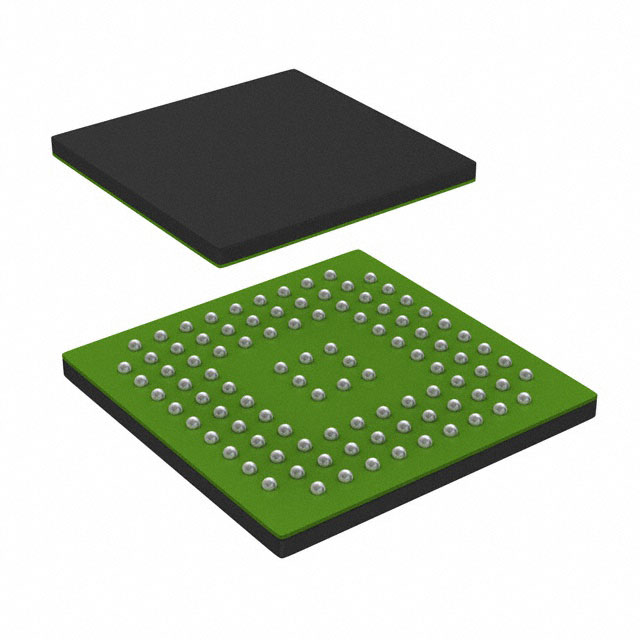
Microchip Technology SCH3226I-SY-TR
- Part No.:
- SCH3226I-SY-TR
- Manufacturer:
- Microchip Technology
- Category:
- Application Specific Microcontrollers
- Package:
- 100-WFBGA
- Datasheet:
-
 SCH3226I-SY-TR.pdf
- Description:
- LPC IO WITH 8042 KBC, RESET GENE
- Quantity:
- Payment:

- Shipping:

Inventory:2,729
Please send an inquiry. Send us your inquiry, and we will respond immediately.
Product details
Overview
SCH3226I-SY-TR from Microchip Technology is a 3.3V Low Pin Count (LPC) Super I/O controller with 5V-tolerant SIO block, integrated 8042-compatible keyboard controller, four full-function UARTs, hardware monitoring, and ACPI 2.0 compliance. It delivers 1.5 Mbps serial communication, dual thermal diode sensing (±1.5°C accuracy), programmable fan control via three PWM outputs, and supports industrial temperature range (−40°C to +85°C) in WFBGA-100 package. Used in embedded industrial motherboards requiring legacy I/O consolidation and system health management.
For engineers reviewing the SCH3226I-SY-TR datasheet, SCH3226I-SY-TR pinout, SCH3226I-SY-TR application, or SCH3226I-SY-TR equivalent, key selection criteria include LPC bus timing (19–33 MHz), GPIO count (40 pins), hardware monitor register accessibility over LPC, IDE/PCI reset buffer configurability via strap option, and compatibility with PC99/PC2001 platform requirements.
Technical Context
The SCH3226I-SY-TR implements an LPC interface compliant with Intel LPC Specification Rev 1.0, supporting serialized IRQ, SMI, and PnP configuration across four port address options. Its 8042-compatible keyboard controller includes 2 kB ROM, 256 B RAM, and dedicated open-drain outputs for PS/2 keyboard/mouse.
Hardware monitoring integrates analog-to-digital conversion for seven voltage rails (+2.5V, +5V, +12V, Vccp, VCC, Vbat, Vtr), internal ambient temperature sensing, and two remote thermal diode inputs. Fan control uses three independent PWM outputs with tachometer feedback on FANTACH1–FANTACH3 pins.
Key Specifications
| Parameter | Value and Actual Design Meaning |
|---|---|
| LPC Bus Frequency | 19–33 MHz - defines maximum host-to-Super I/O command throughput and configuration latency. |
| UART Count & Type | 4 × NS16C550A-compatible UARTs with 16-byte FIFOs - enables high-throughput serial device connectivity without CPU polling overhead. |
| Max Baud Rate | 1.5 Mbps - supports high-speed industrial serial protocols including RS-485 auto-direction mode. |
| Hardware Monitor Inputs | 7 voltage rails + 2 remote thermal diodes + 1 internal sensor - provides comprehensive power integrity and thermal margin validation. |
| GPIO Count | 40 general-purpose I/O pins - allows flexible board-level signal routing, LED control, and strap configuration. |
| Package | 100-ball WFBGA (6×6 mm, 0.5 mm pitch) - enables compact motherboard layout with fine-pitch ball grid array for high I/O density. |
| Operating Temperature | −40°C to +85°C (industrial grade) - ensures reliable operation in uncontrolled environmental conditions typical of factory automation systems. |
Pinout & Package
Package: 100-ball WFBGA (6 mm × 6 mm, 0.5 mm pitch), RoHS-compliant, with exposed thermal pad (HVSS/HVTR). Ball assignments depend on STRAPOPT strap: when tied to VTR, Device ID = 0x7F; when tied to VSS, Device ID = 0x7D.
| Pin/Terminal | Circuit Role | Design Meaning |
|---|---|---|
| LAD0–LAD3 | LPC Address/Data Bus | Time-multiplexed 4-bit bidirectional bus for configuration and runtime register access over LPC. |
| LFRAME# | LPC Frame Signal | Indicates start/end of LPC transaction cycle; synchronizes host-initiated configuration reads/writes. |
| LDRQ# | LPC DMA Request | Asserted by SCH3226I-SY-TR to request DMA channel allocation for burst data transfers (e.g., parallel port ECP mode). |
| nHWM_INT | Hardware Monitor Interrupt | Active-low open-drain output signaling out-of-limit voltage, temperature, or fan speed - directly connects to host PCH SMI# or PME# input. |
| PWM1–PWM3 | Fan Speed Control Outputs | Three independent pulse-width modulated outputs driving external MOSFETs for closed-loop thermal management. |
| FANTACH1–FANTACH3 | Fan Tachometer Inputs | Three dedicated inputs accepting TTL-level fan rotation pulses (2–4 pulses/rev) for RPM calculation and fault detection. |
| REMOTE1+/−, REMOTE2+/− | Thermal Diode Interfaces | Differential analog inputs supporting remote temperature sensing using external diode-connected transistors (e.g., 2N3904). |
| VCCP_IN | Processor Core Voltage Sense | Analog input for monitoring CPU core supply (Vccp); used in hardware monitor limit comparisons and dynamic fan scaling. |
Key Features
| Feature | Design Value |
|---|---|
| ACPI 2.0 & PC99 Compliance | Enables OS-directed power state transitions (S0–S5) and standardized enumeration in Windows/Linux BIOS environments. |
| Programmable Clock Output (CLKO) | 16 Hz square wave output on GP61 pin - supports real-time clock reference or low-frequency timing for auxiliary logic. |
| IDE/PCI Reset Buffers | Configurable via strap option: replaces two 4-pin serial ports with nIDE_RSTDRV, nPCIRST1–nPCIRST3 - simplifies reset tree design in storage- and expansion-heavy platforms. |
| Security Key Register | 32-byte battery-backed register for device authentication - retains cryptographic keys across power cycles for secure boot or firmware validation. |
| IrDA 1.0 Infrared Port | Integrated multiprotocol IR interface supporting IrDA 1.0, SHARP ASK - eliminates need for external transceiver in kiosk or medical handheld applications. |
| Watchdog Timer with WDT Output | Reset pulse generation on timeout; WDT signal routed to GP60 pin - enables external watchdog supervision or LED fault indication. |
Applications
| Industrial Motherboard I/O Hub | Legacy-Interface Embedded Controller |
|---|---|
|
Use Scenario: Compact industrial PC motherboard consolidating PS/2, serial, parallel, and infrared interfaces while monitoring power and thermal margins. IC Role / Device Role / Timing Role: Central Super I/O hub managing LPC-configured logical devices, generating nRSMRST and PWRGD signals, and providing hardware-monitored system health telemetry. Use Value: Reduces discrete logic count by integrating keyboard controller, UARTs, IR port, and voltage/fan/temperature monitoring - lowers BOM cost and improves long-term supply stability. |
Use Scenario: Retrofit upgrade of legacy x86-based CNC controller replacing obsolete SCH311x family parts with enhanced diagnostics and strap-configurable feature sets. IC Role / Device Role / Timing Role: Drop-in functional replacement for SCH3114/SCH3116 with identical register map and LPC timing, enabling reuse of existing BIOS drivers and configuration utilities. Use Value: Maintains software compatibility while adding hardware monitor alerts, improved thermal accuracy (±1.5°C), and configurable IDE/PCI reset buffers for expanded peripheral support. |
| Secure Edge Gateway Controller | Thermally Managed Network Appliance |
|
Use Scenario: Secure IoT gateway requiring tamper-resistant boot, authenticated firmware updates, and monitored power delivery across multiple DC-DC rails. IC Role / Device Role / Timing Role: Security anchor providing battery-backed 32-byte key register, SMI-triggered secure boot checks, and voltage/fan telemetry for runtime integrity verification. Use Value: Enables hardware-rooted trust chain without external secure element - key register survives main power loss and supports AES key wrapping for encrypted firmware images. |
Use Scenario: Fan-cooled network appliance operating continuously in 55°C ambient environments with variable thermal load from packet processing ASICs. IC Role / Device Role / Timing Role: Thermal manager acquiring local ambient and two remote die temperatures, comparing against user-defined limits, and dynamically adjusting three PWM fan outputs. Use Value: Prevents thermal throttling by maintaining ASIC junction temperature within spec using closed-loop fan control - reduces acoustic noise vs. fixed-speed fans. |
Equivalent & Alternatives
The following parts are listed as comparable options for similar Super I/O controller applications.
| Alternative Part | Technical Difference | Application Difference | Selection Advice |
|---|---|---|---|
| ITE IT8786E | 48-pin QFP package; lacks strap-configurable IDE/PCI reset buffers; supports only 2 full UARTs and no IR port. | Targeted at cost-sensitive consumer motherboards; not rated for industrial temperature range. | Choose IT8786E only if footprint constraints prohibit WFBGA and thermal monitoring requirements are minimal. |
| Nuvoton NCT6776D | 128-pin LQFP; includes integrated VGA controller logic; supports 6 UARTs but no hardware-accelerated IrDA. | Designed for mainstream desktop platforms with integrated graphics; higher pin count increases PCB routing complexity. | Select NCT6776D when VGA-related strapping or additional UART channels outweigh WFBGA size advantage and IR functionality. |
Compared with IT8786E and NCT6776D, the SCH3226I-SY-TR offers superior thermal monitoring resolution (±1.5°C remote diode), smaller WFBGA-100 footprint, and strap-selectable reset functionality - making it optimal for space-constrained industrial designs requiring robust health telemetry and legacy interface retention.
Availability
SCH3226I-SY-TR is available at Aetrix Electronics and suitable for industrial automation controllers, embedded network appliances, and secure edge gateways requiring stable component supply, long-lifecycle support, and RoHS-compliant packaging.
Supply support for SCH3226I-SY-TR includes scheduled delivery planning, volume procurement assistance, BOM continuity management, traceable sourcing, and lifecycle availability coordination for OEM customers, industrial embedded developers, connected-device designers, and electronics production programs.
Manufacturer
Microchip Technology Inc. is a leading provider of microcontrollers, analog components, and connectivity solutions, serving automotive, industrial, and consumer markets with vertically integrated silicon and development tools.
The SCH322x Super I/O family was designed specifically for x86-based embedded platforms needing consolidated legacy I/O, hardware health monitoring, and ACPI-compliant power management - targeting industrial PCs, thin clients, and secure gateways.
FAQ
What is the function of the STRAPOPT pin on the SCH3226I-SY-TR?
The STRAPOPT pin on the SCH3226I-SY-TR determines functional mapping of eight GPIO pins and sets the Plug-and-Play Device ID register: when strapped to VTR, Device ID = 0x7F and enables IDE/PCI reset buffers; when strapped to VSS, Device ID = 0x7D and enables two additional 4-pin serial ports. This strap must be hard-wired before power-up and cannot be changed dynamically. The SCH3226I-SY-TR datasheet specifies exact ball locations and default states for all strap-dependent functions.
Does the SCH3226I-SY-TR support both EPP and ECP parallel port modes?
No, the SCH3226I-SY-TR does not support EPP or ECP parallel port modes. Unlike the SCH3227 variant, the SCH3226I-SY-TR omits the Multi-Mode™ Parallel Port with ChiProtect™. Its pinout contains no PD0–PD7, SLCT, BUSY, or nACK signals required for IEEE 1284 compliance. Parallel port functionality is absent in SCH3226I-SY-TR - confirmed in Table 1-1 of DS00002121B and verified across all pin diagrams for this part number.
How many UARTs does the SCH3226I-SY-TR provide, and what are their capabilities?
The SCH3226I-SY-TR provides four full-function NS16C550A-compatible UARTs with 16-byte send/receive FIFOs, supporting baud rates up to 1.5 Mbps and RS-485 auto-direction control. Two additional 4-pin serial ports are available via strap option, but these lack full modem control and FIFO depth. All UARTs support IRQ sharing, 480 I/O address options, and asynchronous access to status/data registers - enabling simultaneous multi-device serial communication in industrial control systems.
Can the SCH3226I-SY-TR monitor processor core voltage (Vccp)?
Yes, the SCH3226I-SY-TR monitors Vccp via the dedicated VCCP_IN analog input pin. This input feeds the internal hardware monitor ADC, allowing real-time tracking and limit comparison against programmable thresholds. Voltage readings are accessible through the Hardware Monitoring Register Set over the LPC bus, and out-of-limit conditions trigger the nHWM_INT signal. This capability is explicitly listed in the "Hardware Monitor" section of DS00002121B and confirmed in Table 1-1 for SCH3226.
What thermal sensing interfaces does the SCH3226I-SY-TR support?
The SCH3226I-SY-TR supports three thermal sensing interfaces: one internal ambient temperature sensor and two differential remote thermal diode inputs (REMOTE1+/− and REMOTE2+/−). Each remote input achieves ±1.5°C accuracy across −40°C to +125°C range when paired with standard diode-connected transistors. Temperature data is readable via LPC-configured hardware monitor registers and can drive automatic fan PWM responses or generate nHWM_INT alerts - fully documented in Section 21.0 of DS00002121B.
SCH3226I-SY-TR Specifications
- Product attributes
- Attribute value
- Manufacturer:
- Microchip Technology
- Series:
- -
- Package/Case:
- 100-WFBGA
- Packaging:
- Tape & Reel (TR)
- Product Status:
- Active
- Programmable:
- Not Verified
- Applications:
- I/O Controller
- Core Processor:
- 8042 Keyboard Controller
- Program Memory Type:
- ROM (2kB)
- Controller Series:
- -
- RAM Size:
- 256 x 8
- Interface:
- IrDA, LPC, Parallel, Serial, UART
- Number of I/O:
- 40
- Voltage - Supply:
- -
- Operating Temperature:
- -40°C ~ 85°C (TA)
- Grade:
- -
- Qualification:
- -
- Mounting Type:
- Surface Mount
- Supplier Device Package:
- 100-WFBGA (8x8)
SCH3226I-SY-TR FAQ
1.How can I place an order for SCH3226I-SY-TR through Aetrix?
Please submit a Request for Quotation (RFQ) for SCH3226I-SY-TR on Aetrix. Our sales agent will provide a competitive quotation and guide you through the order confirmation once you accept the terms.
2.Are the price and stock information for SCH3226I-SY-TR reliable?
The price and inventory of SCH3226I-SY-TR are updated periodically and may fluctuate due to market conditions. Stock and pricing data are typically refreshed every 24 hours. Quotation validity for SCH3226I-SY-TR is usually 5 days.
3.What payment methods are accepted for SCH3226I-SY-TR?
We accept Wire Transfer, PayPal, Credit Card, Western Union, MoneyGram, and Escrow for SCH3226I-SY-TR transactions.
Note: Certain payment methods may incur a processing fee.
4.How is shipping managed for SCH3226I-SY-TR?
SCH3226I-SY-TR orders can be shipped via leading logistics carriers, including DHL, UPS, FedEx, TNT, or Registered Mail.
Once your SCH3226I-SY-TR order is processed, you will receive an email with the shipment details and tracking number.
Note: Tracking information may take up to 24 hours to appear. Express delivery typically takes 3–5 business days.
5.How can I obtain technical support or documentation for SCH3226I-SY-TR?
For technical support, including SCH3226I-SY-TR datasheets, pinout diagrams, or application guidance, please contact our engineering support team. They can provide detailed documentation and assistance for your SCH3226I-SY-TR requirements.
6.How does Aetrix verify that SCH3226I-SY-TR is sourced from the original manufacturer or authorized distributors?
All SCH3226I-SY-TR products on Aetrix are procured from qualified distributors and authorized channels. Our dedicated quality assurance team conducts strict verification, including traceability checks and, if necessary, third-party testing. This ensures that SCH3226I-SY-TR meets industry standards.
7.What is the process for return or replacement of SCH3226I-SY-TR?
All SCH3226I-SY-TR units undergo pre-shipment inspection (PSI). If there is an issue with SCH3226I-SY-TR, returns or replacements are accepted under the following conditions:
1.Quantity discrepancies, incorrect items, or visible external defects (such as breakage or corrosion), acknowledged by Aetrix.
2.The issue is reported within 90 days of delivery.
3.The SCH3226I-SY-TR part is unused and in its original packaging.
Return procedure for SCH3226I-SY-TR:
1.Submit a request within 90 days.
2.Obtain a Return Material Authorization (RMA) from Aetrix.
SCH3226I-SY-TR Tags
-
CYPD3175-24LQXQ
Infineon Technologies

-
SLB9672VU20FW1523XTMA1
Infineon Technologies
-
SLB9670VQ20FW785XTMA1
Infineon Technologies
-
SLB9672XU20FW1523XTMA1
Infineon Technologies
-
SLB9673XU20FW2613XTMA1
Infineon Technologies
-
CYPD3125-40LQXIT
Infineon Technologies
-
AT97SC3204-U2A1A-20
Microchip Technology
-
AT97SC3204-U2A1A-10
Microchip Technology
-
SLM9670AQ20FW1311XTMA1
Infineon Technologies
-
SLB9672XU20FW1613XTMA1
Infineon Technologies
-
SLB9672AU20FW1613XTMA1
Infineon Technologies
-
SLB9673AU20FW2613XTMA1
Infineon Technologies
Tech Hub

TTL and CMOS logic families differ in thresholds, loading, output drive, power and timing. This engineering guide compares 74HC and 74HCT, calculates noise margins and checks 3.3 V/5 V compatibility.

A practical engineering guide to 3.3V and 5V logic compatibility, input thresholds, resistor dividers, translator ICs, MOSFET level shifting, I2C pull-ups, timing limits and power-sequencing risks.

The 74HC595 uses push-pull logic outputs, while the TPIC6B595 uses 50 V open-drain DMOS sinks for higher-power loads. This guide compares timing, current limits, 3.3 V interfacing, load wiring, thermal…

The 74HC595 converts serial data into eight stable parallel outputs. This guide covers pin functions, shift and storage timing, OE and MR behavior, drive-current limits, cascading, voltage compatibilit…

A technical comparison of level-sensitive latches and edge-triggered flip-flops, covering timing windows, setup and hold limits, master–slave operation, time borrowing, race-through, HDL inference and…

A D latch stores one bit while Enable controls when data can pass. This reference covers gate-level operation, truth tables, transparency, setup and hold timing, LE versus OE, common ICs and practical …

An SR latch stores one bit through cross-coupled feedback. This engineering reference covers NOR and NAND implementations, truth tables, forbidden-state recovery, gated operation, switch debouncing, fa…

Latch circuits retain one bit through feedback. This technical reference covers SR and D latches, truth tables, transparency, timing limits, latch-versus-flip-flop behavior, applications and common log…

An engineering guide to LED driver operation, constant-current and constant-voltage outputs, linear and switching topologies, dimming, IC selection, calculations, replacement compatibility, and fault c…

Operational amplifier guide covering op amp basics, feedback, ideal vs real op amps, common configurations, buffer circuits, offset, bias current, gain-bandwidth, slew rate, rail-to-rail limits and sel…


