Taiwan Semiconductor Corporation SMF100AH
- Part No.:
- SMF100AH
- Manufacturer:
- Taiwan Semiconductor Corporation
- Category:
- TVS Diodes
- Package:
- SOD-123W
- Datasheet:
-
SMF100AH.pdf
- Description:
- TVS DIODE 100VWM 162VC SOD123W
- Quantity:
- Payment:

- Shipping:

Inventory:3,777
Please send an inquiry. Send us your inquiry, and we will respond immediately.
Product details
Overview
SMF100AH from Taiwan Semiconductor is a unidirectional surface-mount transient voltage suppressor (TVS) diode designed for automotive-grade ESD and surge protection. It features a 100 V working stand-off voltage (VWM), 111–123 V breakdown voltage (VBR), 162 V clamping voltage (VC) at 1.08 A peak pulse current, and 200 W peak pulse power (10/1000 µs). It is used to protect automotive lighting control modules and powertrain ECUs against ISO 7637-2 Pulse 1/2a/2b/3a/3b transients.
For engineers reviewing the SMF100AH datasheet, SMF100AH pinout, SMF100AH application, or SMF100AH equivalent, key selection criteria include clamping performance under 10/1000 µs surge, AEC-Q101 qualification status, SOD-123W package thermal resistance (RθJL = 33 °C/W), and reverse leakage (<1.08 µA at 100 V).
Technical Context
The SMF100AH operates as a unidirectional avalanche diode with glass-passivated junction for stable breakdown behavior and low leakage. Its clamping action begins above 111 V (min VBR) and limits transient energy to ≤162 V at 1.08 A, enabling robust protection of 12 V/24 V automotive electronics without forward conduction during normal operation.
Thermally, it delivers RθJL = 33 °C/W and RθJA = 100 °C/W when mounted on a 5 mm × 5 mm copper pad, supporting sustained operation up to TJ = 175 °C. It meets JESD201 Class 2 whisker resistance and J-STD-020 moisture sensitivity Level 1.
Key Specifications
| Parameter | Value and Actual Design Meaning |
|---|---|
| VWM | 100 V - Maximum continuous reverse operating voltage before clamping initiates |
| VBR (min/max) | 111 / 123 V - Breakdown occurs within this range at 1 mA test current; defines turn-on threshold |
| VC @ IPPM | 162 V - Clamped voltage at 1.08 A peak pulse current (10/1000 µs); determines protected circuit stress level |
| PPPM | 200 W - Peak pulse power handling per IEC 61000-4-5 waveform; validates surge immunity capability |
| IR @ VWM | <1.08 µA - Reverse leakage at rated stand-off voltage; ensures minimal standby power loss |
| TJ max | +175 °C - Maximum junction temperature; enables under-hood deployment in automotive environments |
| RθJL | 33 °C/W - Junction-to-lead thermal resistance; supports reliable heat transfer to PCB copper |
Pinout & Package
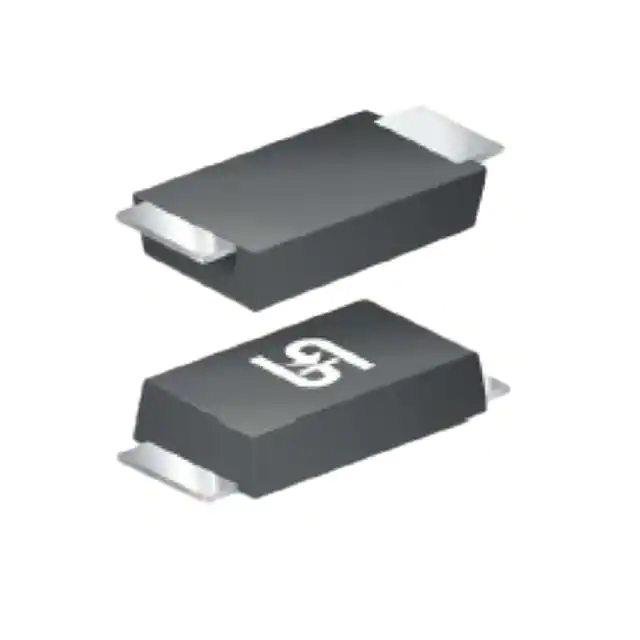
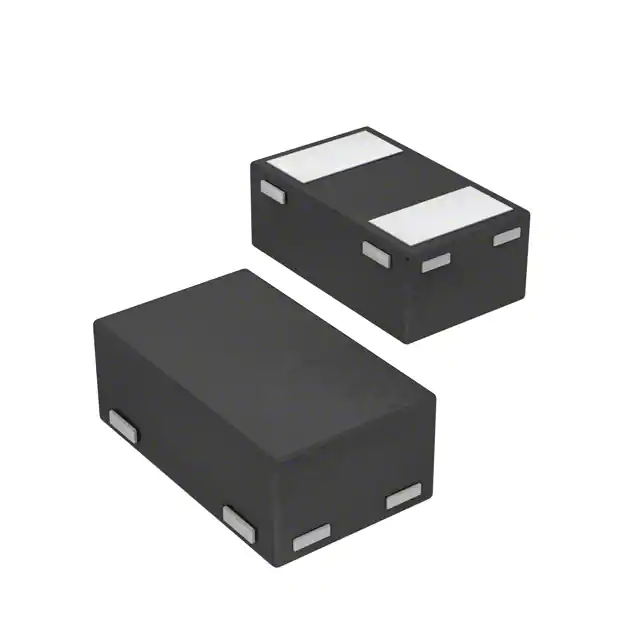
Package: SOD-123W - Surface-mount plastic case with matte tin-plated leads, UL 94V-0 rated molding compound, cathode band polarity indicator, and 0.016 g mass.
| Pin/Terminal | Circuit Role | Design Meaning |
|---|---|---|
| Anode | Forward conduction path | Connected to system ground or lower-potential rail during transient clamp |
| Cathode | Reverse-biased terminal | Connected to protected line (e.g., CAN_H, LIN, supply rail); cathode band marks this terminal |
Key Features
| Feature | Design Value |
|---|---|
| AEC-Q101 qualified | Validated for automotive use across temperature, humidity, and mechanical stress profiles per JESD47 |
| Glass-passivated junction | Ensures stable VBR over lifetime and improved reliability vs. epoxy-passivated alternatives |
| Low IR <1.08 µA @ 100 V | Minimizes quiescent current draw in always-on vehicle systems (e.g., body control modules) |
| ISO 7637-2 compliance | Withstands standardized automotive load-dump and inductive-switching transients (Pulse 1/2a/2b/3a/3b) |
| SOD-123W footprint | Enables high-density placement and compatibility with standard SMT reflow profiles (MSL Level 1) |
Applications
| Automotive Lighting Control | Powertrain ECU Protection |
|---|---|
Use Scenario: Protecting LED driver ICs and microcontrollers in headlamp control units from load-dump surges and ESD events. IC Role / Device Role / Timing Role: Unidirectional TVS placed between supply rail and ground to clamp transients before they reach sensitive logic. Use Value: Limits voltage to ≤162 V during 10/1000 µs pulses, preventing latch-up or gate oxide damage in 3.3 V/5 V MCUs. | Use Scenario: Safeguarding CAN transceiver inputs and sensor signal lines in engine control units exposed to ignition noise. IC Role / Device Role / Timing Role: Standoff protection device on 12 V supply and CAN_H/CAN_L lines to absorb fast transients per ISO 7637-2 Pulse 3b. Use Value: Delivers <1.08 µA leakage at 100 V, avoiding interference with low-current sensor bias networks. |
| Body Control Module (BCM) | Infotainment Power Input |
Use Scenario: Shielding LIN bus transceivers and power management ICs in door module controllers from battery disconnect spikes. IC Role / Device Role / Timing Role: Primary overvoltage clamp on 12 V input rail upstream of DC-DC converters. Use Value: 200 W peak pulse rating handles repetitive load-dump events without degradation per AEC-Q101 life testing. | Use Scenario: Protecting USB-C PD controller and display power rails in center-stack infotainment systems from hot-swap transients. IC Role / Device Role / Timing Role: Secondary-level TVS on 5 V/12 V auxiliary supplies to complement primary front-end protection. Use Value: SOD-123W package allows placement near connectors with minimal trace inductance, improving clamping response time. |
Equivalent & Alternatives
The following parts are listed as comparable options for similar transient voltage suppression applications.
| Alternative Part | Technical Difference | Application Difference | Selection Advice |
|---|---|---|---|
| SMAJ100A | Same VWM (100 V), but higher VC = 169 V and lower PPPM = 400 W (at 10/1000 µs); SMA package (larger footprint, higher RθJA) | Less suitable for space-constrained automotive modules due to larger SMA-DO-214AC outline | Prefer SMF100AH where board area and thermal performance (RθJL = 33 °C/W) are critical |
| 1.5SMC100A | Higher PPPM = 1500 W but significantly larger SMC package; VWM = 100 V, VC = 165 V; not AEC-Q101 qualified | Targeted at industrial power supplies, not automotive; lacks automotive qualification and MSL Level 1 rating | Select SMF100AH for AEC-Q101-compliant designs requiring compact, high-reliability TVS in harsh environments |
Compared with SMAJ100A and 1.5SMC100A, the SMF100AH offers superior thermal efficiency (RθJL = 33 °C/W), automotive qualification, and minimal board footprint-making it optimal for ECU-level protection where size, reliability, and thermal margin are prioritized over raw power rating.
Availability
SMF100AH is available at Aetrix Electronics and suitable for automotive lighting control, powertrain ECU protection, and body control module (BCM) designs requiring stable component supply with full AEC-Q101 traceability and MSL Level 1 handling.
Supply support for SMF100AH includes scheduled delivery planning, volume procurement assistance, BOM continuity management, traceable sourcing, and lifecycle availability coordination for OEM customers, industrial embedded developers, connected-device designers, and electronics production programs.
Manufacturer
Taiwan Semiconductor Corporation (TSC) is a vertically integrated semiconductor manufacturer specializing in discrete power devices, TVS diodes, and rectifiers, with global distribution and automotive qualification capabilities.
The SMF100AH belongs to TSC's AEC-Q101-qualified SMF series of surface-mount TVS diodes, engineered specifically for automotive electronics protection against ISO 7637-2 transients and ESD events in space-constrained modules.
FAQ
What is the clamping voltage of SMF100AH at its rated peak pulse current?
The SMF100AH has a maximum clamping voltage (VC) of 162 V at 1.08 A peak pulse current (IPPM) under a 10/1000 µs waveform. This value is measured per the manufacturer's electrical specifications table and defines the upper voltage limit imposed on protected circuits during surge events. The clamping performance ensures downstream ICs remain within safe operating voltage margins during ISO 7637-2 Pulse 1 and Pulse 2b transients. SMF100AH maintains this specification across its full operating temperature range.
Is SMF100AH qualified for automotive applications?
Yes, SMF100AH is AEC-Q101 qualified, meaning it has passed rigorous stress tests for temperature cycling, humidity, mechanical shock, and accelerated life validation required for automotive electronic components. It also meets JESD201 Class 2 whisker resistance and J-STD-020 MSL Level 1, confirming suitability for lead-free reflow assembly in automotive production. SMF100AH is explicitly listed in TSC's automotive-grade product portfolio for use in ECUs, lighting, and body control modules.
What package does SMF100AH use, and what are its key mechanical attributes?
SMF100AH uses the SOD-123W surface-mount package: a compact, rectangular plastic case with matte tin-plated leads, UL 94V-0 flammability rating, and cathode band polarity marking. Its weight is approximately 0.016 g, and it complies with JEDEC standards for solderability and whisker resistance. The SOD-123W footprint enables high-density placement and supports automated pick-and-place processes. SMF100AH's thermal performance includes RθJL = 33 °C/W when mounted on a 5 mm × 5 mm copper pad.
How does SMF100AH compare to SMF85AH in terms of voltage ratings and application scope?
SMF100AH has a 100 V working stand-off voltage (VWM) and 111–123 V breakdown range (VBR), while SMF85AH is rated for 85 V VWM and 94.4–104 V VBR. Both share identical package, power rating (200 W), and AEC-Q101 qualification. SMF100AH is selected for 24 V automotive systems or higher-voltage auxiliary rails where tighter clamping margin above 100 V is required; SMF85AH suits 12 V systems with lower transient thresholds. SMF100AH's VC = 162 V remains compatible with 24 V-rated ICs.
Does SMF100AH meet ISO 7637-2 requirements, and which pulses are validated?
Yes, SMF100AH is specified to meet ISO 7637-2 for automotive transient immunity, covering Pulse 1 (inductive load dump), Pulse 2a (sudden load removal), Pulse 2b (inductive switching), and Pulses 3a/3b (capacitive coupling and line impedance stabilization network events). This compliance is stated directly in the manufacturer's features list and verified through characterization per the standard's waveform definitions. SMF100AH's 200 W peak pulse rating and low clamping voltage ensure effective suppression across all five pulses without degradation.
SMF100AH Specifications
- Product attributes
- Attribute value
- Manufacturer:
- Taiwan Semiconductor Corporation
- Package/Case:
- SOD-123W
- Series:
- SMF
- Packaging:
- Tape & Reel (TR)
- Product Status:
- Active
- Type:
- Zener
- Unidirectional Channels:
- 1
- Bidirectional Channels:
- -
- Voltage - Reverse Standoff (Typ):
- 100V
- Voltage - Breakdown (Min):
- 111V
- Voltage - Clamping (Max) @ Ipp:
- 162V
- Current - Peak Pulse (10/1000µs):
- -
- Power - Peak Pulse:
- 200W
- Power Line Protection:
- No
- Applications:
- -
- Capacitance @ Frequency:
- -
- Operating Temperature:
- -55°C ~ 175°C (TJ)
- Grade:
- Automotive
- Qualification:
- AEC-Q101
- Mounting Type:
- Surface Mount
- Supplier Device Package:
- SOD-123W
SMF100AH FAQ
1.How can I place an order for SMF100AH through Aetrix?
Please submit a Request for Quotation (RFQ) for SMF100AH on Aetrix. Our sales agent will provide a competitive quotation and guide you through the order confirmation once you accept the terms.
2.Are the price and stock information for SMF100AH reliable?
The price and inventory of SMF100AH are updated periodically and may fluctuate due to market conditions. Stock and pricing data are typically refreshed every 24 hours. Quotation validity for SMF100AH is usually 5 days.
3.What payment methods are accepted for SMF100AH?
We accept Wire Transfer, PayPal, Credit Card, Western Union, MoneyGram, and Escrow for SMF100AH transactions.
Note: Certain payment methods may incur a processing fee.
4.How is shipping managed for SMF100AH?
SMF100AH orders can be shipped via leading logistics carriers, including DHL, UPS, FedEx, TNT, or Registered Mail.
Once your SMF100AH order is processed, you will receive an email with the shipment details and tracking number.
Note: Tracking information may take up to 24 hours to appear. Express delivery typically takes 3–5 business days.
5.How can I obtain technical support or documentation for SMF100AH?
For technical support, including SMF100AH datasheets, pinout diagrams, or application guidance, please contact our engineering support team. They can provide detailed documentation and assistance for your SMF100AH requirements.
6.How does Aetrix verify that SMF100AH is sourced from the original manufacturer or authorized distributors?
All SMF100AH products on Aetrix are procured from qualified distributors and authorized channels. Our dedicated quality assurance team conducts strict verification, including traceability checks and, if necessary, third-party testing. This ensures that SMF100AH meets industry standards.
7.What is the process for return or replacement of SMF100AH?
All SMF100AH units undergo pre-shipment inspection (PSI). If there is an issue with SMF100AH, returns or replacements are accepted under the following conditions:
1.Quantity discrepancies, incorrect items, or visible external defects (such as breakage or corrosion), acknowledged by Aetrix.
2.The issue is reported within 90 days of delivery.
3.The SMF100AH part is unused and in its original packaging.
Return procedure for SMF100AH:
1.Submit a request within 90 days.
2.Obtain a Return Material Authorization (RMA) from Aetrix.
SMF100AH Tags
-
ESD9B5.0ST5G
onsemi
-
DESD3V3E1BL-7B
Diodes Incorporated
-
ESD5Z3.3T1G
onsemi

-
D5V0H1B2LP-7B
Diodes Incorporated

-
D5V0P1B2LP-7B
Diodes Incorporated
-
DESD5V0U1BA-7
Diodes Incorporated

-
ESD5Z5.0T1G
onsemi
-
DESD5V0U1BB-7
Diodes Incorporated

-
D12V0L1B2LP-7B
Diodes Incorporated
-
PESD2V0Y1BSFYL
Nexperia USA Inc.
-
DF2S5M4CT,L3F
Toshiba Semiconductor and Storage

-
D5V0L1B2WS-7
Diodes Incorporated
Tech Hub

Comparator circuit design covering voltage thresholds, input limits, open-collector outputs, LM393 wiring, op-amp differences, hysteresis, timing, window detection and practical fault diagnosis.
Schmitt triggers use separate rising and falling thresholds to stabilize slow or noisy signals. This guide covers hysteresis, 74HC14 and 74HCT14 selection, comparator calculations, RC oscillators and p…
Counterfeit components can hide behind convincing markings and passing basic function tests. This engineering reference covers source traceability, external inspection, X-ray, XRF, electrical testing, …
A practical engineering and sourcing framework covering lifecycle verification, lifetime-buy calculations, replacement qualification, supplier checks and counterfeit-risk controls.
TTL and CMOS logic families differ in thresholds, loading, output drive, power and timing. This engineering guide compares 74HC and 74HCT, calculates noise margins and checks 3.3 V/5 V compatibility.
A practical engineering guide to 3.3V and 5V logic compatibility, input thresholds, resistor dividers, translator ICs, MOSFET level shifting, I2C pull-ups, timing limits and power-sequencing risks.
The 74HC595 uses push-pull logic outputs, while the TPIC6B595 uses 50 V open-drain DMOS sinks for higher-power loads. This guide compares timing, current limits, 3.3 V interfacing, load wiring, thermal…
The 74HC595 converts serial data into eight stable parallel outputs. This guide covers pin functions, shift and storage timing, OE and MR behavior, drive-current limits, cascading, voltage compatibilit…
A technical comparison of level-sensitive latches and edge-triggered flip-flops, covering timing windows, setup and hold limits, master–slave operation, time borrowing, race-through, HDL inference and…
A D latch stores one bit while Enable controls when data can pass. This reference covers gate-level operation, truth tables, transparency, setup and hold timing, LE versus OE, common ICs and practical …