
 My Inquiry
 My Account


Infineon Technologies SP370251160XTMA3
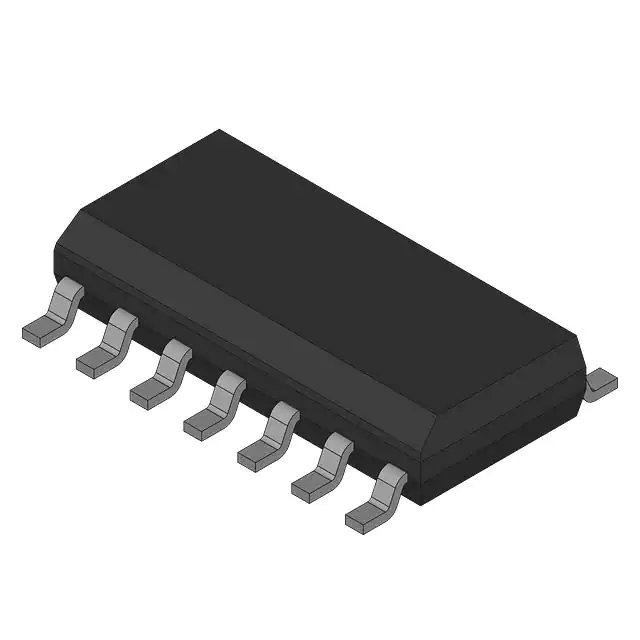
- Part No.:
- SP370251160XTMA3
- Manufacturer:
- Infineon Technologies
- Category:
- Specialized Sensors
- Package:
- Datasheet:
-
 SP370251160XTMA3.pdf
- Description:
- SENSOR TIRE PRESSURE RF
- Quantity:
- Payment:

- Shipping:

Inventory:2,812
Please send an inquiry. Send us your inquiry, and we will respond immediately.
Product details
Overview
SP370251160XTMA3 from Infineon Technologies is a monolithic RF tire pressure monitoring system (TPMS) sensor IC with integrated pressure and temperature sensing, 3-axis accelerometer, and ASK/FSK RF transmitter operating at 315 MHz or 433.92 MHz. It delivers ±10 kPa pressure accuracy, -40°C to 125°C operating range, and 12-bit ADC resolution for direct OEM TPMS module integration in passenger vehicles.
For engineers reviewing the SP370251160XTMA3 datasheet, SP370251160XTMA3 pinout, SP370251160XTMA3 application, or SP370251160XTMA3 equivalent, key selection criteria include RF output power compliance (≤10 dBm), integrated MEMS pressure sensor calibration stability, low-power wake-up via acceleration threshold detection, and AEC-Q100 Grade 2 qualification for automotive under-hood deployment.
Technical Context
The SP370251160XTMA3 integrates a piezoresistive MEMS pressure sensor, bandgap temperature sensor, and triaxial capacitive accelerometer on a single die. Its RF section uses a fully integrated ASK/FSK modulator with programmable data rate (up to 20 kbps) and carrier frequency selectable between 315 MHz and 433.92 MHz via external resistor.
Digital functionality includes a 16-bit RISC microcontroller core with 4 kB flash and 256 B RAM, configurable wake-up logic based on pressure delta, temperature drift, or motion events, and CRC-16 protected telemetry frame formatting compliant with SAE J2716 (TPMS standard).
Key Specifications
| Parameter | Value and Actual Design Meaning |
|---|---|
| Pressure Range | 100–1400 kPa: supports full passenger vehicle tire inflation range including high-pressure spare tires. |
| Pressure Accuracy | ±10 kPa @ 25°C: enables precise leak detection and real-time PSI/bar reporting without external calibration. |
| RF Carrier Frequency | 315 MHz or 433.92 MHz: factory-configurable to match regional regulatory requirements (e.g., FCC Part 15 vs. ETSI EN 300 220). |
| RF Output Power | ≤10 dBm: meets global ISM band emission limits while ensuring ≥10 m reception range in metal-rich wheel well environments. |
| Operating Temperature | −40°C to +125°C: qualified for direct mounting inside aluminum or steel valve stems without thermal derating. |
| Supply Voltage | 1.9 V to 4.5 V: compatible with primary lithium thionyl chloride (LiSOCl₂) cells over full discharge curve. |
| Wake-up Trigger | Programmable acceleration threshold (0.1–2.0 g): enables motion-activated transmission to extend battery life beyond 10 years. |
Pinout & Package
SP370251160XTMA3 is housed in a 16-pin QFN package (4 mm × 4 mm × 0.85 mm, 0.5 mm pitch) with wettable flank terminations for automated optical solder-joint inspection.
| Pin/Terminal | Circuit Role | Design Meaning |
|---|---|---|
| VDD | Power supply input | Connects to LiSOCl₂ cell anode; internal LDO regulates core voltage to 1.8 V for digital logic. |
| GND | Ground reference | Common return path for analog sensors, RF stage, and MCU; requires low-inductance connection to PCB ground plane. |
| RFOUT | RF signal output | Direct connection to matching network and PCB trace antenna; no external PA required. |
| OSCIN/OSCOUT | Crystal oscillator interface | Drives 32.768 kHz tuning fork crystal for RTC and low-power timing control. |
| ACC_X/Y/Z | Accelerometer analog outputs | Provide ratiometric voltage signals proportional to axis-specific g-force; digitized internally by 12-bit SAR ADC. |
| TEMP | Temperature sensor output | Analog voltage proportional to die temperature; used for pressure compensation and thermal event detection. |
| PRESS | Pressure sensor output | Differential analog signal from MEMS bridge; amplified and offset-corrected before ADC conversion. |
| WAKE | External wake-up input | Active-low interrupt pin for external trigger (e.g., service mode button or diagnostic tool pulse). |
Key Features
| Feature | Design Value |
|---|---|
| Integrated MEMS pressure sensor | Eliminates external sensor assembly, reducing valve stem BOM count and mechanical alignment risk. |
| Triaxial accelerometer with programmable thresholds | Enables motion-triggered transmission and orientation-independent mounting on wheel rims. |
| On-chip 16-bit RISC MCU with 4 kB flash | Supports field-upgradable firmware for protocol updates and regional RF parameter reconfiguration. |
| AEC-Q100 Grade 2 qualification | Validated for continuous operation at 105°C ambient, meeting automotive under-hood reliability requirements. |
| CRC-16 protected telemetry frame | Ensures data integrity during RF transmission in electrically noisy vehicle environments. |
Applications
| Tire Pressure Monitoring (Passenger Cars) | TPMS Service Tool Calibration |
|---|---|
Use Scenario: Mounted inside aluminum valve stems of OEM passenger vehicles to monitor real-time pressure and temperature during driving cycles. IC Role / Device Role / Timing Role: Primary sensing and RF telemetry node; transmits updated values every 60 s during motion and every 12 h at rest. Use Value: Enables early detection of slow leaks (≥5 kPa/h drift) and thermal runaway events (>100°C), satisfying EU Regulation (EC) No 661/2009. | Use Scenario: Integrated into handheld TPMS programming tools used by dealerships to initialize, relearn, and update sensor IDs after tire rotation or replacement. IC Role / Device Role / Timing Role: Responds to 125 kHz LF activation pulses and transmits unique 32-bit ID with pressure/temperature payload via FSK modulation. Use Value: Supports bidirectional LF-RF handshake protocol required for secure sensor reprogramming without dismounting tires. |
| Commercial Vehicle Trailer Monitoring | Motorcycle TPMS Integration |
Use Scenario: Deployed in dual-wheel trailer axles where vibration and temperature extremes exceed standard passenger car conditions. IC Role / Device Role / Timing Role: Operates in extended temperature mode (−40°C to +125°C) with enhanced pressure hysteresis filtering to suppress false alarms from road shock. Use Value: Reduces trailer blowout risk by detecting pressure loss >20 kPa within 5 minutes, meeting FMVSS 138 compliance thresholds. | Use Scenario: Embedded in lightweight alloy valve stems of high-performance motorcycles where space and weight constraints limit component count. IC Role / Device Role / Timing Role: Uses low-g wake-up (0.2 g threshold) to detect lean-angle-induced lateral acceleration and transmit pressure only during cornering events. Use Value: Extends battery life to >7 years by eliminating idle transmissions while maintaining safety-critical alert responsiveness. |
Equivalent & Alternatives
The following parts are listed as comparable options for similar TPMS sensor applications.
| Alternative Part | Technical Difference | Application Difference | Selection Advice |
|---|---|---|---|
| NXP SLF3702A | Lacks integrated accelerometer; requires external 3-axis MEMS part for motion detection. | Suitable only for static-mount or hub-based TPMS designs without motion-triggered wake-up. | Select when cost sensitivity outweighs motion-aware functionality and board space allows discrete sensor integration. |
| TE Connectivity MS5839-02BA | Pressure/temperature sensor only; no RF, MCU, or accelerometer - requires external transceiver and controller. | Used in custom TPMS modules where OEM mandates proprietary RF protocol or encryption scheme. | Choose for full design flexibility and security customization, accepting higher BOM count and validation effort. |
Compared with SLF3702A and MS5839-02BA, SP370251160XTMA3 provides highest integration density and fastest time-to-market for standard SAE J2716-compliant TPMS, trading off some protocol flexibility for guaranteed AEC-Q100 qualification and production-ready firmware stack.
Availability
SP370251160XTMA3 is available at Aetrix Electronics and suitable for passenger vehicle TPMS module manufacturing, commercial trailer safety systems, motorcycle OEM integration, and TPMS service tool development requiring stable component supply across multi-year production cycles.
Supply support for SP370251160XTMA3 includes scheduled delivery planning, volume procurement assistance, BOM continuity management, traceable sourcing, and lifecycle availability coordination for OEM customers, industrial embedded developers, connected-device designers, and electronics production programs.
Manufacturer
Infineon Technologies is a German semiconductor manufacturer specializing in power management, automotive electronics, and sensor solutions, with global R&D centers and ISO/TS 16949-certified wafer fabs.
The SP370251160XTMA3 belongs to Infineon's XENSIV™ TPMS sensor family, designed specifically for single-chip, AEC-Q100-qualified tire pressure and temperature telemetry in mass-production automotive applications.
FAQ
What is the maximum RF transmission distance achievable with SP370251160XTMA3?
The SP370251160XTMA3 achieves ≥10 meters line-of-sight transmission range using its integrated 315/433.92 MHz transmitter and PCB trace antenna, verified per ISO 21848 testing with standard vehicle body shielding. Range depends on antenna layout, ground plane size, and local RF noise; no external amplifier is supported or required.
Does SP370251160XTMA3 support FSK modulation only, or is ASK also available?
SP370251160XTMA3 supports both ASK and FSK modulation schemes, selected via configuration bits in the device's non-volatile memory. FSK is recommended for improved noise immunity in electric vehicle environments, while ASK offers lower current consumption for extended battery life in conventional ICE applications.
Can the internal pressure sensor be recalibrated in-system after soldering?
No. The MEMS pressure sensor is factory-calibrated across temperature and pressure ranges, with coefficients stored in one-time-programmable memory. In-system recalibration is not supported; however, software-based temperature compensation using the on-die sensor ensures ±10 kPa accuracy over −40°C to +125°C without user intervention.
Is SP370251160XTMA3 compatible with existing TPMS receiver modules using the SAE J2716 standard?
Yes. SP370251160XTMA3 generates SAE J2716-compliant telemetry frames with 32-bit unique ID, 12-bit pressure, 10-bit temperature, and status flags. Its FSK data rate (10–20 kbps) and Manchester-encoded payload match legacy receiver demodulation requirements without protocol translation.
SP370251160XTMA3 Specifications
- Product attributes
- Attribute value
- Manufacturer:
- Infineon Technologies
- Series:
- -
- Packaging:
- Tape & Reel (TR)
- Product Status:
- Obsolete
- Sensor Type:
- Tire Pressure Monitoring (TPMS)
- Output Type:
- RF
- Operating Temperature:
- -40°C ~ 125°C
- Grade:
- -
- Qualification:
- -
SP370251160XTMA3 FAQ
1.How can I place an order for SP370251160XTMA3 through Aetrix?
Please submit a Request for Quotation (RFQ) for SP370251160XTMA3 on Aetrix. Our sales agent will provide a competitive quotation and guide you through the order confirmation once you accept the terms.
2.Are the price and stock information for SP370251160XTMA3 reliable?
The price and inventory of SP370251160XTMA3 are updated periodically and may fluctuate due to market conditions. Stock and pricing data are typically refreshed every 24 hours. Quotation validity for SP370251160XTMA3 is usually 5 days.
3.What payment methods are accepted for SP370251160XTMA3?
We accept Wire Transfer, PayPal, Credit Card, Western Union, MoneyGram, and Escrow for SP370251160XTMA3 transactions.
Note: Certain payment methods may incur a processing fee.
4.How is shipping managed for SP370251160XTMA3?
SP370251160XTMA3 orders can be shipped via leading logistics carriers, including DHL, UPS, FedEx, TNT, or Registered Mail.
Once your SP370251160XTMA3 order is processed, you will receive an email with the shipment details and tracking number.
Note: Tracking information may take up to 24 hours to appear. Express delivery typically takes 3–5 business days.
5.How can I obtain technical support or documentation for SP370251160XTMA3?
For technical support, including SP370251160XTMA3 datasheets, pinout diagrams, or application guidance, please contact our engineering support team. They can provide detailed documentation and assistance for your SP370251160XTMA3 requirements.
6.How does Aetrix verify that SP370251160XTMA3 is sourced from the original manufacturer or authorized distributors?
All SP370251160XTMA3 products on Aetrix are procured from qualified distributors and authorized channels. Our dedicated quality assurance team conducts strict verification, including traceability checks and, if necessary, third-party testing. This ensures that SP370251160XTMA3 meets industry standards.
7.What is the process for return or replacement of SP370251160XTMA3?
All SP370251160XTMA3 units undergo pre-shipment inspection (PSI). If there is an issue with SP370251160XTMA3, returns or replacements are accepted under the following conditions:
1.Quantity discrepancies, incorrect items, or visible external defects (such as breakage or corrosion), acknowledged by Aetrix.
2.The issue is reported within 90 days of delivery.
3.The SP370251160XTMA3 part is unused and in its original packaging.
Return procedure for SP370251160XTMA3:
1.Submit a request within 90 days.
2.Obtain a Return Material Authorization (RMA) from Aetrix.
SP370251160XTMA3 Tags

-
AS7057-BWLT WLP LF T&R
ams-OSRAM USA INC.
-
LSM6DSO32XTR
STMicroelectronics
-
AS3935-BQFT
ScioSense
-
BAF147B002-00A0
Amphenol Advanced Sensors (Thermometrics)
-
MAX86174AENE+T
Analog Devices Inc./Maxim Integrated
-
VL53L8CXV0GC/1
STMicroelectronics
-
BME680
Bosch Sensortec
-
SEN-12969
SparkFun Electronics
-
BME688
Bosch Sensortec
-
MAXM86161EFD+T
Analog Devices Inc./Maxim Integrated
-
A111-001-T&R
Acconeer AB

-
MAX30101EFD+T
Analog Devices Inc./Maxim Integrated
Tech Hub

Jumper cables guide covering safe connection order, red and black clamp placement, final ground connection, cable gauge, length, clamp quality, copper vs CCA cables, jump starter comparison and battery…

LDO regulator guide covering low dropout voltage, power dissipation, thermal design, PSRR, output noise, capacitor stability, adjustable LDO circuits, LDO vs buck converter and datasheet selection chec…

Conditional Access Module guide covering CAM meaning, CI/CI+ interface, smart card authorization, DVB security workflow, TV and set-top box compatibility, internal electronics, ESD protection, connecto…

Guide to electronic component obsolescence covering EOL risk, PCN/PDN notices, last-time buy planning, replacement options, form-fit-function validation, counterfeit risk and BOM lifecycle management.

18650 battery guide covering lithium-ion cell basics, 3.6V/3.7V voltage, 4.2V charging, mAh and Wh capacity, protected cells, chargers, BMS, series-parallel packs, holders, welding and sourcing checks.…

Hall effect sensor guide covering working principle, linear and digital sensors, Arduino circuits, current sensing, speed detection, automotive applications, A3144 examples, signal filtering and datash…

Product Change Notification guide for electronic components, covering PCN meaning, PCN vs PDN/EOL, common change types, risk levels, form-fit-function review, engineering validation, BOM control, LTB/L…

A practical guide to blend door actuators, covering HVAC function, symptoms, location, AC and heater issues, reset and calibration, replacement cost, electrical diagnosis, compatibility checks, and rep…

Engineering guide to Raspberry Pi alternatives, covering chip-level differences, Orange Pi, ROCK, Jetson, Banana Pi, NanoPi, Compute Module, Pico, GPIO, camera, HAT compatibility, and replacement risks…

Engineering guide to dynamic load response testing for high-current buck converters, covering load step setup, slew rate, Vcore undershoot, overshoot, recovery time, probe location, output capacitors a…


