
 My Inquiry
 My Account


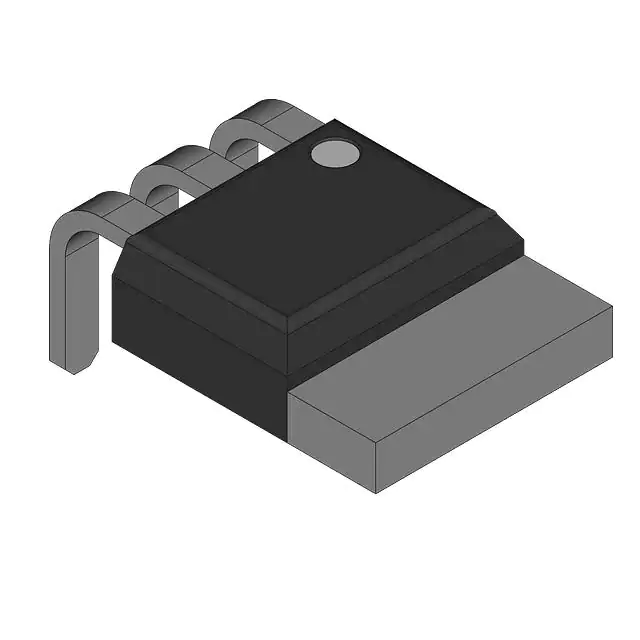
Infineon Technologies SPI16N50C3
- Part No.:
- SPI16N50C3
- Manufacturer:
- Infineon Technologies
- Category:
- FETs, MOSFETs
- Package:
- TO-262-3 Long Leads, I2PAK, TO-262AA
- Datasheet:
-
 SPI16N50C3.pdf
- Description:
- N-CHANNEL POWER MOSFET
- Quantity:
- Payment:

- Shipping:

Inventory:300
Please send an inquiry. Send us your inquiry, and we will respond immediately.
Product details
Overview
SPI16N50C3 from Infineon Technologies is a 500 V, 16 A N-channel enhancement-mode CoolMOS™ power MOSFET in PG-TO262 (TO-262) package, featuring RDS(on) = 0.28 Ω at VGS = 10 V and Tj = 25 °C, ultra-low gate charge (Qg = 66 nC), and periodic avalanche rating. It serves as a high-efficiency primary-side switch in offline SMPS, PFC stages, and industrial AC-DC converters operating up to 150 °C junction temperature.
For engineers reviewing the SPI16N50C3 datasheet, SPI16N50C3 pinout, SPI16N50C3 application, or SPI16N50C3 equivalent, key selection criteria include its 500 V V(BR)DSS, 0.28 Ω RDS(on), 66 nC total gate charge, 50 V/ns dv/dt capability, and TO-262 thermal performance with RthJC = 0.78 K/W - critical for high-density, high-reliability power designs.
Technical Context
This device implements Infineon's 3rd-generation CoolMOS™ superjunction technology, enabling significantly reduced conduction and switching losses compared to planar MOSFETs. Its optimized cell structure delivers low Ciss (1600 pF), Coss (800 pF), and Crss (30 pF), supporting high-frequency operation above 100 kHz in resonant and hard-switched topologies.
The MOSFET integrates a fast, soft-recovery body diode (trr = 420 ns, Qrr = 7 µC) and is rated for repetitive avalanche (IAR = 16 A, EAR = 0.64 mJ) and extreme dv/dt (50 V/ns at Tj = 125 °C), making it suitable for ruggedized flyback, LLC, and half-bridge configurations with high bus voltage transients.
Key Specifications
| Parameter | Value and Actual Design Meaning |
|---|---|
| V(BR)DSS | 500 V - Withstands 400 V DC link with 25 % margin; enables universal-input (85–265 VAC) offline converters. |
| RDS(on) | 0.28 Ω @ VGS = 10 V, Tj = 25 °C - Delivers ≤ 45 W conduction loss at 16 A, reducing heatsink requirements. |
| Qg | 66 nC - Enables efficient gate drive with low-power controllers; reduces driver IC stress and switching loss. |
| tr/tf | 8 ns / 8 ns @ VDD = 380 V, ID = 16 A - Supports clean, fast transitions minimizing overlap loss in hard-switched circuits. |
| RthJC | 0.78 K/W - Allows 160 W continuous dissipation at TC = 25 °C; supports compact thermal design in TO-262 mounting. |
| EAS | 460 mJ - Provides robust single-pulse avalanche immunity during startup, overload, or short-circuit events. |
| dv/dt | 50 V/ns @ VDS = 400 V, ID = 16 A, Tj = 125 °C - Ensures noise-immune operation in high-dV/dt environments like motor drives. |
Pinout & Package
SPI16N50C3 is housed in a PG-TO262 (TO-262) 3-pin surface-mount-compatible package with isolated tab (2500 VAC, 1 min). The drain-connected tab provides low-inductance, high-current path and direct thermal interface to heatsink.
| Pin/Terminal | Circuit Role | Design Meaning |
|---|---|---|
| 1 (Source) | Power return path for load current; referenced to gate drive ground | Low-impedance source terminal; connects to PCB ground plane or source resistor for current sensing. |
| 2 (Gate) | Control input for channel conduction | High-impedance MOS gate requiring <20 V drive; sensitive to ESD and ringing - needs local RC snubber. |
| 3 (Drain) | Main high-voltage power terminal; electrically connected to metal tab | Tab is drain potential - requires isolation from heatsink unless system ground is at high voltage; enables direct thermal coupling. |
Key Features
| Feature | Design Value |
|---|---|
| Ultra-low gate charge | Qg = 66 nC - Reduces gate driver power consumption and enables use of cost-effective low-current drivers. |
| Periodic avalanche rated | EAR = 0.64 mJ, IAR = 16 A - Permits reliable operation under repetitive overvoltage stress without derating. |
| Extreme dv/dt immunity | 50 V/ns at 125 °C - Prevents false turn-on in high-noise, high-speed switching applications such as inverters. |
| Low effective output capacitance | Co(er) = 64 pF - Minimizes energy loss during turn-off and improves ZVS capability in resonant converters. |
| Soft-recovery body diode | trr = 420 ns, Qrr = 7 µC - Reduces EMI and voltage overshoot during commutation in synchronous rectification or freewheeling paths. |
Applications
| Industrial AC-DC Power Supplies | Server & Telecom Rectifiers |
|---|---|
|
Use Scenario: 1 kW active clamp forward or LLC resonant converter in DIN-rail mounted PLC power modules. IC Role / Device Role / Timing Role: Primary-side high-side switch handling 400 V DC bus and delivering regulated 24 V/40 A output. Use Value: 0.28 Ω RDS(on) and 66 nC Qg enable >94 % efficiency at full load while maintaining thermal headroom on compact heatsinks. |
Use Scenario: High-density 3 kW telecom rectifier with interleaved PFC + phase-shifted full-bridge secondary. IC Role / Device Role / Timing Role: Fast-switching PFC boost switch operating at 70–100 kHz with zero-voltage switching assist. Use Value: Low Ciss/Coss and 50 V/ns dv/dt rating ensure stable operation across wide line/load variations and reduce EMI filter size. |
| Motor Drive Inverters | LED Streetlight Drivers |
|
Use Scenario: 3-phase 7.5 kW HVAC inverter with 600 V DC bus and 15 kHz PWM carrier frequency. IC Role / Device Role / Timing Role: Upper-leg IGBT replacement in 6-pack module configuration for improved efficiency and thermal response. Use Value: Avalanche-rated operation withstands inductive kickback during fault conditions; RthJC = 0.78 K/W allows direct heatsink mounting without thermal pads. |
Use Scenario: Outdoor 150 W constant-current LED driver with universal input and IP67 enclosure. IC Role / Device Role / Timing Role: Primary-side switch in flyback topology with integrated X-cap discharge and surge protection. Use Value: 500 V breakdown voltage and 460 mJ EAS support compliance with IEC 61000-4-5 Level 4 (4 kV surge) without external clamping. |
Equivalent & Alternatives
The following parts are listed as comparable options for similar high-voltage power MOSFET applications.
| Alternative Part | Technical Difference | Application Difference | Selection Advice |
|---|---|---|---|
| STP16N50M2 (STMicroelectronics) | RDS(on) = 0.32 Ω, Qg = 52 nC, TO-220 package, no avalanche rating | Limited to non-avalanche-critical PFC and flyback; lower thermal resistance not available | Prefer when gate drive power is constrained but avalanche immunity is not required. |
| IPP60R190C7 (Infineon) | 600 V, RDS(on) = 0.19 Ω, Qg = 63 nC, TO-220FP package, higher voltage margin | Better suited for 480 VAC industrial systems; higher cost and larger footprint than TO-262 | Select when 600 V rating and lower RDS(on) justify added cost and board space. |
Compared with STP16N50M2, SPI16N50C3 offers superior avalanche ruggedness and lower RDS(on); versus IPP60R190C7, it trades 100 V headroom for TO-262 thermal advantage and lower system-level cost in 400 V DC bus designs.
Availability
SPI16N50C3 is available at Aetrix Electronics and suitable for industrial AC-DC power supplies, server rectifiers, and LED streetlight drivers requiring stable component supply, long-term lifecycle support, and traceable sourcing.
Supply support for SPI16N50C3 includes scheduled delivery planning, volume procurement assistance, BOM continuity management, traceable sourcing, and lifecycle availability coordination for OEM customers, industrial embedded developers, connected-device designers, and electronics production programs.
Manufacturer
Infineon Technologies is a German semiconductor manufacturer specializing in power management, automotive, and industrial control ICs and discrete devices.
SPI16N50C3 belongs to the CoolMOS™ C3 family, engineered specifically for high-efficiency, high-reliability switched-mode power conversion in industrial, telecom, and lighting applications demanding low RDS(on), fast switching, and rugged transient performance.
FAQ
Is SPI16N50C3 pin-compatible with standard TO-220 MOSFETs?
No - SPI16N50C3 uses PG-TO262 (TO-262), which has identical pinout numbering (G-D-S) but a wider body, different lead spacing, and an isolated drain tab. PCB layout must accommodate 10.16 mm lead pitch and tab isolation requirements; mechanical compatibility with TO-220 heatsinks is not guaranteed.
What is the maximum recommended gate drive voltage?
The absolute maximum gate-source voltage is ±20 V DC and ±30 V AC (f >1 Hz). For reliable operation, gate drive should be limited to 10–15 V with tight control of overshoot; exceeding 18 V risks permanent threshold shift or oxide damage, especially at elevated temperatures.
Does SPI16N50C3 require a gate resistor for stability?
Yes - a series gate resistor (typically 5–22 Ω) is mandatory to dampen parasitic oscillation caused by gate-drain Miller capacitance and PCB inductance. Without it, ringing can cause false turn-on, increased switching loss, and EMI compliance failure - particularly in high-dv/dt layouts.
Can SPI16N50C3 replace SPP16N50C3 in existing designs?
Yes - SPI16N50C3 and SPP16N50C3 share identical electrical specifications, thermal characteristics, and pinout, differing only in package (TO-262 vs. TO-220) and marking. Thermal design must be re-validated due to TO-262's lower RthJC (0.78 K/W vs. 0.95 K/W for TO-220), allowing higher power density.
SPI16N50C3 Specifications
- Product attributes
- Attribute value
- Manufacturer:
- Infineon Technologies
- Series:
- CoolMOS™
- Package/Case:
- TO-262-3 Long Leads, I2PAK, TO-262AA
- Packaging:
- Bulk
- Product Status:
- Active
- FET Type:
- N-Channel
- Technology:
- MOSFET (Metal Oxide)
- Drain to Source Voltage (Vdss):
- 500 V
- Current - Continuous Drain (Id) @ 25°C:
- 16A (Tc)
- Drive Voltage (Max Rds On, Min Rds On):
- 10V
- Rds On (Max) @ Id, Vgs:
- 280mOhm @ 10A, 10V
- Vgs(th) (Max) @ Id:
- 3.9V @ 675µA
- Gate Charge (Qg) (Max) @ Vgs:
- 66 nC @ 10 V
- Vgs (Max):
- ±20V
- Input Capacitance (Ciss) (Max) @ Vds:
- 1600 pF @ 25 V
- FET Feature:
- -
- Power Dissipation (Max):
- 160W (Tc)
- Operating Temperature:
- -55°C ~ 150°C (TJ)
- Grade:
- -
- Qualification:
- -
- Mounting Type:
- Through Hole
- Supplier Device Package:
- PG-TO262-3-1
SPI16N50C3 FAQ
1.How can I place an order for SPI16N50C3 through Aetrix?
Please submit a Request for Quotation (RFQ) for SPI16N50C3 on Aetrix. Our sales agent will provide a competitive quotation and guide you through the order confirmation once you accept the terms.
2.Are the price and stock information for SPI16N50C3 reliable?
The price and inventory of SPI16N50C3 are updated periodically and may fluctuate due to market conditions. Stock and pricing data are typically refreshed every 24 hours. Quotation validity for SPI16N50C3 is usually 5 days.
3.What payment methods are accepted for SPI16N50C3?
We accept Wire Transfer, PayPal, Credit Card, Western Union, MoneyGram, and Escrow for SPI16N50C3 transactions.
Note: Certain payment methods may incur a processing fee.
4.How is shipping managed for SPI16N50C3?
SPI16N50C3 orders can be shipped via leading logistics carriers, including DHL, UPS, FedEx, TNT, or Registered Mail.
Once your SPI16N50C3 order is processed, you will receive an email with the shipment details and tracking number.
Note: Tracking information may take up to 24 hours to appear. Express delivery typically takes 3–5 business days.
5.How can I obtain technical support or documentation for SPI16N50C3?
For technical support, including SPI16N50C3 datasheets, pinout diagrams, or application guidance, please contact our engineering support team. They can provide detailed documentation and assistance for your SPI16N50C3 requirements.
6.How does Aetrix verify that SPI16N50C3 is sourced from the original manufacturer or authorized distributors?
All SPI16N50C3 products on Aetrix are procured from qualified distributors and authorized channels. Our dedicated quality assurance team conducts strict verification, including traceability checks and, if necessary, third-party testing. This ensures that SPI16N50C3 meets industry standards.
7.What is the process for return or replacement of SPI16N50C3?
All SPI16N50C3 units undergo pre-shipment inspection (PSI). If there is an issue with SPI16N50C3, returns or replacements are accepted under the following conditions:
1.Quantity discrepancies, incorrect items, or visible external defects (such as breakage or corrosion), acknowledged by Aetrix.
2.The issue is reported within 90 days of delivery.
3.The SPI16N50C3 part is unused and in its original packaging.
Return procedure for SPI16N50C3:
1.Submit a request within 90 days.
2.Obtain a Return Material Authorization (RMA) from Aetrix.
SPI16N50C3 Tags
-
BSZ180P03NS3EGATMA1
Infineon Technologies
-
SIRA14DP-T1-GE3
Vishay Siliconix

-
AO4419
Alpha & Omega Semiconductor Inc.
-
SISA14BDN-T1-GE3
Vishay Siliconix
-
PSMN9R5-30YLC,115
Nexperia USA Inc.
-
BUK9Y21-40E,115
Nexperia USA Inc.
-
RTQ035N03HZGTR
Rohm Semiconductor
-
FDMS7680
onsemi
-
RQ3E180BNTB
Rohm Semiconductor
-
STL6N2VH5
STMicroelectronics
-
DMPH4029LFGQ-7
Diodes Incorporated
-
DMT6015LSS-13
Diodes Incorporated
Tech Hub

Guide to electronic component obsolescence covering EOL risk, PCN/PDN notices, last-time buy planning, replacement options, form-fit-function validation, counterfeit risk and BOM lifecycle management.

18650 battery guide covering lithium-ion cell basics, 3.6V/3.7V voltage, 4.2V charging, mAh and Wh capacity, protected cells, chargers, BMS, series-parallel packs, holders, welding and sourcing checks.…

Hall effect sensor guide covering working principle, linear and digital sensors, Arduino circuits, current sensing, speed detection, automotive applications, A3144 examples, signal filtering and datash…

Product Change Notification guide for electronic components, covering PCN meaning, PCN vs PDN/EOL, common change types, risk levels, form-fit-function review, engineering validation, BOM control, LTB/L…

A practical guide to blend door actuators, covering HVAC function, symptoms, location, AC and heater issues, reset and calibration, replacement cost, electrical diagnosis, compatibility checks, and rep…

Engineering guide to Raspberry Pi alternatives, covering chip-level differences, Orange Pi, ROCK, Jetson, Banana Pi, NanoPi, Compute Module, Pico, GPIO, camera, HAT compatibility, and replacement risks…
Engineering guide to dynamic load response testing for high-current buck converters, covering load step setup, slew rate, Vcore undershoot, overshoot, recovery time, probe location, output capacitors a…
Engineering guide to output capacitor selection for ASIC Vcore rails, covering bulk capacitors, polymer capacitors, MLCC decoupling, DC bias, ESR, ESL, placement, transient response and substitution ri…
Engineering guide to high-current ASIC Vcore rails, covering 12-phase buck architecture, PMBus control, dynamic load testing, output capacitor networks, smart power stage selection, thermal design and …
Voltage regulator guide covering linear, LDO, 7805, Zener, adjustable, buck, VRM and alternator regulators, with design checks, testing methods, troubleshooting and datasheet-based selection.


