
 My Inquiry
 My Account


STMicroelectronics SPV1020
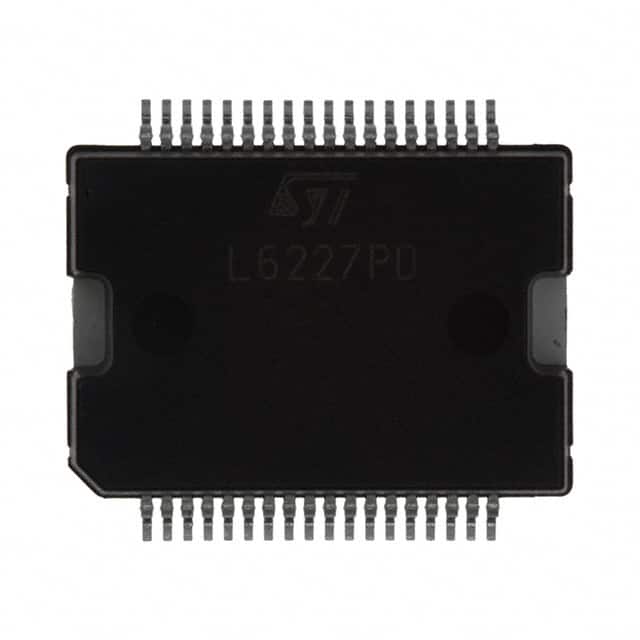
- Part No.:
- SPV1020
- Manufacturer:
- STMicroelectronics
- Category:
- Power Management - Specialized
- Package:
- 36-PowerBFSOP (0.295", 7.50mm Width)
- Datasheet:
-
 SPV1020.pdf
- Description:
- IC DC-DC BOOST CNVRT SOLAR 36SSO
- Quantity:
- Payment:

- Shipping:

Inventory:1,630
Please send an inquiry. Send us your inquiry, and we will respond immediately.
Product details
Overview
SPV1020 from STMicroelectronics is a monolithic 4-phase interleaved DC-DC boost converter IC with integrated MPPT algorithm, designed for photovoltaic energy harvesting. It operates from 6.5 V to 40 V input, delivers up to 320 W at 40 V output, achieves 98% peak efficiency, and features SPI interface, overvoltage/overcurrent/overtemperature protection, and 0.2% MPPT tracking accuracy.
For engineers reviewing the SPV1020 datasheet, SPV1020 pinout, SPV1020 application, or SPV1020 equivalent, this device is selected for solar panel-level DC-DC optimization where local MPP computation, high power density, electrolytic-capacitor-free design, and programmable switching frequency (50–200 kHz) are critical.
Technical Context
The SPV1020 implements a fixed-frequency PWM boost topology with four interleaved phases, each driven by integrated low-side MOSFETs (70 mΩ RDS(on)) and synchronous rectifiers (70 mΩ RDS(on)). The embedded Perturb & Observe MPPT logic continuously adjusts duty cycle (5–90%, 0.2% resolution) based on real-time VIN_SNS and VOUT_SNS feedback to maximize PV string power extraction.
It integrates full protection circuitry: output overvoltage shutdown at 1.04 V sensed on VOUT_SNS (corresponding to 40 V), thermal shutdown at 150 °C with 20 °C hysteresis, and per-phase overcurrent limit of 4.5 A. The SPI interface (CPOL=1, CPHA=1, 6 MHz max) enables host readback of 10-bit ADC values (VIN, IOUT, PWM duty) and status registers.
Key Specifications
| Parameter | Value and Actual Design Meaning |
|---|---|
| Input Voltage Range | 6.5 V to 40 V - supports wide-range PV string operation including partial shading and cold-start conditions. |
| Output Power Capability | 320 W at 40 V - enables single-chip solution for high-power solar modules without external power stages. |
| MPPT Accuracy | ±0.2% - ensures precise maximum power point tracking under dynamic irradiance and temperature gradients. |
| Peak Efficiency | 98% - minimizes thermal stress and system-level energy loss in distributed PV architectures. |
| Switching Frequency Range | 50 kHz to 200 kHz - adjustable via OSC_IN resistor to optimize EMI, magnetics size, and efficiency trade-offs. |
| Duty Cycle Resolution | 0.2% step - enables fine-grained control for stable convergence and reduced oscillation around MPP. |
| Thermal Shutdown Threshold | 150 °C with 20 °C hysteresis - prevents silicon damage while allowing safe recovery during transient overload. |
Pinout & Package
SPV1020 is housed in a thermally enhanced PowerSSO-36 package with exposed PGND pad (30 mm² solder area), optimized for high-current DC-DC conversion and PCB heat dissipation. RthJA = 24 °C/W measured on 4-layer FR4 board.
| Pin/Terminal | Circuit Role | Design Meaning |
|---|---|---|
| VIN (Pins 34, 7,8,17,18,19,20,29,30) | Power Input Supply | High-current DC input node; multiple pins reduce trace resistance and thermal rise for 9 A continuous operation. |
| VOUT (Pins 2, 12,13,24,25) | Boost Output Supply | High-voltage output node; parallel pins support 40 V/9 A delivery with low parasitic inductance. |
| LX1–LX4 (Pins 0, 9,16,21,28) | Phase Inductor Interface | Four dedicated switch-node terminals enabling true 4-phase interleaving and ripple cancellation. |
| VIN_SNS / VOUT_SNS (Pins 35, 3) | Analog Voltage Sensing Inputs | High-impedance inputs for resistor-divider feedback; enable accurate MPPT and CV regulation with 1.25 V and 1.0 V internal references. |
| SPI_DATA_IN / SPI_DATA_OUT / SPI_CLK / XCS (Pins 32, 6, 33, 31) | Full-Duplex SPI Interface | Standard 4-wire slave interface (CPOL=1, CPHA=1); allows host readback of real-time ADC data and fault status. |
| PZ_OUT (Pin 2) | Compensation Node | External pole-zero network connection point for stabilizing voltage feedback loop across operating conditions. |
Key Features
| Feature | Design Value |
|---|---|
| Integrated 4-phase interleaved boost | Eliminates need for external gate drivers, MOSFETs, and electrolytic output capacitors-reducing BOM count and system footprint. |
| Built-in Perturb & Observe MPPT engine | Performs real-time MPP calculation locally at panel level, increasing system efficiency vs. centralized inverter-based MPPT. |
| Programmable burst mode transition | Automatically switches to low-power burst mode under low solar radiation, reducing quiescent current to 1 mA in shutdown. |
| Comprehensive fault protection suite | Independent OVP (1.04 V on VOUT_SNS), OCP (~4.5 A per phase), OTP (150 °C), and UVLO (6.5 V) ensure robust field reliability. |
| Adjustable 50–200 kHz switching frequency | Enables EMI compliance tuning and magnetics optimization without changing layout or component selection. |
Applications
| Residential Solar Microinverters | Commercial PV String Optimizers |
|---|---|
|
Use Scenario: Distributed DC-DC conversion behind individual solar panels in rooftop arrays with variable shading and orientation. IC Role / Device Role / Timing Role: Panel-level MPPT controller and high-efficiency boost stage, replacing bypass diodes in junction boxes. Use Value: Increases total array yield by up to 25% under partial shading by optimizing each panel independently. |
Use Scenario: Retrofitting legacy string inverters with module-level power electronics to improve monitoring and performance. IC Role / Device Role / Timing Role: Standalone DC optimizer IC that interfaces directly with PV cell strings and feeds regulated DC to central inverter. Use Value: Enables per-panel health reporting and real-time power throttling via SPI, supporting predictive maintenance. |
| Off-Grid Solar Battery Chargers | Utility-Scale PV Power Stations |
|
Use Scenario: Charging 24 V or 48 V battery banks from variable-output PV sources in remote telecom or rural electrification systems. IC Role / Device Role / Timing Role: Constant-voltage/constant-current (CVCC) battery charging controller with adaptive MPPT and thermal derating. Use Value: Maintains >95% efficiency across 6.5–40 V input range, extending battery life through precise voltage regulation. |
Use Scenario: High-density solar farms using series-parallel panel configurations requiring scalable, modular DC optimization. IC Role / Device Role / Timing Role: Scalable building block for multi-unit optimizer stacks, synchronized via shared SPI bus for coordinated control. Use Value: Supports hot-plug capability and redundant operation-loss of one SPV1020 does not disrupt adjacent panel outputs. |
Equivalent & Alternatives
The following parts are listed as comparable options for similar photovoltaic DC-DC optimization applications.
| Alternative Part | Technical Difference | Application Difference | Selection Advice |
|---|---|---|---|
| MAX20096 | Single-phase boost with external MOSFETs; no integrated MPPT logic; requires external microcontroller for algorithm execution. | Requires additional MCU, PCB area, and firmware development; lower integration but higher flexibility in control strategy. | Select when custom MPPT algorithms (e.g., Incremental Conductance) or non-standard voltage/current ranges are required. |
| TIDA-01611 Reference Design (using UCC28070 + C2000) | Two-phase interleaved analog controller + DSP-based MPPT; discrete power stage; no monolithic integration. | Higher design complexity and BOM count; supports >1 kW scaling but lacks panel-level form factor and thermal optimization. | Select for utility-scale central optimizer designs needing >500 W per channel and advanced grid-support functions. |
Compared with MAX20096 and TIDA-01611, SPV1020 offers highest integration for panel-level use-embedding power switches, MPPT logic, protection, and SPI in one PowerSSO-36 package-reducing time-to-market and improving long-term reliability in harsh outdoor environments.
Availability
SPV1020 is available at Aetrix Electronics and suitable for residential solar microinverters, commercial PV string optimizers, and off-grid battery charging systems requiring stable component supply, long-lifecycle support, and automotive-grade thermal robustness.
Supply support for SPV1020 includes scheduled delivery planning, volume procurement assistance, BOM continuity management, traceable sourcing, and lifecycle availability coordination for OEM customers, industrial embedded developers, connected-device designers, and electronics production programs.
Manufacturer
STMicroelectronics is a global semiconductor leader headquartered in Geneva, Switzerland, specializing in power management, analog, microcontrollers, and automotive-grade ICs with strong focus on energy efficiency and industrial reliability.
The SPV1020 belongs to ST's solar energy IC product line, engineered specifically for distributed photovoltaic power conversion-emphasizing panel-level intelligence, high integration, and extended operational lifetime in outdoor deployments.
FAQ
What is the minimum input voltage required for SPV1020 startup?
The SPV1020 initiates startup when input voltage exceeds the undervoltage lockout (UVLO) threshold of 6.5 V. Below this, all circuitry remains disabled to prevent erratic behavior or excessive quiescent draw. Startup sequence begins in burst mode, progressively enabling each of the four phases only after VIN stabilizes above 6.5 V.
How does the SPV1020 handle overvoltage protection on the output?
SPV1020 monitors output voltage via VOUT_SNS pin, comparing the scaled-down signal to an internal 1.0 V reference. When VOUT_SNS reaches 1.04 V (corresponding to 40 V at VOUT), it triggers immediate driver shutdown and asserts a fault signal (DIAG = 0). Recovery occurs automatically when VOUT_SNS drops back to 1.04 V, restarting MPPT from 5% duty cycle.
Can multiple SPV1020 devices be synchronized for coherent interleaving across panels?
No-each SPV1020 operates with its own internal oscillator and independent MPPT engine. While panels can be connected in series/parallel configurations, the devices do not support external clock synchronization or phase alignment. Interleaving is strictly internal to each IC and not coordinated between units.
What external components are mandatory for basic SPV1020 operation?
Mandatory components include: four boost inductors (one per LX pin), four bootstrap capacitors (CB1–CB4), input/output voltage divider resistors (R1/R2 for VIN_SNS, R3/R4 for VOUT_SNS), output compensation network (resistor + capacitor from PZ_OUT to SGND), and a 100 nF ceramic capacitor on VREG referenced to SGND. No external MOSFETs or gate drivers are needed.
SPV1020 Specifications
- Product attributes
- Attribute value
- Manufacturer:
- STMicroelectronics
- Series:
- -
- Package/Case:
- 36-PowerBFSOP (0.295", 7.50mm Width)
- Packaging:
- Tube
- Product Status:
- Obsolete
- Applications:
- Photovoltaics
- Current - Supply:
- 5mA
- Voltage - Supply:
- 6.5V ~ 45V
- Operating Temperature:
- -40°C ~ 85°C
- Grade:
- -
- Qualification:
- -
- Mounting Type:
- Surface Mount
- Supplier Device Package:
- PowerSSO-36 EPD
SPV1020 FAQ
1.How can I place an order for SPV1020 through Aetrix?
Please submit a Request for Quotation (RFQ) for SPV1020 on Aetrix. Our sales agent will provide a competitive quotation and guide you through the order confirmation once you accept the terms.
2.Are the price and stock information for SPV1020 reliable?
The price and inventory of SPV1020 are updated periodically and may fluctuate due to market conditions. Stock and pricing data are typically refreshed every 24 hours. Quotation validity for SPV1020 is usually 5 days.
3.What payment methods are accepted for SPV1020?
We accept Wire Transfer, PayPal, Credit Card, Western Union, MoneyGram, and Escrow for SPV1020 transactions.
Note: Certain payment methods may incur a processing fee.
4.How is shipping managed for SPV1020?
SPV1020 orders can be shipped via leading logistics carriers, including DHL, UPS, FedEx, TNT, or Registered Mail.
Once your SPV1020 order is processed, you will receive an email with the shipment details and tracking number.
Note: Tracking information may take up to 24 hours to appear. Express delivery typically takes 3–5 business days.
5.How can I obtain technical support or documentation for SPV1020?
For technical support, including SPV1020 datasheets, pinout diagrams, or application guidance, please contact our engineering support team. They can provide detailed documentation and assistance for your SPV1020 requirements.
6.How does Aetrix verify that SPV1020 is sourced from the original manufacturer or authorized distributors?
All SPV1020 products on Aetrix are procured from qualified distributors and authorized channels. Our dedicated quality assurance team conducts strict verification, including traceability checks and, if necessary, third-party testing. This ensures that SPV1020 meets industry standards.
7.What is the process for return or replacement of SPV1020?
All SPV1020 units undergo pre-shipment inspection (PSI). If there is an issue with SPV1020, returns or replacements are accepted under the following conditions:
1.Quantity discrepancies, incorrect items, or visible external defects (such as breakage or corrosion), acknowledged by Aetrix.
2.The issue is reported within 90 days of delivery.
3.The SPV1020 part is unused and in its original packaging.
Return procedure for SPV1020:
1.Submit a request within 90 days.
2.Obtain a Return Material Authorization (RMA) from Aetrix.
SPV1020 Tags
-
TPS2511DGNR
Texas Instruments
-
UTC2000/MG
Microchip Technology
-
TUSB320HAIRWBR
Texas Instruments
-
TPS61252DSGR
Texas Instruments
-
PI5USB30216CXUAEX
Diodes Incorporated
-
SN6501DBVR
Texas Instruments
-
CYPD3177-24LQXQT
Infineon Technologies
-
SN6501QDBVRQ1
Texas Instruments
-
STUSB1600AQTR
STMicroelectronics

-
SN6505BDBVR
Texas Instruments
-
SN6501DBVT
Texas Instruments
-
TPS65150PWPR
Texas Instruments
Tech Hub

A practical engineering and sourcing framework covering lifecycle verification, lifetime-buy calculations, replacement qualification, supplier checks and counterfeit-risk controls.

TTL and CMOS logic families differ in thresholds, loading, output drive, power and timing. This engineering guide compares 74HC and 74HCT, calculates noise margins and checks 3.3 V/5 V compatibility.

A practical engineering guide to 3.3V and 5V logic compatibility, input thresholds, resistor dividers, translator ICs, MOSFET level shifting, I2C pull-ups, timing limits and power-sequencing risks.

The 74HC595 uses push-pull logic outputs, while the TPIC6B595 uses 50 V open-drain DMOS sinks for higher-power loads. This guide compares timing, current limits, 3.3 V interfacing, load wiring, thermal…

The 74HC595 converts serial data into eight stable parallel outputs. This guide covers pin functions, shift and storage timing, OE and MR behavior, drive-current limits, cascading, voltage compatibilit…

A technical comparison of level-sensitive latches and edge-triggered flip-flops, covering timing windows, setup and hold limits, master–slave operation, time borrowing, race-through, HDL inference and…

A D latch stores one bit while Enable controls when data can pass. This reference covers gate-level operation, truth tables, transparency, setup and hold timing, LE versus OE, common ICs and practical …

An SR latch stores one bit through cross-coupled feedback. This engineering reference covers NOR and NAND implementations, truth tables, forbidden-state recovery, gated operation, switch debouncing, fa…

Latch circuits retain one bit through feedback. This technical reference covers SR and D latches, truth tables, transparency, timing limits, latch-versus-flip-flop behavior, applications and common log…

An engineering guide to LED driver operation, constant-current and constant-voltage outputs, linear and switching topologies, dimming, IC selection, calculations, replacement compatibility, and fault c…


