
 My Inquiry
 My Account


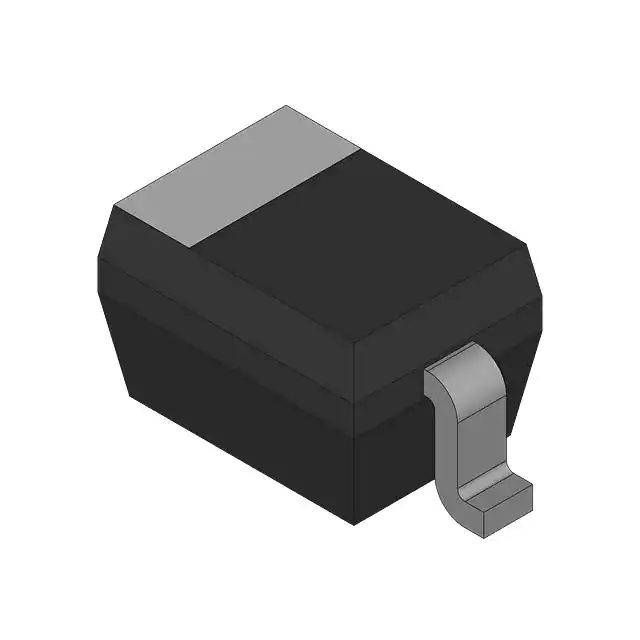
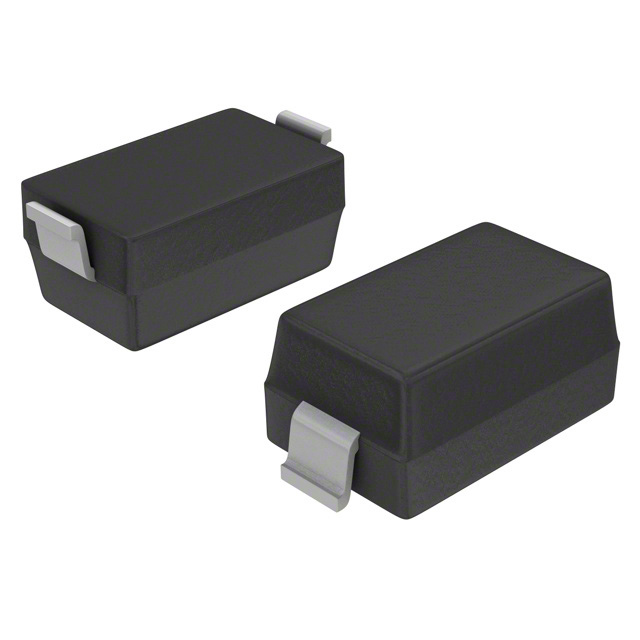
Taiwan Semiconductor Corporation SS19LH
- Part No.:
- SS19LH
- Manufacturer:
- Taiwan Semiconductor Corporation
- Category:
- Single Diodes
- Package:
- SOD-123
- Datasheet:
-
 SS19LH.pdf
- Description:
- 1A, 90V, SCHOTTKY RECTIFIER
- Quantity:
- Payment:

- Shipping:

Inventory:4,138
Please send an inquiry. Send us your inquiry, and we will respond immediately.
Product details
Overview
SS19LH from Taiwan Semiconductor is a 1 A, 90 V Schottky barrier surface-mount rectifier in Sub SMA package, featuring 0.700 V forward voltage at 0.5 A / 25°C, 50 µA reverse current at rated VR, and 30 A peak surge capability - ideal for automotive DC/DC converters and reverse battery protection circuits.
For engineers reviewing the SS19LH datasheet, SS19LH pinout, SS19LH application, or SS19LH equivalent, key selection criteria include its AEC-Q101 qualification, 90 V repetitive peak reverse voltage, low VF at high temperature, moisture sensitivity level 1 rating, and Sub SMA thermal performance (RθJL = 45°C/W).
Technical Context
The SS19LH operates as a single-die Schottky rectifier optimized for low-loss, high-frequency switching in automotive power systems. It supports continuous forward current up to 1 A with junction temperature range of –55°C to +150°C and withstands 8.3 ms half-sine surge currents up to 30 A.
Its electrical behavior is defined by a 90 V VRRM, 0.700 V typical forward voltage at 0.5 A/25°C (rising to 0.800 V at 1.0 A/25°C), and reverse leakage limited to 50 µA at rated VR and 25°C - critical for efficiency-sensitive 12 V–48 V vehicle subsystems.
Key Specifications
| Parameter | Value and Actual Design Meaning |
|---|---|
| VRRM | 90 V - maximum non-repetitive reverse blocking voltage; defines safe operating range in 48 V automotive bus clamping |
| IF | 1 A - continuous average forward current; supports compact DC/DC stage designs without forced cooling |
| IFSM | 30 A - peak surge current (8.3 ms half-sine); handles load dump transients in automotive environments |
| VF @ 0.5 A, 25°C | 0.700 V - low conduction loss enabling >92% efficiency in 5–12 V output buck converters |
| IR @ VRRM, 25°C | 50 µA - minimal leakage at full rated voltage; preserves battery standby life in always-on modules |
| TJ max | +150°C - extended junction temperature rating enables under-hood deployment without derating |
| RθJL | 45°C/W - low junction-to-lead thermal resistance allows direct PCB copper pour heat sinking |
Pinout & Package
Package: Sub SMA - surface-mount plastic package with matte tin-plated leads, UL 94V-0 molding compound, polarity indicated by cathode band, weight ≈ 0.019 g.
| Pin/Terminal | Circuit Role | Design Meaning |
|---|---|---|
| Anode | Current entry point during forward conduction | Connected to lower-potential side (e.g., switch node in synchronous buck); requires thermal pad connection for RθJL optimization |
| Cathode | Current exit point during forward conduction; marked by band | Connected to higher-potential rail (e.g., input/bus); serves as reference for reverse voltage stress and ESD path |
Key Features
| Feature | Design Value |
|---|---|
| AEC-Q101 qualified | Validated for automotive-grade reliability including temperature cycling, HTRB, and ESD per JESD22-A114 |
| Guard ring structure | Enhances ruggedness against transient overvoltage events such as ISO 7637-2 pulse 1/2a/5a |
| Moisture sensitivity level 1 | Enables standard SMT reflow without baking; eliminates production line delays and moisture-induced popcorning |
| Halogen-free (IEC 61249-2-21) | Complies with automotive OEM environmental requirements and supports lead-free assembly compatibility |
| High dV/dt capability (10,000 V/µs) | Prevents false turn-on in fast-switching topologies like LLC resonant converters and active clamp circuits |
Applications
| Automotive DC/DC Converters | Reverse Battery Protection |
|---|---|
Use Scenario: Step-down conversion from 12 V or 48 V vehicle battery to 3.3 V/5 V microcontroller rails in ADAS ECUs. IC Role / Device Role / Timing Role: Freewheeling diode in asynchronous buck topology; conducts during low-side switch off-time. Use Value: 0.700 V VF minimizes conduction loss; 150°C TJmax ensures operation near engine bay heat sources. | Use Scenario: Preventing damage when jumper cables are incorrectly connected during battery replacement or jump-start. IC Role / Device Role / Timing Role: Series-blocking rectifier placed between battery terminal and system input; blocks reverse polarity current flow. Use Value: 90 V VRRM exceeds 48 V system surge limits; 30 A IFSM survives momentary short-circuit faults. |
| LED Headlamp Drivers | Low-Voltage Inverters |
Use Scenario: Constant-current regulation for high-brightness LED arrays in adaptive front lighting systems (AFS). IC Role / Device Role / Timing Role: Output rectifier in boost-derived constant-current stage; handles PWM-modulated ripple current. Use Value: Low 50 µA IR prevents LED dimming drift during standby; Sub SMA footprint fits tight optical module layouts. | Use Scenario: AC output generation from 12 V battery for cabin fans, USB-C PD inverters, or auxiliary power supplies. IC Role / Device Role / Timing Role: Bridge leg diode in push-pull or half-bridge inverter output stage. Use Value: 10,000 V/µs dV/dt rating suppresses spurious conduction during fast MOSFET switching edges. |
Equivalent & Alternatives
The following parts are listed as comparable options for similar Schottky rectifier applications.
| Alternative Part | Technical Difference | Application Difference | Selection Advice |
|---|---|---|---|
| Vishay VS-1EQH03-M3/5AT | Same Sub SMA package; 1 A / 30 V VRRM; 0.45 V VF @ 1 A - lower voltage rating, lower VF | Suitable only for ≤24 V systems; not rated for 48 V automotive bus or load dump | Select when lower forward loss is prioritized over reverse voltage margin in low-voltage auxiliary rails |
| ON Semiconductor SB190 | DO-214AA package; 1 A / 90 V; 0.82 V VF @ 1 A - same VRRM, higher VF, larger footprint | Compatible in space-constrained PCBs only if Sub SMA-to-DO-214AA adapter layout is acceptable | Choose when legacy DO-214AA tooling exists and thermal budget allows +0.02 V higher conduction loss |
Compared with VS-1EQH03-M3/5AT and SB190, the SS19LH uniquely balances 90 V robustness, 0.700 V low VF at partial load, AEC-Q101 compliance, and Sub SMA manufacturability - making it optimal for new 48 V automotive power designs requiring zero derating at 125°C ambient.
Availability
SS19LH is available at Aetrix Electronics and suitable for automotive DC/DC converters, reverse battery protection circuits, and LED headlamp drivers requiring stable component supply across multi-year vehicle production cycles.
Supply support for SS19LH includes scheduled delivery planning, volume procurement assistance, BOM continuity management, traceable sourcing, and lifecycle availability coordination for OEM customers, industrial embedded developers, connected-device designers, and electronics production programs.
Manufacturer
Taiwan Semiconductor Corporation (TSC) is a vertically integrated analog and discrete semiconductor manufacturer headquartered in Hsinchu, Taiwan, serving automotive, industrial, and consumer markets since 1979.
The SSxLH series was designed specifically for AEC-Q101-compliant automotive power conversion - emphasizing high-temperature reliability, surge resilience, and SMT process compatibility in harsh under-hood environments.
FAQ
What is the maximum junction temperature rating for SS19LH?
The SS19LH has a maximum junction temperature (TJ) rating of +150°C, verified per AEC-Q101 stress testing. This allows uninterrupted operation in under-hood automotive locations where ambient temperatures exceed 105°C, provided thermal design maintains junction temperature below this limit. The SS19LH datasheet specifies derating curves confirming 1 A continuous current is sustainable up to 125°C ambient with adequate PCB copper area.
Is SS19LH qualified for automotive applications?
Yes, the SS19LH is AEC-Q101 qualified, meaning it has passed accelerated stress tests including high-temperature reverse bias (HTRB), temperature cycling, and electrostatic discharge (ESD) per JESD22-A114. Its construction - guard ring, halogen-free molding, and moisture sensitivity level 1 - aligns with automotive OEM requirements for long-term reliability in safety-critical power systems.
What is the forward voltage of SS19LH at 1.0 A and 25°C?
The SS19LH exhibits a maximum forward voltage (VF) of 0.800 V at 1.0 A and 25°C, as specified in the Electrical Specifications table. This value reflects worst-case conduction loss under full-rated DC current and is measured using pulse conditions (PW = 0.3 ms) to avoid self-heating effects. At 0.5 A, VF drops to 0.700 V typical.
Does SS19LH have a specified reverse recovery time (trr)?
No, the SS19LH datasheet does not specify reverse recovery time (trr) because it is a Schottky barrier diode - a majority-carrier device with no minority-carrier storage delay. Its switching is inherently fast and governed by junction capacitance (CJ) and circuit inductance, not trr. Characteristic curves confirm negligible reverse recovery charge (Qrr ≈ 0), making it suitable for >1 MHz switching frequencies.
What packaging and reel quantity is offered for SS19LH?
The SS19LH is supplied in Sub SMA package on tape-and-reel format, with 10,000 units per reel. The ordering code SS19LH explicitly denotes the 90 V variant within the SSxLH family. Tape dimensions and sprocket hole pitch comply with EIA-481-D standards, supporting high-speed pick-and-place placement without lead deformation.
SS19LH Specifications
- Product attributes
- Attribute value
- Manufacturer:
- Taiwan Semiconductor Corporation
- Series:
- -
- Package/Case:
- SOD-123
- Packaging:
- Tape & Reel (TR)
- Product Status:
- Not For New Designs
- Technology:
- Schottky
- Voltage - DC Reverse (Vr) (Max):
- 90 V
- Current - Average Rectified (Io):
- 1A
- Voltage - Forward (Vf) (Max) @ If:
- 800 mV @ 1 A
- Speed:
- Fast Recovery =< 500ns, > 200mA (Io)
- Reverse Recovery Time (trr):
- -
- Current - Reverse Leakage @ Vr:
- 50 µA @ 90 V
- Capacitance @ Vr, F:
- -
- Grade:
- Automotive
- Qualification:
- AEC-Q101
- Mounting Type:
- Surface Mount
- Supplier Device Package:
- Sub SMA
- Operating Temperature - Junction:
- -55°C ~ 150°C
SS19LH FAQ
1.How can I place an order for SS19LH through Aetrix?
Please submit a Request for Quotation (RFQ) for SS19LH on Aetrix. Our sales agent will provide a competitive quotation and guide you through the order confirmation once you accept the terms.
2.Are the price and stock information for SS19LH reliable?
The price and inventory of SS19LH are updated periodically and may fluctuate due to market conditions. Stock and pricing data are typically refreshed every 24 hours. Quotation validity for SS19LH is usually 5 days.
3.What payment methods are accepted for SS19LH?
We accept Wire Transfer, PayPal, Credit Card, Western Union, MoneyGram, and Escrow for SS19LH transactions.
Note: Certain payment methods may incur a processing fee.
4.How is shipping managed for SS19LH?
SS19LH orders can be shipped via leading logistics carriers, including DHL, UPS, FedEx, TNT, or Registered Mail.
Once your SS19LH order is processed, you will receive an email with the shipment details and tracking number.
Note: Tracking information may take up to 24 hours to appear. Express delivery typically takes 3–5 business days.
5.How can I obtain technical support or documentation for SS19LH?
For technical support, including SS19LH datasheets, pinout diagrams, or application guidance, please contact our engineering support team. They can provide detailed documentation and assistance for your SS19LH requirements.
6.How does Aetrix verify that SS19LH is sourced from the original manufacturer or authorized distributors?
All SS19LH products on Aetrix are procured from qualified distributors and authorized channels. Our dedicated quality assurance team conducts strict verification, including traceability checks and, if necessary, third-party testing. This ensures that SS19LH meets industry standards.
7.What is the process for return or replacement of SS19LH?
All SS19LH units undergo pre-shipment inspection (PSI). If there is an issue with SS19LH, returns or replacements are accepted under the following conditions:
1.Quantity discrepancies, incorrect items, or visible external defects (such as breakage or corrosion), acknowledged by Aetrix.
2.The issue is reported within 90 days of delivery.
3.The SS19LH part is unused and in its original packaging.
Return procedure for SS19LH:
1.Submit a request within 90 days.
2.Obtain a Return Material Authorization (RMA) from Aetrix.
SS19LH Tags
-
1N4448X-TP
Micro Commercial Co
-
1N4148WX-TP
Micro Commercial Co

-
1N4148TR
onsemi
-
MMSD4148T1G
onsemi
-
MMBD914LT3G
onsemi
-
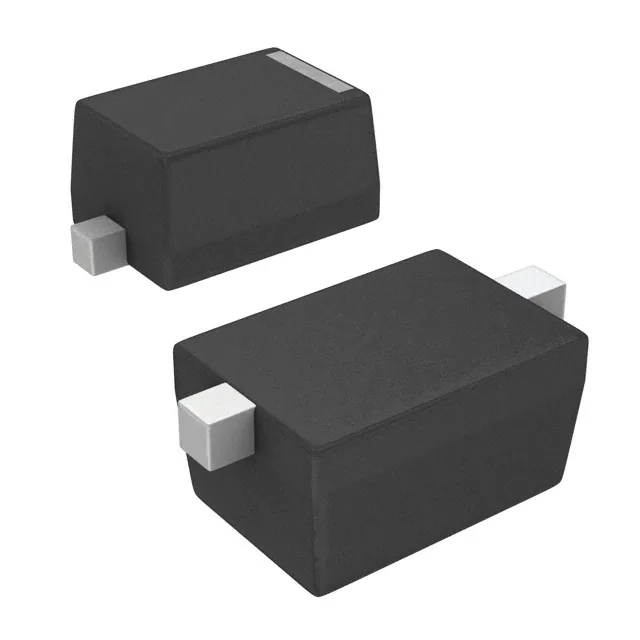
BAS16HT1G
onsemi
-
1N914BWT
onsemi
-
BAS21LT1G
onsemi
-
LL4148
onsemi
-
BAS16LT1G
onsemi
-
MMSD914T1G
onsemi
-
BAV21W-7-F
Diodes Incorporated
Tech Hub

Counterfeit components can hide behind convincing markings and passing basic function tests. This engineering reference covers source traceability, external inspection, X-ray, XRF, electrical testing, …

A practical engineering and sourcing framework covering lifecycle verification, lifetime-buy calculations, replacement qualification, supplier checks and counterfeit-risk controls.

TTL and CMOS logic families differ in thresholds, loading, output drive, power and timing. This engineering guide compares 74HC and 74HCT, calculates noise margins and checks 3.3 V/5 V compatibility.

A practical engineering guide to 3.3V and 5V logic compatibility, input thresholds, resistor dividers, translator ICs, MOSFET level shifting, I2C pull-ups, timing limits and power-sequencing risks.

The 74HC595 uses push-pull logic outputs, while the TPIC6B595 uses 50 V open-drain DMOS sinks for higher-power loads. This guide compares timing, current limits, 3.3 V interfacing, load wiring, thermal…

The 74HC595 converts serial data into eight stable parallel outputs. This guide covers pin functions, shift and storage timing, OE and MR behavior, drive-current limits, cascading, voltage compatibilit…

A technical comparison of level-sensitive latches and edge-triggered flip-flops, covering timing windows, setup and hold limits, master–slave operation, time borrowing, race-through, HDL inference and…

A D latch stores one bit while Enable controls when data can pass. This reference covers gate-level operation, truth tables, transparency, setup and hold timing, LE versus OE, common ICs and practical …

An SR latch stores one bit through cross-coupled feedback. This engineering reference covers NOR and NAND implementations, truth tables, forbidden-state recovery, gated operation, switch debouncing, fa…

Latch circuits retain one bit through feedback. This technical reference covers SR and D latches, truth tables, transparency, timing limits, latch-versus-flip-flop behavior, applications and common log…


