
 My Inquiry
 My Account


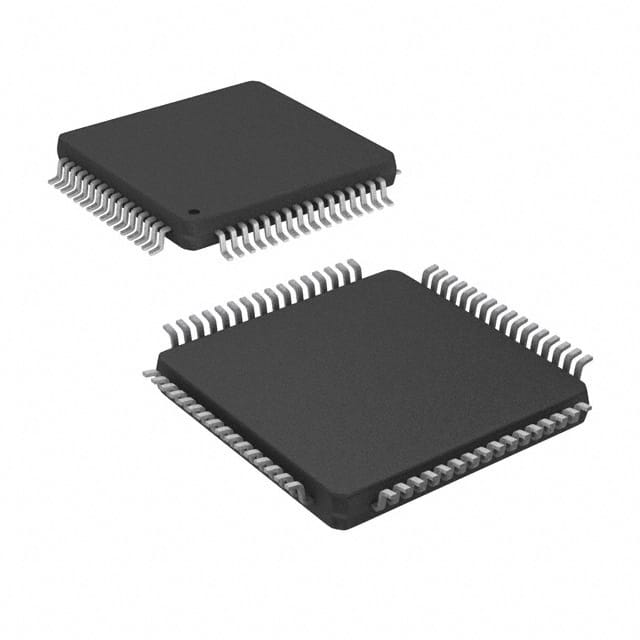
STMicroelectronics STA2051TR
- Part No.:
- STA2051TR
- Manufacturer:
- STMicroelectronics
- Category:
- Application Specific Microcontrollers
- Package:
- 64-TQFP
- Datasheet:
-
 STA2051TR.pdf
- Description:
- IC CTRLR BASEBAND 32BIT 64-TQFP
- Quantity:
- Payment:

- Shipping:

Inventory:4,661
Please send an inquiry. Send us your inquiry, and we will respond immediately.
Product details
Overview
STA2051TR from STMicroelectronics is a 32-bit single-chip GPS/telematics baseband controller integrating an ARM7TDMI CPU, 256 KB Flash + 16 KB OTP, 64 KB RAM, 12-channel GPS correlation DSP, and automotive-grade CAN 2.0B interface. It delivers <1 m differential GPS accuracy, 7 s warm-start TTFF, and operates from -40°C to 85°C in TQFP64 package.
For engineers reviewing the STA2051TR datasheet, STA2051TR pinout, STA2051TR application, or STA2051TR equivalent, key selection considerations include its integrated GPS DSP (no TCXO required), dual-supply core (1.8 V) and I/O (2.7–3.6 V) domains, RTCA-SC159/WAAS/EGNOS compliance, and 48 GPIO with interrupt capability - critical for automotive telematics ECU design.
Technical Context
The STA2051TR implements a dedicated 12-channel GPS correlation engine with built-in acquisition and tracking logic, eliminating need for external TCXO and supporting RTCA-SC159, WAAS, and EGNOS augmentation protocols. Its ARM7TDMI core runs at up to 66 MHz with integrated PLL clock management and four low-power modes (Wait, Slow, Stop, Standby).
Peripheral integration includes CAN 2.0B (1 Mbit/s), two I²C (400 kHz), two SPI (8 Mb/s), three UARTs (625 kBaud), one smart-card UART (ISO 7816-3), USB 1.1 (TQFP144 only), HDLC unit, 4×12-bit sigma-delta ADC (1 kHz multi-channel sample rate), and real-time clock with 32 kHz oscillator and backup supply support.
Key Specifications
| Parameter | Value and Actual Design Meaning |
|---|---|
| CPU Core | ARM7TDMI 32-bit RISC, up to 66 MHz - enables real-time GPS baseband processing and host application execution in single chip. |
| Embedded Memory | 256 KB Flash + 16 KB OTP (100K cycles) + 64 KB RAM - sufficient for GPS firmware, navigation stack, and telematics middleware storage. |
| GPS DSP | 12-channel correlation engine with RTCA-SC159/WAAS/EGNOS support - enables certified aviation-grade positioning without external timing reference. |
| Accuracy & TTFF | Stand-alone <30 m; differential <1 m; surveying <1 cm; cold start 45 s - meets automotive infotainment and fleet tracking latency and precision requirements. |
| Power Supply | Core: 1.8 V (internal regulator or external); I/O: 2.7–3.6 V; ADC ref: 3.0–3.3 V - enables mixed-domain power optimization in vehicle ECUs. |
| Operating Temp | -40°C to +85°C - qualified for under-hood and dashboard-mounted automotive telematics modules per AEC-Q100 stress guidelines. |
| Package | TQFP64 (10 × 10 mm, 0.5 mm pitch) - supports compact PCB layout with thermal pad for automotive thermal cycling reliability. |
Pinout & Package
TQFP64 package with exposed thermal pad; 64-pin quad flat pack, 0.5 mm pitch, 10 mm × 10 mm body size. Pin functions validated per STMicroelectronics STA2051 Data Brief Figure 3 (LQFP64 top view).
| Pin/Terminal | Circuit Role | Design Meaning |
|---|---|---|
| VDDCORE | Core power supply input | Accepts 1.8 V regulated supply; internal LDO bypass option improves power efficiency in battery-backed systems. |
| VDDIO | I/O power supply input | 2.7–3.6 V domain powers GPIO, UART, SPI, I²C - compatible with standard automotive 3.3 V rail. |
| OSC_IN / OSC_OUT | External crystal oscillator interface | Supports 1–20 MHz crystals; optional TCXO-free GPS operation via internal RC oscillator calibration. |
| GPS_I/Q[3:0] | Dedicated GPS analog front-end inputs | Four differential pairs for direct connection to GPS RF frontend ICs (e.g., STA2062), enabling zero-IF baseband sampling. |
| CAN_H / CAN_L | CAN 2.0B physical layer interface | Direct connection to ISO 11898-compliant transceiver; supports 1 Mbit/s bit rate for high-speed vehicle bus telemetry. |
| USB_DP / USB_DM | USB 1.1 differential data lines | Not available on TQFP64 - reserved no-connect; functional only on TQFP144 variant per datasheet specification. |
Key Features
| Feature | Design Value |
|---|---|
| Integrated GPS correlation DSP | 12-channel hardware-accelerated acquisition/tracking eliminates need for external DSP, reducing BOM count and latency in GNSS receivers. |
| Dual-voltage domain architecture | Separate 1.8 V core and 3.3 V I/O supplies enable independent power gating and dynamic voltage scaling for automotive stop/start energy savings. |
| Automotive-qualified peripherals | CAN 2.0B (1 Mbit/s), RTC with 32 kHz backup oscillator, and -40°C to +85°C operation meet ISO 16750-4 environmental stress requirements. |
| Flexible serial connectivity | Three UARTs (one ISO 7816-3 smart card compliant), two SPI (one configurable as MMC/SD), and two I²C interfaces support multi-sensor telematics gateway designs. |
| Low-power clock management | Reset and clock control unit provides Wait, Slow, Stop, and Standby modes - extends battery life in always-on GPS loggers and emergency call (eCall) modules. |
Applications
| Automotive Telematics ECU | Fleet Tracking Terminal |
|---|---|
Use Scenario: Integrated vehicle location, diagnostics, and remote command execution in OEM telematics control units. IC Role / Device Role / Timing Role: Primary baseband processor handling GPS signal correlation, CAN bus telemetry aggregation, and cellular modem interfacing via UART. Use Value: Single-chip solution reduces system cost and board area while meeting UNECE R155 software update security and GPS accuracy requirements. | Use Scenario: Real-time asset monitoring across logistics fleets using GPS position reporting and engine status polling. IC Role / Device Role / Timing Role: Host controller managing GPS acquisition, CAN message parsing (J1939/ISO 15765), and GPRS modem handshaking over UART. Use Value: 45 s cold-start TTFF and <1 m differential accuracy ensure rapid reacquisition after vehicle ignition and precise geo-fencing enforcement. |
| eCall Emergency Module | Aviation GPS Data Logger |
Use Scenario: Automatic crash notification system triggering GPS position upload and voice call initiation within 100 ms of airbag deployment. IC Role / Device Role / Timing Role: Safety-critical baseband controller executing autonomous GPS fix, CAN crash event detection, and USB/UART-based modem control. Use Value: Standby-mode RTC and 7 s warm-start TTFF guarantee sub-second position lock during emergency activation, satisfying EU eCall Regulation 2015/758. | Use Scenario: Portable flight data recorder capturing GPS trajectory, altitude, and heading for general aviation post-flight analysis. IC Role / Device Role / Timing Role: GNSS baseband processor implementing RTCA-SC159 and WAAS correction decoding for certified vertical accuracy. Use Value: On-chip WAAS/EGNOS support achieves <3 m stand-alone and <1 m differential accuracy without external correction receiver - essential for ADS-B Out compliance. |
Equivalent & Alternatives
The following parts are listed as comparable options for similar GPS baseband controller applications.
| Alternative Part | Technical Difference | Application Difference | Selection Advice |
|---|---|---|---|
| u-blox UBX-G70xx series | Integrated GNSS RF frontend + baseband; no ARM host core; serial NMEA output only. | Targeted at plug-and-play positioning modules, not programmable host controllers. | Select when system requires minimal firmware development and standardized NMEA interface instead of custom GPS stack implementation. |
| Qualcomm MDM9200 | Cellular + GPS SoC; ARM11 core; supports LTE Cat 4; higher power and larger footprint (BGA361). | Designed for connected vehicle gateways requiring simultaneous 4G and GNSS, not standalone GPS/telematics. | Select when cellular modem integration, Linux OS support, and multi-radio coexistence are mandatory - not for cost-sensitive, low-power GPS-only nodes. |
Compared with u-blox UBX-G70xx and Qualcomm MDM9200, the STA2051TR uniquely combines programmable ARM7 host processing, hardware GPS correlation, and automotive CAN in a compact TQFP64 package - making it optimal for firmware-customizable, safety-aware telematics ECUs where modularity and deterministic timing outweigh raw throughput needs.
Availability
STA2051TR is available at Aetrix Electronics and suitable for automotive telematics ECUs, fleet tracking terminals, and eCall emergency modules requiring stable component supply, long-lifecycle support, and AEC-Q100-aligned qualification.
Supply support for STA2051TR includes scheduled delivery planning, volume procurement assistance, BOM continuity management, traceable sourcing, and lifecycle availability coordination for OEM customers, industrial embedded developers, connected-device designers, and electronics production programs.
Manufacturer
STMicroelectronics is a global semiconductor leader headquartered in Geneva, designing and manufacturing microcontrollers, analog ICs, MEMS, and automotive-grade chips since 1987.
The STA2051 belongs to ST's automotive telematics baseband controller product line, engineered specifically for GPS-enabled vehicle communication systems requiring functional safety awareness, CAN integration, and certified positioning accuracy.
FAQ
Is the STA2051TR pin-compatible with the STA2051E (TQFP144) variant?
No. The STA2051TR uses a TQFP64 package with 64 pins, while the STA2051E uses TQFP144 with 144 pins. Key differences include absence of USB 1.1, reduced GPIO count (48 vs. 80), and omission of second SPI/I²C multiplexing options in the 64-pin version. Pin mapping is not interchangeable.
Does the STA2051TR require an external TCXO for GPS operation?
No. The STA2051TR's GPS correlation DSP supports TCXO-free operation using internal RC oscillator calibration, validated for RTCA-SC159, WAAS, and EGNOS compliance. An external crystal (1–20 MHz) is still required for system clock generation, but temperature compensation is handled internally.
What is the maximum sample rate of the 12-bit sigma-delta ADC in multi-channel mode?
The 4-channel 12-bit sigma-delta ADC achieves 1 kHz aggregate sample rate in multi-channel conversion mode. In single-channel mode, it reaches 4 kHz - confirmed in the Data Brief Section 1 under "Analog to Digital Converter" specifications.
Can the STA2051TR support both CAN and USB simultaneously?
No. USB 1.1 functionality is exclusive to the TQFP144 package variant (STA2051E/STA2051ETR). The STA2051TR (TQFP64) has USB-related pins designated as no-connect. CAN 2.0B remains fully operational and is the primary vehicle bus interface for this package option.
STA2051TR Specifications
- Product attributes
- Attribute value
- Manufacturer:
- STMicroelectronics
- Series:
- -
- Package/Case:
- 64-TQFP
- Packaging:
- Tape & Reel (TR)
- Product Status:
- Obsolete
- Programmable:
- Not Verified
- Applications:
- GPS Baseband Controller
- Core Processor:
- ARM7®
- Program Memory Type:
- FLASH (256kB)
- Controller Series:
- VESPUCCI
- RAM Size:
- 64K x 8
- Interface:
- I2C, SPI Serial, CAN, USB, UART
- Number of I/O:
- 48
- Voltage - Supply:
- 1.8V
- Operating Temperature:
- -40°C ~ 85°C
- Grade:
- -
- Qualification:
- -
- Mounting Type:
- Surface Mount
- Supplier Device Package:
- 64-TQFP
STA2051TR FAQ
1.How can I place an order for STA2051TR through Aetrix?
Please submit a Request for Quotation (RFQ) for STA2051TR on Aetrix. Our sales agent will provide a competitive quotation and guide you through the order confirmation once you accept the terms.
2.Are the price and stock information for STA2051TR reliable?
The price and inventory of STA2051TR are updated periodically and may fluctuate due to market conditions. Stock and pricing data are typically refreshed every 24 hours. Quotation validity for STA2051TR is usually 5 days.
3.What payment methods are accepted for STA2051TR?
We accept Wire Transfer, PayPal, Credit Card, Western Union, MoneyGram, and Escrow for STA2051TR transactions.
Note: Certain payment methods may incur a processing fee.
4.How is shipping managed for STA2051TR?
STA2051TR orders can be shipped via leading logistics carriers, including DHL, UPS, FedEx, TNT, or Registered Mail.
Once your STA2051TR order is processed, you will receive an email with the shipment details and tracking number.
Note: Tracking information may take up to 24 hours to appear. Express delivery typically takes 3–5 business days.
5.How can I obtain technical support or documentation for STA2051TR?
For technical support, including STA2051TR datasheets, pinout diagrams, or application guidance, please contact our engineering support team. They can provide detailed documentation and assistance for your STA2051TR requirements.
6.How does Aetrix verify that STA2051TR is sourced from the original manufacturer or authorized distributors?
All STA2051TR products on Aetrix are procured from qualified distributors and authorized channels. Our dedicated quality assurance team conducts strict verification, including traceability checks and, if necessary, third-party testing. This ensures that STA2051TR meets industry standards.
7.What is the process for return or replacement of STA2051TR?
All STA2051TR units undergo pre-shipment inspection (PSI). If there is an issue with STA2051TR, returns or replacements are accepted under the following conditions:
1.Quantity discrepancies, incorrect items, or visible external defects (such as breakage or corrosion), acknowledged by Aetrix.
2.The issue is reported within 90 days of delivery.
3.The STA2051TR part is unused and in its original packaging.
Return procedure for STA2051TR:
1.Submit a request within 90 days.
2.Obtain a Return Material Authorization (RMA) from Aetrix.
STA2051TR Tags
-
CYPD3175-24LQXQ
Infineon Technologies

-
SLB9672VU20FW1523XTMA1
Infineon Technologies
-
SLB9670VQ20FW785XTMA1
Infineon Technologies
-
SLB9672XU20FW1523XTMA1
Infineon Technologies
-
SLB9673XU20FW2613XTMA1
Infineon Technologies
-
CYPD3125-40LQXIT
Infineon Technologies
-
AT97SC3204-U2A1A-20
Microchip Technology
-
AT97SC3204-U2A1A-10
Microchip Technology
-
SLM9670AQ20FW1311XTMA1
Infineon Technologies
-
SLB9672XU20FW1613XTMA1
Infineon Technologies
-
SLB9672AU20FW1613XTMA1
Infineon Technologies
-
SLB9673AU20FW2613XTMA1
Infineon Technologies
Tech Hub

A practical engineering guide to 3.3V and 5V logic compatibility, input thresholds, resistor dividers, translator ICs, MOSFET level shifting, I2C pull-ups, timing limits and power-sequencing risks.

The 74HC595 uses push-pull logic outputs, while the TPIC6B595 uses 50 V open-drain DMOS sinks for higher-power loads. This guide compares timing, current limits, 3.3 V interfacing, load wiring, thermal…

The 74HC595 converts serial data into eight stable parallel outputs. This guide covers pin functions, shift and storage timing, OE and MR behavior, drive-current limits, cascading, voltage compatibilit…

A technical comparison of level-sensitive latches and edge-triggered flip-flops, covering timing windows, setup and hold limits, master–slave operation, time borrowing, race-through, HDL inference and…

A D latch stores one bit while Enable controls when data can pass. This reference covers gate-level operation, truth tables, transparency, setup and hold timing, LE versus OE, common ICs and practical …

An SR latch stores one bit through cross-coupled feedback. This engineering reference covers NOR and NAND implementations, truth tables, forbidden-state recovery, gated operation, switch debouncing, fa…

Latch circuits retain one bit through feedback. This technical reference covers SR and D latches, truth tables, transparency, timing limits, latch-versus-flip-flop behavior, applications and common log…

An engineering guide to LED driver operation, constant-current and constant-voltage outputs, linear and switching topologies, dimming, IC selection, calculations, replacement compatibility, and fault c…

Operational amplifier guide covering op amp basics, feedback, ideal vs real op amps, common configurations, buffer circuits, offset, bias current, gain-bandwidth, slew rate, rail-to-rail limits and sel…

Jumper cables guide covering safe connection order, red and black clamp placement, final ground connection, cable gauge, length, clamp quality, copper vs CCA cables, jump starter comparison and battery…


